Written By: Sergio Harding
Through its extensive geographic breadth and scope, the Second Atlas provides a valuable, large-scale snapshot of the status of Virginia’s breeding avifauna. In addition, we assessed the changes in the composition and distribution of these bird communities over time through comparison with data reported some thirty years before the First Atlas. Finally, an extensive point count survey during the Second Atlas allowed us to generate population estimates for many of Virginia’s breeding bird species.
Breeding Species Found During the Second Atlas
The Second Atlas documented breeding evidence for 205 species. This included 196 species that were confirmed breeders, as well as four that were probable breeders and five that were possible breeders (Table 1). Each of these species except for Swallow-tailed Kite (Elanoides forficatus) and Northern Waterthrush (Parkesia noveboracensis) is profiled in a full Species Account, for a total of 203 Accounts.
Table 1. Species documented as probable or possible breeders during the Second Atlas. The highest breeding category for each species is also provided for the First Atlas. Species are sorted by status during the Second Atlas, then by taxonomic order.
| Common Name | Scientific Name | Second Atlas | First Atlas |
|---|---|---|---|
| Black Rail | Laterallus jamaicensis | probable | possible |
| Alder Flycatcher | Empidonax alnorum | probable | probable |
| Swainson’s Thrush | Catharus ustulatus | probable | probable |
| Pine Siskin | Spinus pinus | probable | confirmed |
| American Bittern | Botaurus lentiginosus | possible | confirmed |
| Swallow-tailed Kite | Elanoides forficatus | possible | not reported |
| Merlin | Falco columbarius | possible | not reported |
| Northern Waterthrush | Parkesia noveboracensis | possible | confirmed |
| Henslow’s Sparrow | Centronyx henslowii | possible | confirmed |
This editorial decision was made for Swallow-tailed Kite because it is not known to breed in the Commonwealth. However, there has been an increase in the number of spring and summer records for the species in Virginia’s Coastal Plain since the 1950s (Rottenborn and Brinkley 2007), which hints at the possibility of its nesting there. The kite also appears to be expanding its range northward, as it was documented nesting in North Carolina in 2013. It was documented in one block in Northampton County during the Second Atlas.
Northern Waterthrush likewise was not featured in a Species Account as it is considered a casual breeder in Virginia, with only one breeding confirmation on record (Rottenborn and Brinkley 2007); this confirmation was documented during the First Atlas. The species was documented in one block in Highland County during the Second Atlas.
Like the Swallow-tailed Kite and Northern Waterthrush, three other species did not rise above the level of possible breeders during the Second Atlas; however, each was profiled in a Species Account. The American Bittern (Botaurus lentiginosus), though rare, is better established as a breeder in the Commonwealth than the waterthrush (Rottenborn and Brinkley 2007) and therefore merited a Species Account. This was also the case for the Henslow’s Sparrow (Centronyx henslowii), which was also confirmed as a breeder in the northern Piedmont in 2022. The Merlin (Falco columbarius), another possible breeder during the Second Atlas, was confirmed as a first-time breeder in Virginia in 2021, some months after the field data collection period had closed for the Second Atlas. Given the significance and timing of this record, this species was also featured in a Species Account.
Changes in Species Composition Between Atlases
New Breeding Species Since the First Atlas
Eight species that were not detected during the First Atlas were confirmed as breeders during (or shortly after) the Second Atlas. They include two new breeders to Virginia: Painted Bunting (Passerina ciris), whose breeding confirmation during the Second Atlas was the first breeding record for the state, and Merlin, which was first confirmed as a breeder in Virginia in 2021.
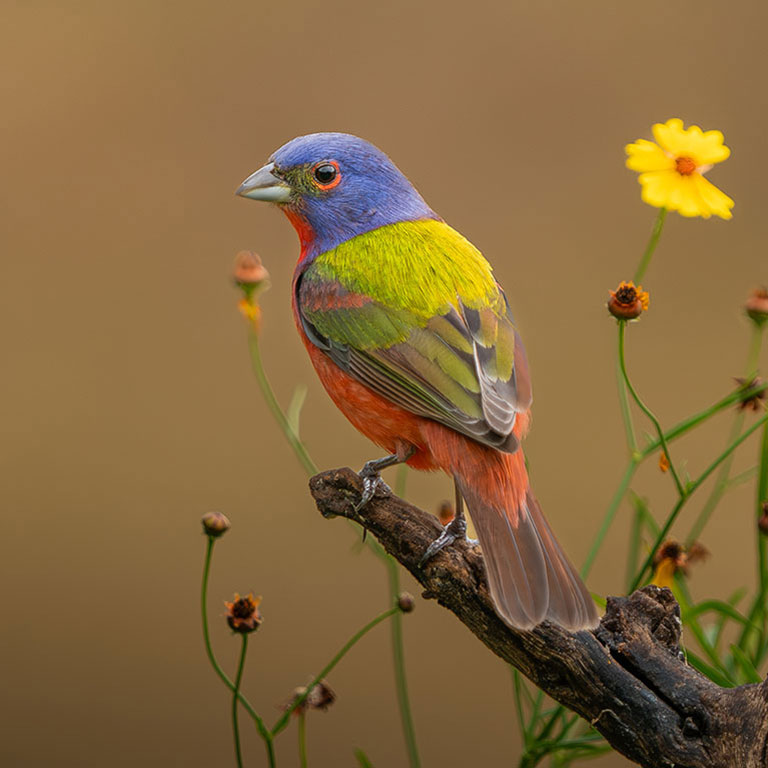
The remaining species had been confirmed as breeders in Virginia prior to the Second Atlas, and those details are available in their respective Species Accounts. They are the following: Anhinga (Anhinga anhinga), Black-necked Stilt (Himantopus mexicanus), Yellow-rumped Warbler (Setophaga coronata), Mississippi Kite (Ictinia mississippiensis), Eurasian Collared-Dove (Streptopelia decaocto) and Trumpeter Swan (Cygnus buccinator). The last two species are not native to Virginia, though Trumpeter Swans are reported to have wintered in areas of the Commonwealth during the 19th century. An additional species, the Common Merganser (Mergus merganser), bred historically in Virginia but was subsequently lost. It was reported without breeding evidence during the First Atlas, regaining its status as a breeder in the Commonwealth in the early 2000s (Rottenborn and Brinkley 2007). Virginia’s geographic position along the Mid-Atlantic coast contributes to a confluence of breeding species whose core ranges lie to the north or south of the Commonwealth. For example, of the species above, Anhinga, Mississippi Kite, and Eurasian Collared-Dove are new breeders since the First Atlas as a result of northward range expansions, and Merlin and Yellow-rumped Warbler are new breeders as a result of southward range expansions.
Species with Breeding Evidence During the First but not Second Atlas
Ten species were documented with breeding evidence during the First Atlas but not during the Second Atlas (Table 2). Three of these were not confirmed as breeders in the First Atlas. They include the following:
- Short-eared Owl (Asio flammeus), which is considered a casual breeder in Virginia based on its having bred regularly in low numbers in coastal salt marshes of the Coastal Plain region through the 1920s and irregularly in the northern Piedmont as recently as 2001 (Rottenborn and Brinkley 2007);
- Yellow-bellied Flycatcher (Empidonax flaviventris), which was known to breed on Mount Rogers in Grayson and Smyth Counties in the 1970s through the mid-1980s (Rottenborn and Brinkley 2007); and
- Nashville Warbler (Leiothlypis ruficapilla), which has never been confirmed as a breeder in the state but is suspected to have bred in the Mountains and Valleys region based on summer records and other evidence (Rottenborn and Brinkley 2007).
Table 2. Species documented with breeding evidence during the First Atlas but not during the Second Atlas. The highest breeding category for each species is provided. Species are sorted by status during the First Atlas, then by taxonomic order.
| Common Name | Scientific Name | First Atlas | Second Atlas |
|---|---|---|---|
| Blue-winged Teal | Spatula discors | confirmed | observed |
| Green-winged Teal | Anas crecca | confirmed | observed |
| Ring-necked Pheasant | Phasianus colchicus | confirmed | observed |
| Upland Sandpiper | Bartramia longicauda | confirmed | observed |
| Bewick’s Wren | Thryomanes bewickii | confirmed | not reported |
| Sedge Wren | Cistothorus stellaris | confirmed | observed |
| Bachman’s Sparrow | Peucaea aestivalis | confirmed | not reported |
| Short-eared Owl | Asio flammeus | probable | observed |
| Nashville Warbler | Leiothlypis ruficapilla | probable | observed |
| Yellow-bellied Flycatcher | Empidonax flaviventris | possible | observed |
The remaining seven species were confirmed breeders during the First Atlas (Table 2), and information about each is summarized below. Several additional species that have been known to breed in Virginia, including irregular breeders, were not reported with breeding evidence during either Atlas and are not addressed here. The publication “Virginia’s birdlife: An annotated checklist, 4th edition” (Rottenborn and Brinkley 2007) provides a comprehensive list of these species and their breeding status in the Commonwealth.
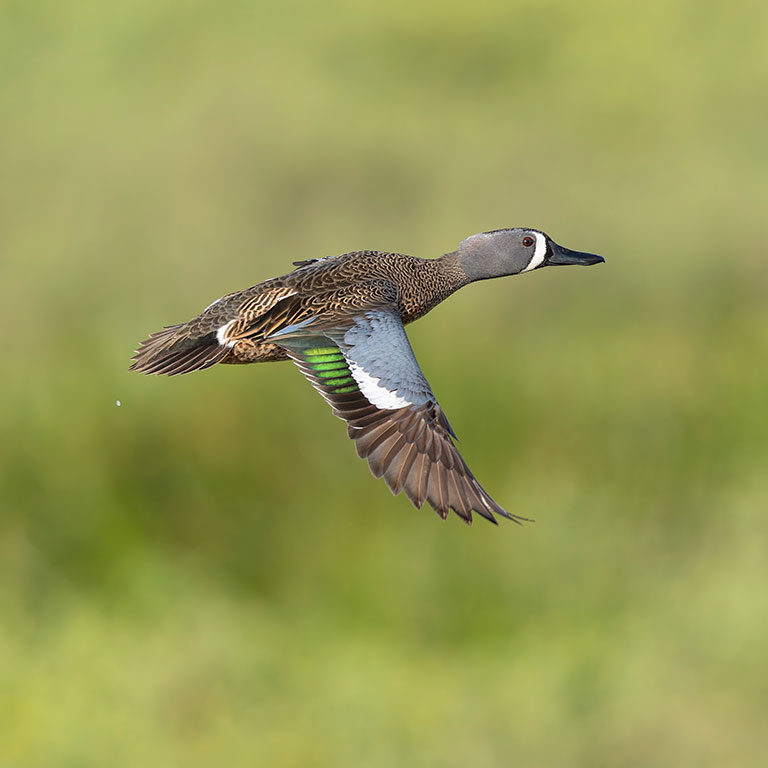
Blue-winged Teal
The Blue-winged Teal (Spatula discors) nests over a large swath of North America, reaching its highest densities in the prairies of the northern central U.S. and Canada (Rohwer et al. 2020). It breeds irregularly or in low numbers in many portions of its range, including the eastern states (Rohwer et al. 2020). In Virginia, it apparently never had a strong breeding presence. Here, it has been considered locally uncommon along coastal areas, where it nests in ponds and marshes, and rare further inland (Rottenborn and Brinkley 2007).
Blue-winged Teals were confirmed breeders in three blocks in the Coastal Plain during the First Atlas, in Accomack and Northampton Counties on the Eastern Shore and in a block crossing the city boundaries of Hampton and Poquoson on the Lower Peninsula (Trollinger and Reay 2001). Over 450 observations of Blue-winged Teals were reported during the Second Atlas, but none with breeding evidence. Although the species may still breed in small numbers in Virginia, previously known breeding habitats such as small offshore islands in the Chesapeake Bay have eroded away or have been reduced in both size and habitat suitability (Gary Costanzo, personal communication).
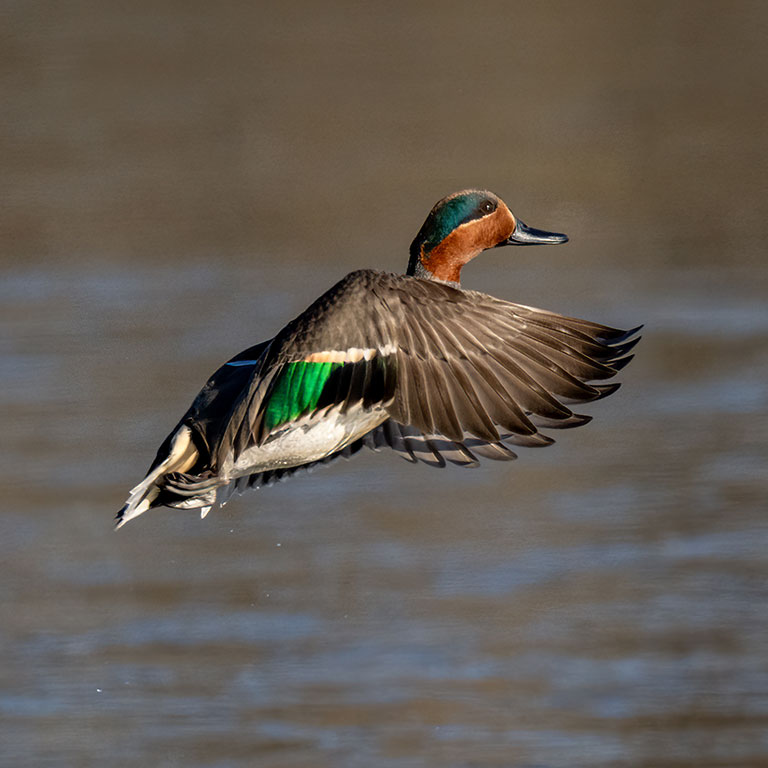
Green-winged Teal
The Green-winged Teal (Anas crecca) has a widespread, intercontinental breeding range (Johnson et al. 2020). In North America, it is represented by the subspecies A. c. carolinensis, which nests in Alaska and Canada and through portions of the Northwest, Upper Midwest, and Northeast (Johnson et al. 2020). It breeds irregularly outside of this core range and is considered a casual breeder in Virginia (Rottenborn and Brinkley 2007). During the First Atlas, the Green-winged Teal was a confirmed breeder in only one block in Smyth County in the Mountains and Valleys (Trollinger and Reay 2001). Although 330 individual observations of the species were documented during the Second Atlas, none were associated with breeding evidence. The species may still breed occasionally in Virginia (Gary Costanzo, personal communication).
Ring-necked Pheasant
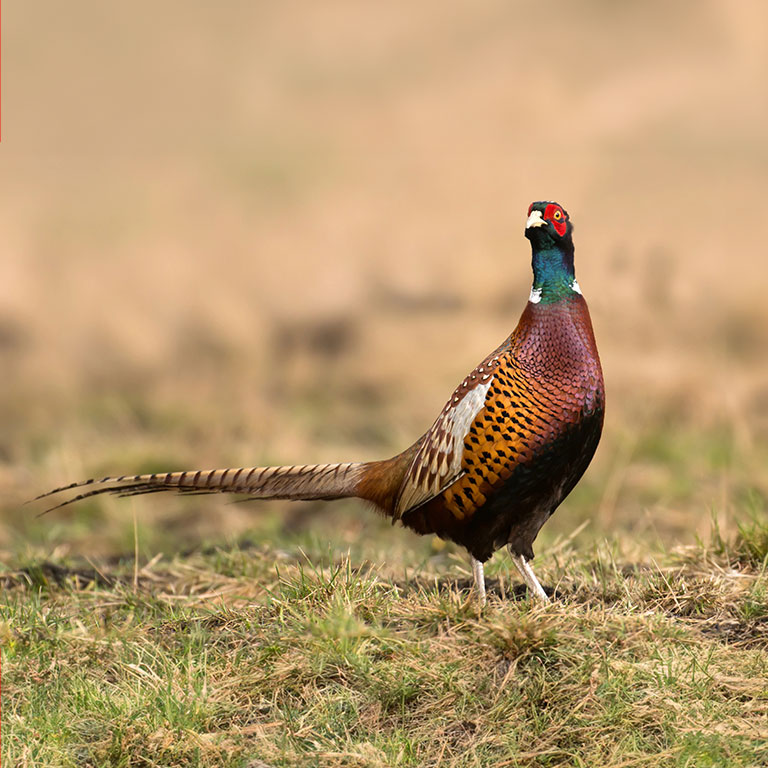
The Ring-necked Pheasant (Phasianus colchicus) is a non-native species which, in Virginia, requires cultivated lands interspersed with heavy grasses and swampy bottoms (Marc Puckett, personal communication). It was introduced into the Commonwealth between 1958 (Taylor 1971) and at least 1976 (Rottenborn and Brinkley 2007) by the Virginia Department of Wildlife Resources (VDWR) to establish a population for hunting purposes. VDWR releases ended sometime in the 1970s (Marc Puckett, personal communication). Additional introductions by hunt clubs occurred as early as 1947 (Taylor 1971), and private releases on shooting preserves continue to this day.
The VDWR program used mostly hybrid birds produced from brood stock of several species and subspecies of pheasant, releasing them in multiple counties across all three physiographic regions (Taylor 1971). Although birds associated with several of the release events were able to breed successfully (Taylor 1971), habitat change may have ultimately prevented the birds from taking permanent hold on the Virginia landscape (Marc Puckett, personal communication). Ring-necked Pheasant was reported as a confirmed breeder in four blocks during the First Atlas, including in Rockbridge and Warren Counties in the Mountains and Valleys region and in New Kent (or Charles City) and York Counties in the Coastal Plain region (Trollinger and Reay 2001). Contemporary reports of the species are likely from continuing local introductions (Rottenborn and Brinkley 2007). Ring-necked Pheasant was documented through 11 observations without breeding evidence during the Second Atlas.
Upland Sandpiper
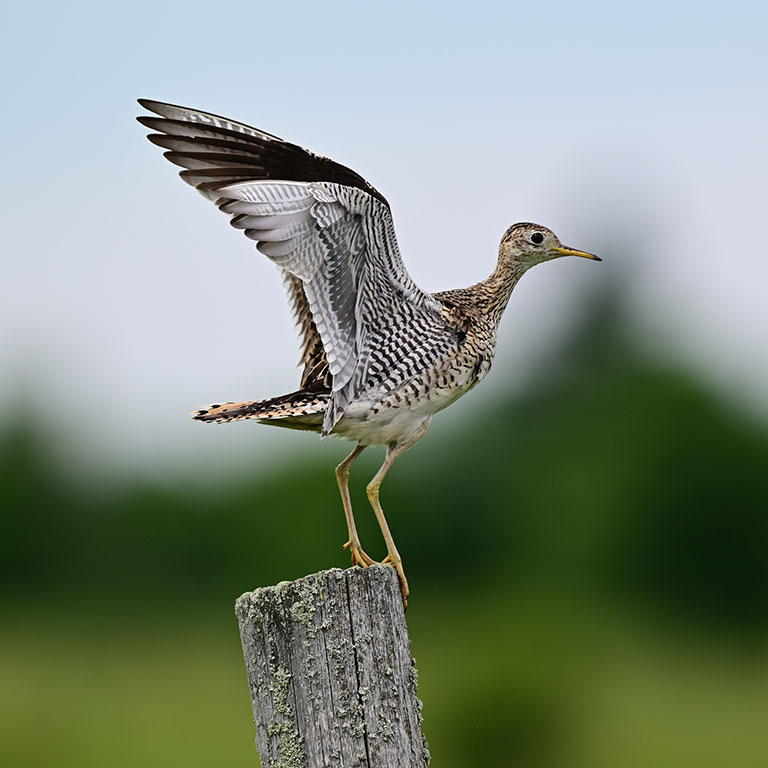
The Upland Sandpiper (Bartramia longicauda), a grassland-nesting shorebird of the Great Plains, expanded its range into the eastern U.S. during the extensive forest clearing of the 19th century (Wilson and Watts 2012). The eastern population subsequently crashed due to unregulated market hunting in the late 1800s and never recovered to its former levels (Houston et al. 2023). The species appears to have been extirpated as a breeder from many of the northeastern states by the 1990s (Houston et al. 2023).
Virginia’s population, at the southeastern edge of its breeding range, followed a similar trajectory. Here, Upland Sandpipers bred in the Piedmont and Mountains and Valleys regions, nesting in pastures and hayfields and in the grassy fields at airports (Wilson and Watts 2012). With the exception of the college farm at Virginia Tech in Montgomery County, where up to 20 breeding pairs were documented annually, most reports in the 1930s and 1940s were of only up to a few pairs (Wilson and Watts 2012).
The population continued to dwindle, and Upland Sandpipers were confirmed breeders in only four blocks during the First Atlas, where they were found in Fauquier and Loudoun Counties in the Piedmont region and Pulaski and Shenandoah Counties in the Mountains and Valleys region (Trollinger and Reay 2001). The species was last documented breeding in Virginia in 2002 at the Remington Turf Farm in Fauquier County (Rottenborn and Brinkley 2007). Five observations of Upland Sandpiper were reported during the Second Atlas for the months of April and August, but none with breeding evidence.
Bewick’s Wren
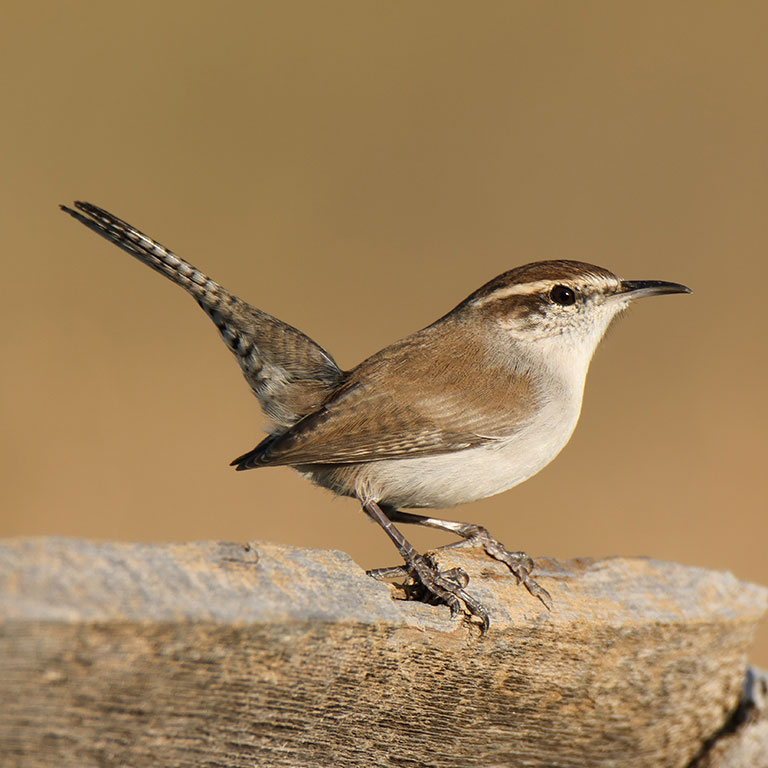
The Bewick’s Wren (Thryomanes bewickii) was once described as more common than both the Northern House Wren (Troglodytes aedon) and Carolina Wren (Thryothorus ludovicianus) (Lord 1949,Scott 1952) in parts of the Mountains and Valleys region, its historic stronghold in Virginia. This followed an expansion of its western U.S. breeding range into the eastern U.S. in the mid- to late-1800s, following the conversion of forests to agriculture (Kennedy and White 2020). A species of open, shrubby habitats (Kennedy and White 2020), it was described from farms and pastures in the Commonwealth (Grey and Stevens 1949, Lord 1949, Scott 1952).
In Virginia, it also bred in the Coastal Plain, where it was reported nesting in the Norfolk area in the late 1800s, and in multiple counties in the Piedmont (Rottenborn and Brinkley 2007). During the First Atlas, the Bewick’s Wren was confirmed as a breeder in only two blocks in Dickenson and Highland Counties in the Mountains and Valleys region (Trollinger and Reay 2001); the latter observation, from 1989, represents the last breeding record for the state (Rottenborn and Brinkley 2007). The Appalachian and broader eastern breeding population is functionally extirpated. The driving factor is believed to be competition with the Northern House Wren (Kennedy and White 2020), which underwent its own southward range expansion in the late 1800s (Johnson 2024). No observations of Bewick’s Wren were reported during the Second Atlas.
Sedge Wren
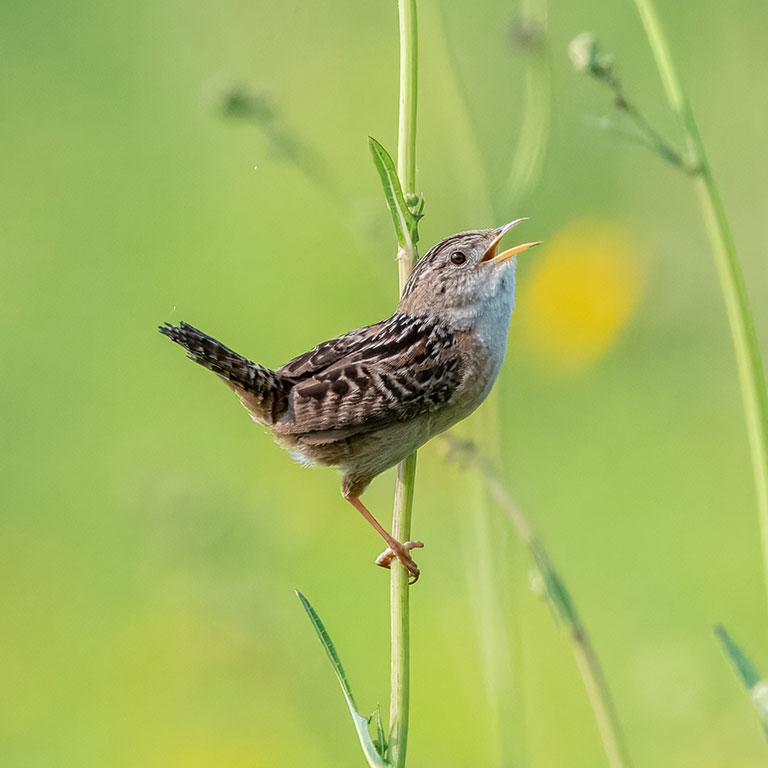
The Sedge Wren (Cistothorus stellaris) is associated with salt marshes in the Chesapeake Bay and may nest in a variety of grassland habitats elsewhere in its range (Wilson et al. 2007). It is considered a casual breeder occurring in low numbers in Virginia (Rottenborn and Brinkley 2007). Here, it is at the periphery of its core breeding range, which is in the upper Midwest and adjacent Canada and the northeastern states (Herkert et al. 2021). There are fewer than ten breeding confirmations of Sedge Wren in the Commonwealth. However, summer reports of singing birds across all three of Virginia’s physiographic regions (Rottenborn and Brinkley 2007) hint at more widespread, albeit sporadic, breeding. The species is considered a nomadic breeder, prone to erratic movements during the breeding season across its range (Herkert et al. 2021).
During the First Atlas, the Sedge Wren was a confirmed breeder in only one block in Accomack County on the Eastern Shore in the Coastal Plain region (Trollinger and Reay 2001). The last confirmed breeding record for Virginia was from Augusta County in 2004 (Rottenborn and Brinkley 2007). Fourteen observations of Sedge Wren were reported during the Second Atlas, but none with breeding evidence; based on the reported dates of observations, these were likely a mix of wintering (December and February) and spring (April and May) and fall (August) migrants.
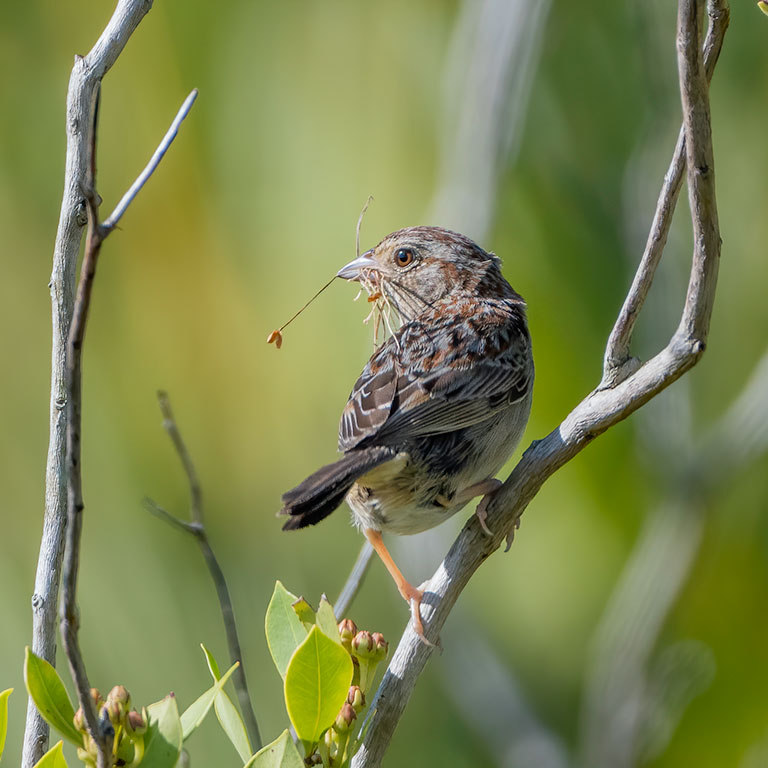
Bachman’s Sparrow
The Bachman’s Sparrow (Peucaea aestivalis) is a bird of mature, open pine savannas of the southeastern U.S. (Dunning et al. 2020). The species’ breeding range may have extended as far north as Virginia in pre-colonial times when such forests were present here. However, it was not documented in the Commonwealth until 1897 (Watts 2000). Bachman’s Sparrow was reported in the Mountains and Valleys region through 1948 and in the Piedmont region through 1968 (Rottenborn and Brinkley 2007). It was rediscovered in the Piedmont region in Brunswick County in 1986 during the First Atlas (Trollinger and Reay 2001) and was first documented in the Coastal Plain region in Sussex County in 1989 (Rottenborn and Brinkley 2007). It was subsequently found at Fort Pickett and Fort A.P. Hill in 1993, and singing males were recorded in regenerating clearcuts in southside Virginia in 1996 (Watts et al. 1998). This ephemeral habitat does not provide the long-term stability necessary to sustain populations of the species, and the sparrow was last reported in Virginia in 2003 from Suffolk County (Don Schwab, personal communication). Mature pine savannahs such as those found at The Nature Conservancy’s Piney Grove Preserve and VDWR’s Big Woods Wildlife Management Area in Sussex County are the best hope for reestablishment of the species in Virginia.
Changes in Breeding Distributions Since the First Atlas
Comparing the results of the Second Atlas to those of the First is a pulse check on Virginia’s breeding bird populations. A total of 205 species were documented with breeding evidence during the Second Atlas. Maps of change in breeding distribution between Atlases are based on modeled results and are provided for 82 species in their respective Species Accounts. These maps are particularly insightful when paired with the population trends for those species, as they help inform whether increases or decreases in their populations are translating to changes in their distribution.
For these 82 species, we looked at changes in distribution at the level of Virginia’s physiographic regions (Coastal Plain, Piedmont, and Mountains and Valleys) as we were interested in evaluating change at large geographic scales. In most cases, breeding distributions have remained relatively unchanged at these broad scales, with changes in occurrence manifesting at local or sub-regional (e.g., northern Piedmont) levels. For most species with declining trends, these findings indicate that they may have not yet lost much ground in Virginia, despite populations that have grown smaller since monitoring began in 1966 through the North American Breeding Bird Survey (BBS). However, the maps for several species strongly indicate broad changes in their breeding distribution since the First Atlas (see sections that follow).
For the remaining 123 species, we only have breeding evidence maps as a means of comparing distributions between Atlases. Interpretation of these raw, unmodeled data is less reliable than using the modeled maps of change in distribution. Survey effort was uneven among individual blocks and between Atlases, which can affect whether a species that is present in a block is detected. Survey effort during the Second Atlas was two to five times greater than during the First; this also translated to superior geographic coverage during the Second Atlas, especially in the Mountains and Valleys region and in the southern Piedmont. The vast majority (108) of these 123 species were in fact reported from more blocks (ranging from one to more than 1,900) during the Second Atlas. These species include many with declining population trends, which might otherwise be expected to be reported from fewer blocks. Nonetheless, we were able to make inferences about regional changes in distribution for some of these species.
Species with Expanding Distributions
In addition to the species reported as new to the Second Atlas (see New Breeding Species Since the First Atlas), five species have undergone substantial geographic expansions within Virginia (Table 3). Not surprisingly, all have growing populations, based on population trend data.
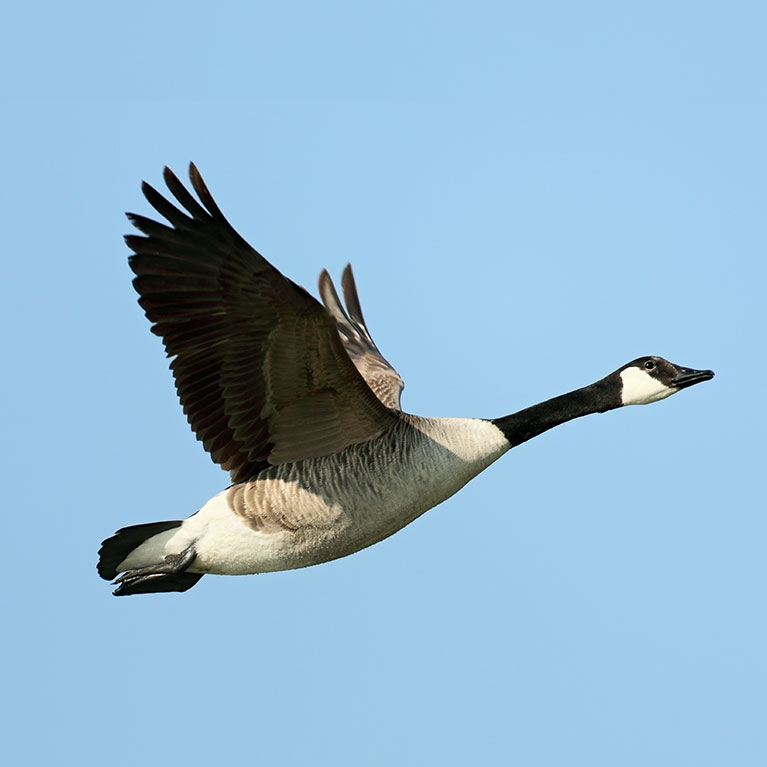
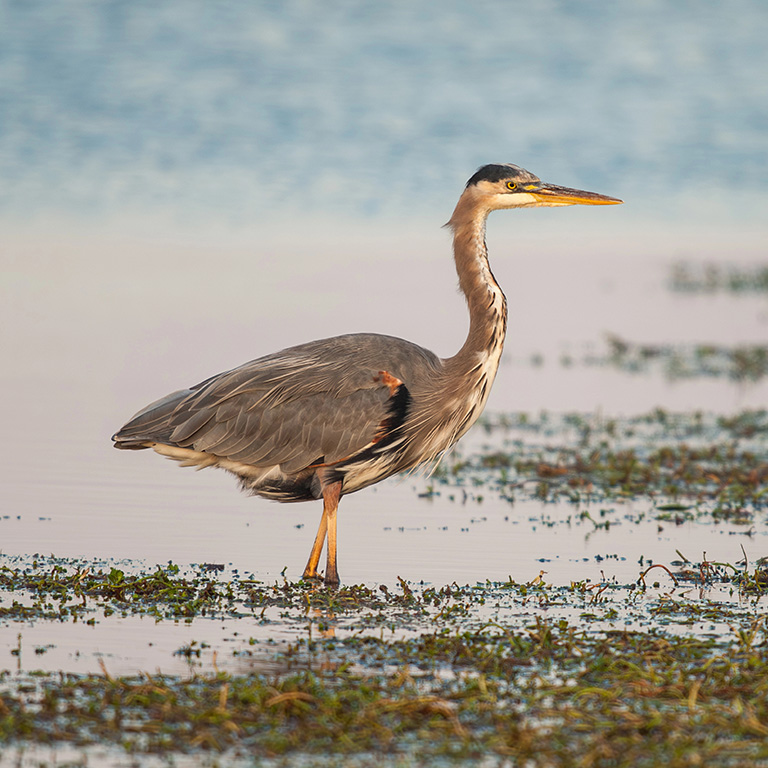
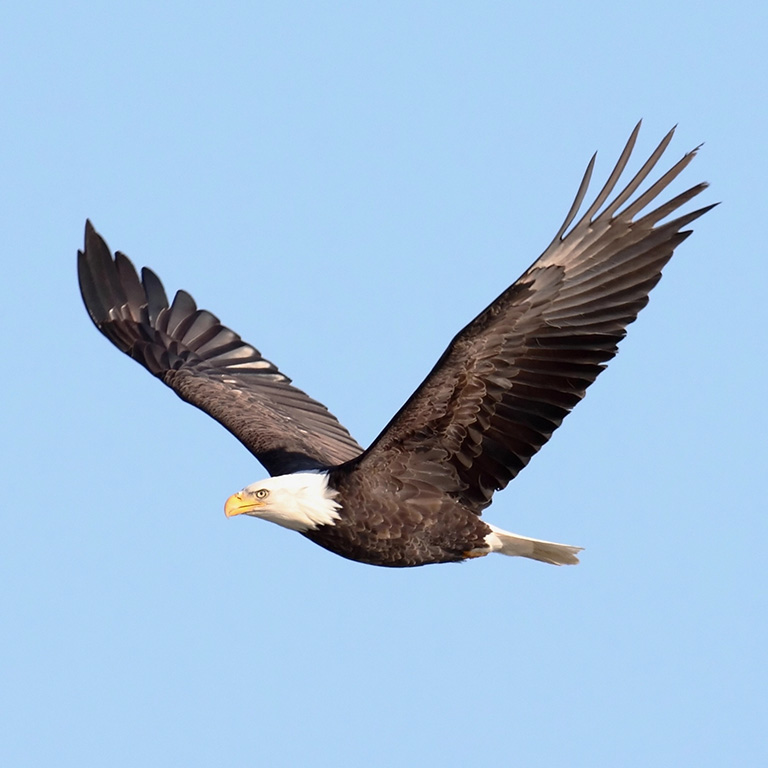
- Three of the species have coastal origins (Rottenborn and Brinkley 2007): the Canada Goose (Branta canadensis) has substantially increased its footprint within the Coastal Plain, and the Great Blue Heron (Ardea herodias) and Bald Eagle (Haliaeetus leucocephalus) have expanded into the Mountains and Valleys.
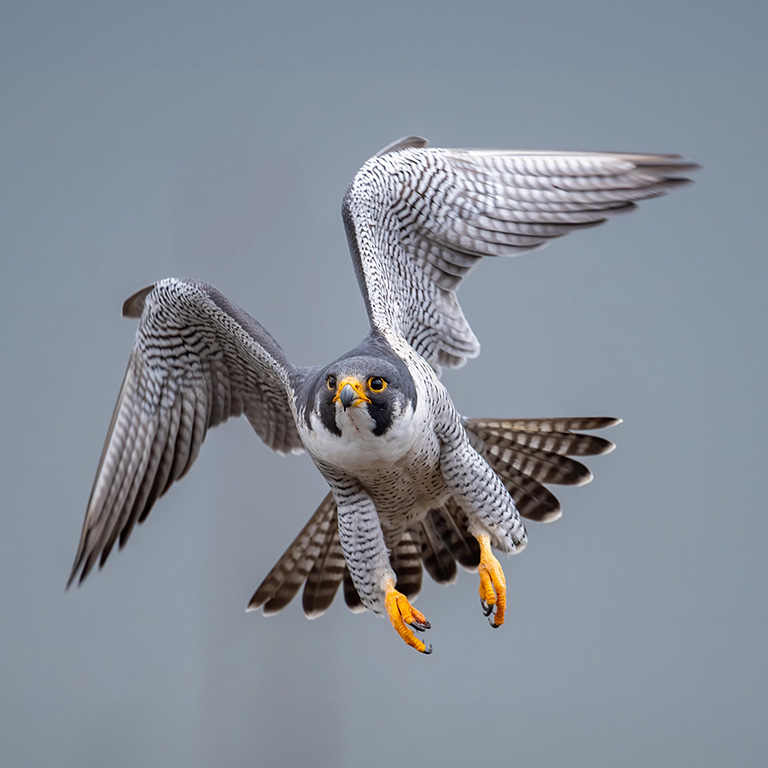
- The Peregrine Falcon (Falco peregrinus) has expanded its distribution within the Coastal Plain since reintroduction efforts there ended in 1985. This expansion has been well-documented through annual monitoring of that population (Watts et al. 2018).
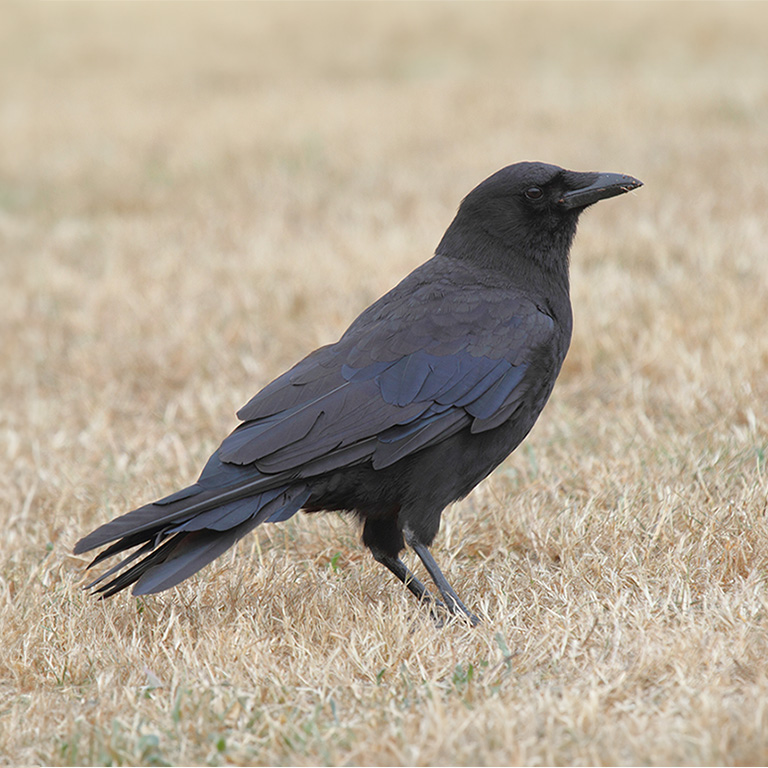
- The Common Raven (Corvus corax), once associated nearly exclusively with areas west of the Blue Ridge Mountains, has expanded eastward into the Piedmont and Coastal Plain.
Table 3. Species with regional expansions in distribution between Atlases. Regions of expansion include Coastal Plain (CP), Piedmont (P) and Mountains and Valleys (MV). The Evaluation column indicates whether maps of change in distribution (Model) or maps of breeding evidence (Raw data) were used to assess distribution change. Species are sorted by taxonomic order.
| Common Name | Scientific Name | Region | Population Trend | Evaluation |
|---|---|---|---|---|
| Canada Goose | Branta canadensis | CP | Increasing | Model |
| Great Blue Heron | Ardea herodias | MV | Increasing | Model |
| Bald Eagle | Haliaeetus leucocephalus | MV | Increasing | Model |
| Peregrine Falcon | Falco peregrinus | CP | Increasing | Raw data |
| Common Raven | Corvus corax | CP, P | Increasing | Model |
Species with Contracting Distributions
The maps of change in distribution for a dozen species signal broad contractions in their breeding distribution within one or more physiographic regions (Table 4). This does not mean that they can no longer be found within those areas of contraction, but their presence as breeders there is reduced. The majority of these species have negative population trends. This suggests that declines in their populations are translating into large-scale reductions in their distribution on the landscape.
Table 4. Species with regional contractions in distribution between Atlases. Regions of contraction include Coastal Plain (CP), Piedmont (P) and Mountains and Valleys (MV). The Evaluation column indicates whether maps of change in distribution (Model) or maps of breeding evidence (Raw data) were used to assess distribution change. Species are sorted by taxonomic order.
| Common Name | Scientific Name | Region of Contraction | Population Trend | Evaluation |
|---|---|---|---|---|
| Northern Bobwhite | Colinus virginianus | MV | Decreasing | Model |
| Ruffed Grouse | Bonasa umbellus | P, MV | Decreasing | Model |
| Rock Pigeon | Columba livia | CP | Decreasing | Model |
| Black-billed Cuckoo | Coccyzus erythropthalmus | P, MV | None available | Raw data |
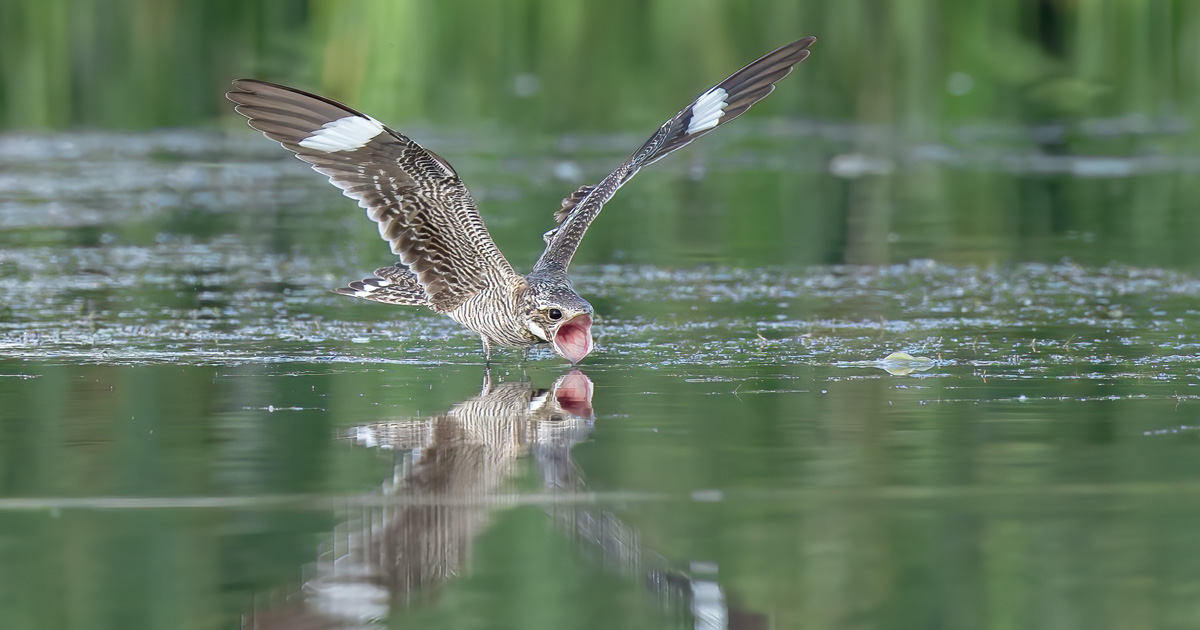
| Common Nighthawk | Chordeiles minor | CP, P, MV | Decreasing | Raw data |
| Eastern Whip-poor-will | Antrostomus vociferus | CP | Decreasing | Model |
| Clapper Rail | Rallus crepitans | CP | Decreasing | Model |
| American Barn Owl | Tyto furcata | CP | Decreasing | Model |
| American Kestrel | Falco sparverius | P | Decreasing | Model |
| Loggerhead Shrike | Lanius ludovicianus | P, MV | Decreasing | Raw data |
| Horned Lark | Eremophila alpestris | MV | Decreasing | Model |
| Vesper Sparrow | Pooecetes gramineus | P, MV | Decreasing | Raw data |
| Yellow-breasted Chat | Icteria virens | MV | Decreasing | Model |
| Golden-winged Warbler | Vermivora chrysoptera | MV | Decreasing | Model |
| Kentucky Warbler | Geothlypis formosa | CP, P, MV | Decreasing | Model |
| American Redstart | Setophaga ruticilla | CP, P | Stable | Model |
The maps for three of these species are especially striking based on the sheer geographic breadth of this loss.
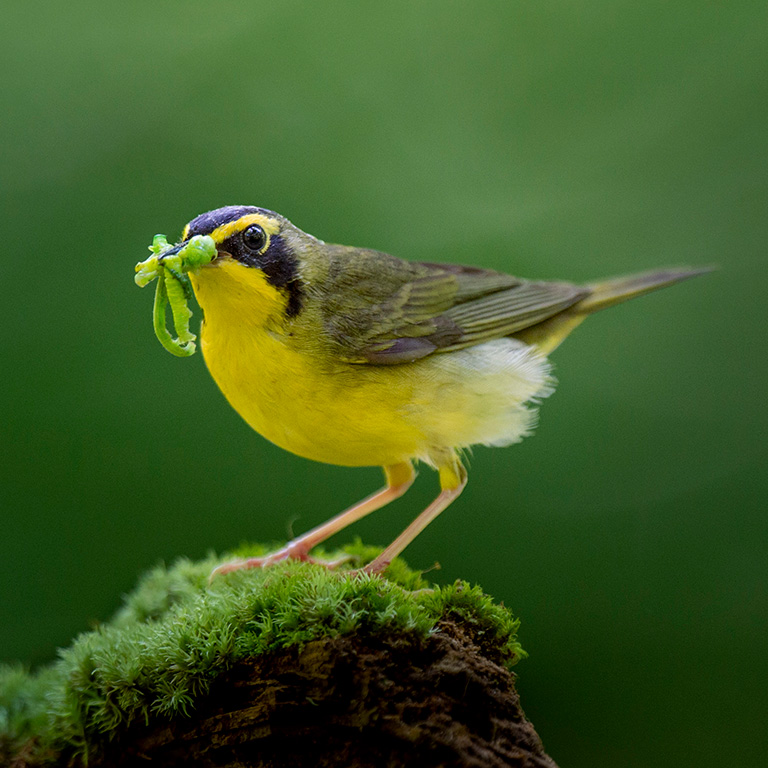
- Kentucky Warbler (Geothlypis formosa) is signaling a decrease in its distribution across the entire state. Though more common in the Mountains and Valleys (Rottenborn and Brinkley 2007), it is seeing a substantial reduction in its footprint in all three physiographic regions.
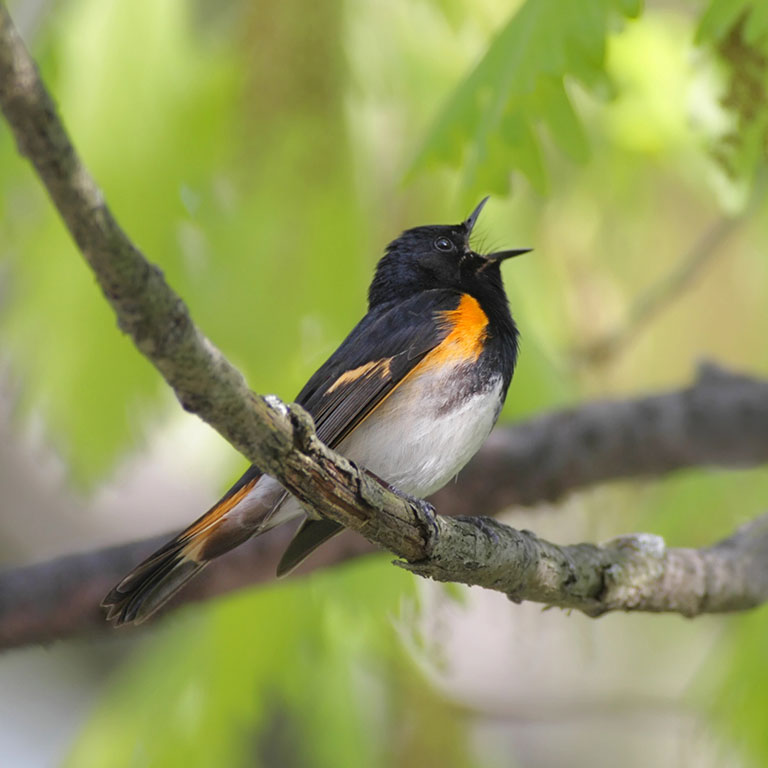
- Despite a stable population trend, American Redstart (Setophaga ruticilla) has lost ground in both the Coastal Plain and Piedmont, where it was already less common relative to the Mountains and Valleys (Rottenborn and Brinkley 2007). This suggests that Virginia’s redstart population, which already had a somewhat tenuous foothold east of the Blue Ridge Mountains, may be retracting further westward and/or facing continued population decline in the eastern-most breeding birds. Alternately, the Atlas may be alerting us to population-level changes for the species that are not being picked up by the BBS, which monitors its population trend.
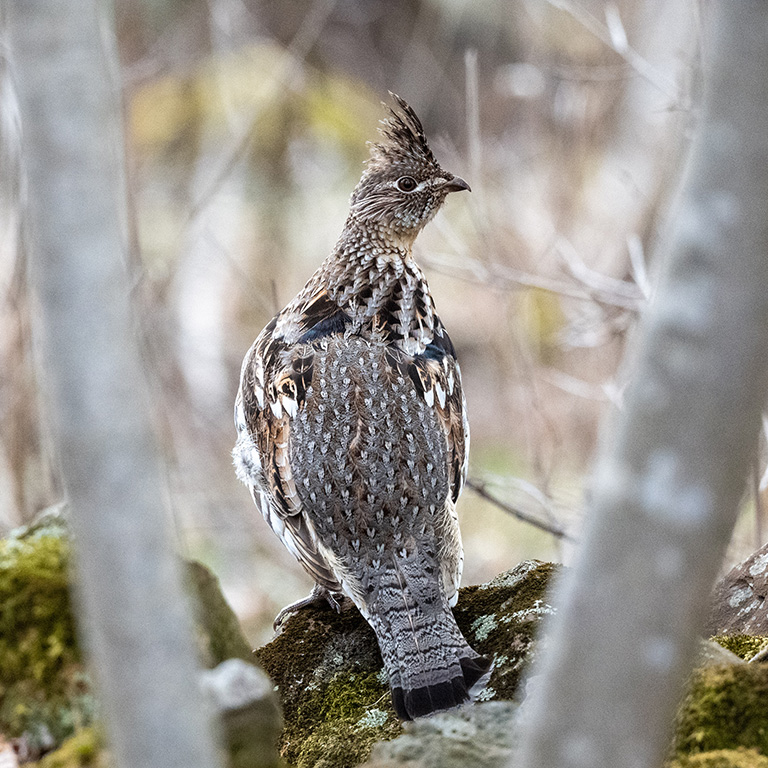
- A third species, Ruffed Grouse (Bonasa umbellus), has also seen its distribution diminished in two regions, the Mountains and Valleys and Piedmont. However, its decline in the Piedmont is not shown on the map because no model was developed for that region due to a lack of records. The species has grown even scarcer in the Piedmont since being described as an uncommon and local resident there (Rottenborn and Brinkley 2007); it was documented in only two Piedmont blocks during the Second Atlas.
Four additional species appear to have undergone contractions in their breeding distribution within Virginia based on comparisons of their breeding evidence maps between Atlases (Table 4). These species were detected in significantly fewer blocks during the Second Atlas, despite the considerably greater survey effort expended, strongly suggesting that their breeding distribution has shrunk over the past 30 years. They include Black-billed Cuckoo (Coccyzus erythropthalmus), Common Nighthawk (Chordeiles minor), Loggerhead Shrike (Lanius ludovicianus) and Vesper Sparrow (Pooecetes gramineus), which were each documented in 64 to 79% fewer blocks during the current Atlas. Three of the four species have declining population trends, while Black-billed Cuckoo has no credible population trend. All four have diminished distributions within at least two regions (Table 4).
Of the 16 species with contracting distributions (Table 4), ten are associated with open upland habitats. Many are part of a broader community of grassland and shrubland-dependent species that are undergoing broad population declines. They include Northern Bobwhite (Colinus virginianus), American Barn Owl (Tyto furcata), American Kestrel (Falco sparverius), Loggerhead Shrike, Horned Lark (Eremophila alpestris), Vesper Sparrow, Yellow-breasted Chat (Icteria virens) and Golden-winged Warbler (Vermivora chrysoptera). The remaining two species are Rock Pigeon (Columba livia) and Common Nighthawk.
One species, Clapper Rail (Rallus crepitans), is a bird of tidal saltwater and brackish marshes. The remaining species are associated with forested habitats. They include Ruffed Grouse, Black-billed Cuckoo, Eastern Whip-poor-will (Antrostomus vociferus), Kentucky Warbler and American Redstart. There is wide variation in the habitat requirements of these forest species, such that the general decrease in forest cover in Virginia between Atlases is not sufficient to explain the contractions in their distributions.
Thirteen of these 16 species are classified as Species of Greatest Conservation Need and one (Black-billed Cuckoo) as an Assessment Priority Species in the 2025 Virginia Wildlife Action Plan (VDWR 2025; see Species of Greatest Conservation Need). The remaining two species have no conservation designation in Virginia:
- Rock Pigeon is a non-native species introduced to North America and is therefore not a conservation priority.
- American Redstart, discussed above, may deserve increased vigilance despite the numerical stability of its population in the Atlantic Flyway. The Flyway is comprised of the states and Canadian provinces along the eastern seaboard, including Virginia.
Several of these Species of Greatest Conservation Need are the focus of ongoing conservation attention here in Virginia (see their respective Species Accounts). For the remainder, these results underscore the urgent need to better understand the causes of their declines and to act to reverse them, setting them on a path to regain lost ground.
Species Population Estimates
Abundance models based on Atlas point count data were created for 103 breeding species. These models identify areas in the state where a species can be found in greater or lesser numbers. In addition, the models were used to generate statewide population estimates for the species. Table 5 reports the ten most abundant species based on population size, and Table 6 the ten least abundant. Notably, there are many species, including rare or uncommon breeding species, with much smaller populations than those in Table 6. Their population size could not be estimated as those species are not well-represented in the point count data.
Table 5. Population estimates (number of individuals) for the ten most abundant species for which they could be generated. There is a 95% probability that the true population size falls between the lower and upper bounds (95% confidence intervals). The Detection column reports the proportion of survey points (n=15,764) where the species was detected.
| Common Name | Scientific Name | Population Estimate | Lower Bound | Upper Bound | Detection |
|---|---|---|---|---|---|
| Northern Cardinal | Cardinalis cardinalis | 3,080,000 | 2,600,000 | 3,650,000 | 49.8% |
| Carolina Wren | Thryothorus ludovicianus | 2,583,000 | 1,689,000 | 3,962,000 | 45.1% |
| American Goldfinch | Spinus tristis | 2,212,000 | 1,100,000 | 4,459,000 | 20.4% |
| Chipping Sparrow | Spizella passerina | 1,969,000 | 1,598,000 | 2,429,000 | 34.1% |
| Tufted Titmouse | Baeolophus bicolor | 1,866,000 | 1,527,000 | 2,282,000 | 33.9% |
| Red-eyed Vireo | Vireo olivaceus | 1,864,000 | 1,751,000 | 1,984,000 | 41.5% |
| Indigo Bunting | Passerina cyanea | 1,851,000 | 1,646,000 | 2,082,000 | 42.0% |
| American Robin | Turdus migratorius | 1,577,000 | 1,392,000 | 1,789,000 | 28.3% |
| Carolina Chickadee | Poecile carolinensis | 1,526,000 | 1,212,000 | 1,924,000 | 17.3% |
| Blue-gray Gnatcatcher | Polioptila caerulea | 1,418,000 | 1,125,000 | 1,791,000 | 20.6% |
Table 6. Population estimates (number of individuals) for the ten least abundant species for which they could be generated. There is a 95% probability that the true population size falls between the lower and upper bounds (95% confidence intervals). The Detection column reports the proportion of survey points (n=15,764) where the species was detected.
| Common Name | Scientific Name | Population Estimate | Lower Bound | Upper Bound | Detection |
|---|---|---|---|---|---|
| Cerulean Warbler | Setophaga cerulea | 10,700 | 5,900 | 22,200 | 0.3% |
| Belted Kingfisher | Megaceryle alcyon | 13,400 | 7,000 | 26,500 | 0.4% |
| Bald Eagle | Haliaeetus leucocephalus | 13,700 | 4,500 | 46,000 | 0.4% |
| Boat-tailed Grackle | Quiscalus major | 18,800 | 10,300 | 35,400 | 0.3% |
| Green Heron | Butorides virescens | 19,700 | 3,400 | 114,900 | 0.4% |
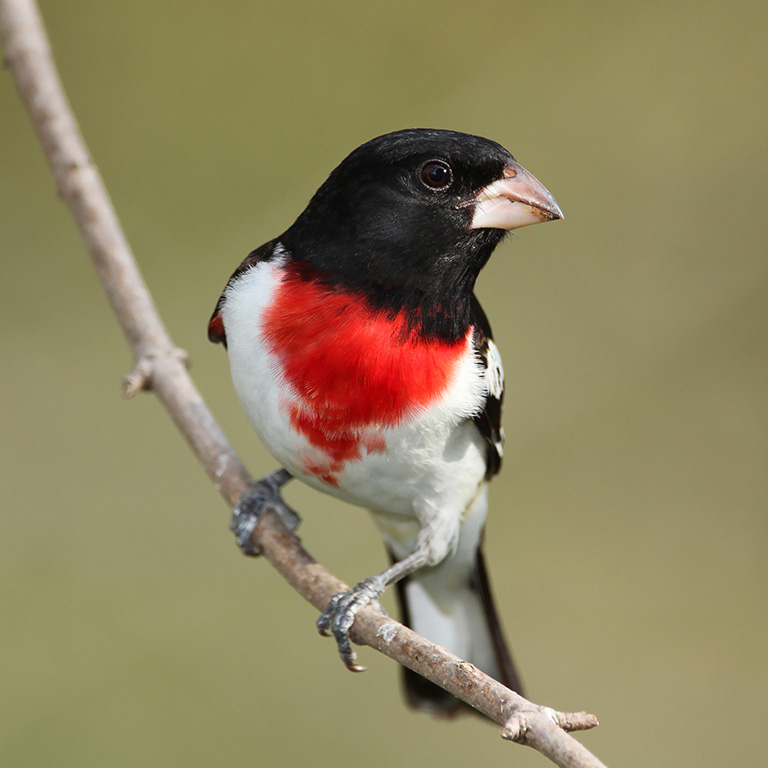
| Rose-breasted Grosbeak | Pheucticus ludovicianus | 21,600 | 10,200 | 49,000 | 0.5% |
| Prothonotary Warbler | Protonotaria citrea | 25,600 | 12,300 | 54,900 | 0.5% |
| Common Raven | Corvus corax | 28,300 | 9,200 | 94,700 | 1.0% |
| Red-tailed Hawk | Buteo jamaicensis | 29,300 | 14,100 | 61,500 | 1.0% |
| Horned Lark | Eremophila alpestris | 30,300 | 9,300 | 123,600 | 0.4% |
The ten most abundant species, unsurprisingly, have statewide distributions. They include a mix of species that breed in forests, forest edges, and more open shrubby habitats. The ten least abundant species include those with limited breeding distributions in Virginia (Boat-tailed Grackle [Quiscalus major], Cerulean Warbler [Setophaga cerulea], and Rose-breasted Grosbeak [Pheucticus ludovicianus]) or sparse distributions in one or more physiographic regions (Common Raven, Horned Lark, and Prothonotary Warbler [Protonotaria citrea]); species that are less numerous by virtue of being top predators (Bald Eagle and Red-tailed Hawk [Buteo jamaicensis]); and species strongly associated with bodies of water such as lakes, ponds, rivers and streams, which are a less widespread than other habitat types in the state (Green Heron [Butorides virescens] and Belted Kingfisher [Megaceryle alcyon]).
Population estimates are prone to a number of sources of error. The lower and upper bounds in Tables 5 and 6 represent the range of values within which there is 95% confidence that the true population size falls. While this range is relatively narrow for many of the species in both tables (e.g., Red-eyed Vireo and Boat-tailed Grackle), it is much wider for some of the others (e.g., American Goldfinch and Green Heron), indicating that there is less confidence in their estimates. Population estimates should not be interpreted as representing absolute values. They are most useful in giving a sense of the abundance of a species relative to other species, which can differ by orders of magnitude. For example, the Cerulean Warbler, a Tier II Species of Greatest Conservation Need, is estimated to number in the thousands, whereas the populations of the three most abundant species number in the millions.
How You Can Support Birds
Every action matters. From restoring habitat and planting native species to supporting conservation policies and contributing to citizen science, you can help protect Virginia’s birds and the places they depend on.
Literature Cited
Bailey, R. S., and C. B. Rucker (Editors) (2021). The second atlas of breeding birds in West Virginia. The Pennsylvania State University Press, University Park, PA, USA. 568 pp.
Dunning, J. B., Jr., P. Pyle, and M. A. Patten (2020). Bachman’s Sparrow (Peucaea aestivalis), version 1.0. In Birds of the World (P. G. Rodewald, Editor). Cornell Lab of Ornithology, Ithaca, NY, USA. https://doi.org/10.2173/bow.bacspa.01
Grey, J.H., and C.E. Stevens, Jr. (1949). The birds of Albemarle County, Virginia. The Raven 20:67–111.
Herkert, J. R., D. E. Kroodsma, and J. P. Gibbs (2021). Sedge Wren (Cistothorus stellaris), version 1.0. In Birds of the World (A. F. Poole and F. B. Gill, Editors). Cornell Lab of Ornithology, Ithaca, NY, USA. https://doi.org/10.2173/bow.sedwre1.01
Houston, C. S., S. G. Mlodinow, C. Jackson, D. E. Bowen Jr., and F. Medrano (2023). Upland Sandpiper (Bartramia longicauda), version 2.0. In Birds of the World (N. D. Sly, Editor). Cornell Lab of Ornithology, Ithaca, NY, USA. https://doi.org/10.2173/bow.uplsan.02
Johnson, K., C. Carboneras, D. A. Christie, and G. M. Kirwan (2020). Green-winged Teal (Anas crecca), version 1.0. In Birds of the World (S. M. Billerman, Editor). Cornell Lab of Ornithology, Ithaca, NY, USA. https://doi.org/10.2173/bow.gnwtea.01
Johnson, L. S. (2024). Northern House Wren (Troglodytes aedon), version 1.1. In Birds of the World (B. K. Keeney, A. F. Poole, M. G. Smith, and S. M. Billerman, Editors). Cornell Lab of Ornithology, Ithaca, NY, USA.
Kennedy, E. D. and D. W. White (2020). Bewick’s Wren (Thryomanes bewickii), version 1.0. In Birds of the World (A. F. Poole, Editor). Cornell Lab of Ornithology, Ithaca, NY, USA. https://doi.org/10.2173/bow.bewwre.01
Lord, W. (1949). Bird checklist – Blue Ridge Parkway – Rocky Knob District. The Raven 20:17–22.
Rottenborn, S. C. and E. S. Brinkley (Editors) (2007). Virginia’s birdlife: An annotated checklist. 4th edition. Virginia Society of Ornithology.
Rohwer, F. C., W. P. Johnson, and E. R. Loos (2020). Blue-winged Teal (Spatula discors), version 1.0. In Birds of the World (A. F. Poole and F. B. Gill, Editors). Cornell Lab of Ornithology, Ithaca, NY, USA. https://doi.org/10.2173/bow.buwtea.01
Scott, F. R. (1952). Notes on the birds of Highland County, Virginia. The Raven 23:63–65.
Taylor, W. H. (1971). Foreign game bird stockings and results in Virginia. Journal of the Southeastern Association of Fish and Wildlife Agencies:165–175. https://seafwa.org/journal/1971/foreign-game-bird-stockings-and-results-virginia.
Trollinger, J. B., and K. K. Reay (2001). Breeding bird atlas of Virginia 1985-1989. Virginia Department of Game and Inland Fisheries, Richmond, VA, USA. 219 pages.
Virginia Department of Wildlife Resources (VDWR) (2025). Virginia wildlife action plan. Virginia Department of Wildlife Resources, Henrico, VA, USA. 506 pp.
Watts, B. D. (2000). Bachman’s Sparrow management plan: Fort A. P. Hill, Virginia. CCBTR-00-06. Center for Conservation Biology Technical Report Series. College of William and Mary, Williamsburg, VA, USA. 17 pp.
Watts, B. D., M. A. Byrd, E. K. Mojica, S. Padgett, S. R. Harding, and C. A. Koppie (2018). Long-term monitoring of a successful recovery program of Peregrine Falcons in Virginia. Ornis Hungarica 26:104–113. https://doi.org/10.1515/orhu-2018-0018.
Watts, B. D., M. D. Wilson, D. S. Bradshaw, and A. S. Allen (1998). A survey of the Bachman’s Sparrow in southeastern Virginia. The Raven 69:9–14.
Wilson, A. M., D. W. Brauning and R. S. Mulvihill (Editors) (2012). Second atlas of breeding birds in Pennsylvania. The Pennsylvania State University Press, University Park, PA, USA. 612 pp.
Wilson, M. D., and B. D. Watts (2012). The Virginia avian heritage project: a report to summarize the Virginia avian heritage database. Center for Conservation Biology Technical Report Series, CCBTR 12-04. College of William and Mary and Virginia Commonwealth University. Williamsburg, VA, USA. 48 pp.
Wilson, M. D., B. D. Watts, and D. F. Brinker (2007). Status review of Chesapeake Bay marsh lands and breeding marsh birds. Waterbirds 30:122–137.