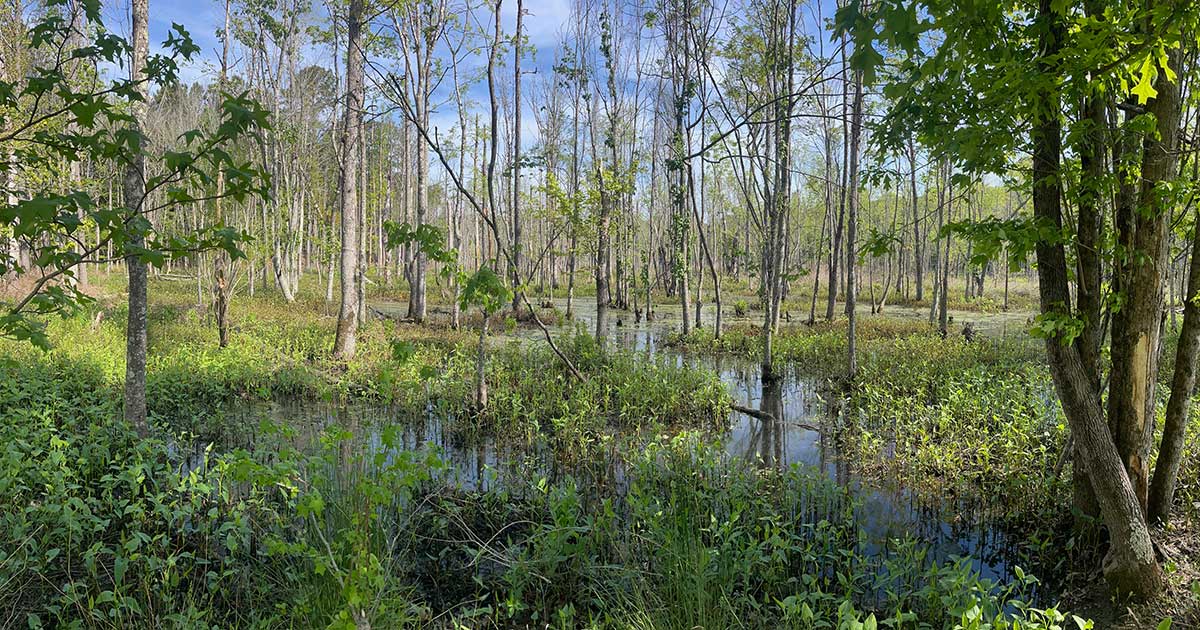
These wetlands include both tidal and nontidal wetlands with a woody component in the form of trees and/or shrubs. They include bottomland forests, bogs, fens, pocosin, seeps, and scrub-shrub thickets (VDWR 2025). Woody wetlands are inundated or saturated by surface water (e.g., precipitation) or groundwater (e.g., seeps) and can be saturated for a brief period or fully inundated year-round (VDWR 2025). As of 2020, woody wetlands covered almost 1.3 million acres (513,000 hectares) or 5.0% of the state (USGS 2024).
Among the most prominent woody wetlands are bottomland forests, which include a diversity of forests associated with the floodplains of rivers and streams (Fleming et al. 2021). They are subject to flooding frequencies that range from temporary to seasonal to semi-permanent. In Virginia, bottomland forests include bald cypress–tupelo swamps along Coastal Plain rivers and streams; both wet and well-drained swamps on levees and higher terraces in the Coastal Plain and outer Piedmont; and forests along most river floodplains of the northern and western Piedmont and the Mountains and Valleys region (Fleming et al. 2021).
The threats faced by bottomland forests include development and fragmentation, modification of natural water and flooding regimes through levees and dams (including conversion to open water), agricultural and industrial pollutants, and non-native invasive plant species (VDWR 2025). Climate change may further threaten these habitats through increasing storm magnitude/frequency and drought, which can lead to severe flooding (VDWR 2025).
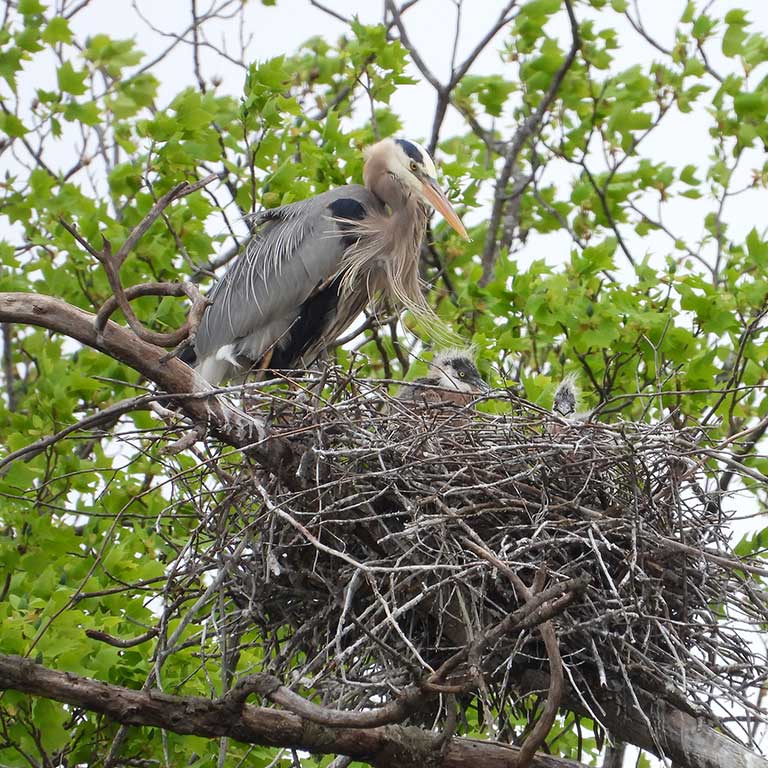
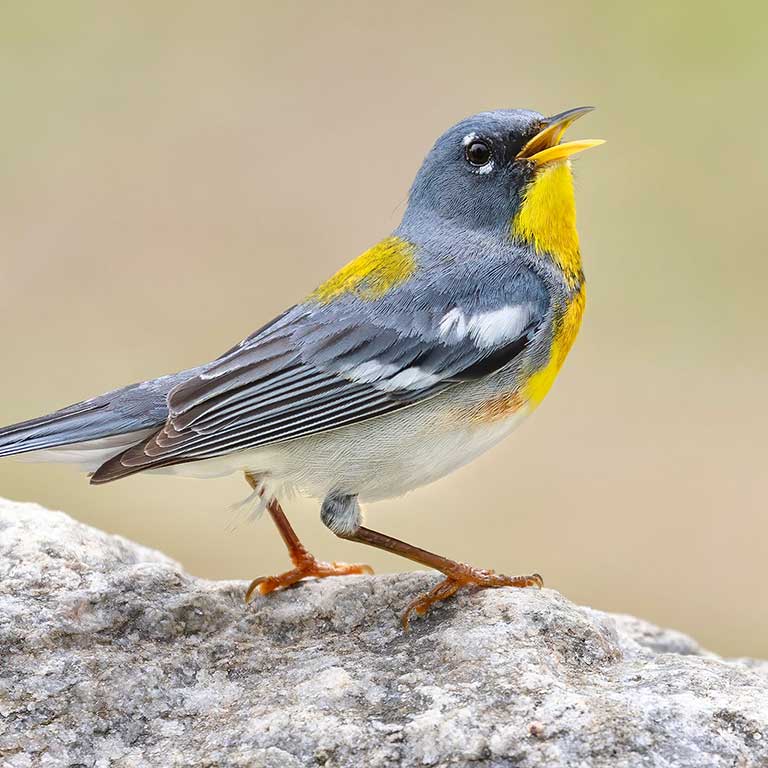
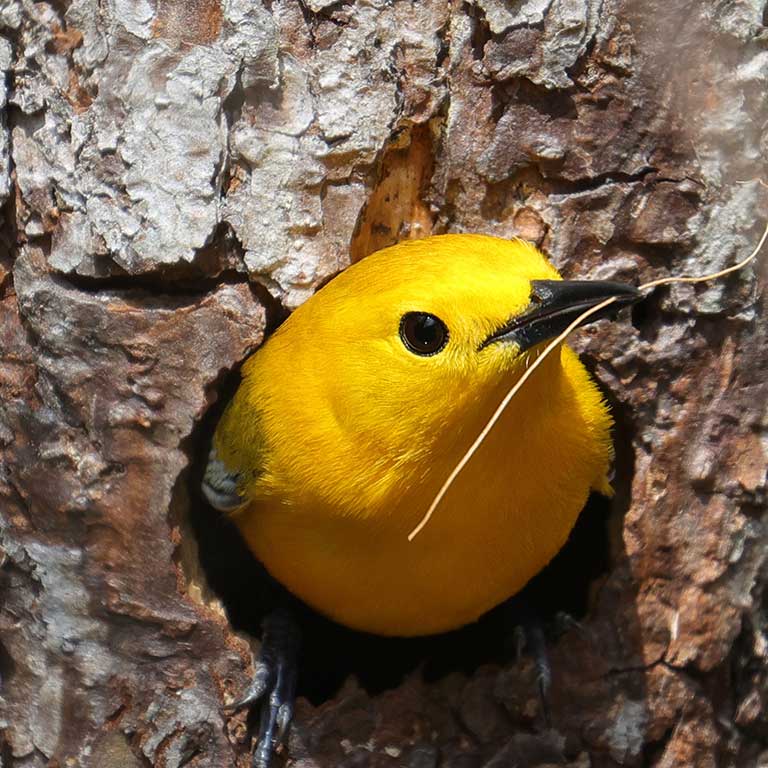
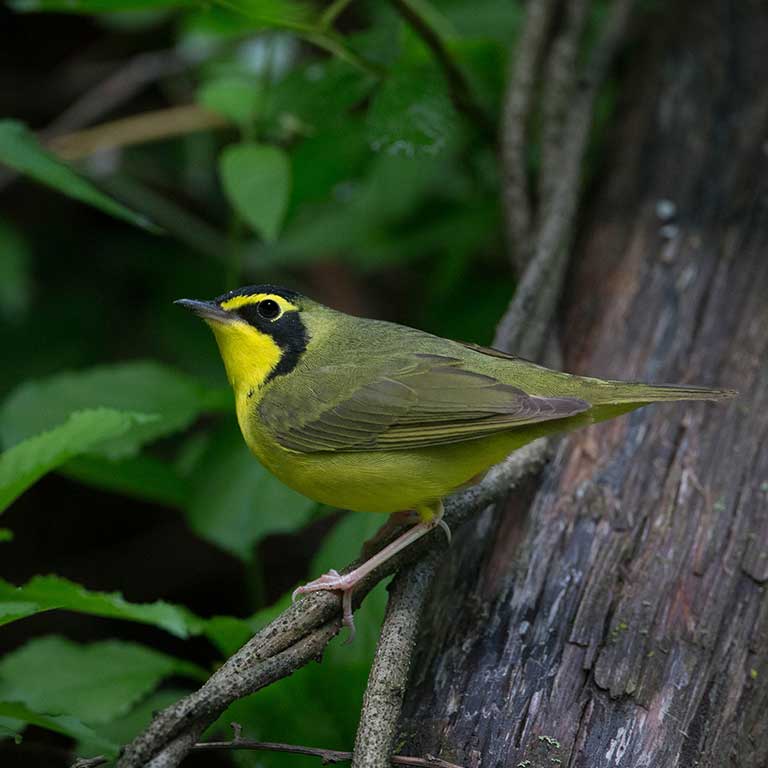
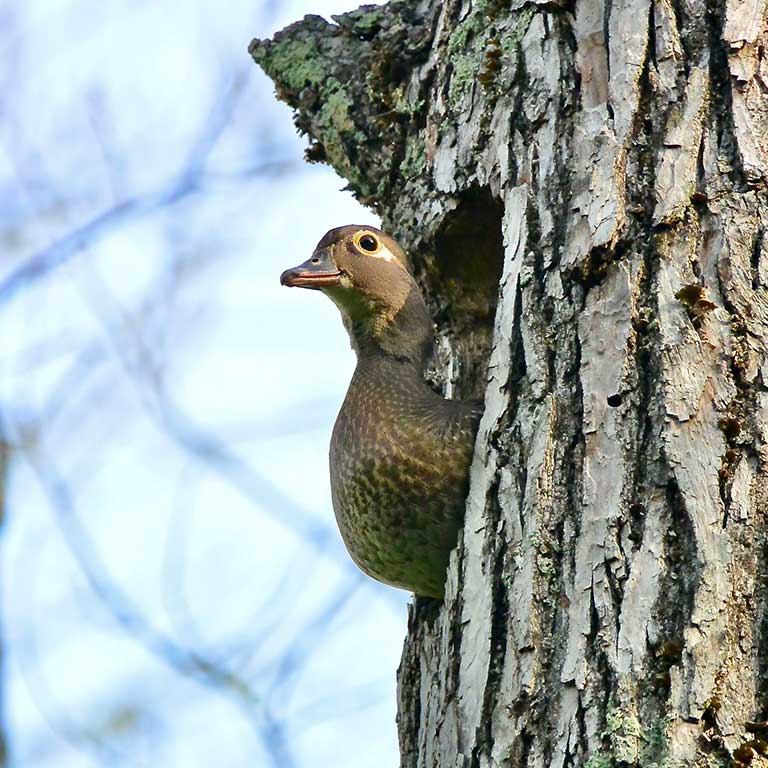
Various species breed in woody wetlands, including but not limited to Great Blue Heron (Ardea herodias), Northern Parula (Setophaga americana), Prothonotary Warbler (Protonotaria citrea), Kentucky Warbler (Geothlypis formosa), and Wood Duck (Aix sponsa).
Literature Cited
Fleming, G. P., K. D. Patterson, and K. Taverna (2021). The Natural Communities of Virginia: a Classification of Ecological Community Groups and Community Types. Third approximation. Version 3.3. Virginia Department of Conservation and Recreation, Division of Natural Heritage, Richmond, VA. www.dcr.virginia.gov/natural-heritage/natural-communities/
U.S. Geological Survey (USGS) (2024). Annual NLCD collection 1 science products (ver. 1.1, June 2025): U.S. Geological Survey data release. Reston, VA, USA. https://doi.org/10.5066/P94UXNTS.
Virginia Department of Wildlife Resources (VDWR) (2025). Virginia wildlife action plan. Virginia Department of Wildlife Resources, Henrico, VA, USA. 506 pp.