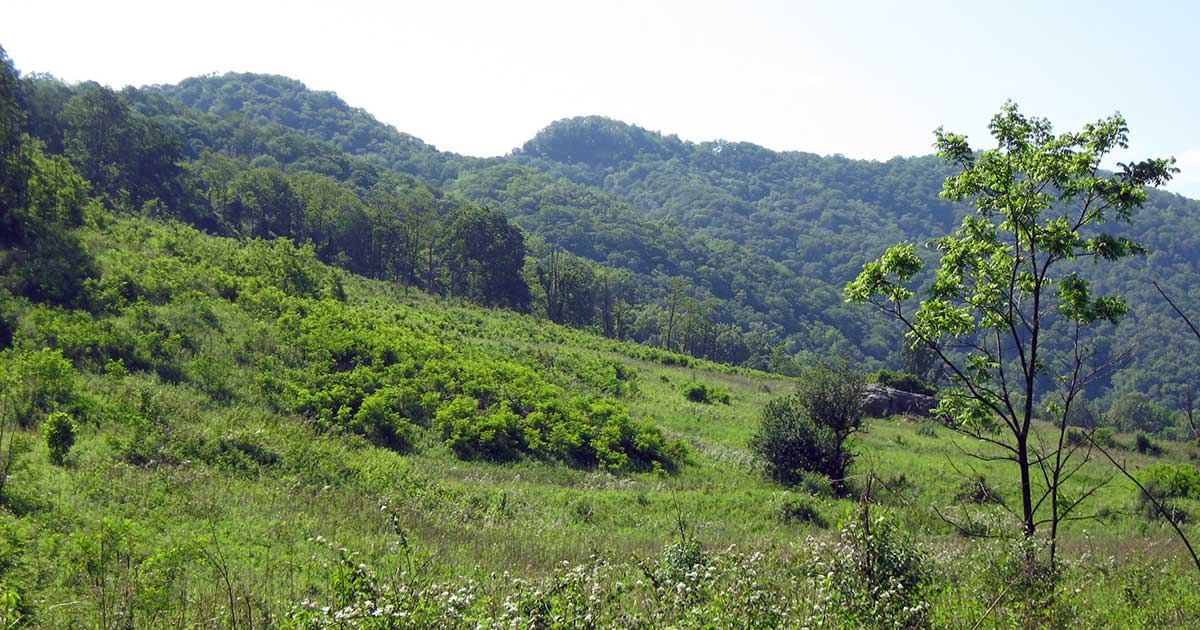
Shrublands are open habitats that contain small- to medium-sized woody plants, generally under 16 ft (5 m). In some habitats, such as open cow pastures, shrubs can be few and scattered; in others, such as timber clearcuts a few years post-harvest, they can be abundant and widespread. Additional shrubland habitat in the Commonwealth can be found in abandoned fields, restored strip mines, powerline rights-of-way, shrubby wetlands, vegetated fencerows and even in suburban back yards. Shrubland habitats type are generally dependent on disturbances such as fire, weather events (e.g. hurricanes, tornadoes) or active management in order to be created and maintained; without disturbance, they would generally revert to forest.
Shrublands covered approximately 555,000 acres (225,000 hectares) or 2.17% of the Commonwealth in 2020 (USGS 2024). Though it has seen a modest increase in the past few decades (USGS 2024), shrubby habitat today covers but a fraction of the land area that it likely did in the late 1800s to early 1900s (VDWR 2025). The transition to an industrialized economy from a farming economy, and the intensification and modernization of agricultural practices following World War II, contributed to a large-scale loss of open, shrubby habitat (VDWR 2025). Shrublands today are vulnerable to invasive plants such as autumn olive (Eleagnus pungens), honeysuckle (Lonicera spp.) and privet (Ligustrum spp.), which degrade habitat quality and complicate management efforts.
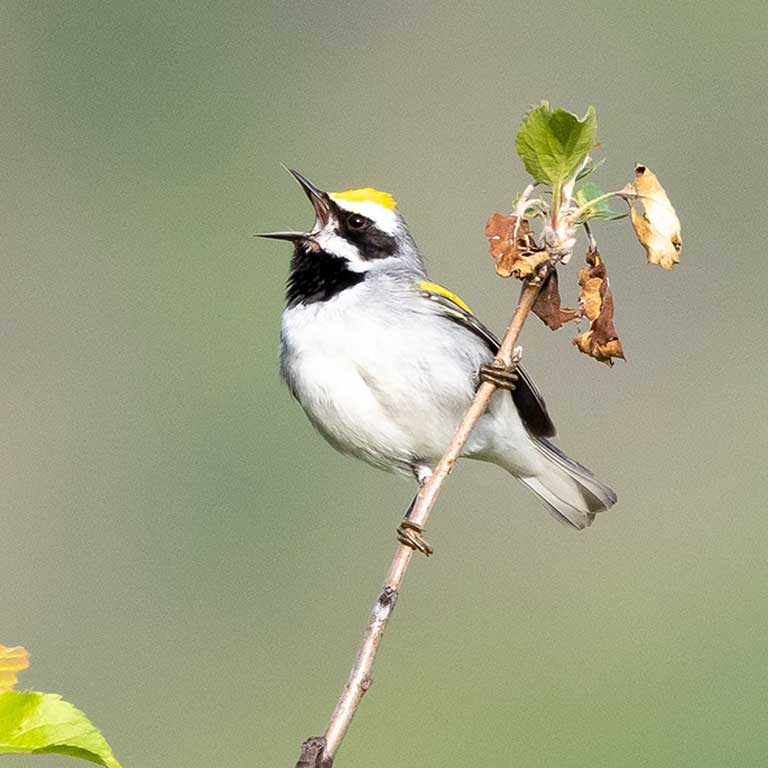
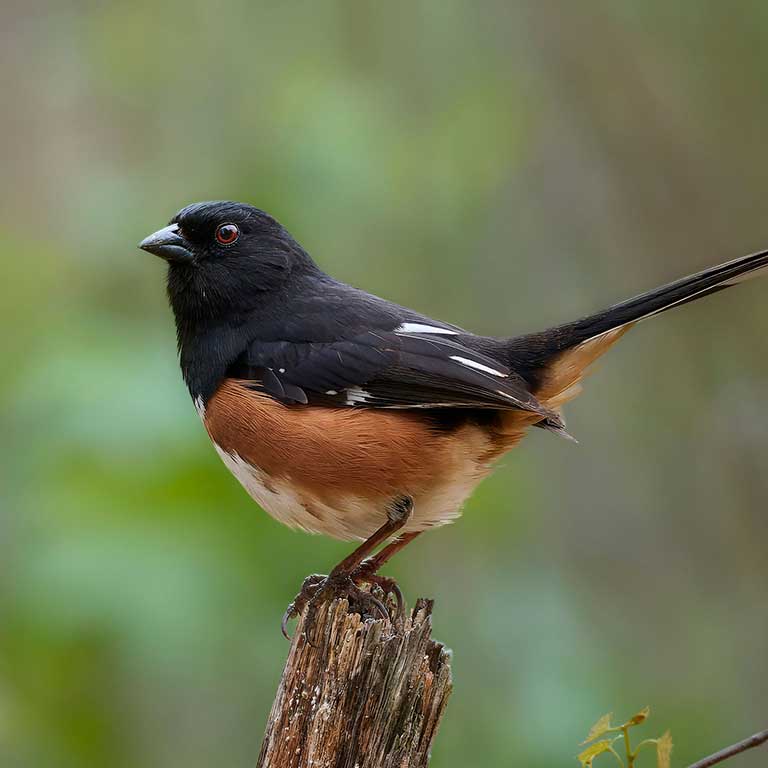
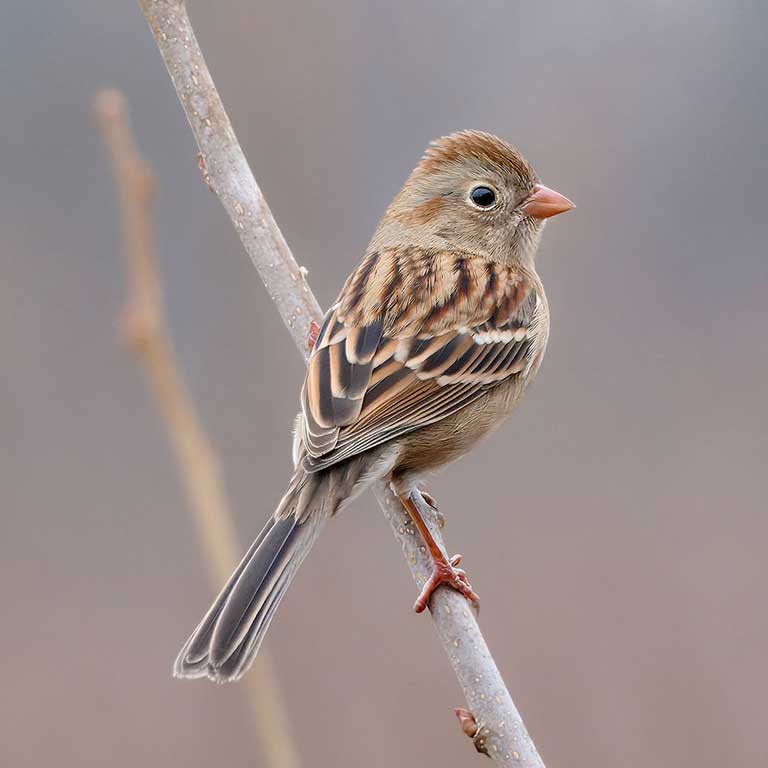
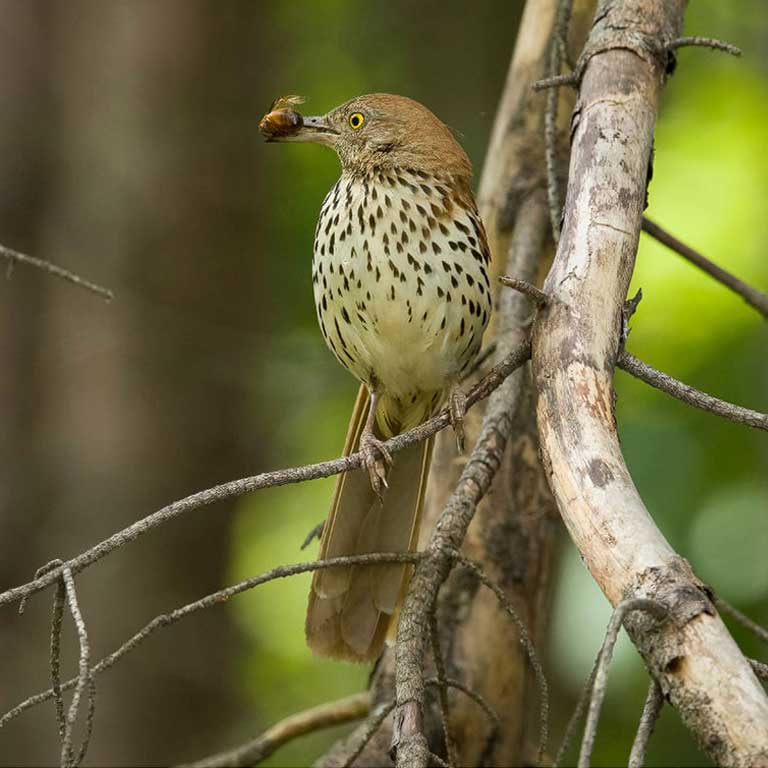
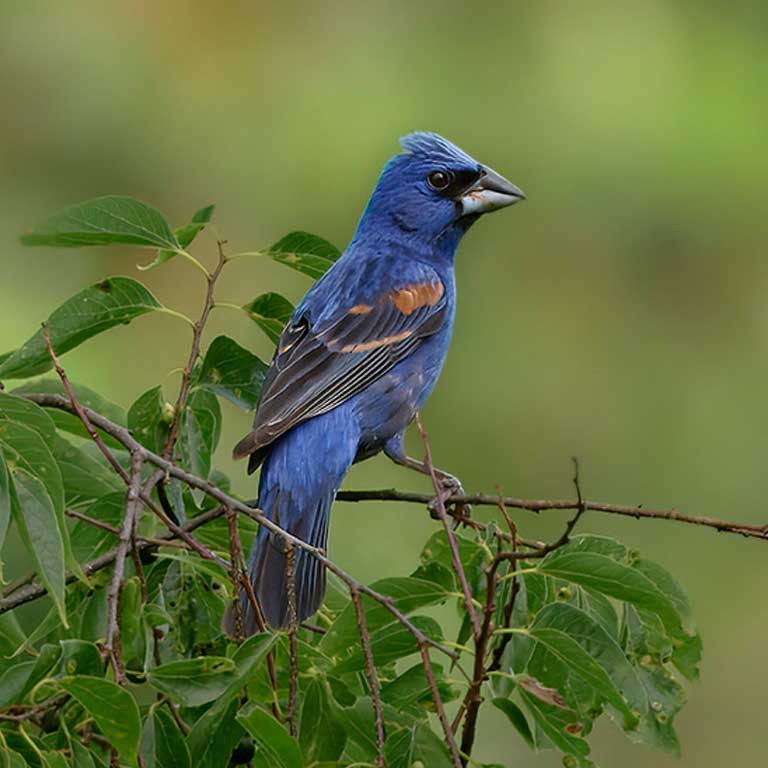
Among the bird species associated with this habitat is the Golden-winged Warbler (Vermivora chrysoptera), which depends on high-elevation shrublands in the Mountains and Valleys region. Shrublands are found across the state, however, as are many of the species that call them home. This includes Eastern Towhee (Pipilo erythrophthalmus), Field Sparrow (Spizella pusilla), Brown Thrasher (Toxostoma rufum), and Blue Grosbeak (Passerina caerulea).
Literature Cited
U.S. Geological Survey (USGS) (2024). Annual NLCD collection 1 science products (ver. 1.1, June 2025): U.S. Geological Survey data release. Reston, VA, USA. https://doi.org/10.5066/P94UXNTS.
Virginia Department of Wildlife Resources (VDWR) (2025). Virginia wildlife action plan. Virginia Department of Wildlife Resources, Henrico, VA, USA. 506 pp.