Introduction
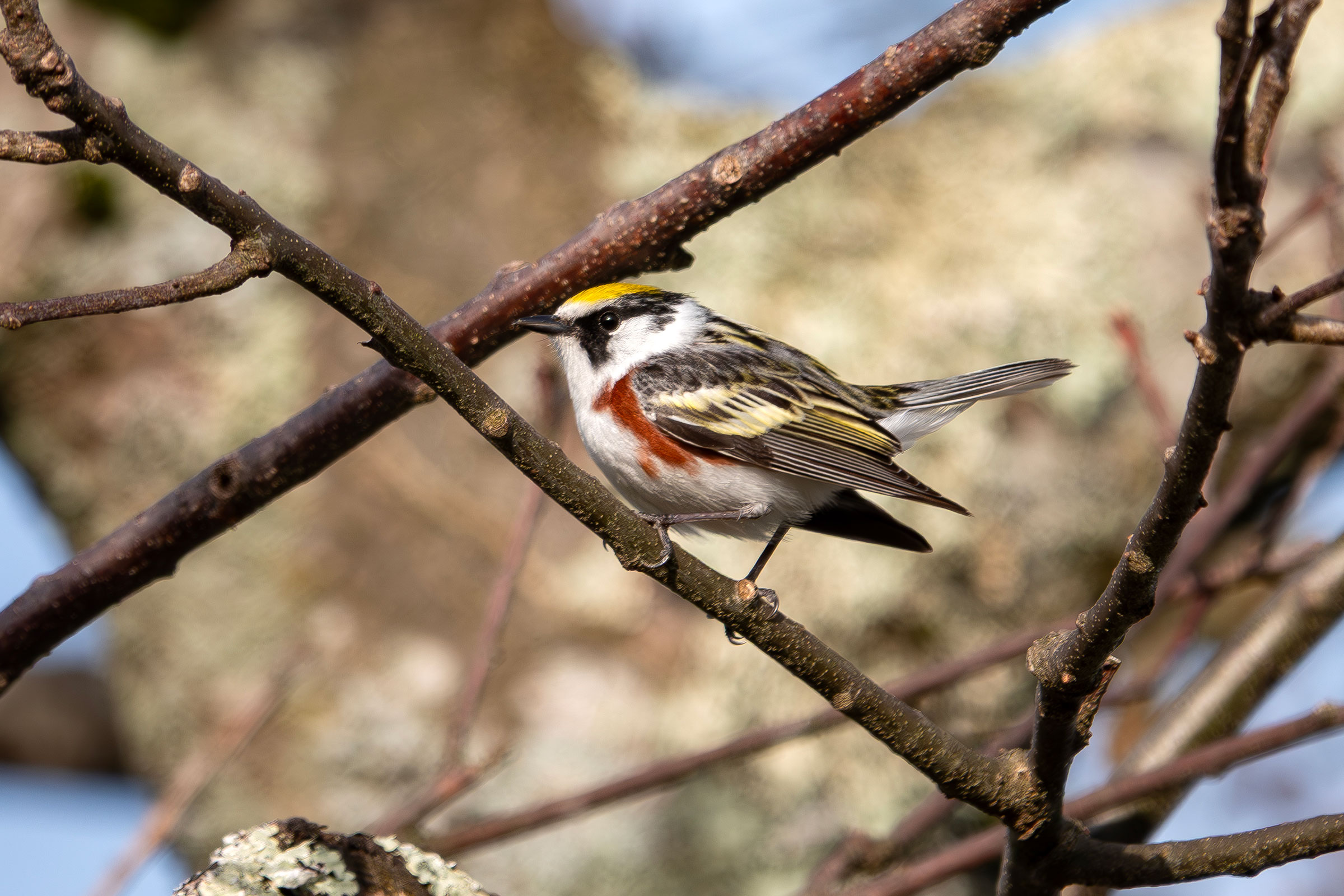
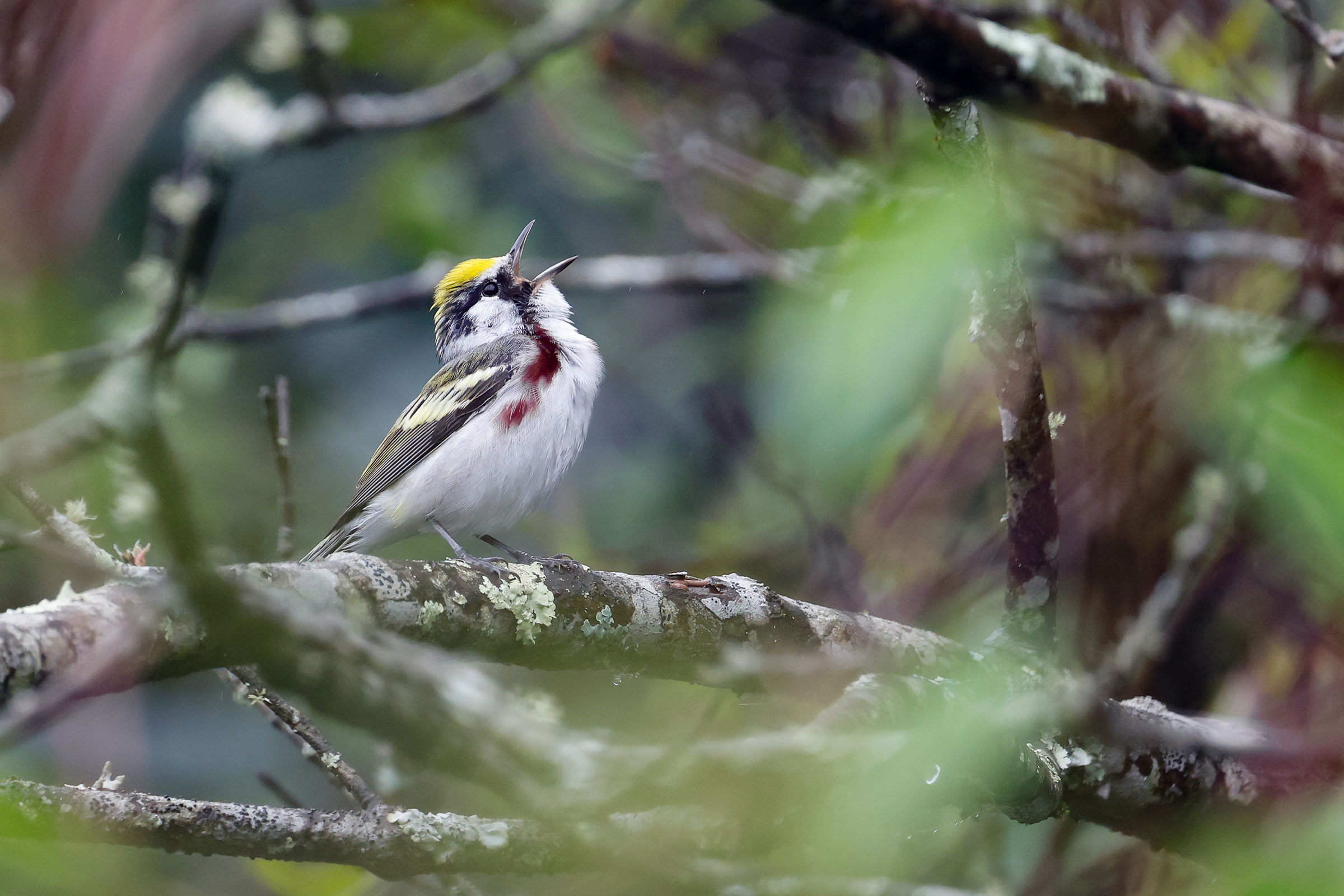
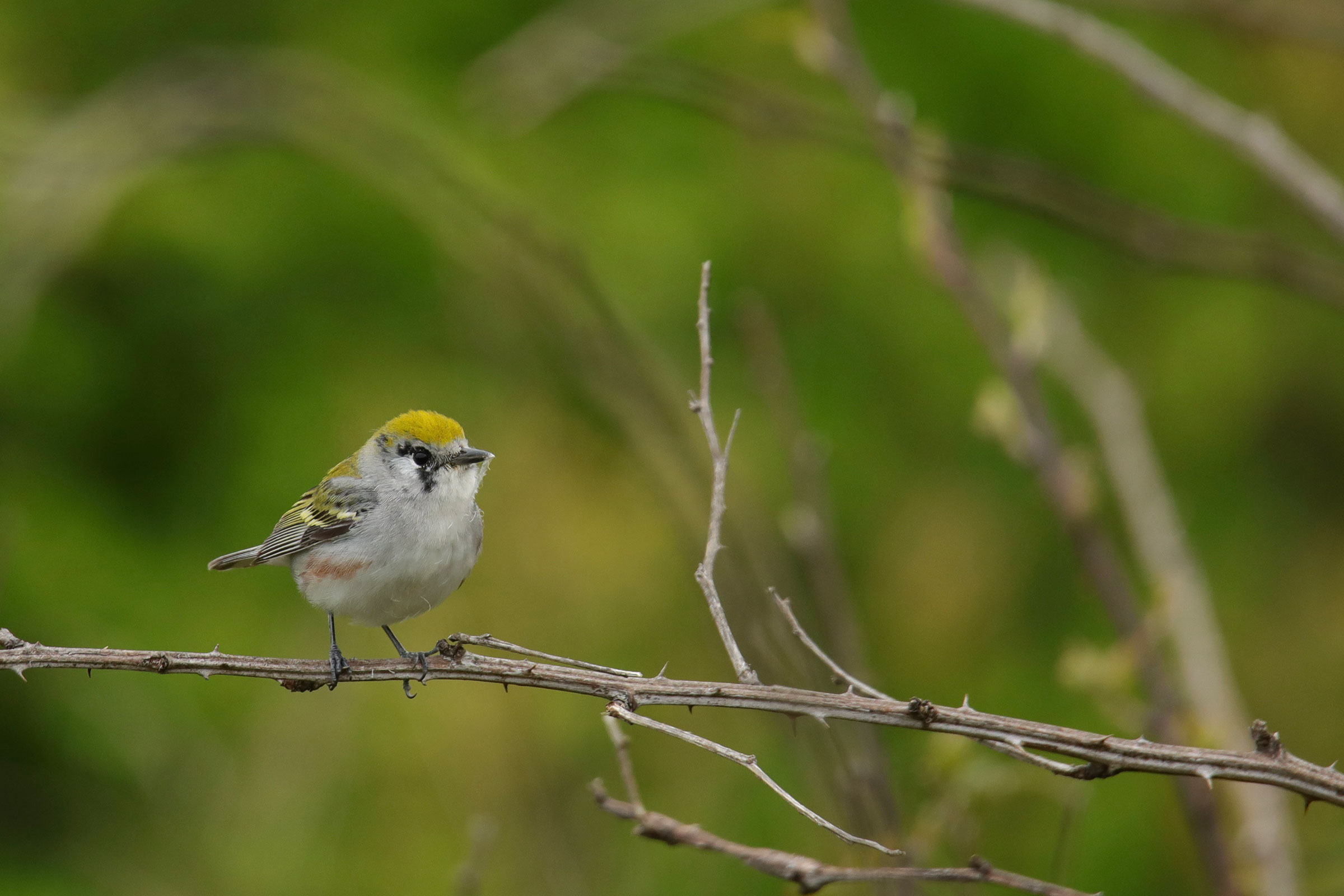
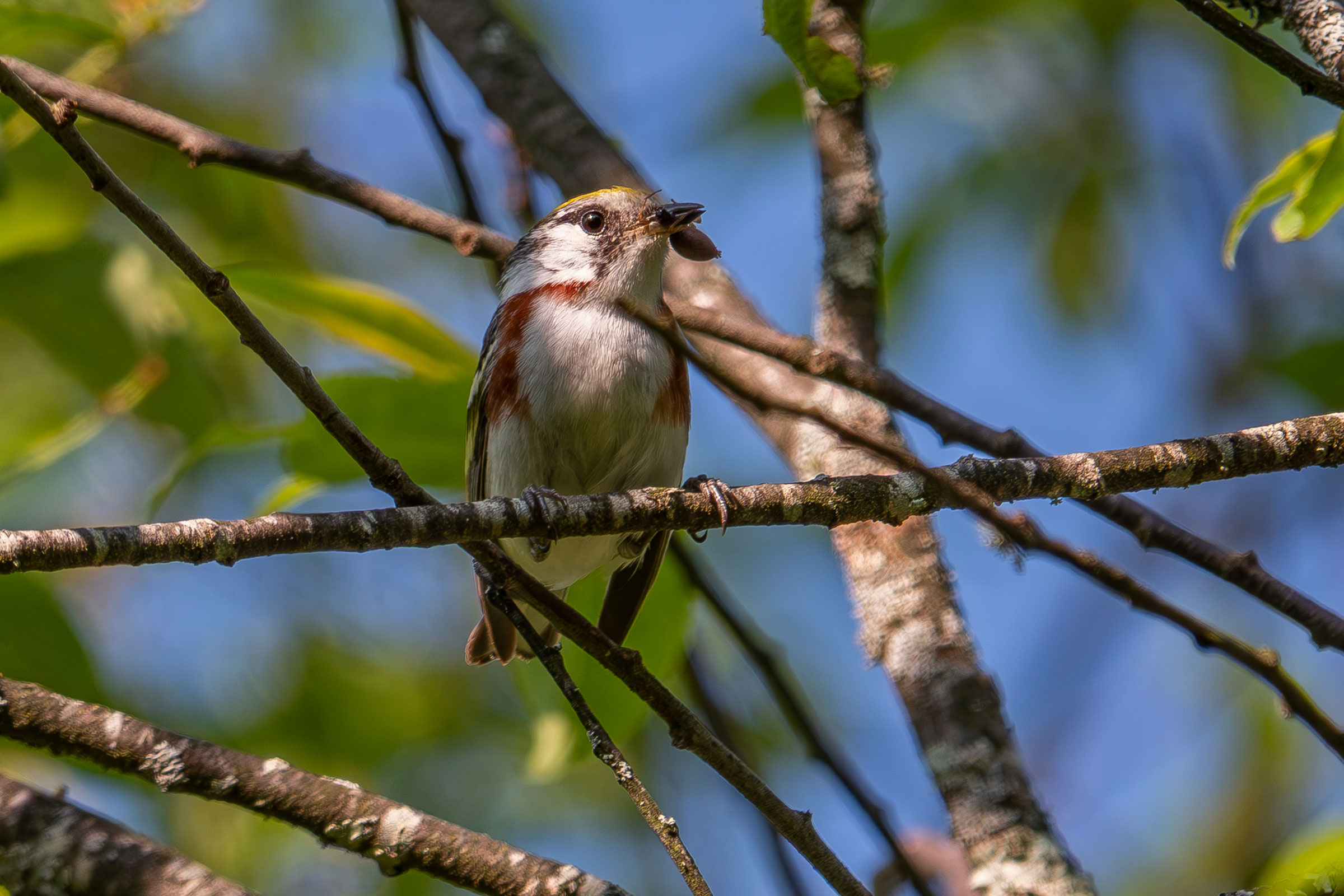
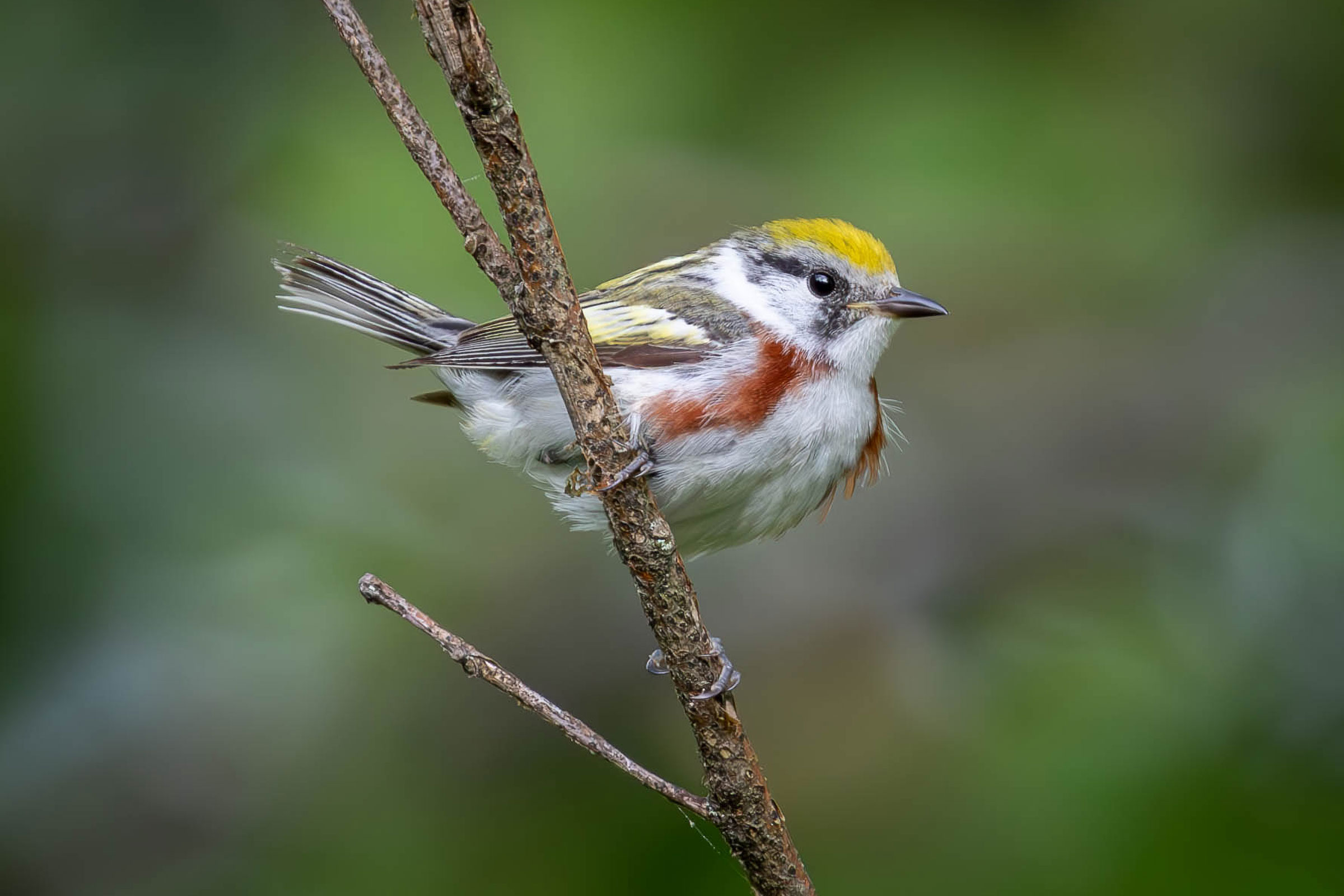
With its exuberant, pleased, pleased, pleased to meetcha!, the Chestnut-sided Warbler has a distinct song. The bulk of the Chestnut-sided Warbler’s breeding range is north and west of Virginia, extending into southern Canada and the upper Great Lakes. However, there is a narrow extension of the range that follows the Appalachian Mountains south into western Virginia as well as into West Virginia, Kentucky, North Carolina, and Tennessee. Throughout their range, Chestnut-sided Warblers are considered “disturbance species,” capitalizing on the young forest conditions created by storms, timber harvests, and fires (Byers et al. 2020).
Breeding Distribution
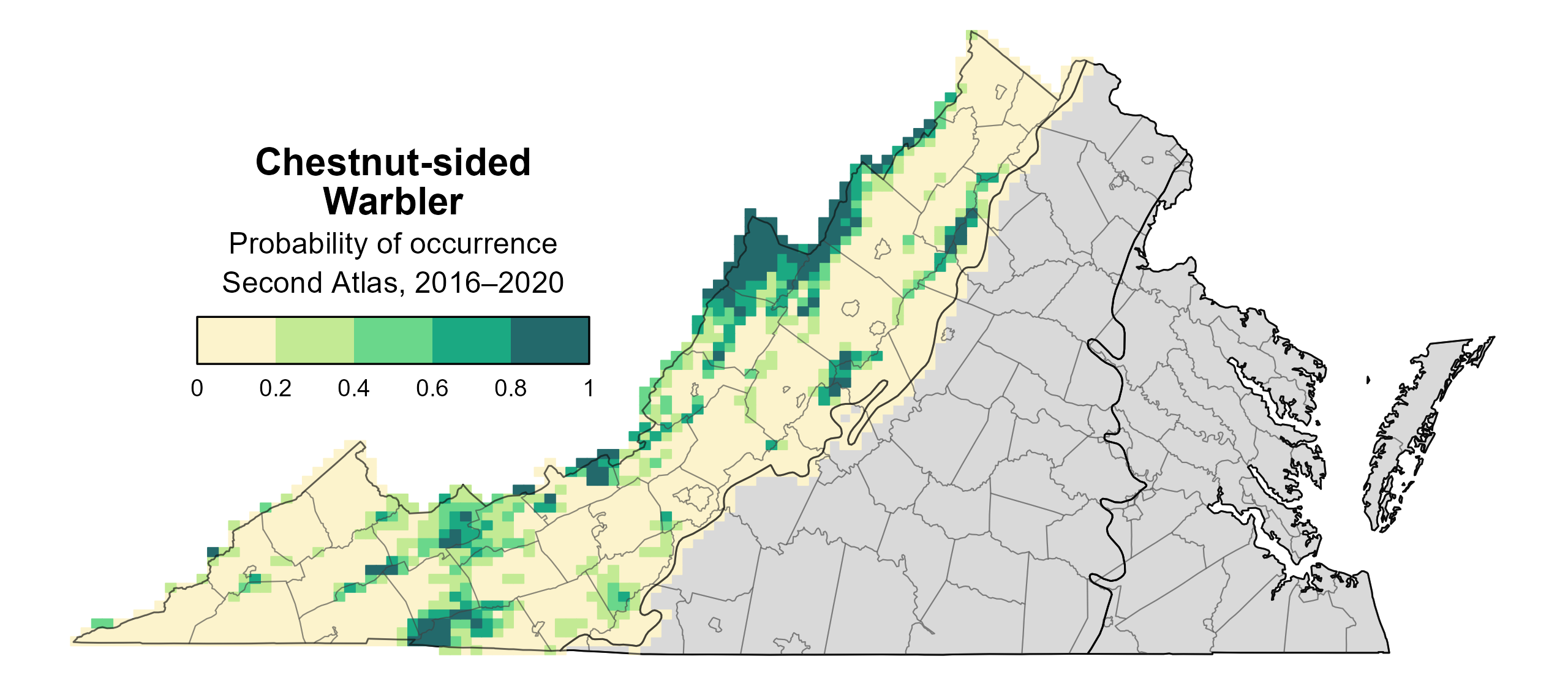
Chestnut-sided Warblers are found only in the Mountains and Valleys region. Within most of this region, this species is absent or slightly likely to occur, except for isolated areas where it is moderately to highly likely to occur in young forest habitat (Figure 1). These areas include the mountainous areas bordering West Virginia and the Blue Ridge Mountains and sections of Augusta, Bath, Giles, Grayson, Highland, Madison, Nelson, Page, Rockingham, Tazewell, and Smyth Counties.
Chestnut-sided Warbler likelihood of occurrence increases with the proportion of edge habitat in a block as well as with elevation. Their occurrence is also slightly positively associated with the amount of forest cover in a block.
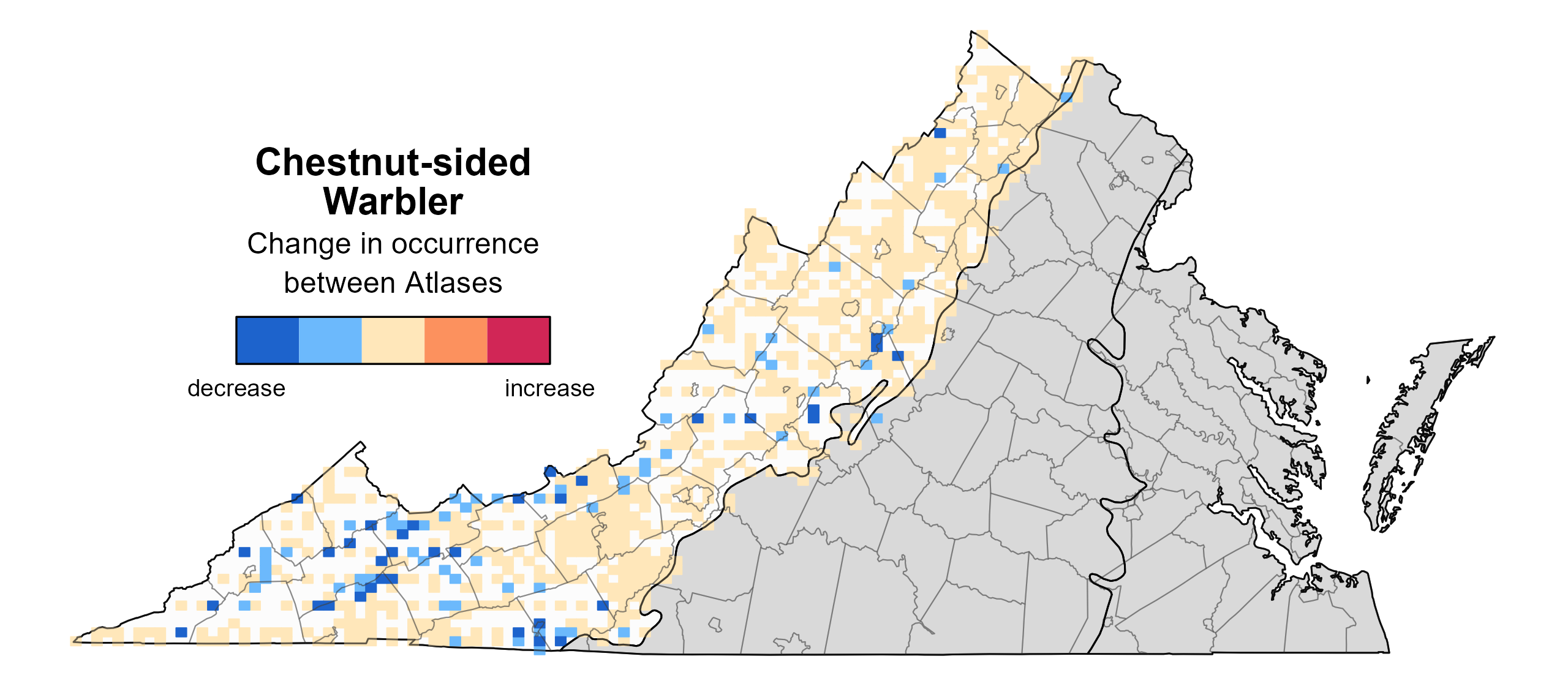
Between the First and Second Atlases (Figures 1 and 2), the Chestnut-sided Warbler’s likelihood of occurrence remained generally constant throughout most of the Mountains and Valleys region but decreased in the southwestern portion of the region (Figure 3).
View Environmental Associations

Breeding Evidence
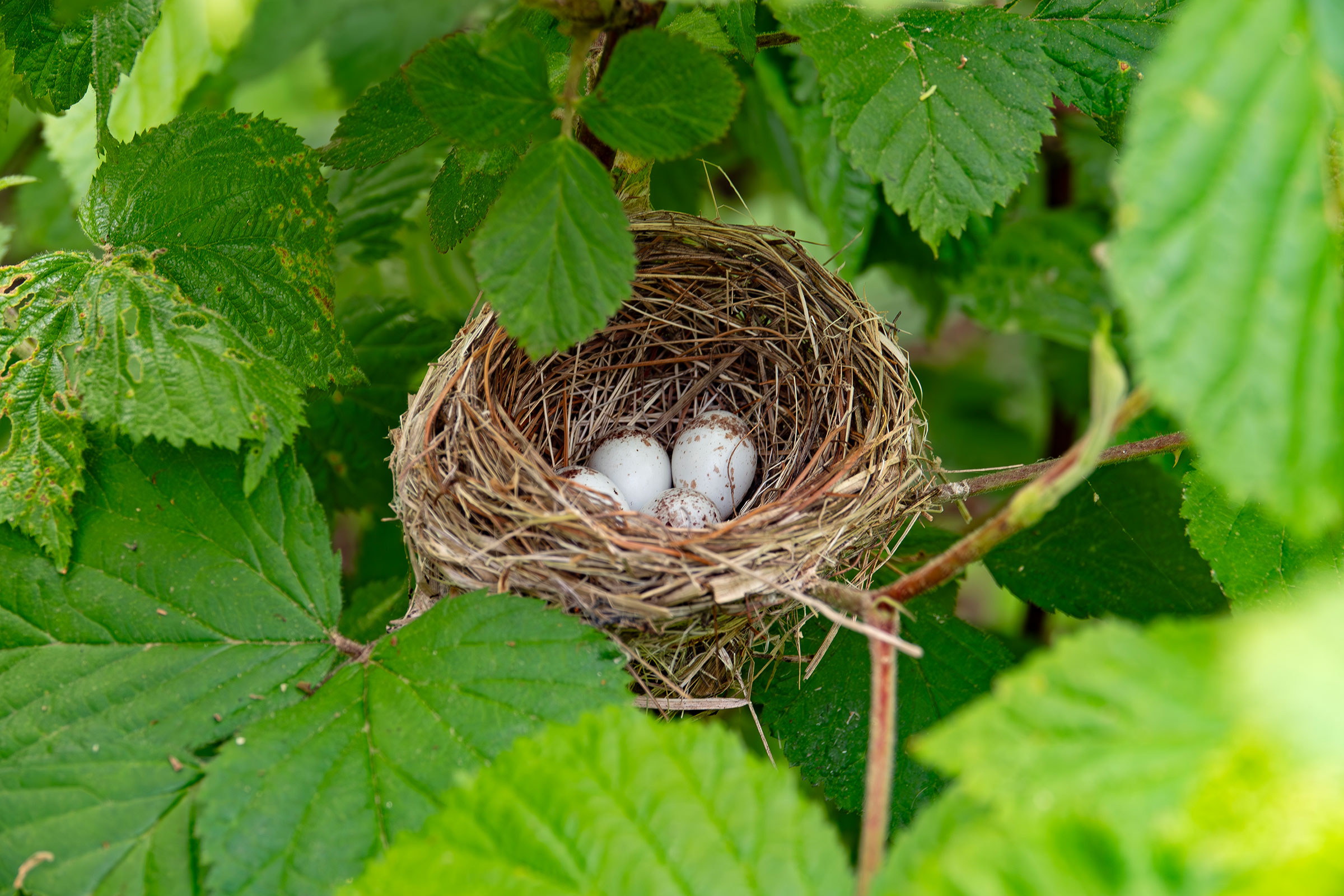
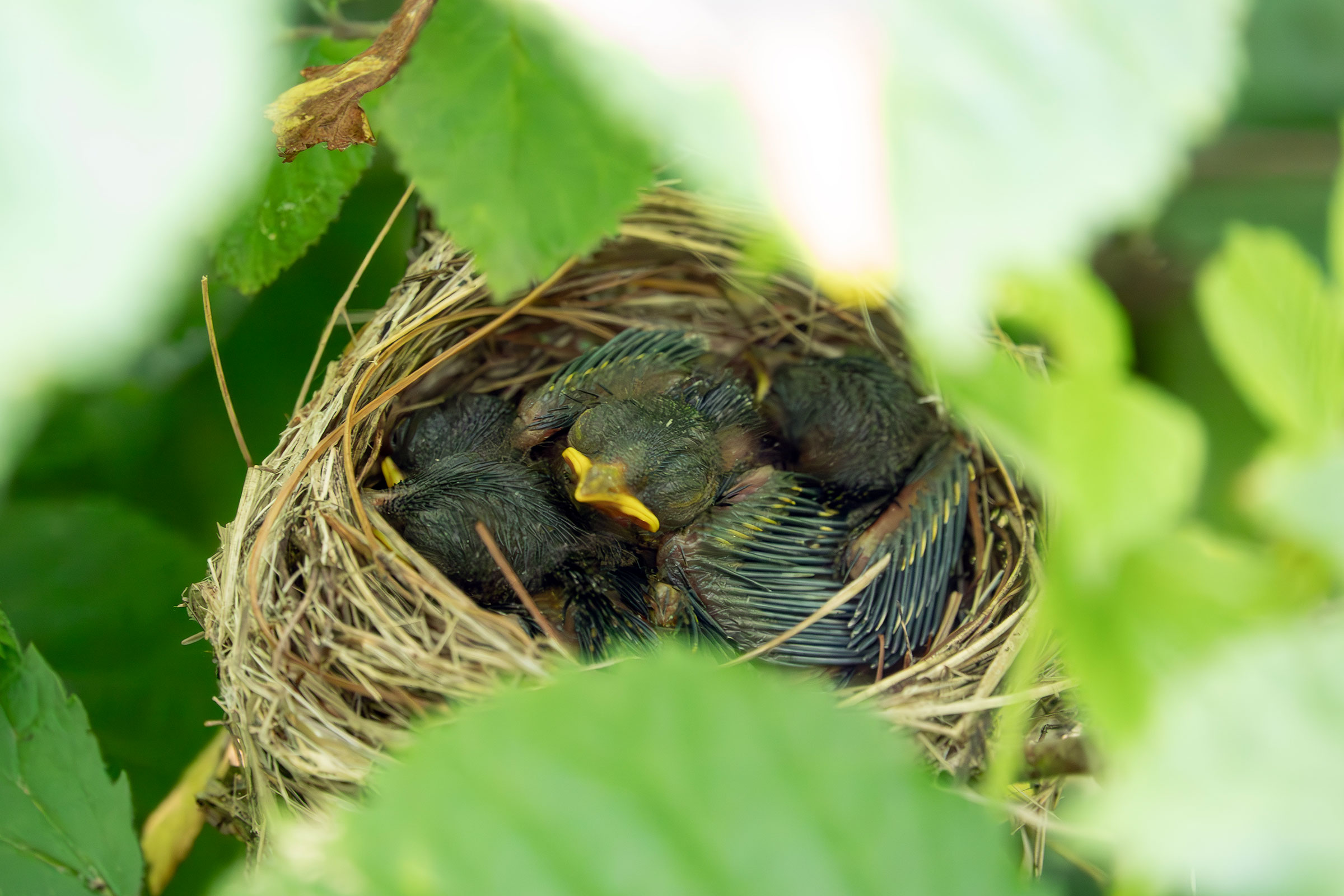
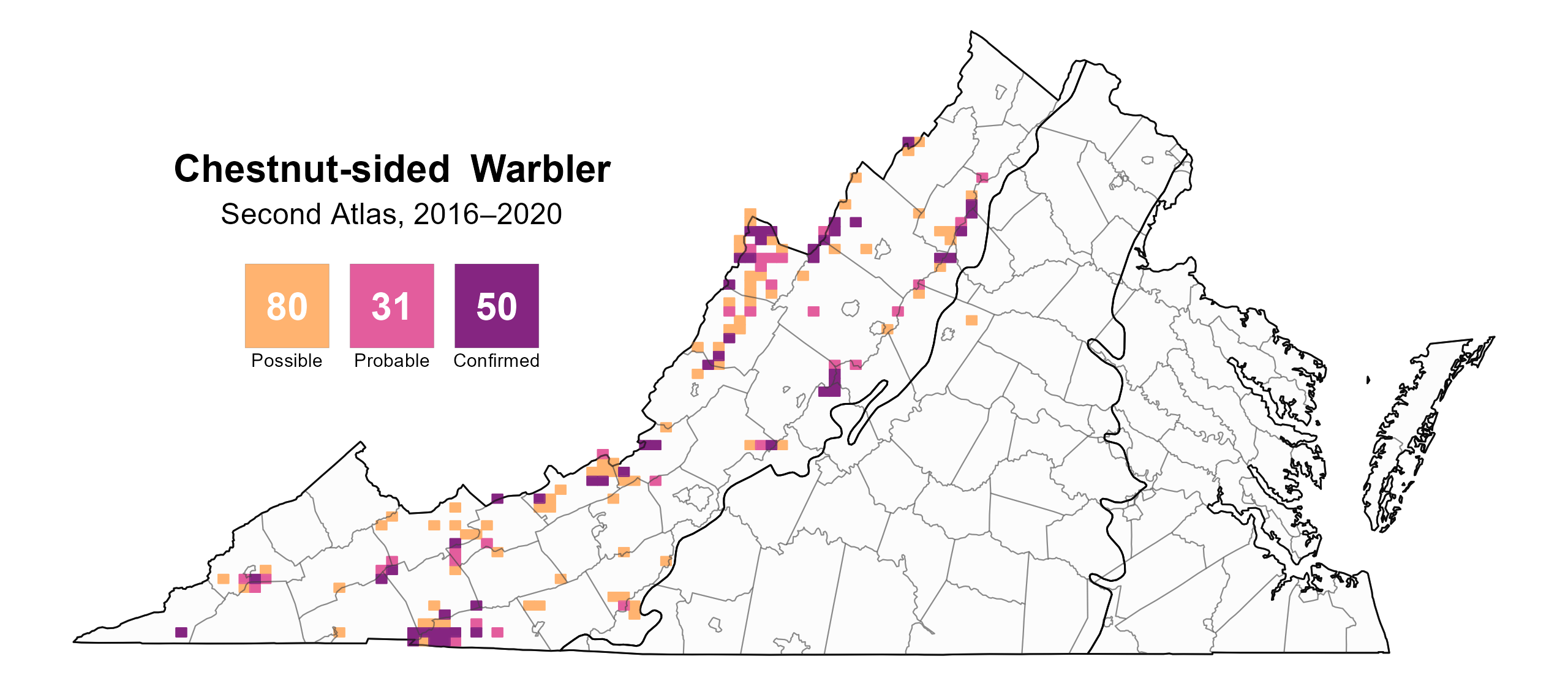
Chestnut-sided Warblers were confirmed breeders in 50 blocks and 20 counties and found to be probable breeders in six additional counties (Figure 4). Breeding observations generally were recorded in similar areas during both Atlas periods (Figures 4 and 5).
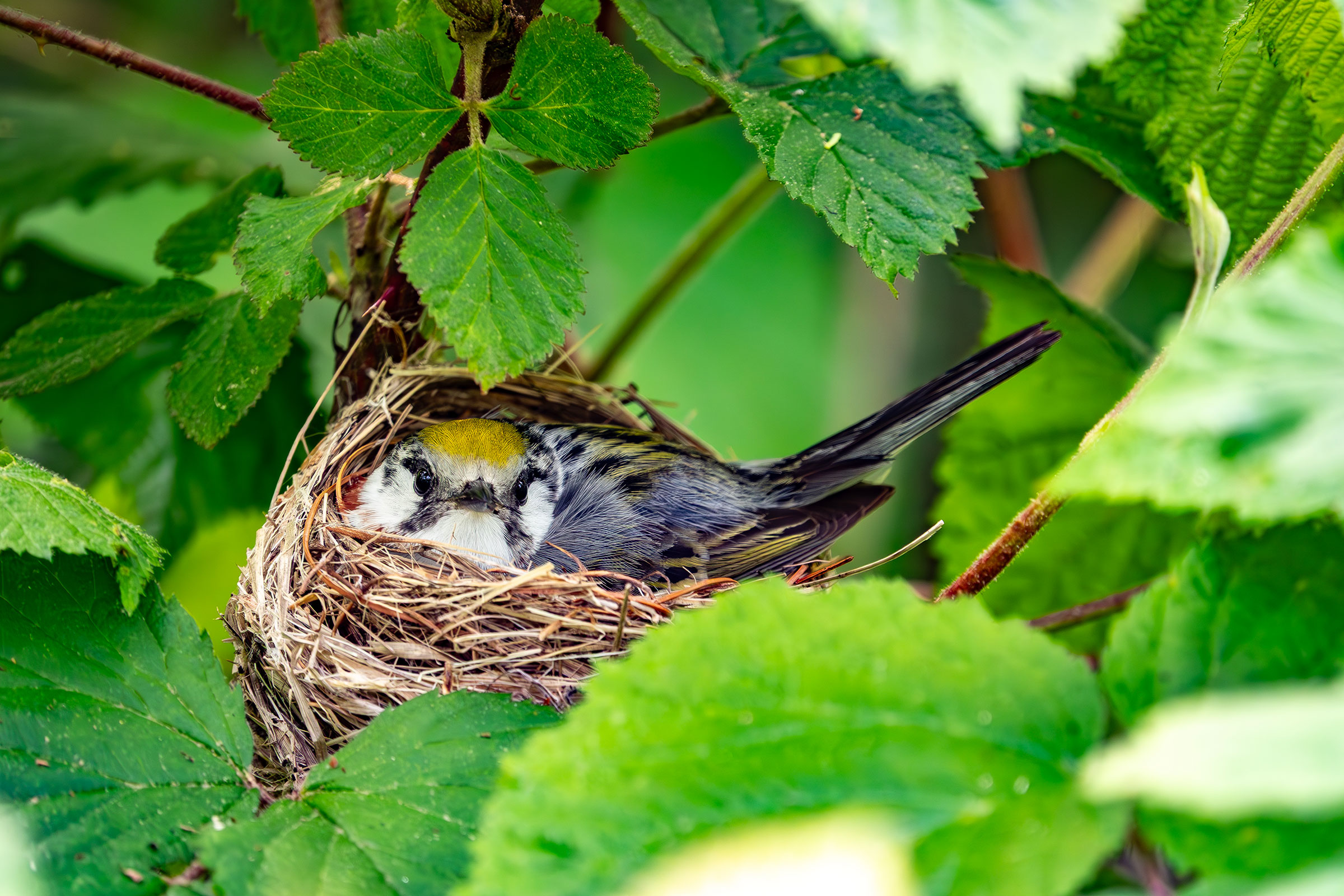
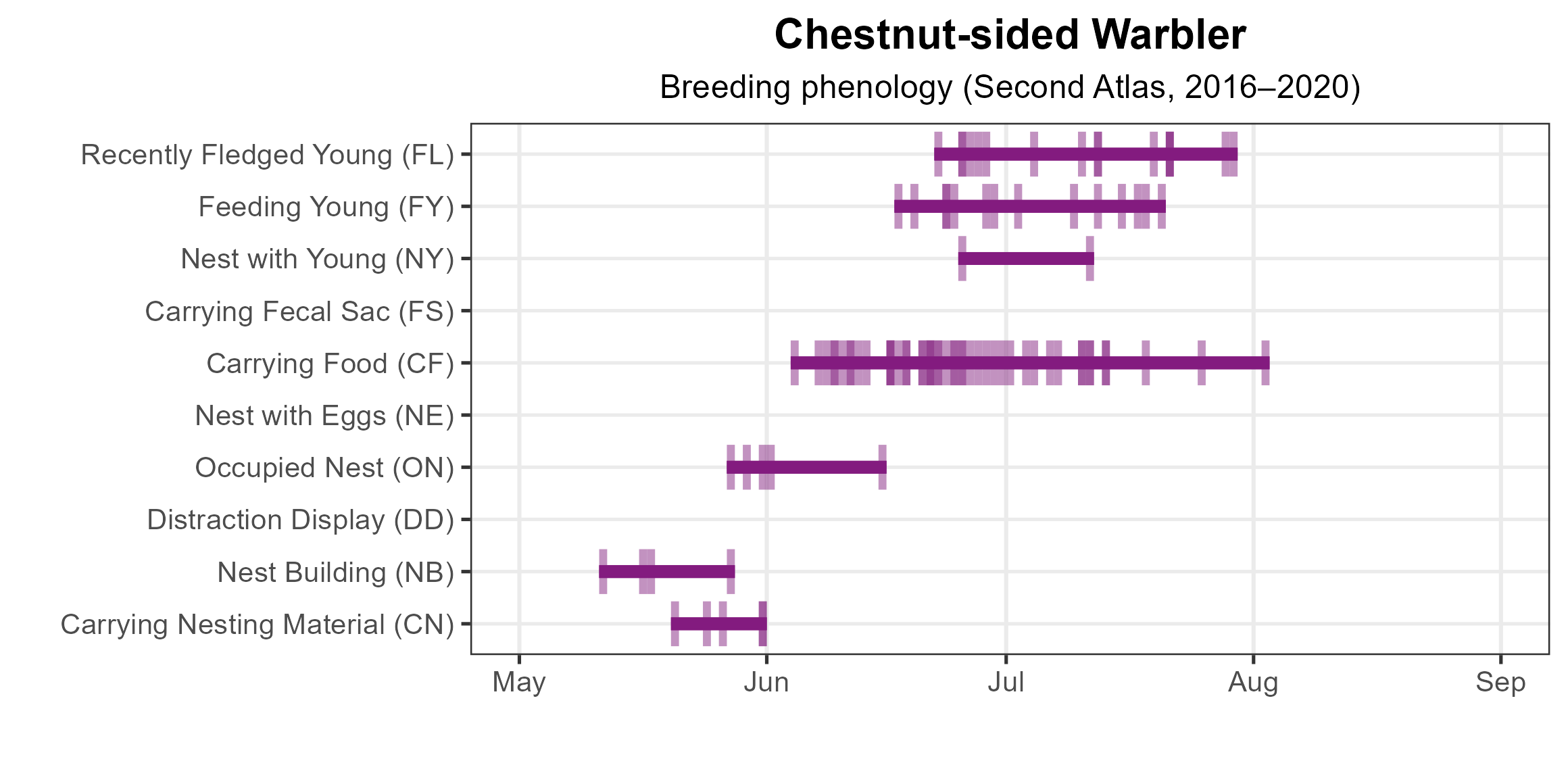
The earliest confirmed breeding behavior was confirmed on May 11 when adults were observed nest building. Adults were last observed carrying food on August 2. In addition to carrying food, breeding was confirmed primarily through observations of recently fledged young (Jun 22 – July 29) and adults feeding young (June 17 – July 20) (Figure 6).
For more general information on the breeding habits of this species, please refer to All About Birds.

Population Status
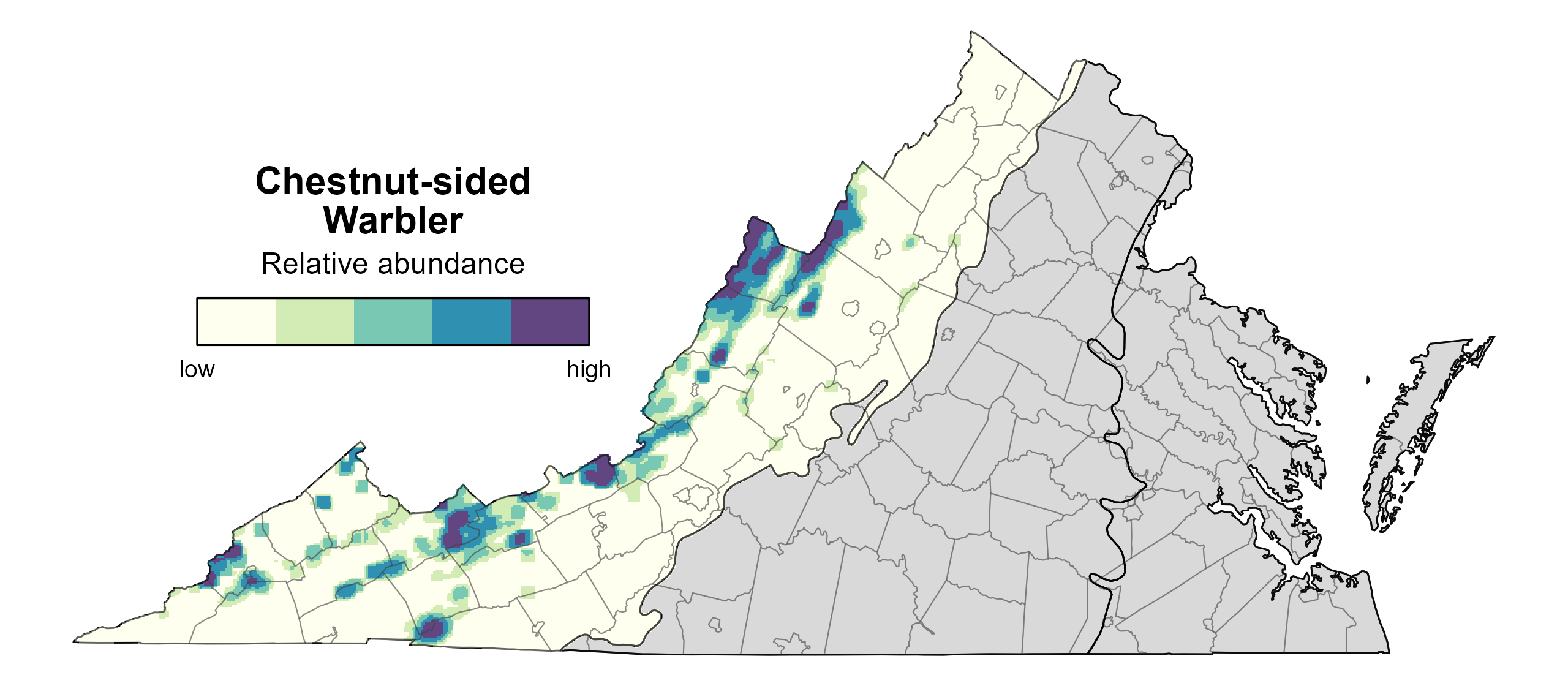
Chestnut-sided Warbler relative abundance was estimated to be highest in the counties bordering West Virginia in the central portion of the region (Figure 7). The Blue Ridge Mountains, however, were less important in driving abundance estimates than they were in influencing distribution.
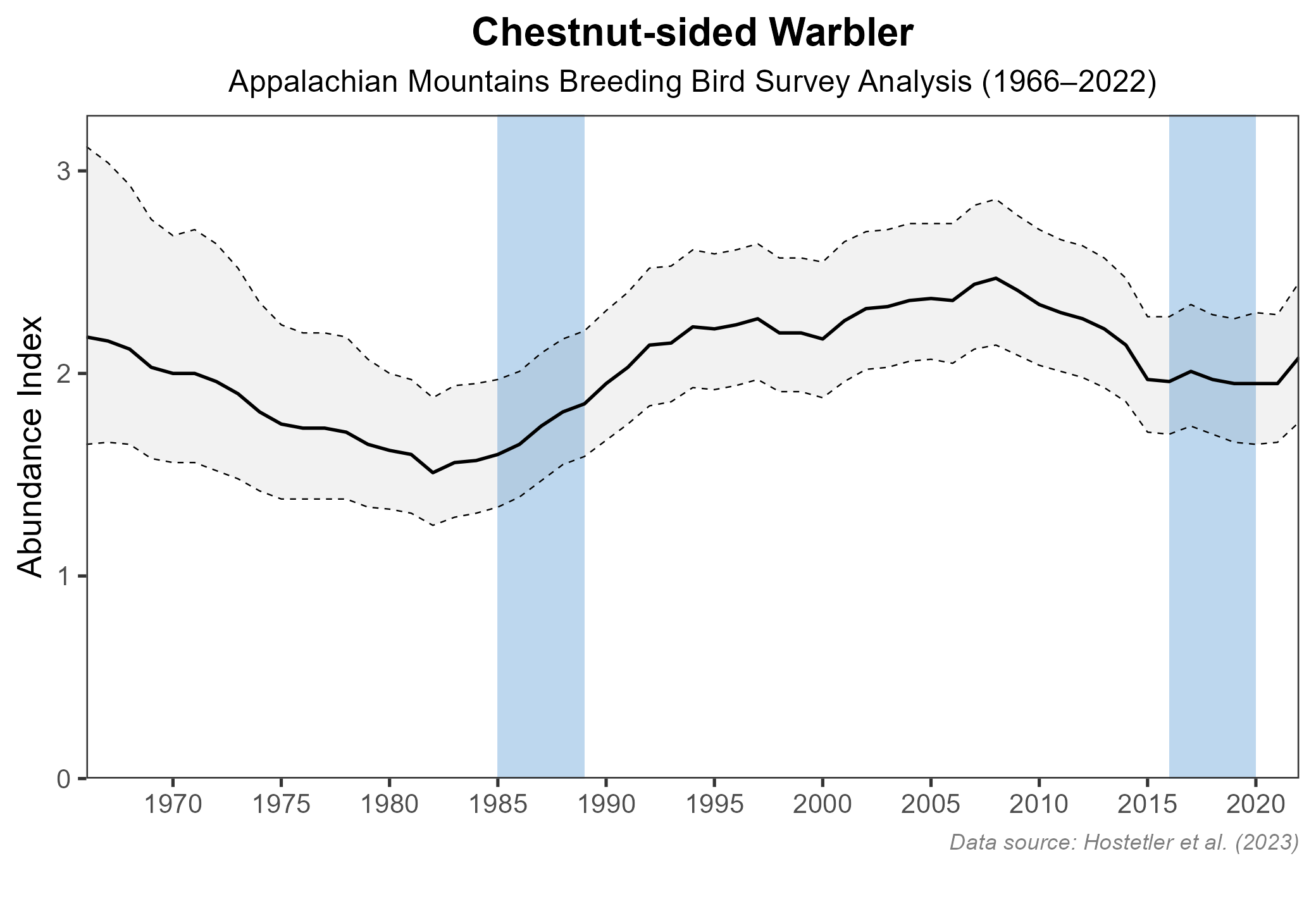
The total estimated Chestnut-sided Warbler population in the state is approximately 38,000 individuals (with a range between 15,000 and 104,000). Based on the North American Breeding Bird Survey (BBS) population trend data for the Appalachian Mountains region (as the Virginia data does not produce a credible trend for the state), the Chestnut-sided Warbler population decreased by a nonsignificant 0.08% annually from 1966–2022 in the region, and between Atlas periods, Chestnut-sided Warblers increased by a nonsignificant 0.42% per year from 1987–2018 (Hostetler et al. 2023; Figure 8).
Conservation
Although relatively less common in Virginia, Chestnut-sided Warblers are common and widespread throughout their range (Byers et al. 2020). Thus, they are not considered a species of special concern, and no specific conservation projects for Chestnut-sided Warblers are underway in Virginia.
Interactive Map
The interactive map contains up to six Atlas layers (probability of occurrence for the First and Second Atlases, change in probability of occurrence between Atlases, breeding evidence for the First and Second Atlases, and abundance for the Second Atlas) that can be viewed one at a time. To view an Atlas map layer, mouse over the layer box in the upper left. County lines and physiographic regional boundaries (Mountains and Valleys, Piedmont, and Coastal Plain) can be turned on and off by checking or unchecking the box below the layer box. Within the map window, users can hover on a block to see its value for each layer and pan and zoom to see roads, towns, and other features of interest that are visible beneath a selected layer.
View Interactive Map in Full Screen
References
Byers, B. E., M. Richardson, and D. W. Brauning (2020). Chestnut-sided Warbler (Setophaga pensylvanica), version 1.0. In Birds of the World (A. F. Poole, Editor). Cornell Lab of Ornithology, Ithaca, NY, USA. https://doi.org/10.2173/bow.chswar.01.
Hostetler, J. A., J. R. Sauer, J. E. Hines, D. Ziolkowski, and M. Lutmerding (2023). The North American breeding bird survey, analysis results 1966–2022. U.S. Geological Survey, Laurel, MD, USA. https://doi.org/10.5066/P9SC7T11.