Introduction
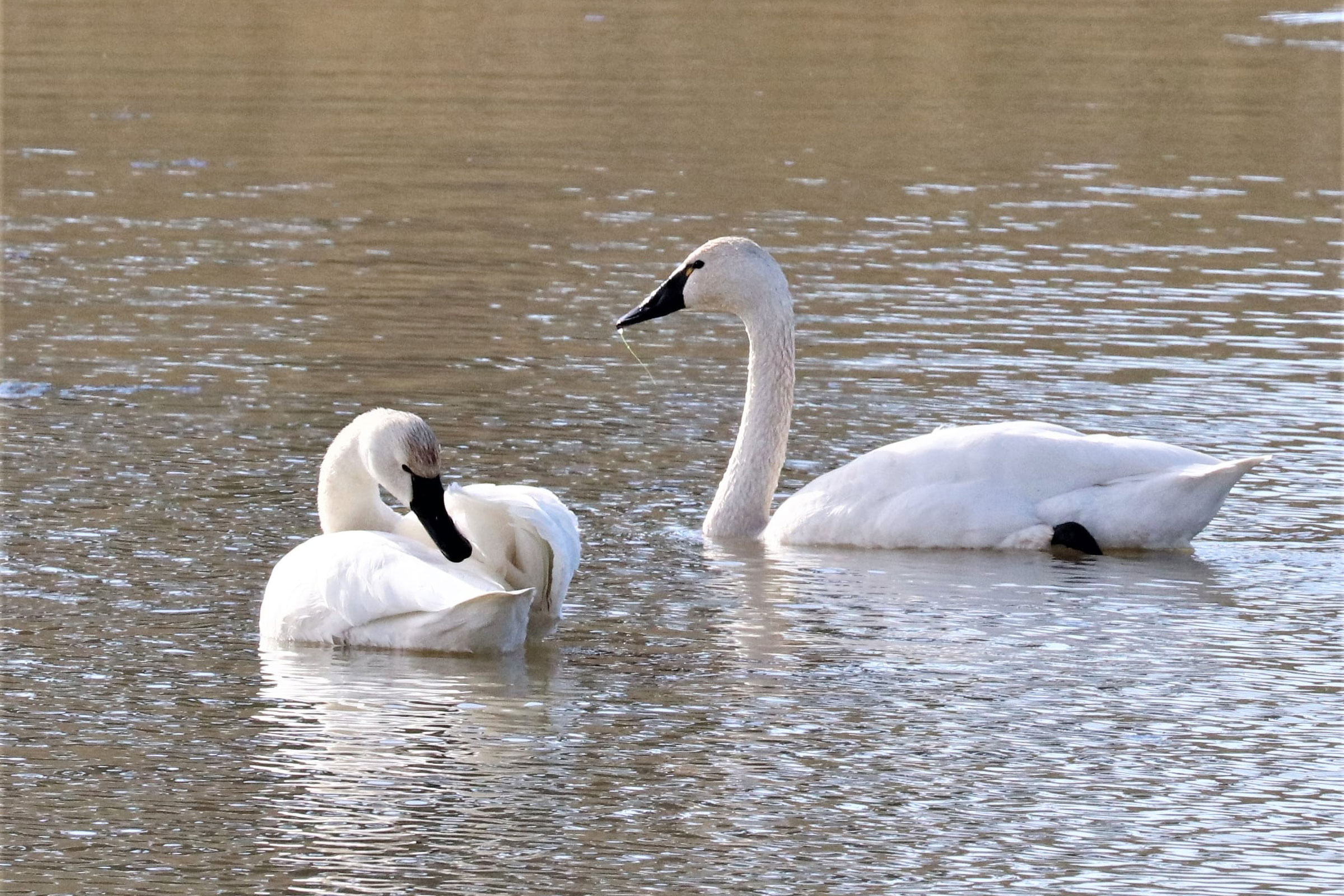
With a wingspan over five feet and weighing up to 30 pounds, the Trumpeter Swan is our largest and heaviest waterfowl species. Although rare in the eastern U.S., this species was reported to have wintered along the Potomac and Occoquan Rivers in colonial times, disappearing by 1900 (Johnston 1996; Rottenborn and Brinkley 2007). Substantial declines across North America were due to overhunting by Europeans (Mitchell and Eichholz 2020).
Since the First Atlas, reintroduction efforts in the Midwest and captive breeding have led to the establishment of a small, mostly sedentary population in Virginia. Today, Virginiaʼs Trumpeter Swans are classified as Category 5 by the Virginia Avian Records Committee (VARCOM), indicating an introduced species with a self-sustaining population.
Breeding Distribution
Because the species is rare, its distribution could not be modeled. For information on where Trumpeter Swan occurs in Virginia, please see the Breeding Evidence section.
Breeding Evidence
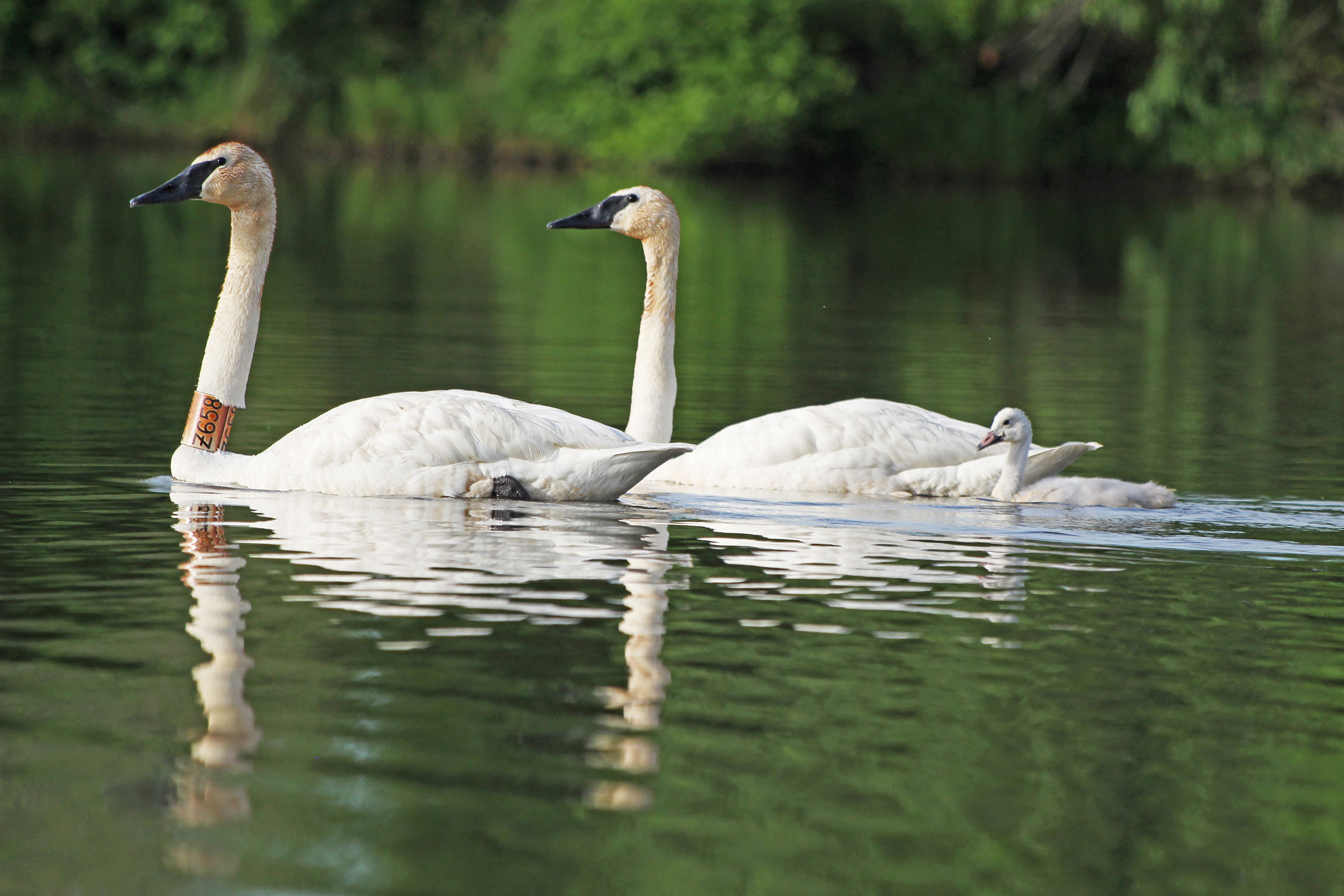
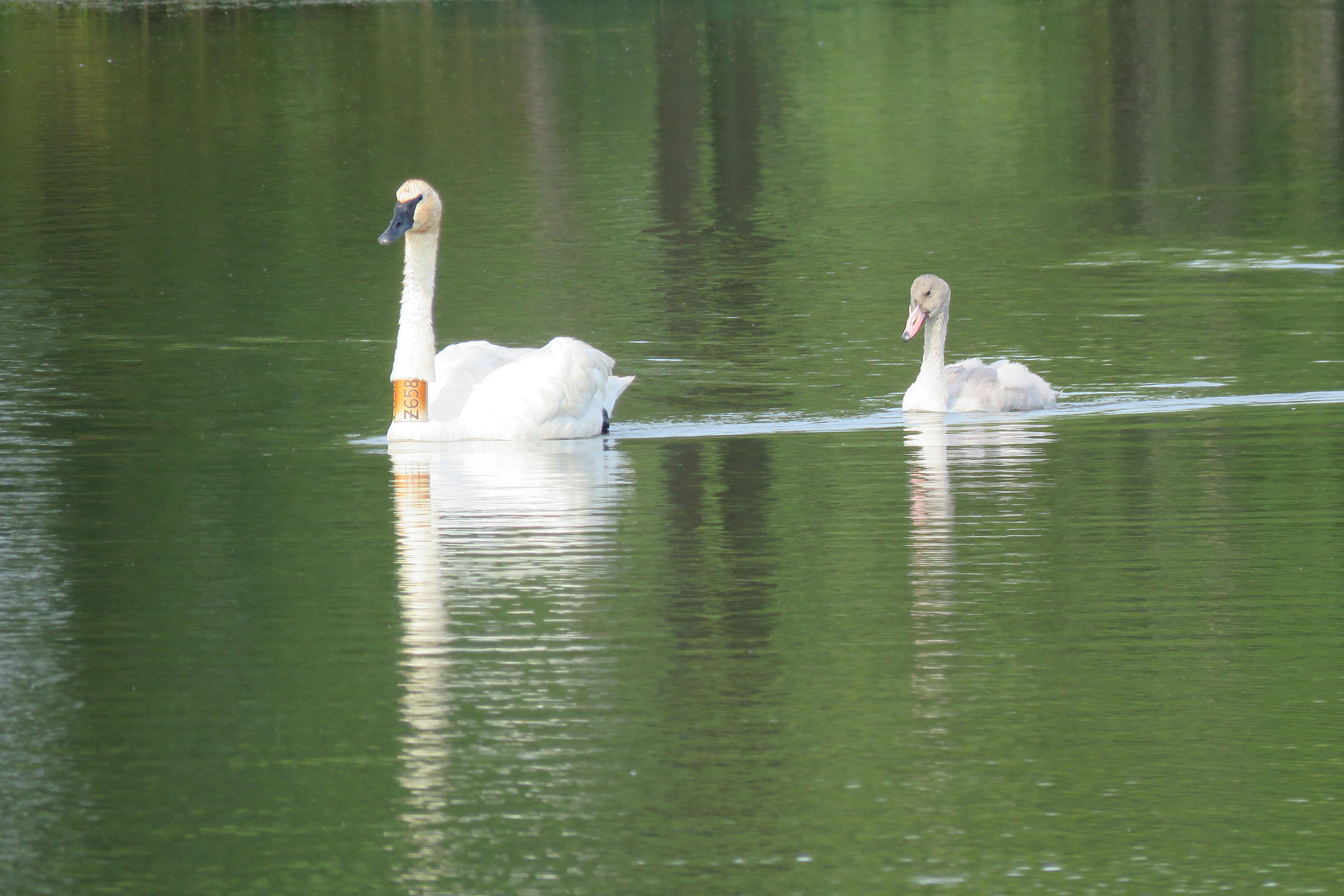
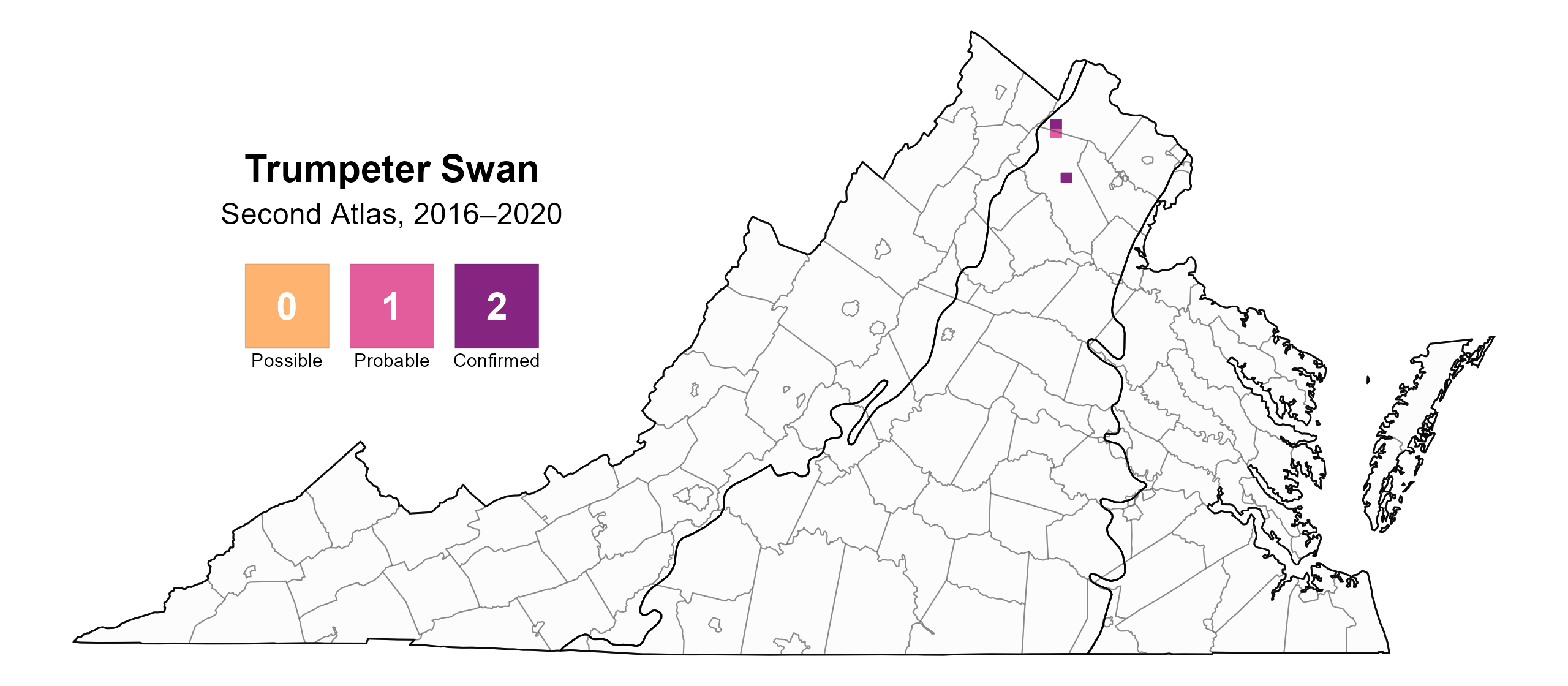
Trumpeter Swans only breed in the Piedmont region, where they were confirmed breeders in two blocks and probable breeders in an additional block (Figure 1). Neck-banded residents bred at two locations, Airlie Reservoir and nearby Clifton Institute, within one block in Fauquier County. These birds originated from a captive flock that was housed at the Swan Research Program facility near Warrenton, Virginia (Lutz 2009; Bruno 2023). In 2020, one neck-banded adult paired with an unbanded bird and nested at Piney Swamp Pond in Loudoun County. The species was not present in the state during the First Atlas.
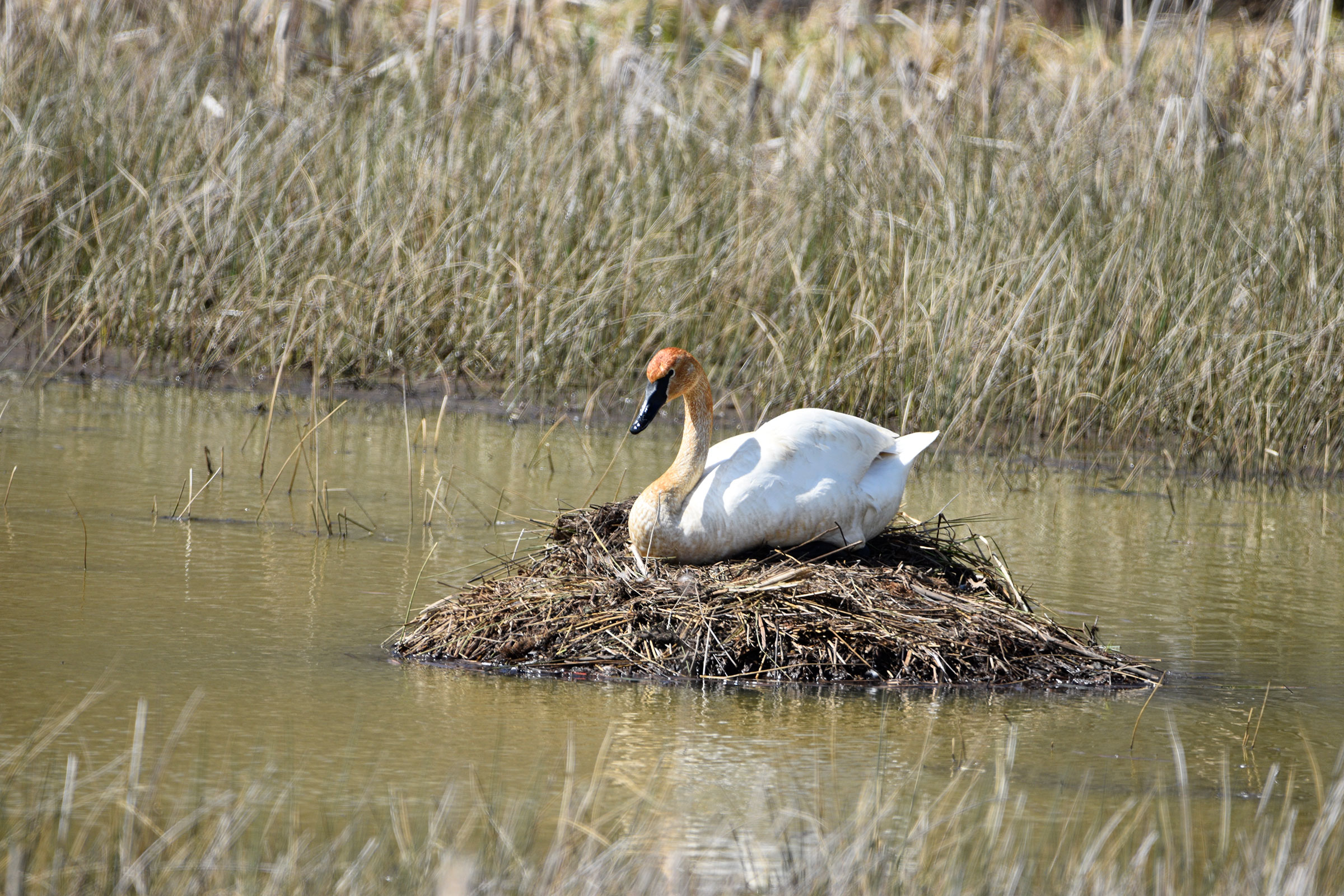
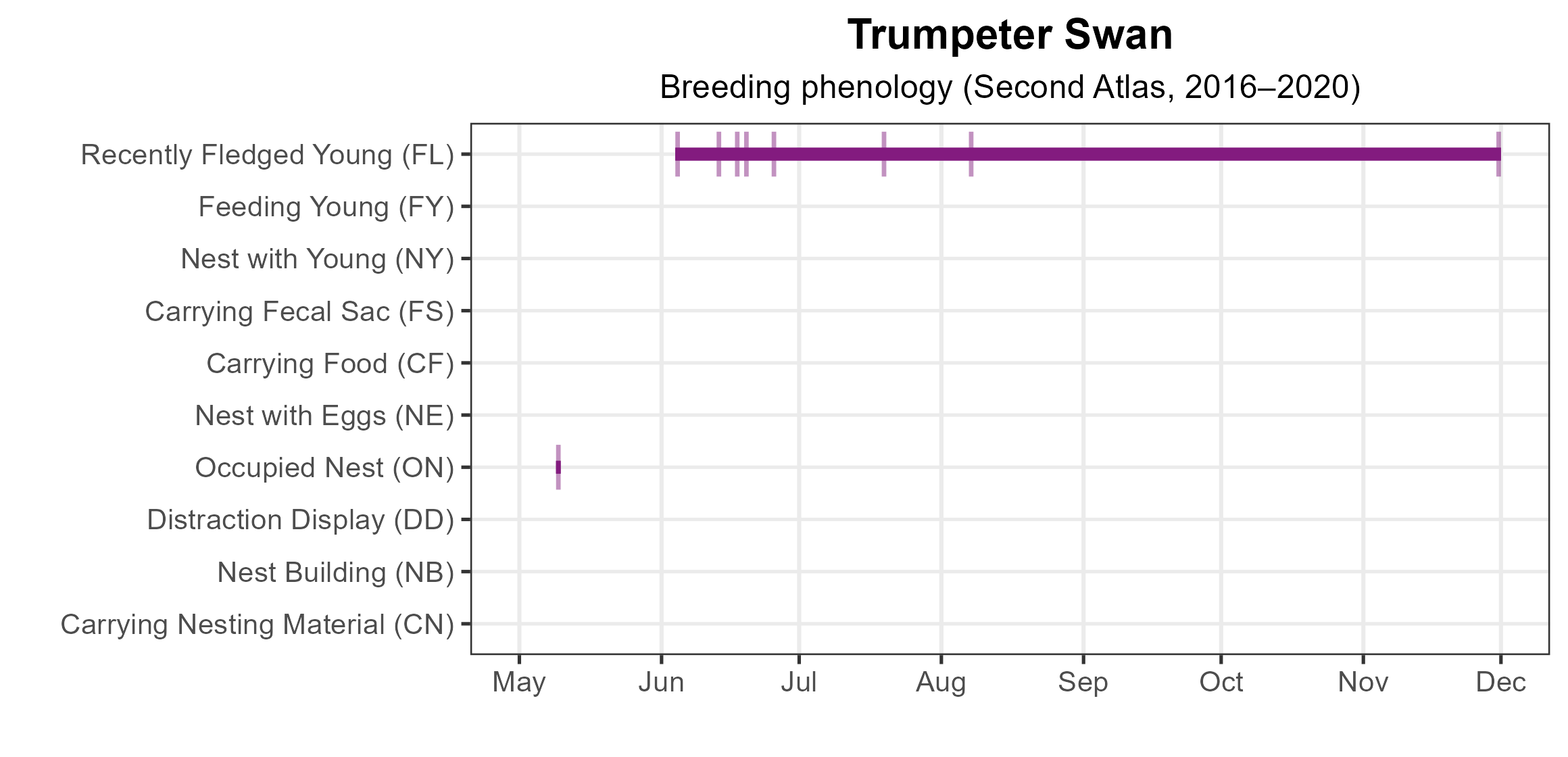
Breeding phenology was not well documented by the Atlas. Only one observation of a nest was obtained at Clifton Institute on May 9 (Figure 2). Downy young were seen with parents from June 4, and adult-sized young stuck with their parents until at least November near where they hatched. For more general information on the breeding habits of the Trumpeter Swan, please refer to All About Birds.
Population Status
Trumpeter Swan abundance could not be modeled because the species is so rare. The North American Trumpeter Swan Survey, which estimates population change for the species, does not include Virginia.
Conservation
Coordinated reintroduction efforts are credited with saving the Trumpeter Swan from near extinction, making its comeback a classic conservation success story. One of the goals of such efforts was the establishment of a migratory population that would winter in the Chesapeake Bay. In the 1990s, Operation Migration attempted to train captive-reared Trumpeter Swans to migrate to the Bay using ultralight aircraft (in addition to the projectʼs more famous work with Whooping Cranes). Those efforts ceased in 2001, and the captive birds held in Virginia were released. Rather than migrating, they became permanent residents and began breeding. This has led to concerns that like the introduced Mute Swan (Cygnus olor), this population can have negative impacts on other species via competition for food and space. The population is still relatively small and localized but appears to be expanding to other locations.
In the U.S., Trumpeter Swan management is guided by flyway-based plans. Across each flyway, swans can be conserved by increased management of human recreation, lead pollution, breeding and wintering habitat, and capture/relocation (Mitchell and Eichholz 2020).
Interactive Map
The interactive map contains up to six Atlas layers (probability of occurrence for the First and Second Atlases, change in probability of occurrence between Atlases, breeding evidence for the First and Second Atlases, and abundance for the Second Atlas) that can be viewed one at a time. To view an Atlas map layer, mouse over the layer box in the upper left. County lines and physiographic regional boundaries (Mountains and Valleys, Piedmont, and Coastal Plain) can be turned on and off by checking or unchecking the box below the layer box. Within the map window, users can hover on a block to see its value for each layer and pan and zoom to see roads, towns, and other features of interest that are visible beneath a selected layer.
View Interactive Map in Full Screen
References
Bruno, R. (2023). Virginia Christmas bird counts: 2022-2023 season. The Raven 94:30–35.
Johnston, D. W. (1996). Historical records of the Trumpeter Swan in Virginia. Banisteria 7:8–10.
Lutz, L. (2009). Trumpeter Swans may again grace Bay’s waters. Bay Journal. https://www.bayjournal.com/news/wildlife_habitat/trumpeter-swans-may-again-grace-bays-waters/article_6604d37e-943b-5e58-a48c-cd3a904456c2.html.
Mitchell, C. D. and M. W. Eichholz (2020). Trumpeter Swan (Cygnus buccinator), version 1.0. In Birds of the World (P. G. Rodewald, Editor). Cornell Lab of Ornithology, Ithaca, NY, USA. https://doi.org/10.2173/bow.truswa.01.
Rottenborn, S. C., and E. S. Brinkley (Editors) (2007). Virginia’s birdlife: An annotated checklist. 4th edition. Virginia Society of Ornithology.