Introduction
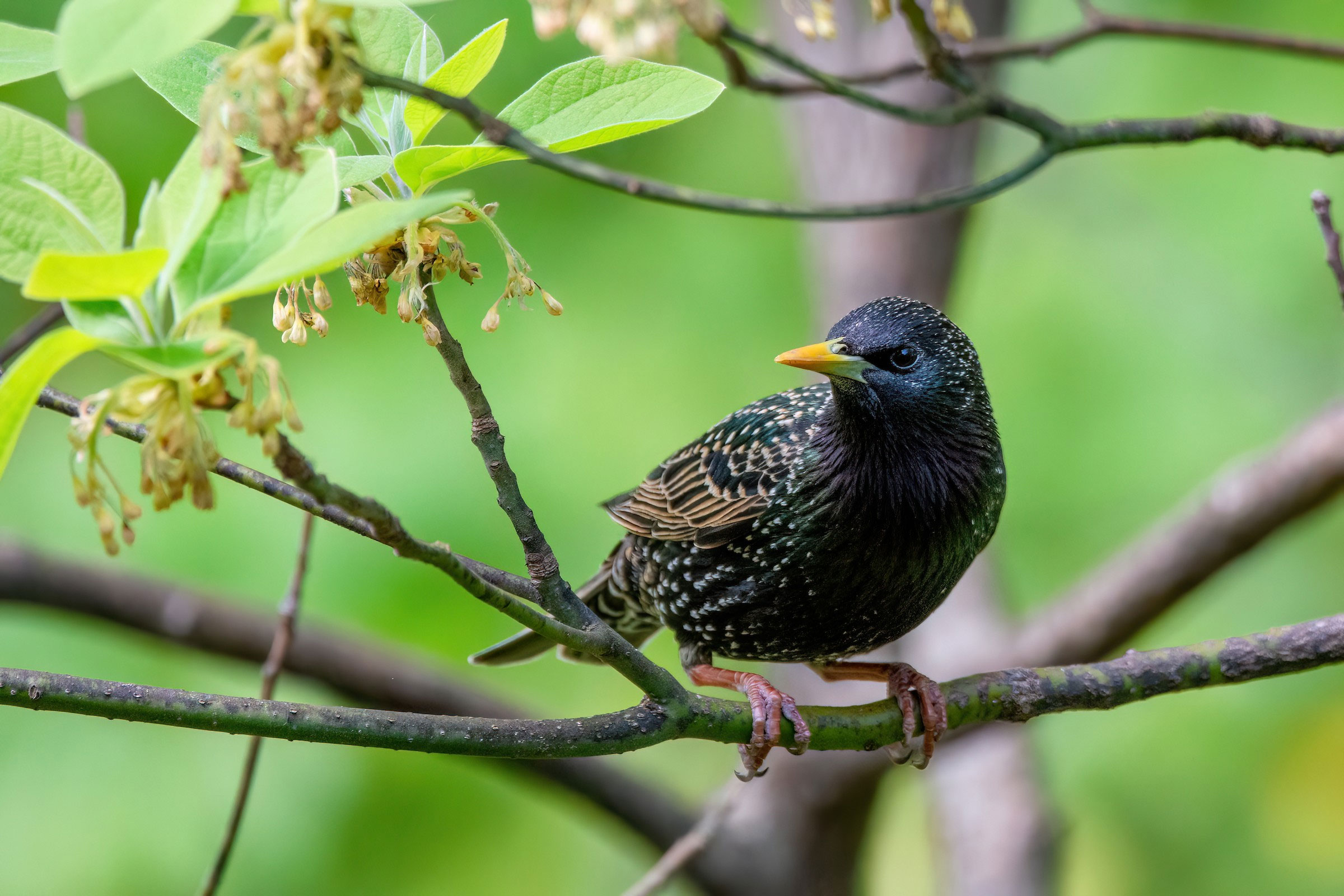
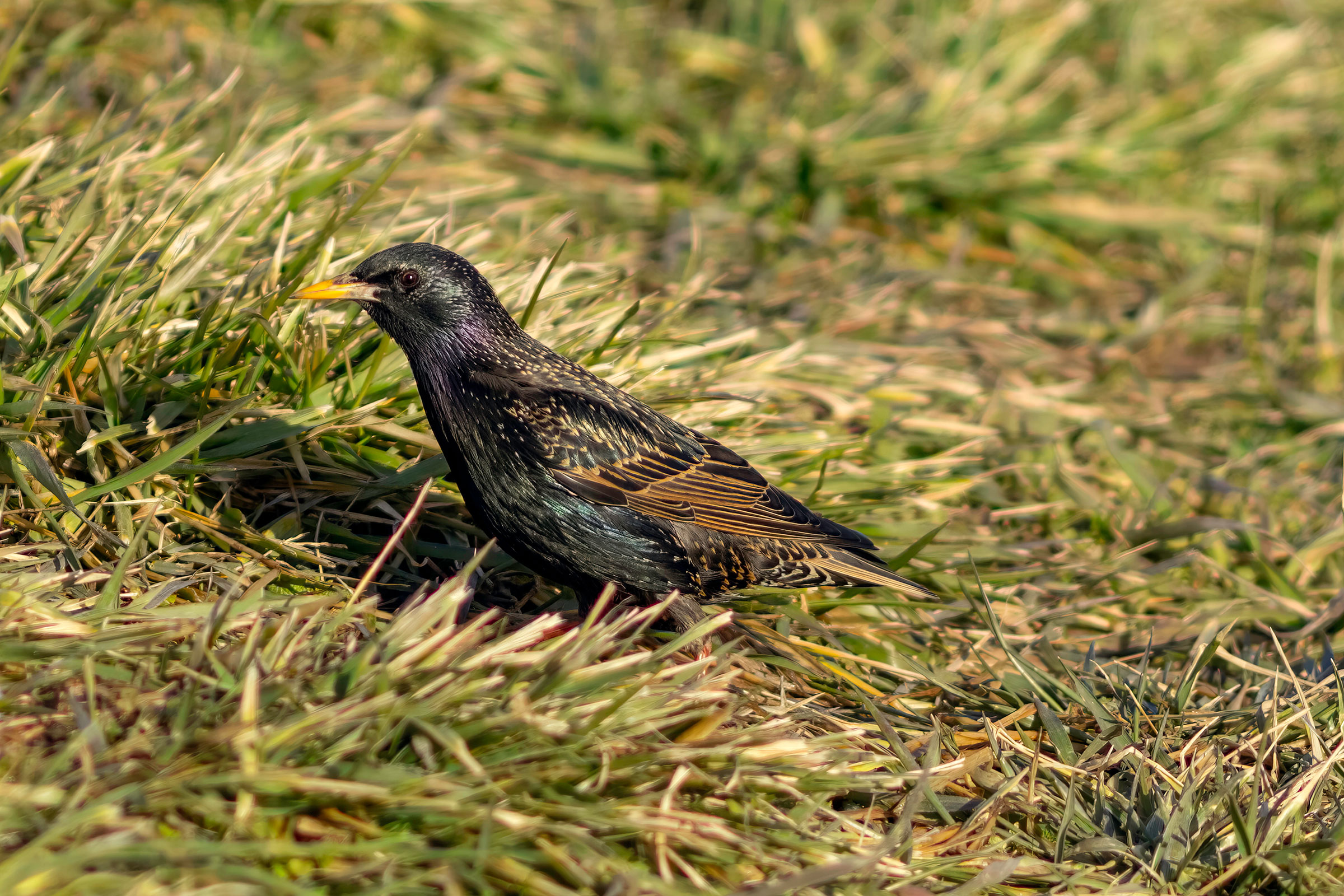
In Virginia, European Starlings can be considered a commensal species, meaning that they benefit from an association with humans, mainly in terms of obtaining food and nesting sites, while humans remain mostly unaffected by their presence. They were introduced to North America in the 1800s and are now common in developed areas and agricultural landscapes, where they find natural and artificial nesting sites, often competing with cavity nesters for cavities in snags (Cabe 2020).
Breeding Distribution
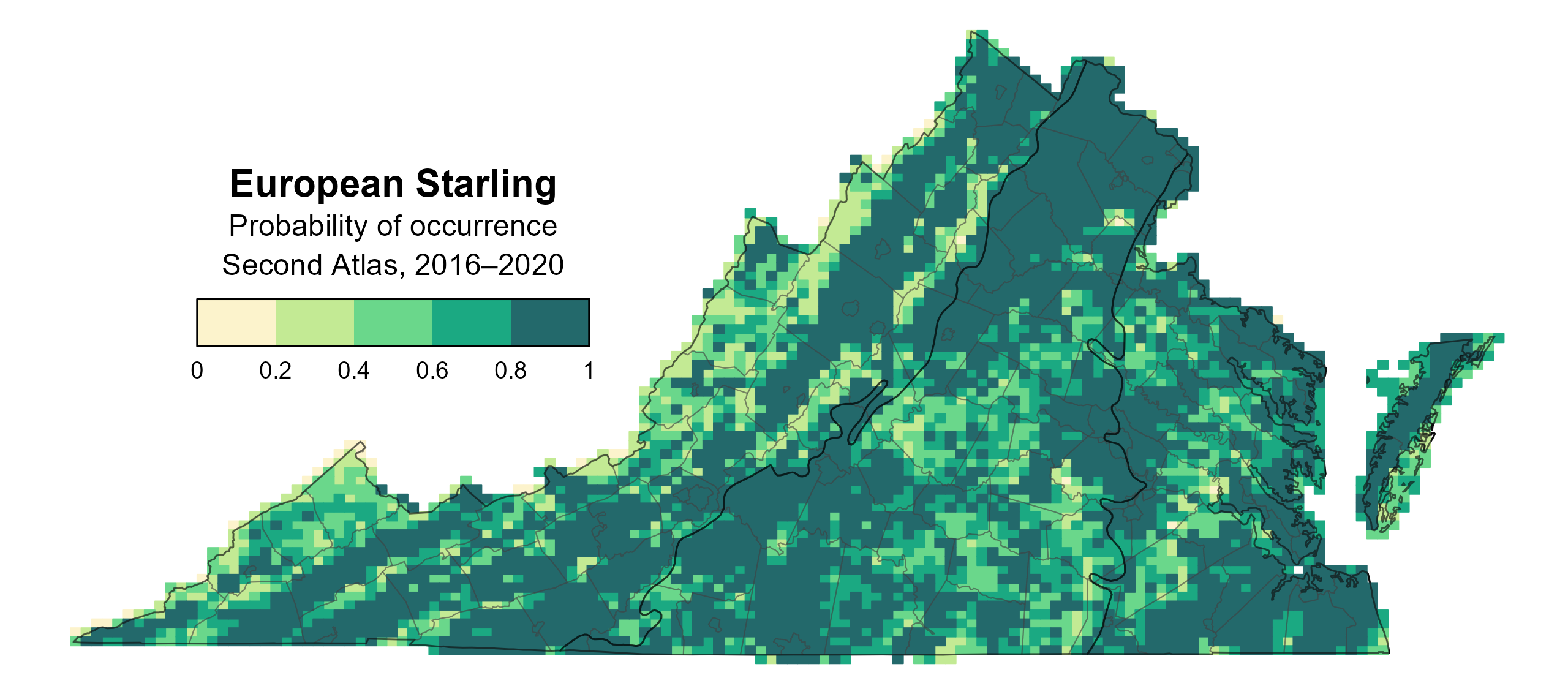
European Starlings are found throughout the state and are most likely to occur in human-dominated, developed areas, such as Hampton Roads, Northern Virginia, and Richmond, and in agricultural landscapes (Figure 1). Although slightly negatively associated with forested habitat and areas with a diversity of habitat types, European Starlings are still found in blocks with these environments.
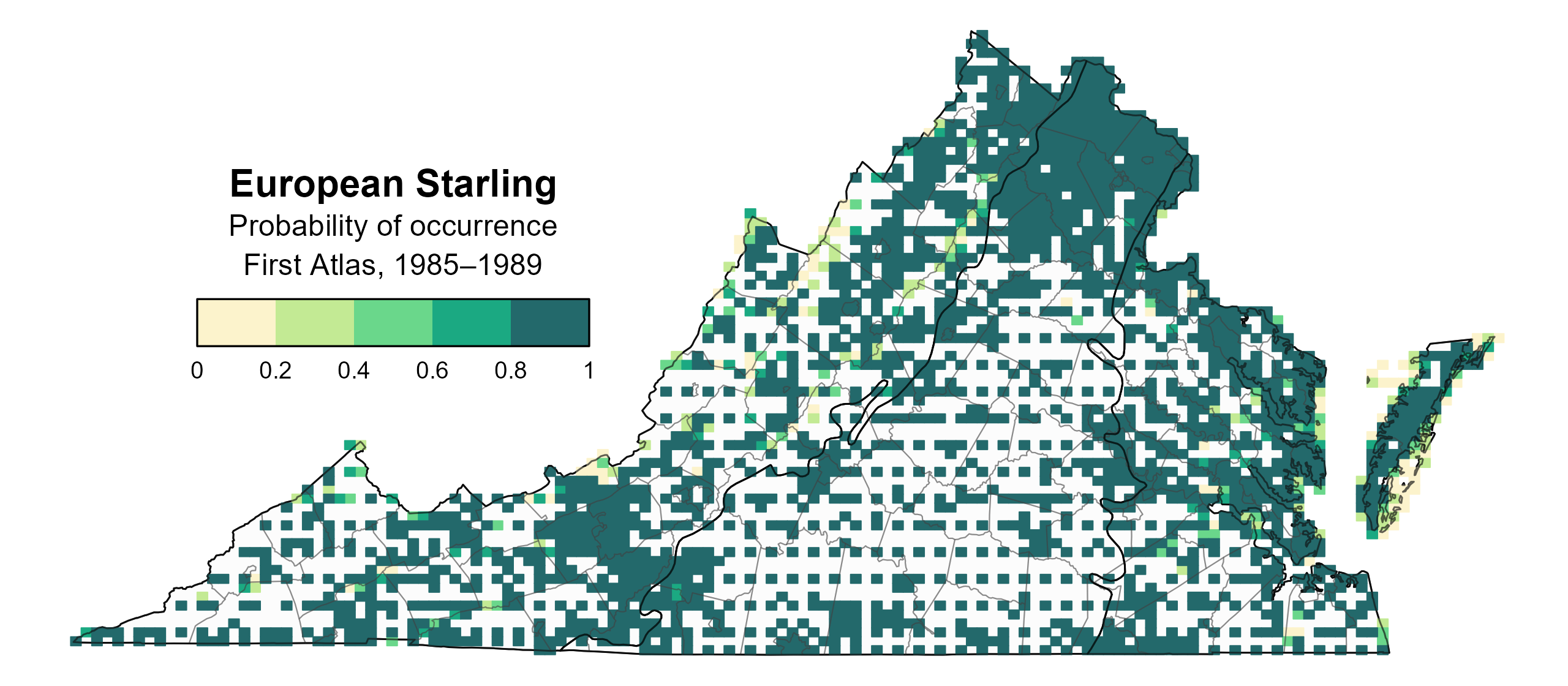
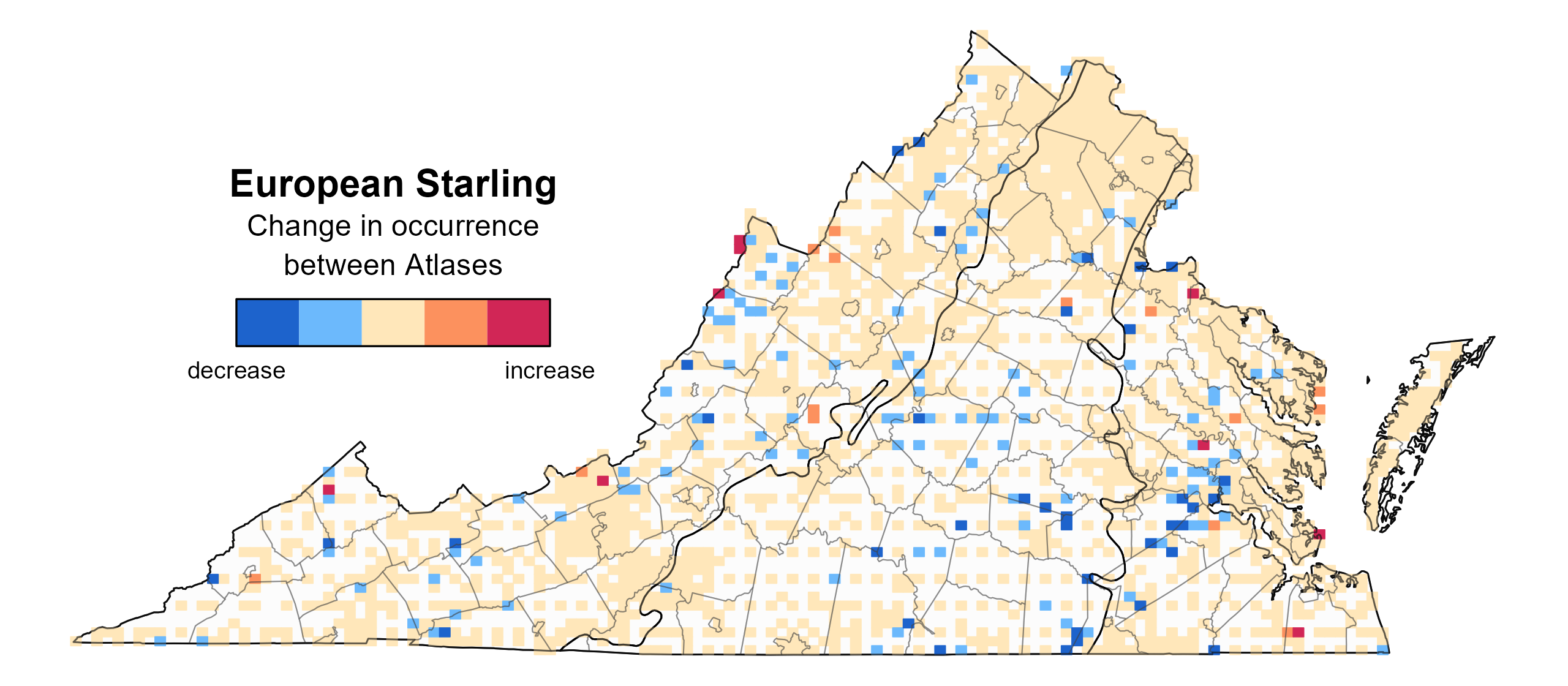
Between Atlases (Figures 1 and 2), European Starling likelihood of occurrence remained high across the state; thus, no notable changes in occupancy occurred (Figure 3).
View Environmental Associations
Breeding Evidence
European Starlings were confirmed breeders in 1,358 blocks in all 133 counties in the state (Figure 4). Similarly, during the First Atlas, volunteers confirmed European Starling breeding throughout the state (Figure 5).
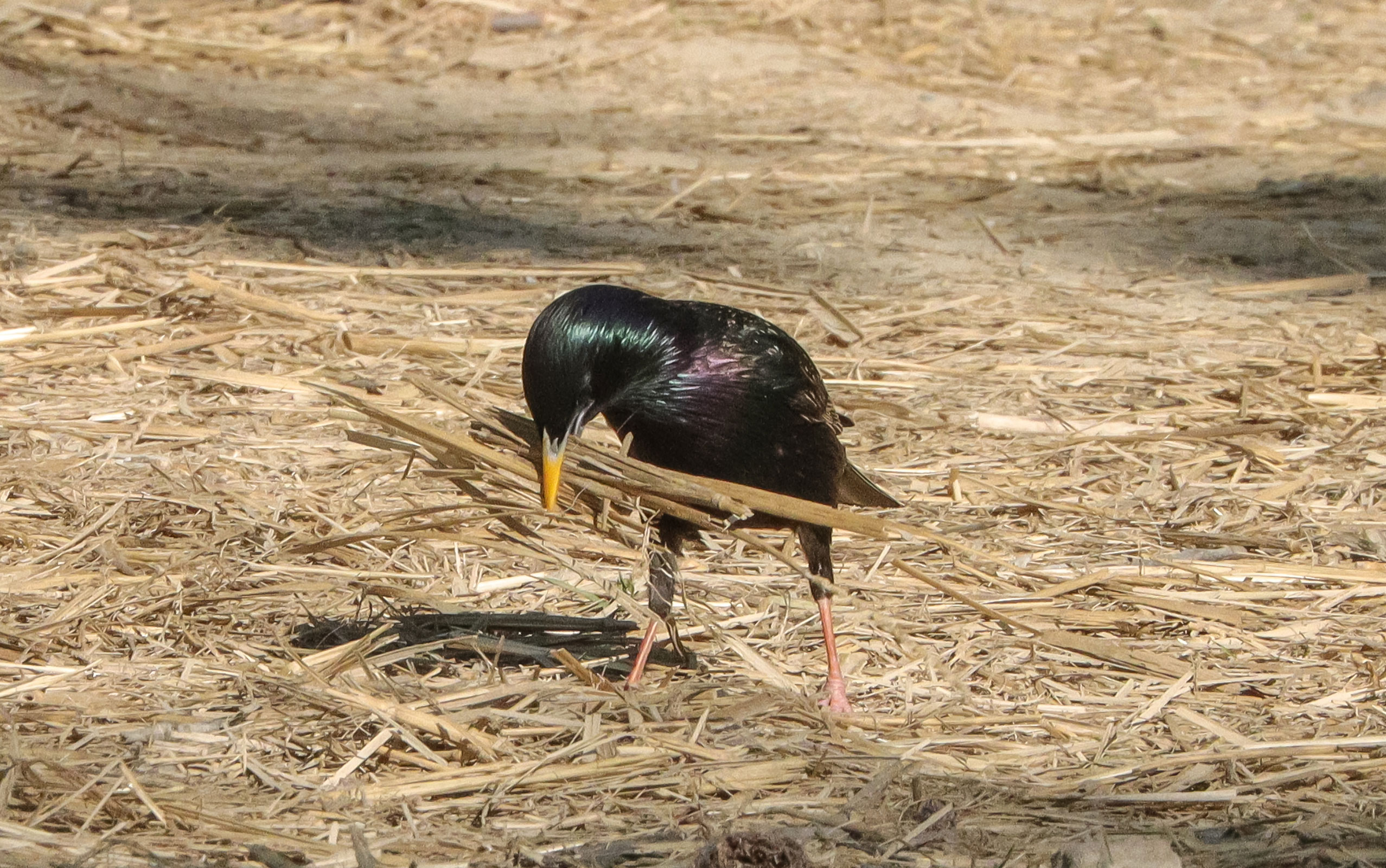
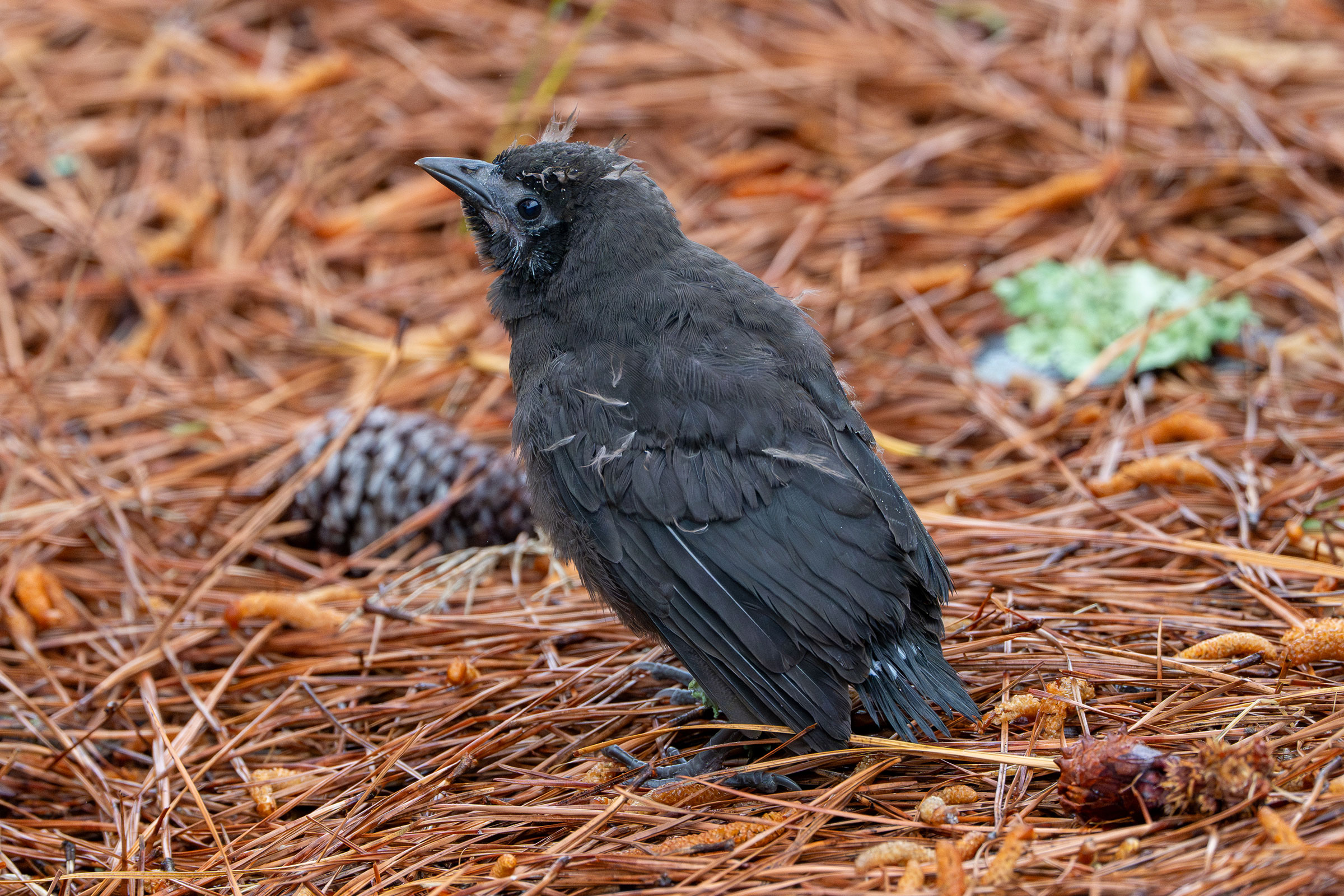
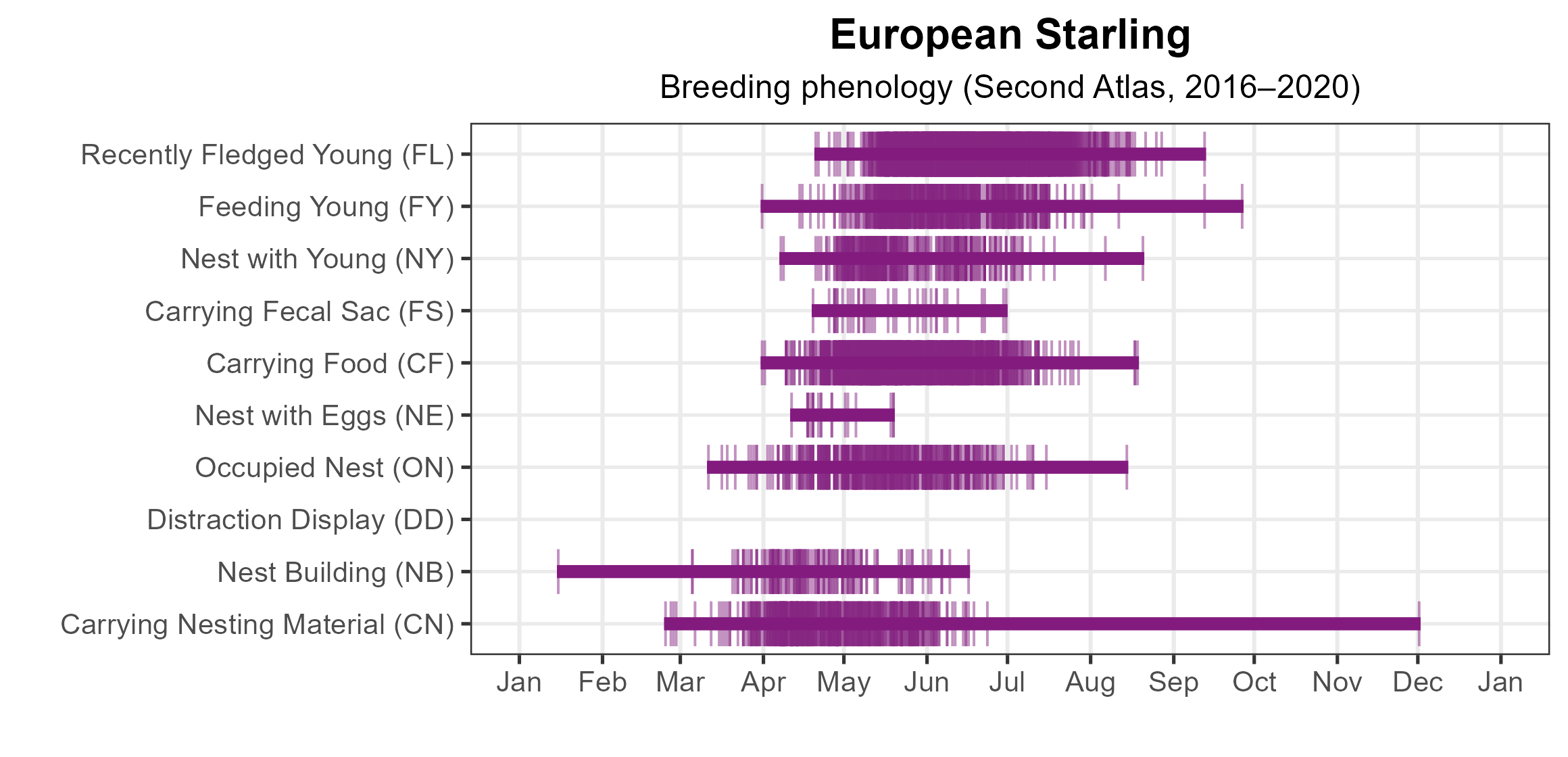
European Starling breeding was documented as early as mid-January when nest building was observed. However, breeding was confirmed primarily through observations of occupied nests (March 11 – August 14), adults carrying food (March 31 – August 18), adults feeding young (March 31 – September 26), and recently fledged young (April 20 – September 12) (Figure 6).
For more general information on the breeding habits of this species, please refer to All About Birds.


Population Status
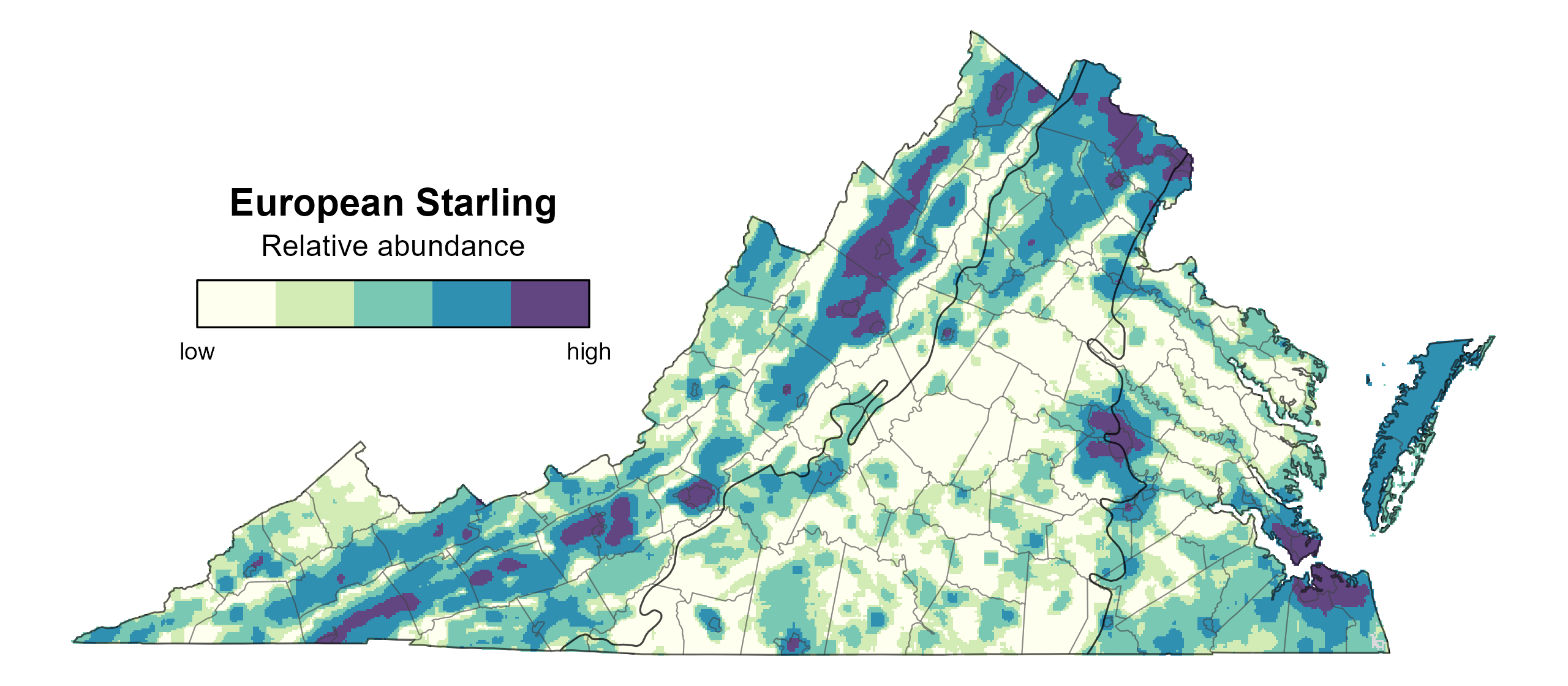
While European Starlings occur in every county in Virginia, their relative abundance is geographically varied. Relative abundance was estimated to be high in agricultural areas in the Mountains and Valleys region and the urban-suburban areas of Hampton Roads-Virginia Beach, Northern Virginia, and Richmond (Figure 7).
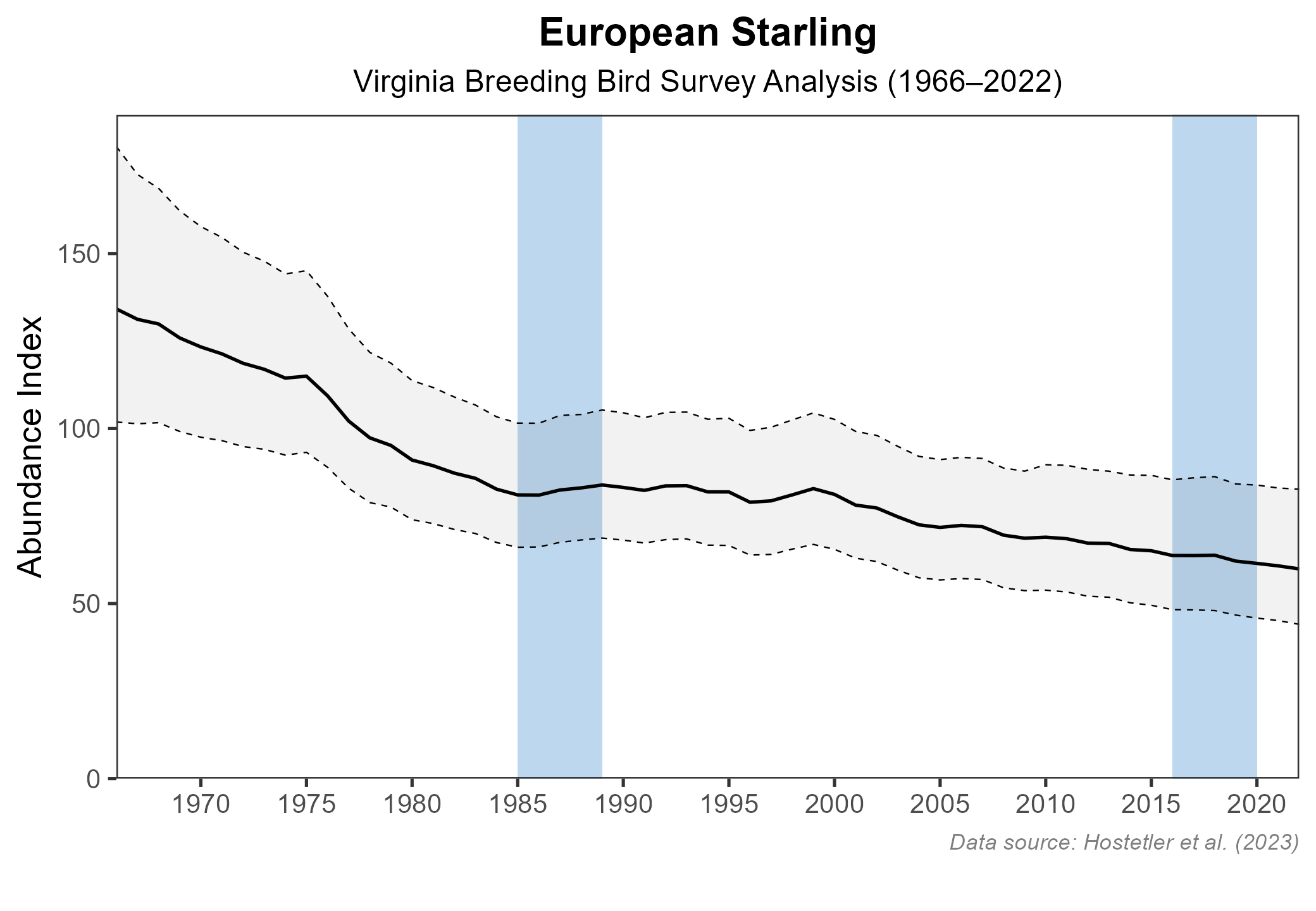
The total estimated European Starling population in the state is approximately 1,071,000 individuals (with a range between 882,000 and 1,303,000). Based on the North American Breeding Bird Survey (BBS), the European Starling population experienced a significant decline of 1.43% annually from 1966–2022 in Virginia; however, between Atlases, its population showed a nonsignificant decrease of 0.83% per year from 1987–2018 (Hostetler et al. 2023; Figure 8).
Conservation
European Starlings are a non-native invasive species; thus, they are not afforded protections under the Migratory Bird Treaty Act and are not considered a species of special concern. In fact, the species is a fierce competitor for nest cavities and may usurp the nests of native birds, such as American Kestrels (Falco sparverius).
Interactive Map
The interactive map contains up to six Atlas layers (probability of occurrence for the First and Second Atlases, change in probability of occurrence between Atlases, breeding evidence for the First and Second Atlases, and abundance for the Second Atlas) that can be viewed one at a time. To view an Atlas map layer, mouse over the layer box in the upper left. County lines and physiographic regional boundaries (Mountains and Valleys, Piedmont, and Coastal Plain) can be turned on and off by checking or unchecking the box below the layer box. Within the map window, users can hover on a block to see its value for each layer and pan and zoom to see roads, towns, and other features of interest that are visible beneath a selected layer.
View Interactive Map in Full Screen
References
Cabe, P. R. (2020). European Starling (Sturnus vulgaris), version 1.0. In Birds of the World (S. M. Billerman, Editor). Cornell Lab of Ornithology, Ithaca, NY, USA. https://doi.org/10.2173/bow.eursta.01.
Hostetler, J. A., J. R. Sauer, J. E. Hines, D. Ziolkowski, and M. Lutmerding (2023). The North American breeding bird survey, analysis results 1966–2022. U.S. Geological Survey, Laurel, MD, USA. https://doi.org/10.5066/P9SC7T11.