Introduction
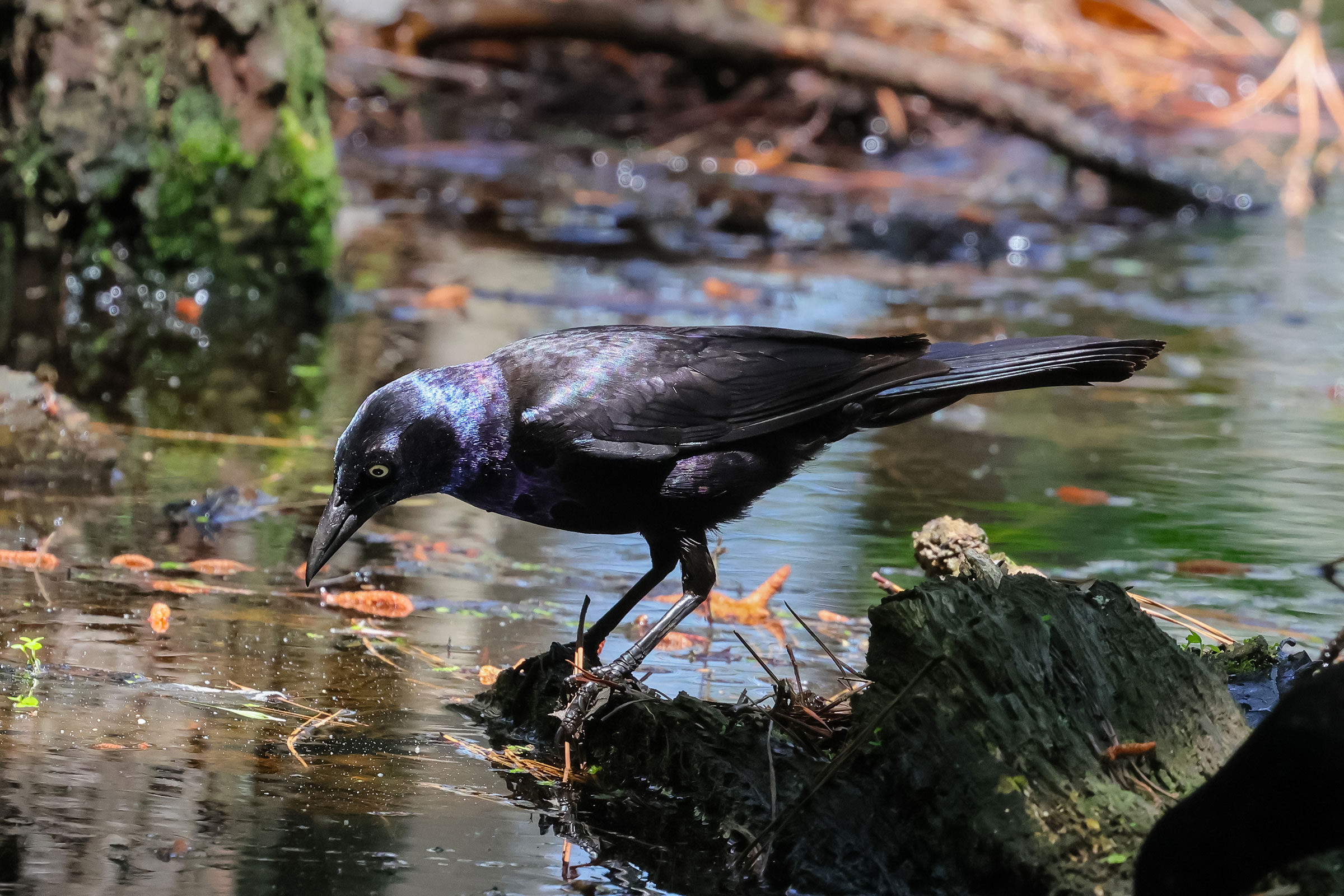
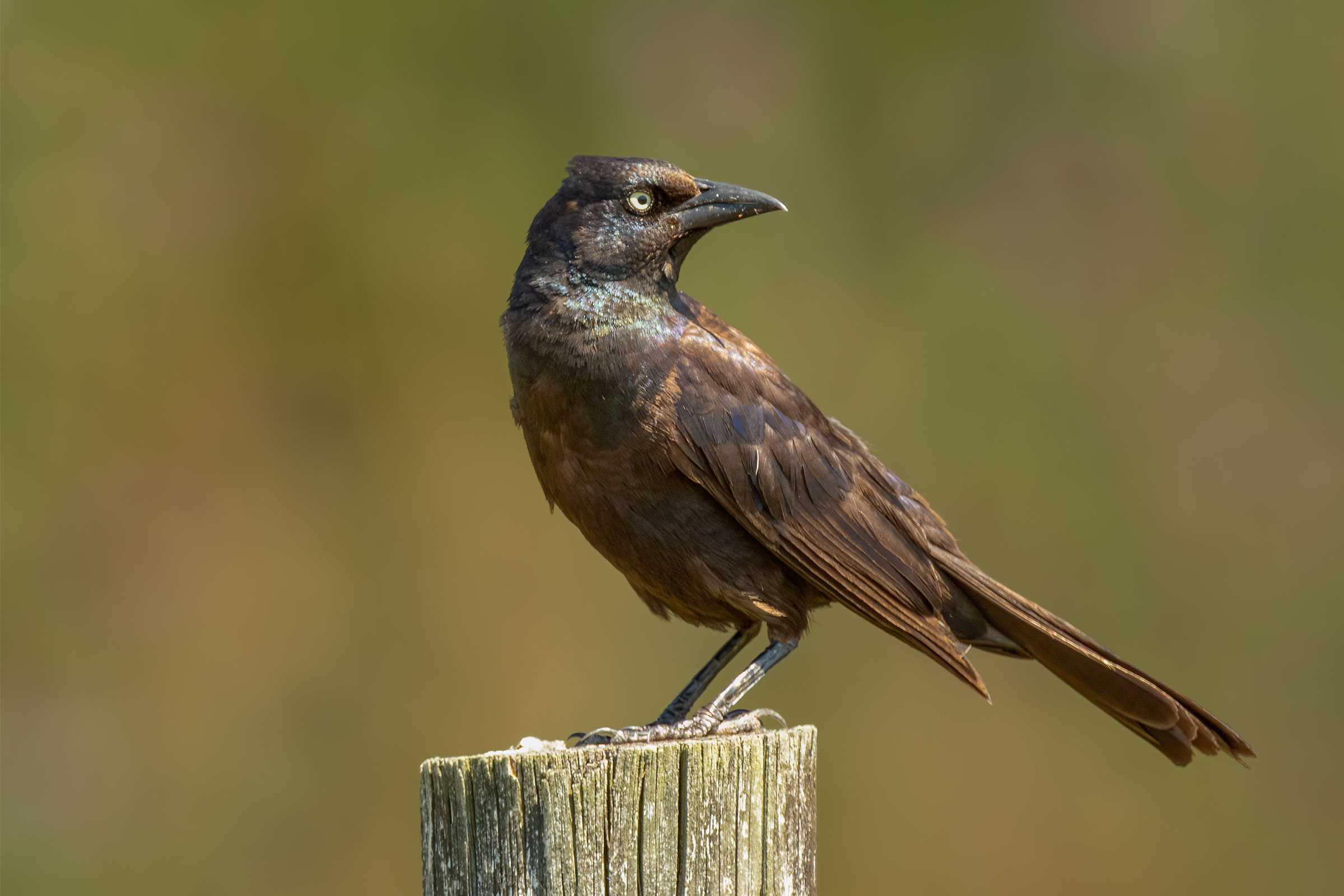
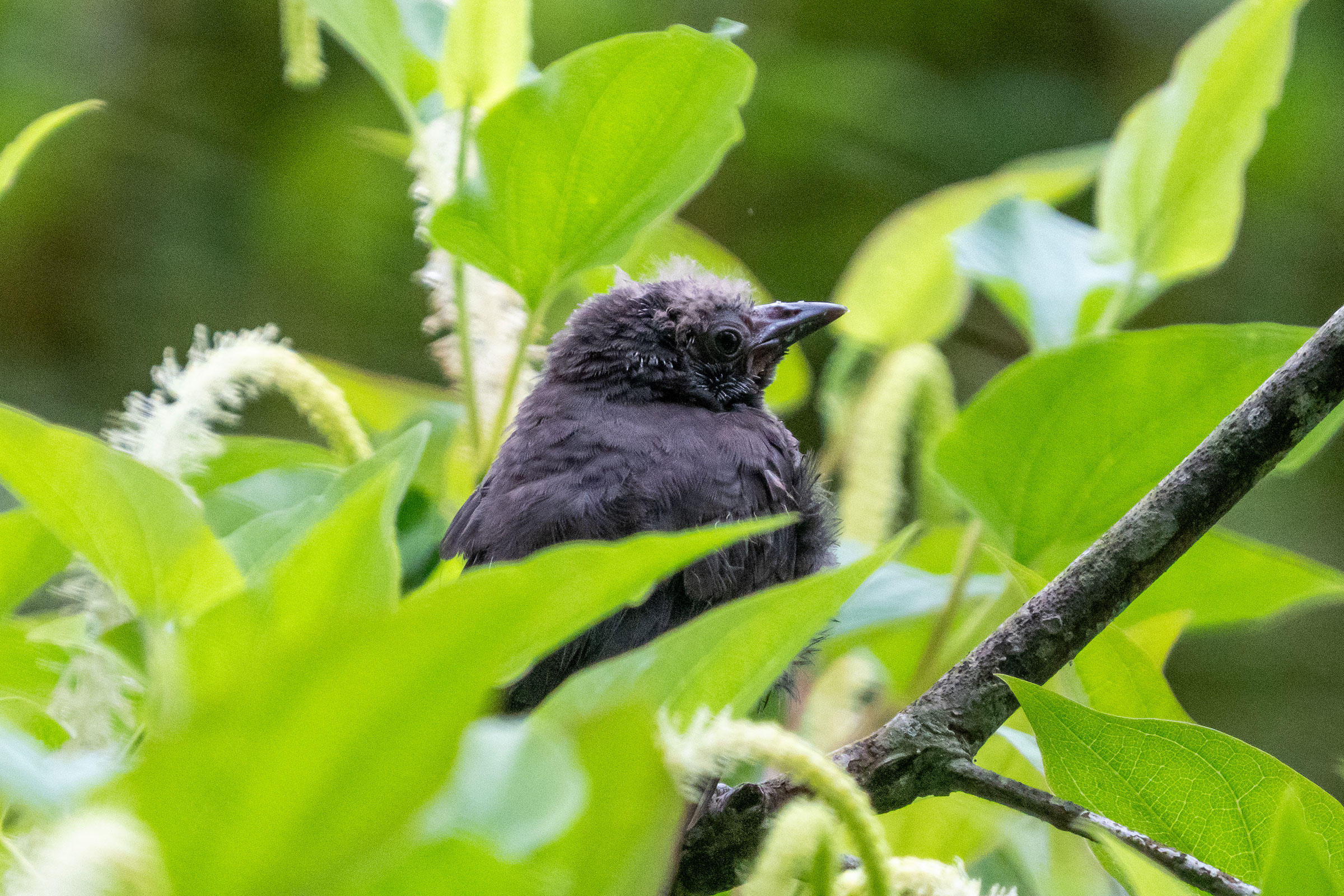
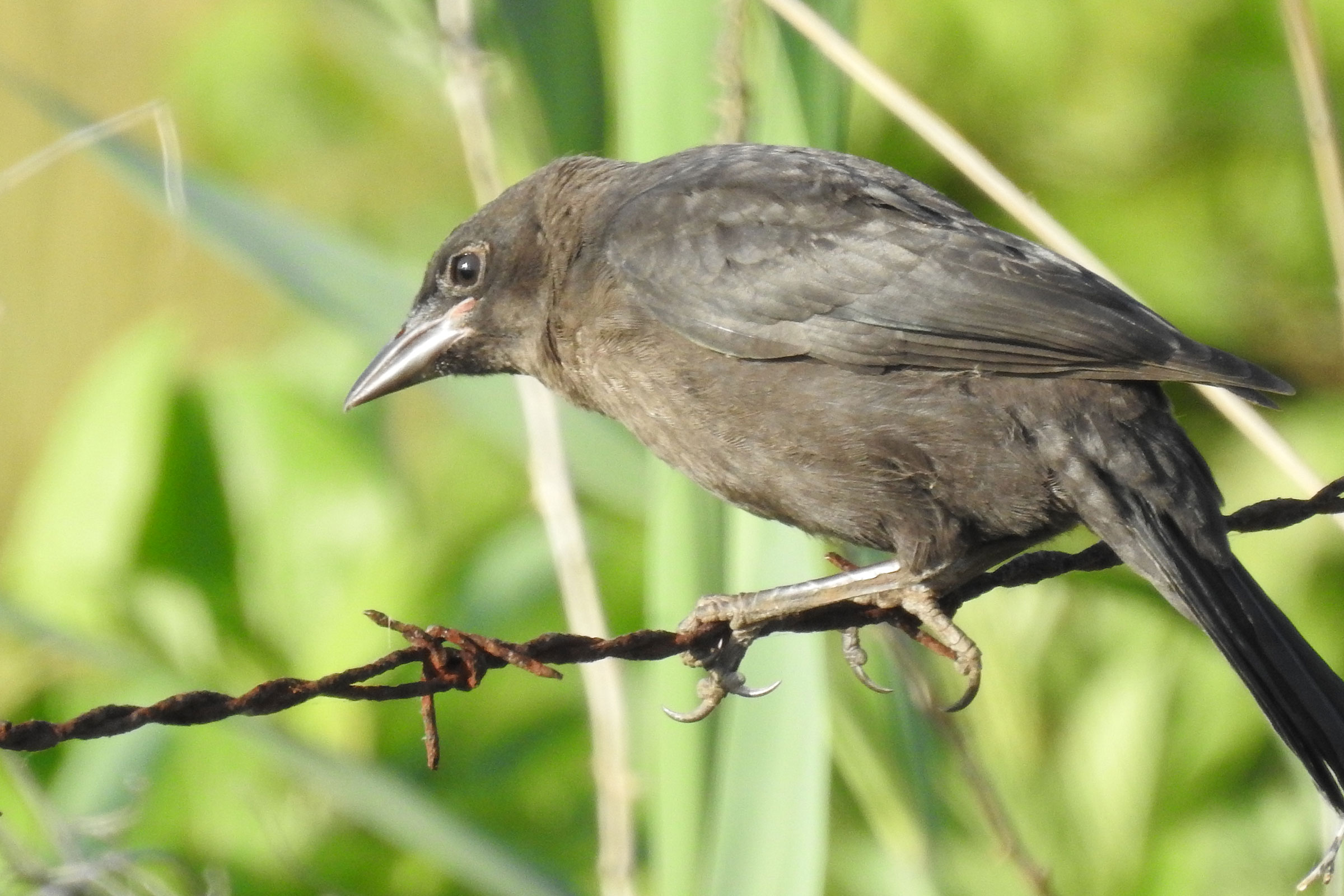
It is easy to dismiss the Common Grackle as just another “blackbird,” but a closer look reveals something different. The subtle purple, blue, and even green iridescence of a male Common Grackle is one of nature’s most remarkable sights. As a Common Grackle twists and turns, the sun reveals glossy colors along the head, nape, and wing, particularly during courtship displays, at the end of which males flare their ruffs out as they dip and raise their heads. In Virginia, Common Grackles can be found nearly anywhere there is a mix of trees for nesting or roosting and open areas for foraging, including neighborhoods, parks, open woodlands, wetlands, and farmland (Peer and Bollinger 2020).
Breeding Distribution
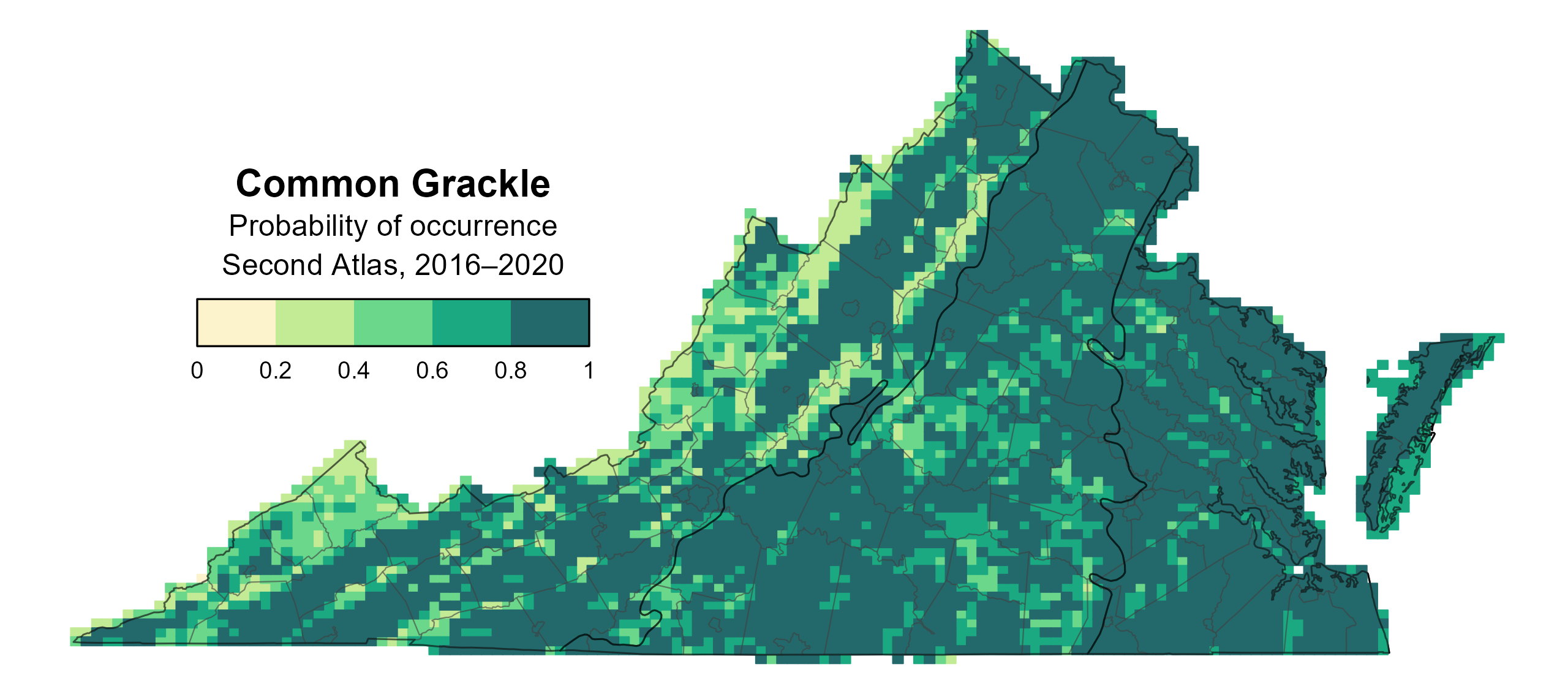
Common Grackles are found throughout the state, but they are most likely to occur in the Coastal Plan and Piedmont regions (Figure 1). Their likelihood of occurring varies throughout the Mountains and Valleys region, where they are less likely to inhabit the heavily forested mountainous areas. They are more likely to occur in blocks with agricultural and developed lands and less likely to occur in forested blocks or those with shrubland and grassland habitats.
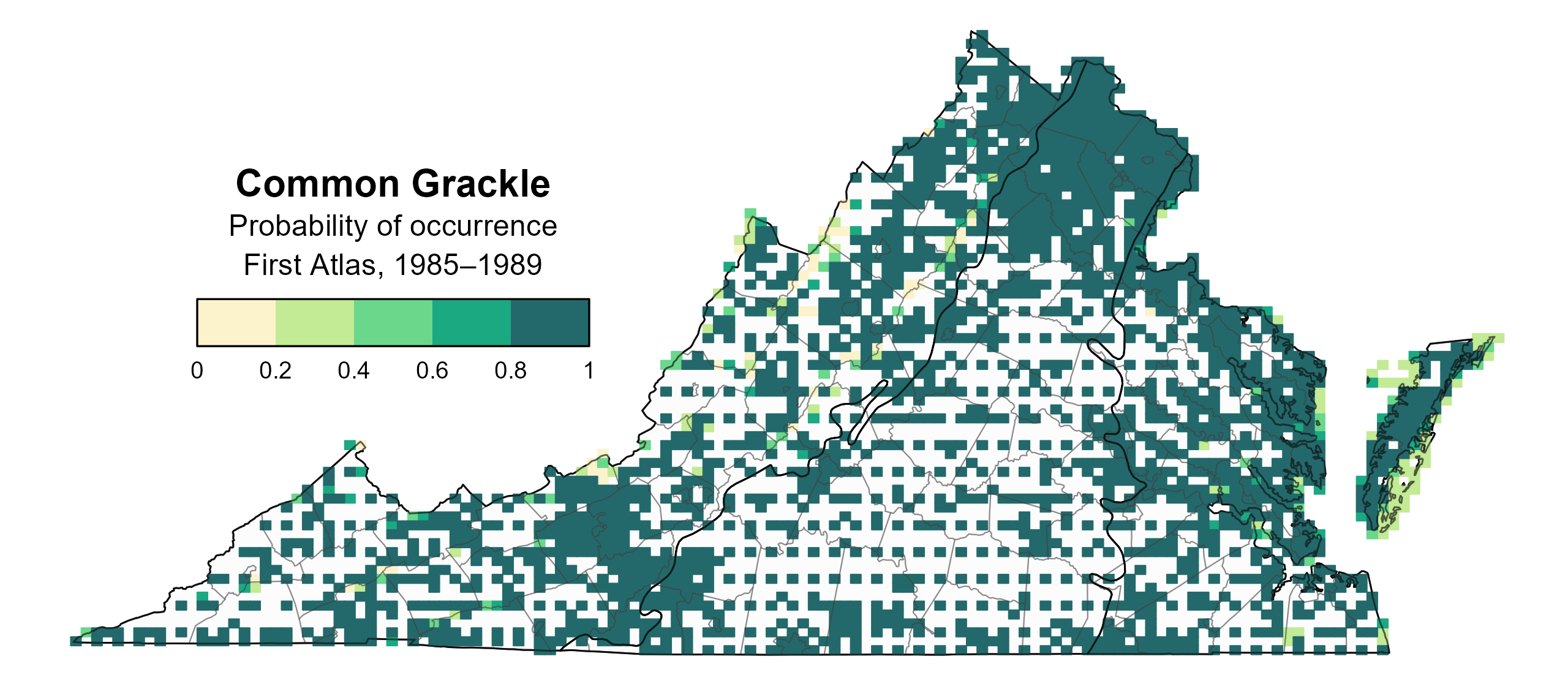
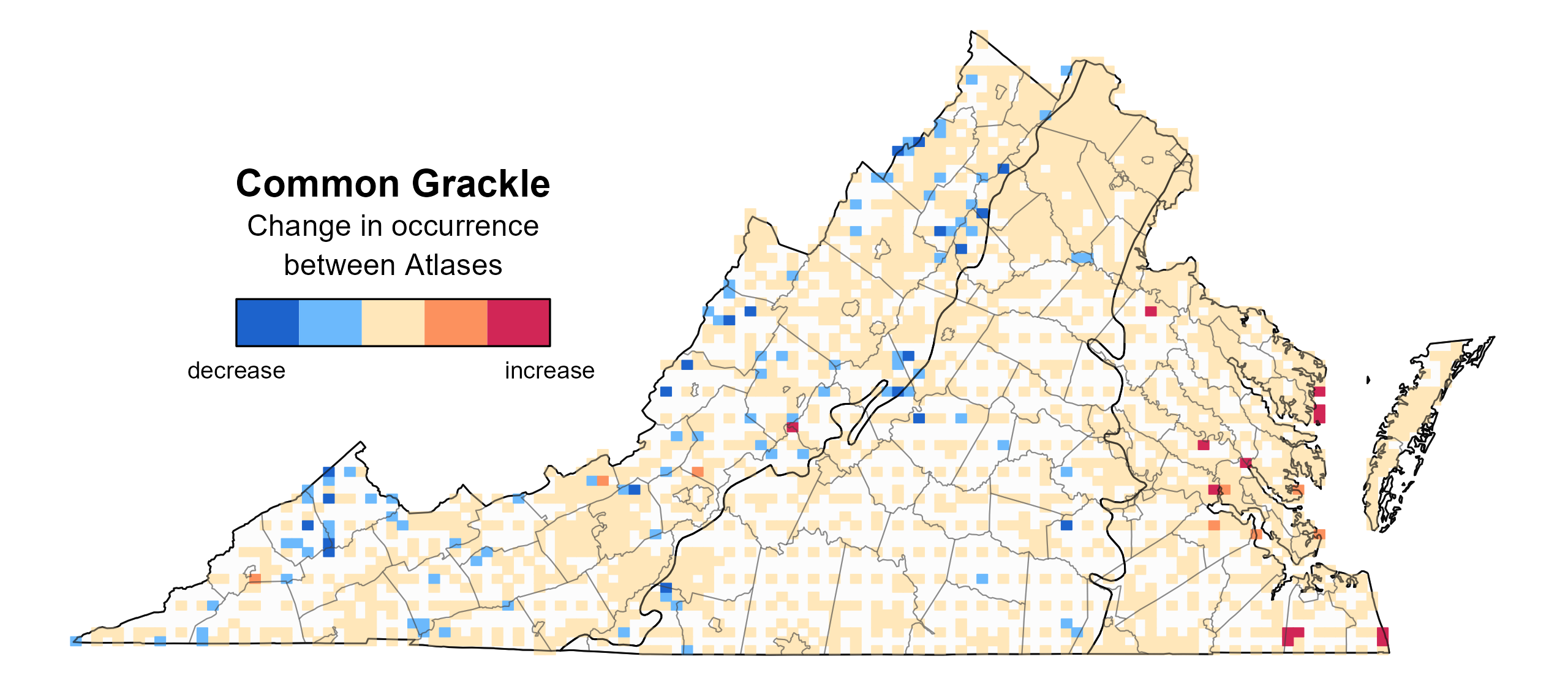
Between the First and Second Atlases (Figures 1 and 2), the Common Grackle’s likelihood of occurrence remained mostly constant throughout the entire state. However, several counties (Bath, Buchanan, Dickenson, and Shenandoah) in the Mountains and Valleys region experienced decreases in likely occurrence, and other possible small areas of decrease also occurred throughout that region (Figure 3). These decreases may have been related to reforestation, which decreased the amount of suitable breeding habitat.
View Environmental Associations
Breeding Evidence
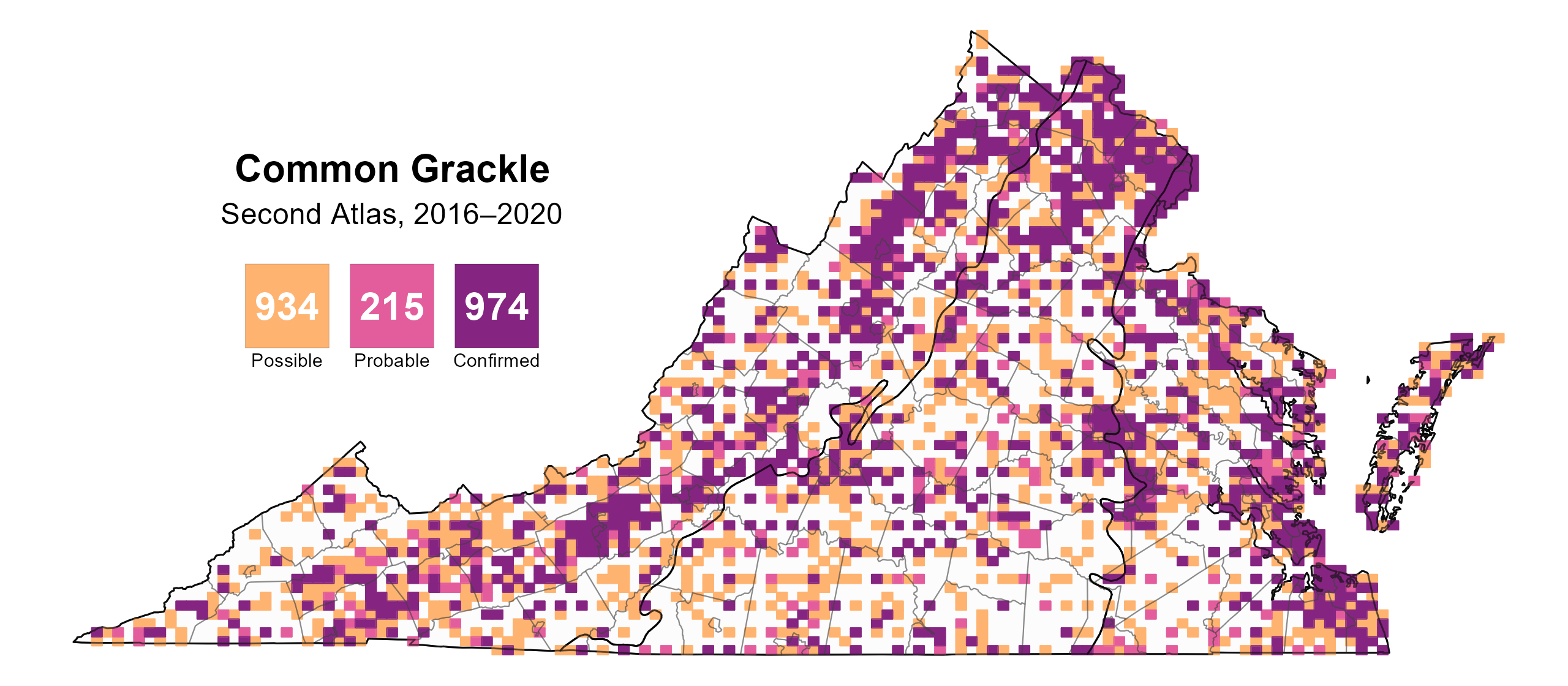
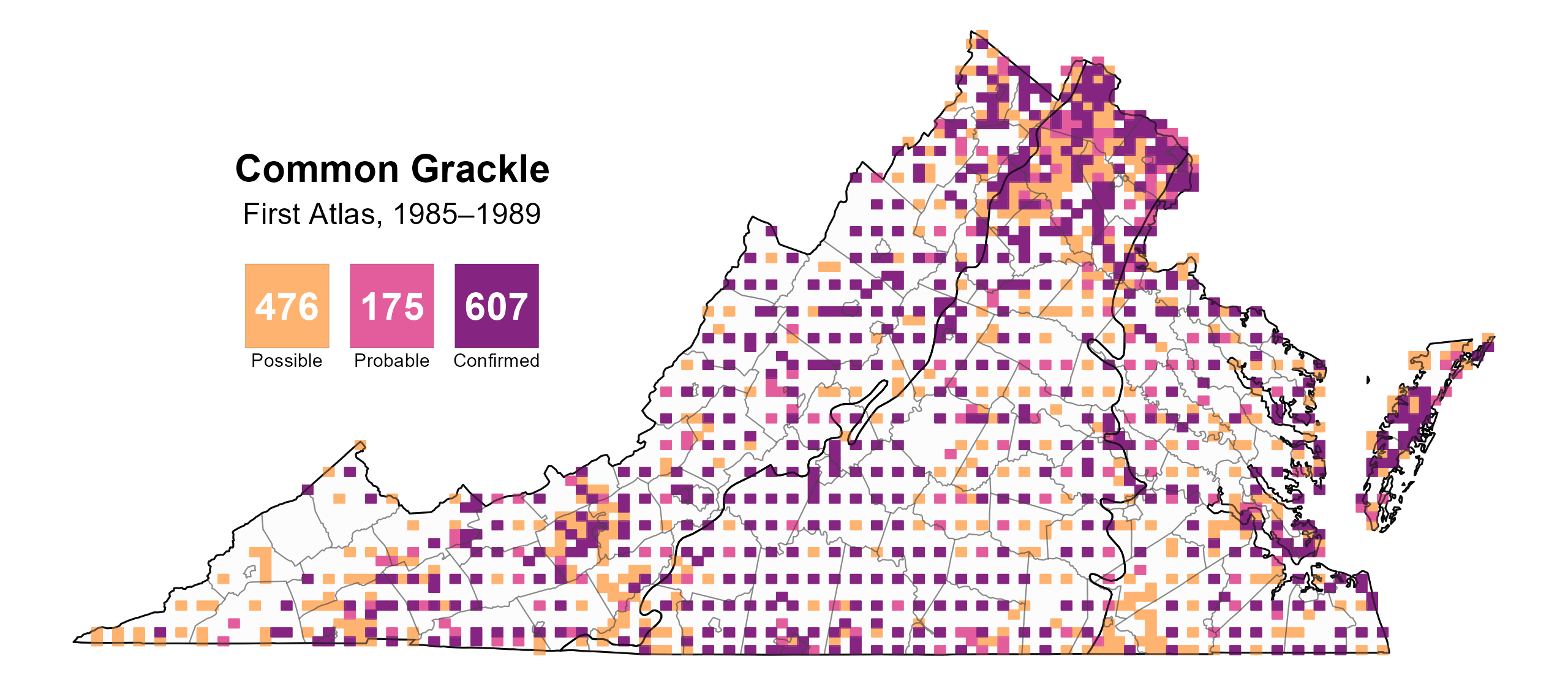
Common Grackles were confirmed breeders in 974 blocks and 127 counties and found to be probable breeders in one additional county; thus, they were confirmed or probable breeders in almost all counties (133) in the state (Figure 4). Confirmed detections were most numerous near urban areas and in rural farming regions. They were also confirmed breeders throughout the state during the First Atlas (Figure 5).
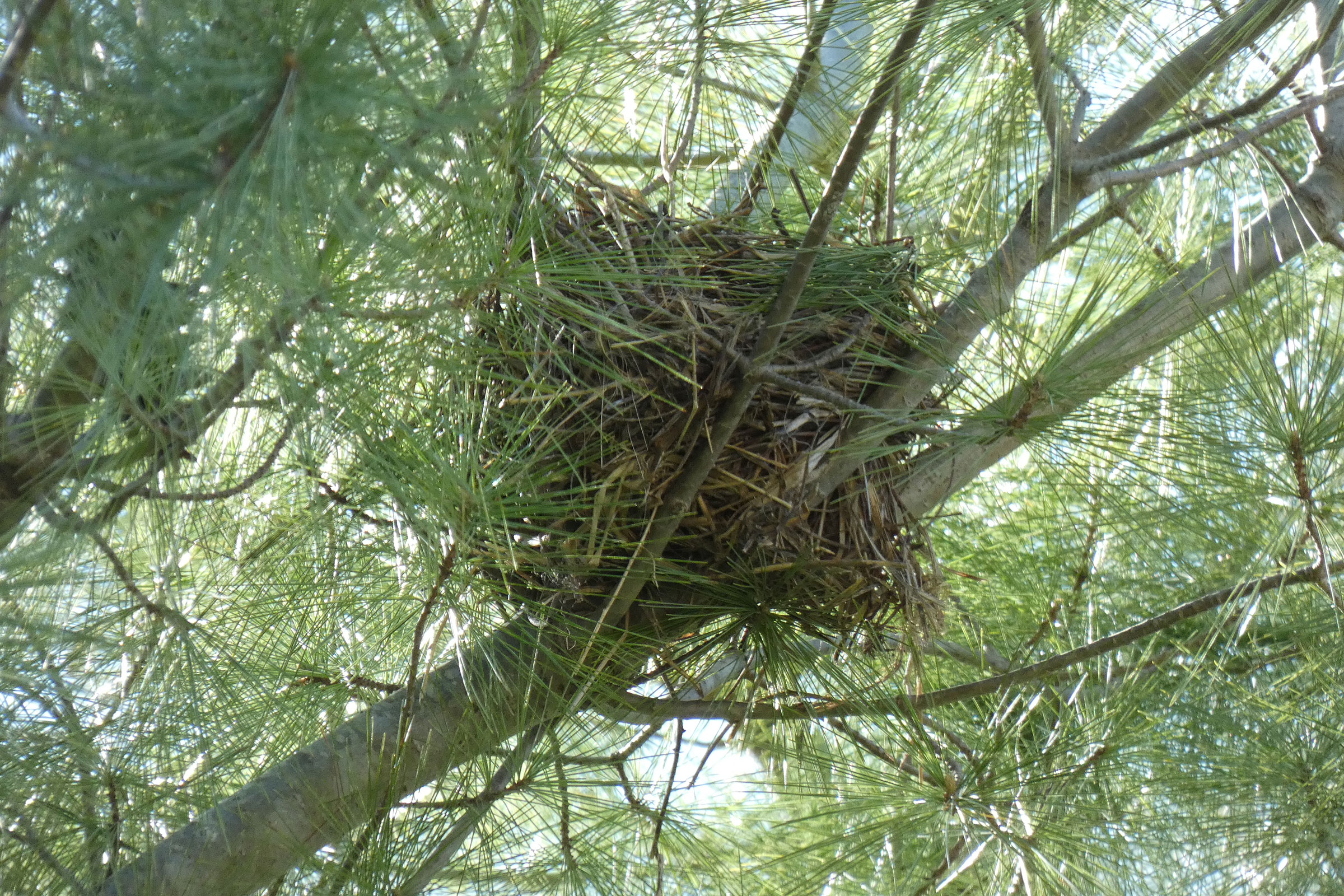
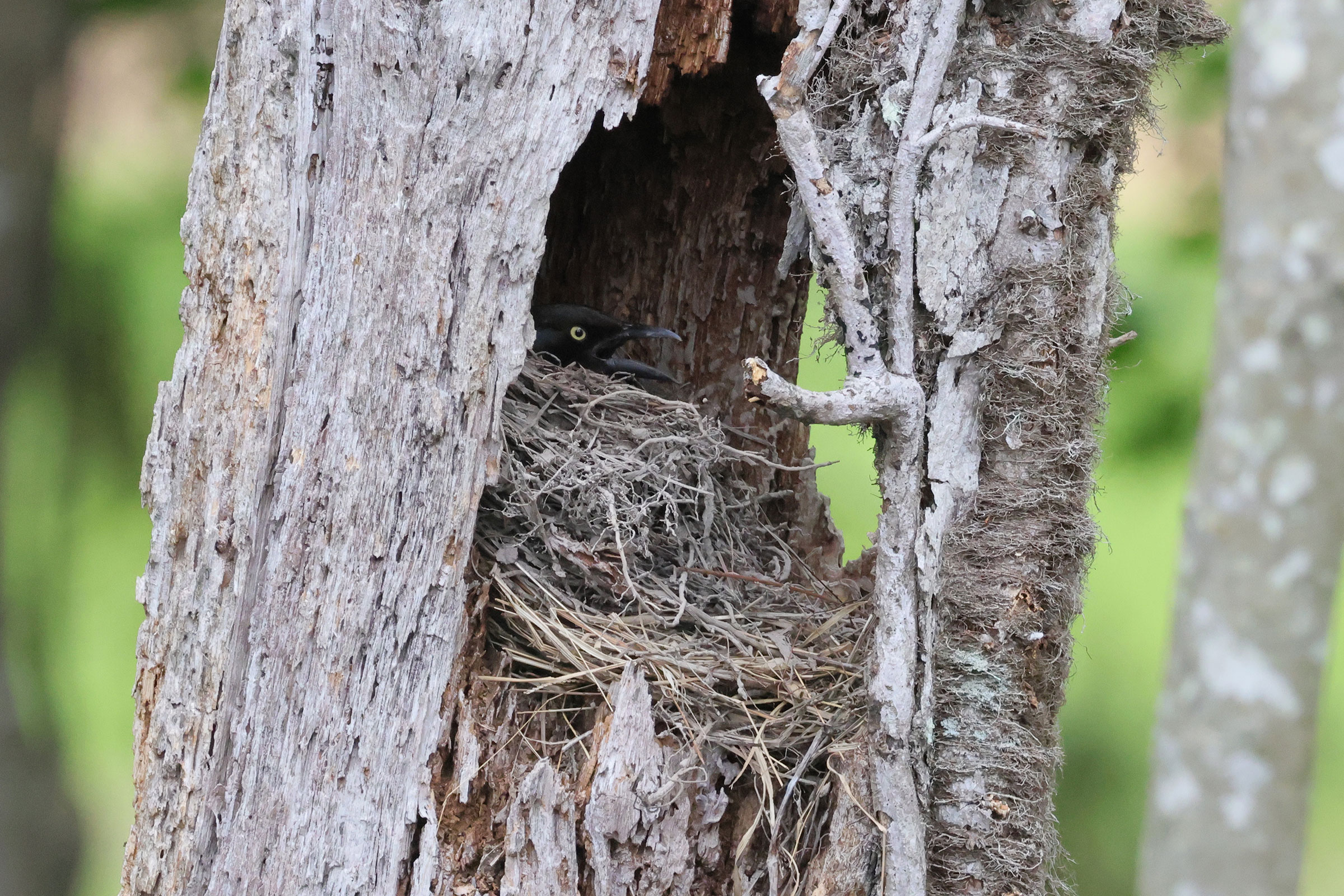
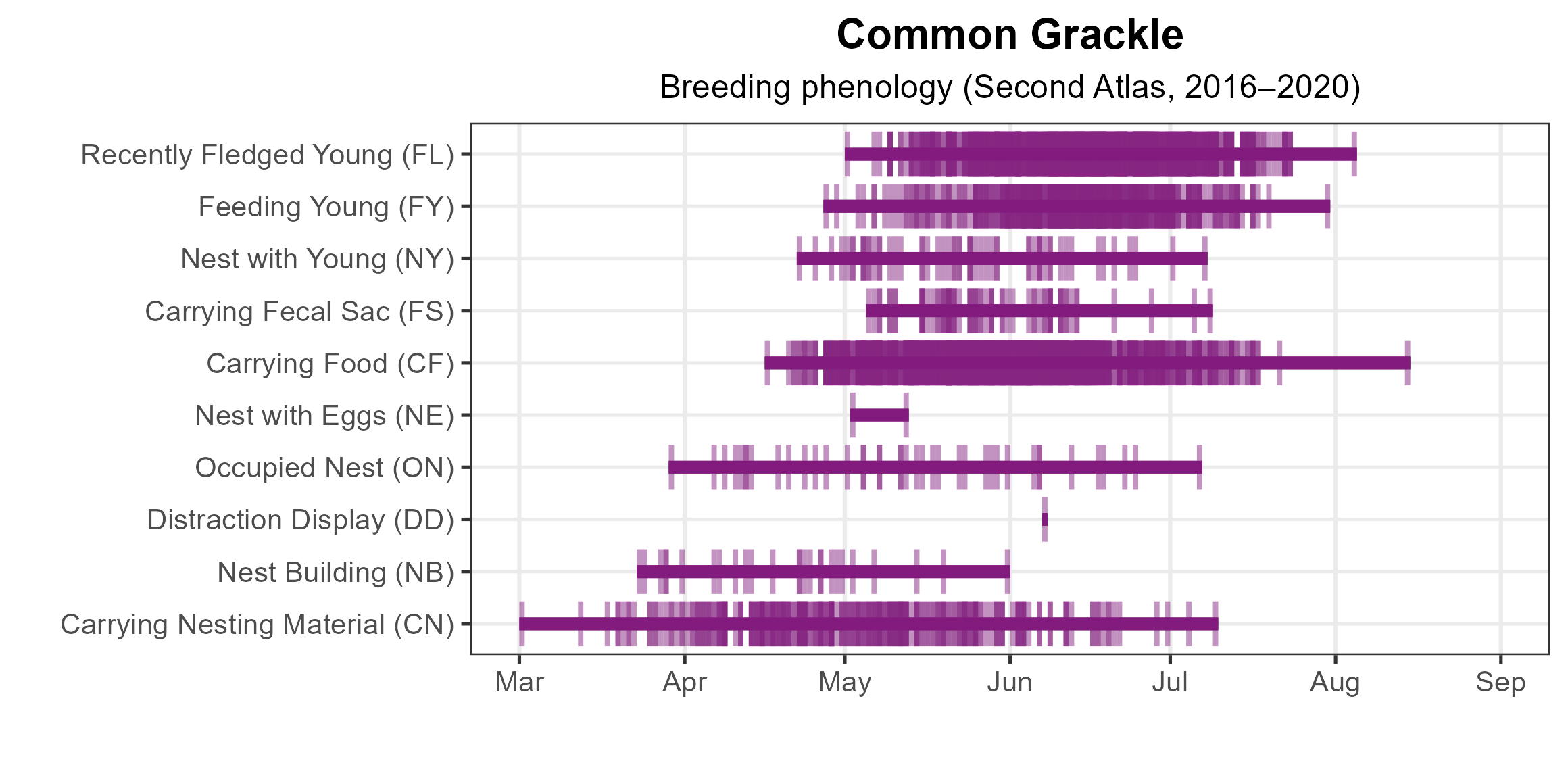
The earliest confirmed breeding behavior was documented in early March when adults were recorded carry nesting material, a behavior that is particularly conspicuous, as the female carries material while the male zealously (and unhelpfully) follows her. Breeding evidence was most frequently documented based on observations of adults carrying food (April 16 – August 14), adults feeding young (April 27 – July 30), and recently fledged young (May 1 – August 4) (Figure 6).
For more general information on the breeding habits of this species, please refer to All About Birds.
Population Status
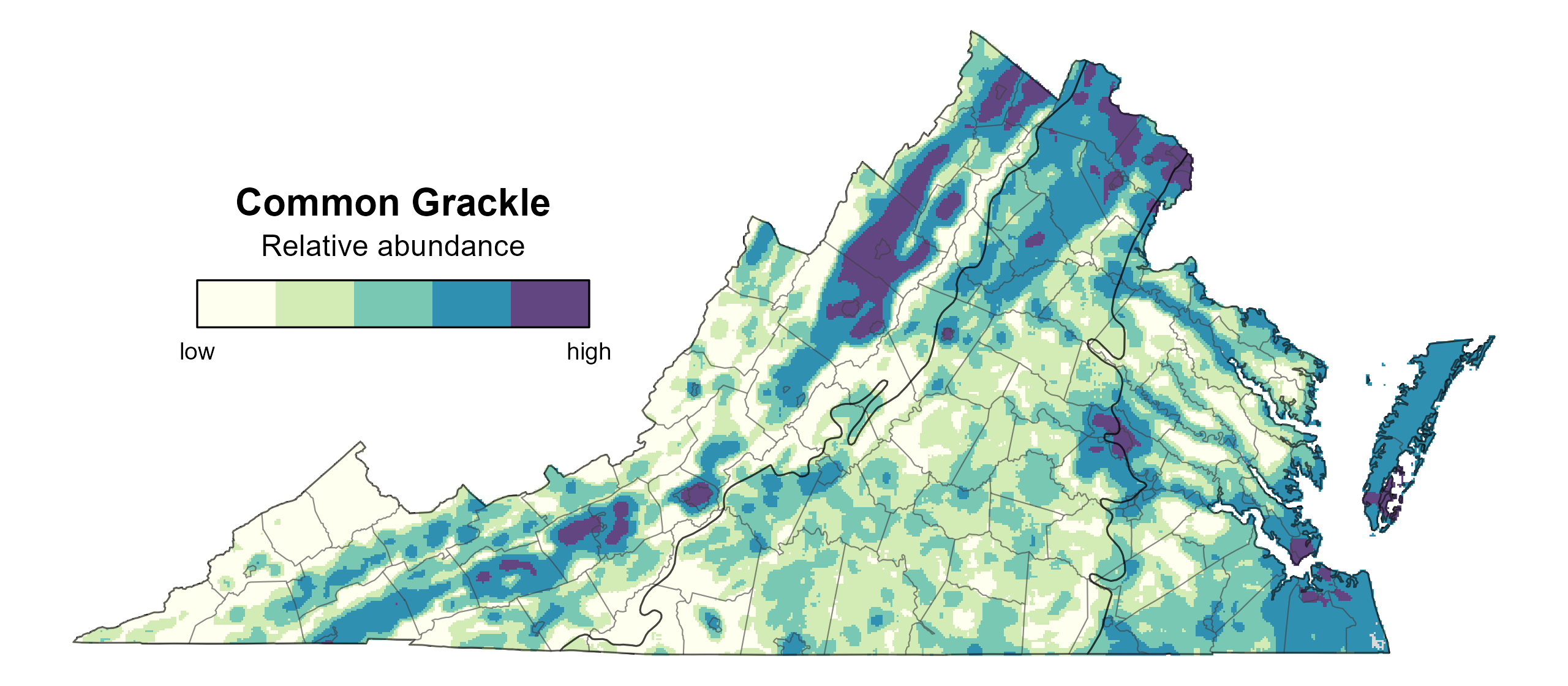
Common Grackle relative abundance was estimated to vary across the regions (Figure 7). In the Coastal Plain region, it was predicted to be high in the southeastern corner and on the Eastern Shore. In the Piedmont region, Richmond and the northern portions of the region near Fairfax had high estimated abundance levels. In the Mountains and Valleys region, estimates of high abundance were largely restricted to rural farming valleys and near developed areas (Figure 7).
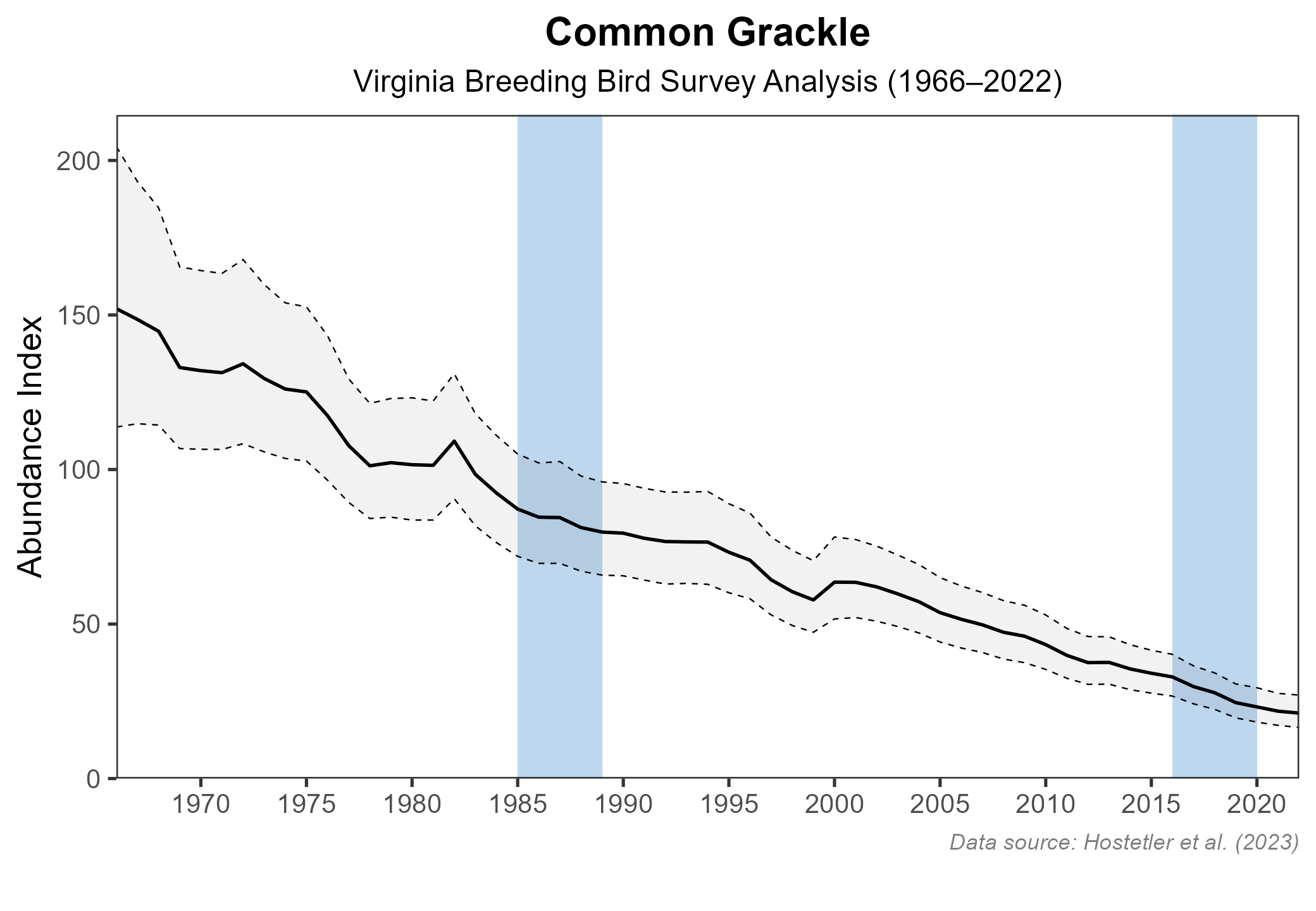
The total estimated Common Grackle population in the state is approximately 1,159,000 individuals (with a range between 944,000 and 1,425,000). Based on the North American Breeding Bird Survey (BBS), the Common Grackle population declined by a significant 3.46% annually from 1966–2021 in Virginia, and between Atlas periods, its population decreased by almost the same amount, a significant 3.52% per year from 1987–2018 (Hostetler et al. 2023; Figure 8).
Conservation
Common Grackles are relatively abundant and widespread in Virginia. They are generally considered a nuisance species, often causing significant losses to agricultural grain, seed, and fruit crops (Peer and Bollinger 2020). However, due to their declines in the state, Virginia’s 2025 Wildlife Action Plan lists this species as a Tier IV Species of Greatest Conservation Need, indicating that long-term planning may be needed (VDWR 2025).
Interactive Map
The interactive map contains up to six Atlas layers (probability of occurrence for the First and Second Atlases, change in probability of occurrence between Atlases, breeding evidence for the First and Second Atlases, and abundance for the Second Atlas) that can be viewed one at a time. To view an Atlas map layer, mouse over the layer box in the upper left. County lines and physiographic regional boundaries (Mountains and Valleys, Piedmont, and Coastal Plain) can be turned on and off by checking or unchecking the box below the layer box. Within the map window, users can hover on a block to see its value for each layer and pan and zoom to see roads, towns, and other features of interest that are visible beneath a selected layer.
View Interactive Map in Full Screen
References
Hostetler, J. A., J. R. Sauer, J. E. Hines, D. Ziolkowski, and M. Lutmerding (2023). The North American breeding bird survey, analysis results 1966–2022. U.S. Geological Survey, Laurel, MD, USA. https://doi.org/10.5066/P9SC7T11.
Peer, B. D., and E. K. Bollinger (2020). Common Grackle (Quiscalus quiscula), version 1.0. In Birds of the World (A. F. Poole and F. B. Gill, Editors). Cornell Lab of Ornithology, Ithaca, NY, USA. https://doi.org/10.2173/bow.comgra.01.
Virginia Department of Wildlife Resources (VDWR). 2025. Virginia wildlife action plan. Virginia Department of Wildlife Resources, Henrico, VA, USA. 506 pp.