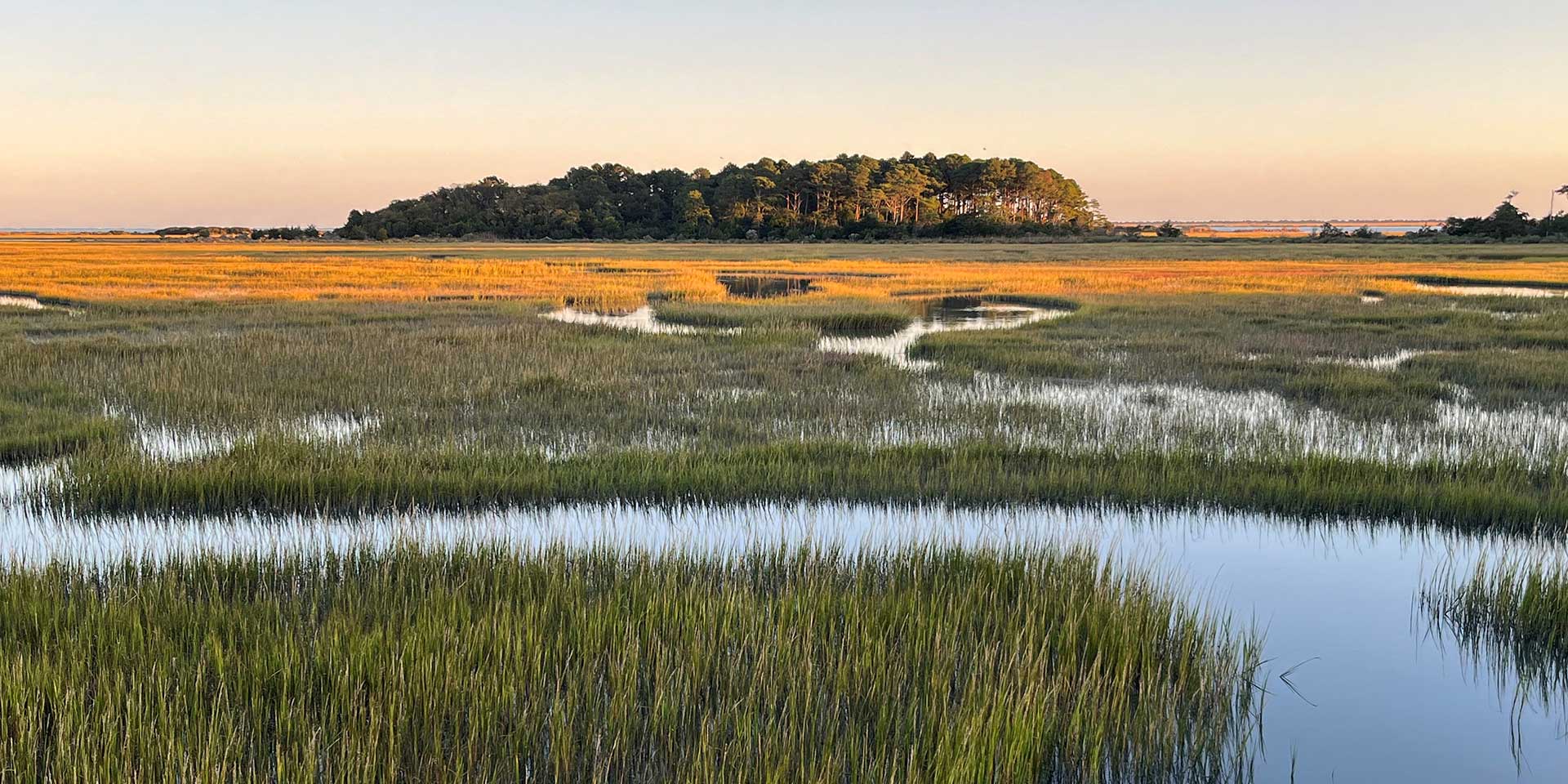
These wetlands are dominated by non-woody vegetation, including grasses, sedges (Carex spp.) and rushes (Juncus spp.), in areas where the soil is periodically saturated with or covered by water (USGS 2024). In Virginia they are primarily represented by marshes, but can also include wet meadows, springs, impoundments and vernal pools (VDWR 2025). In 2020, these wetlands collectively covered approximately 191,000 acres (77,200 hectares), equivalent to only 0.8% of the Commonwealth.
Tidal marshes in coastal Virginia vary in salinity, ranging from saltwater and brackish marshes in the lower reaches of the Chesapeake Bay and its tributaries, to freshwater marshes in the upper reaches (Woodward and Hoffman 1991, Wilson et al. 2007). Higher salinity marshes are characterized by vertical structure in the form of grasses and associates, while broad-leaved plants are more common in freshwater systems (Wilson et al. 2007). Vegetation can also differ within salinity zones on the basis of elevation. Within salt marshes, high marsh floods irregularly when the highest tides occur, resulting in a greater shrub component than in low marsh, which floods daily with the tides (Woodward and Hoffman 1991).
Inland marshes are exclusively freshwater marshes, although unique inland salt marshes are found near Saltville in Smyth County (Fleming et al. 2021).
Historic draining, ditching and filling of marshes to support agriculture and development led to the loss of a high proportion of Virgina’s marshes (VDWR 2025). Marsh habitat statewide is currently threatened by development, non-native invasive plant species (e.g. Phragmites), and pollution due to stormwater and agricultural runoff (VDWR 2025). Coastal and tidal wetlands may be further impacted by marsh subsidence (sinking of the marsh), rising sea levels, storm surges and prolonged high tides (VDWR 2025).
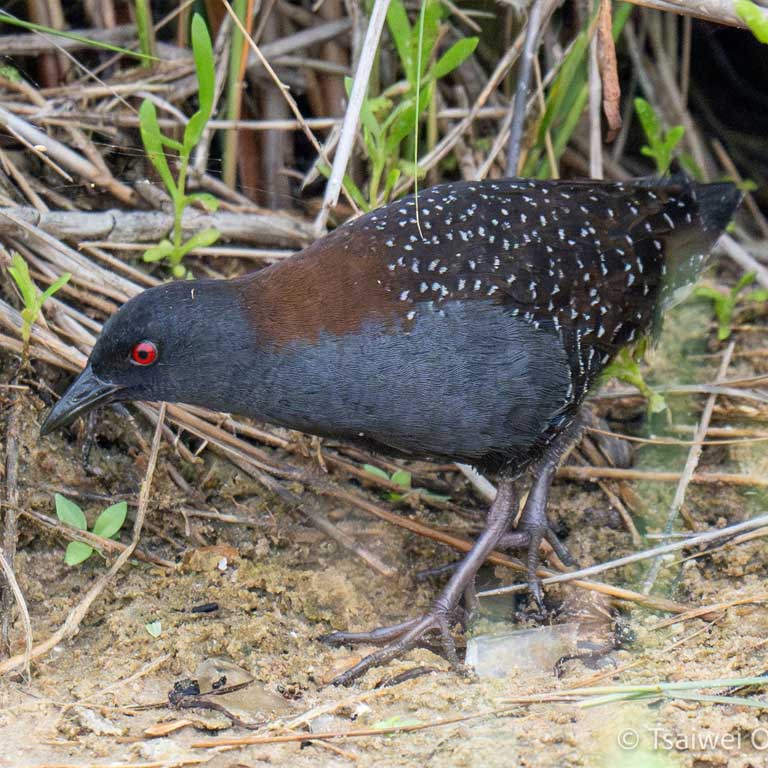
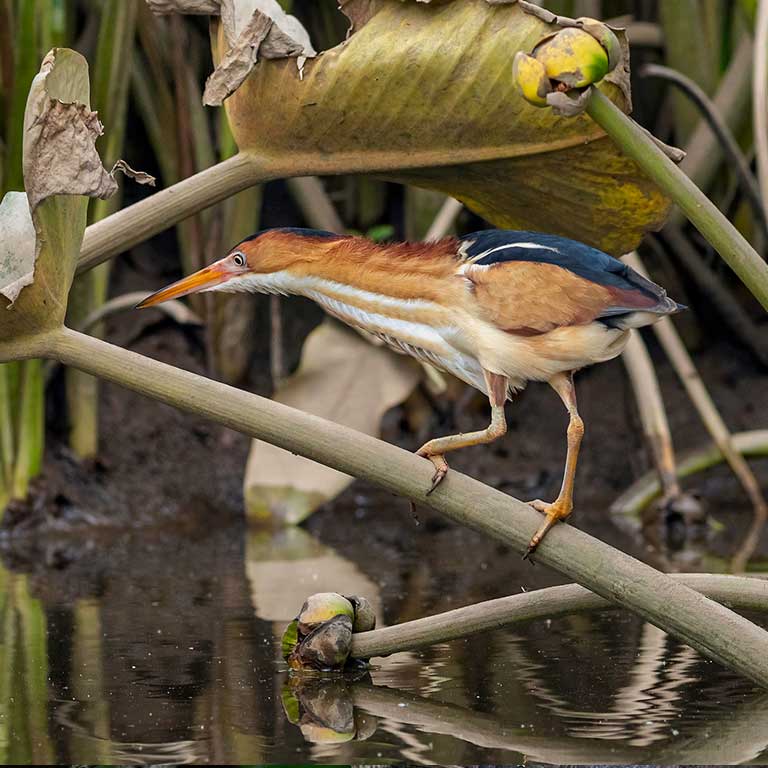
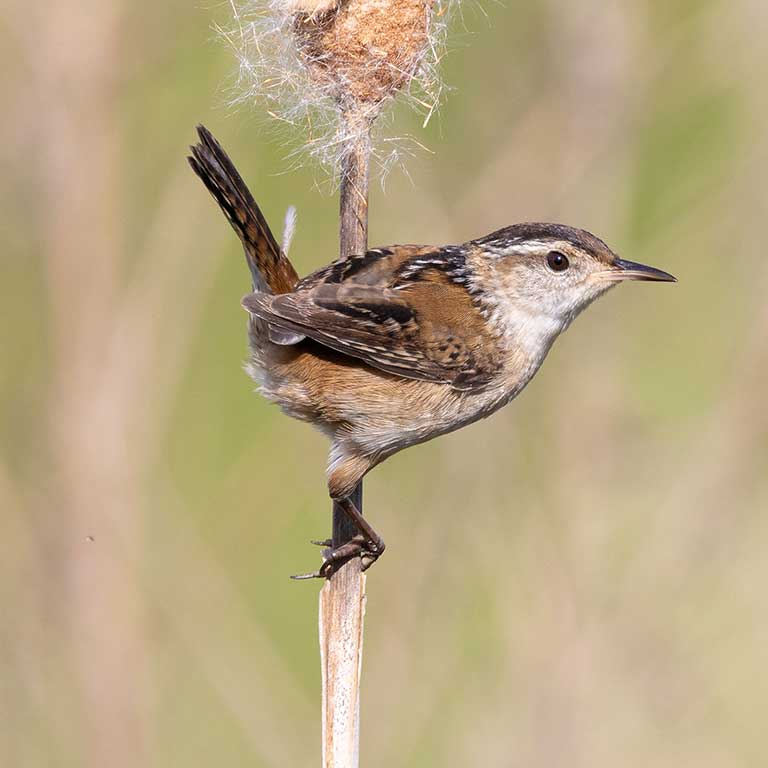
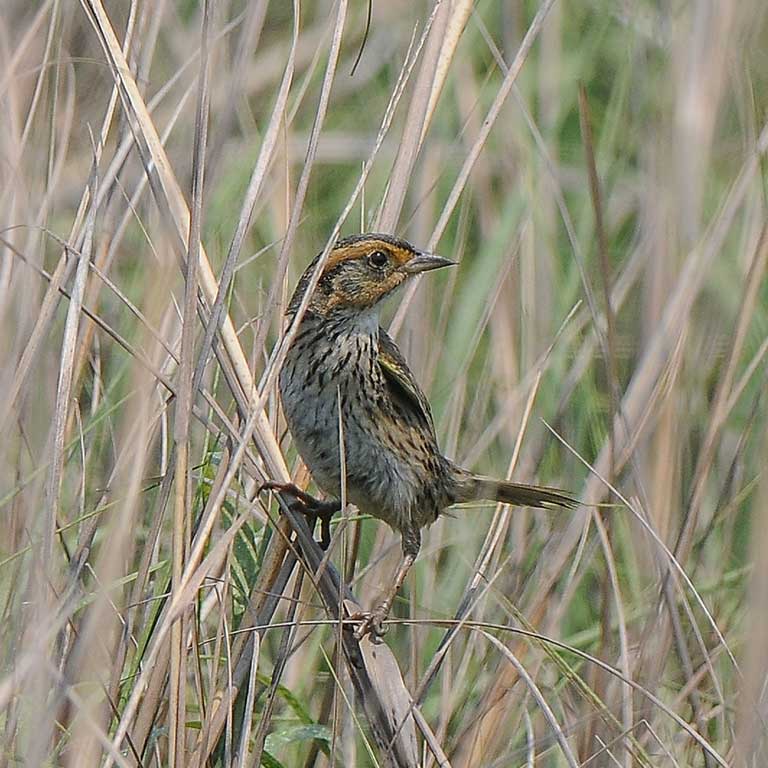
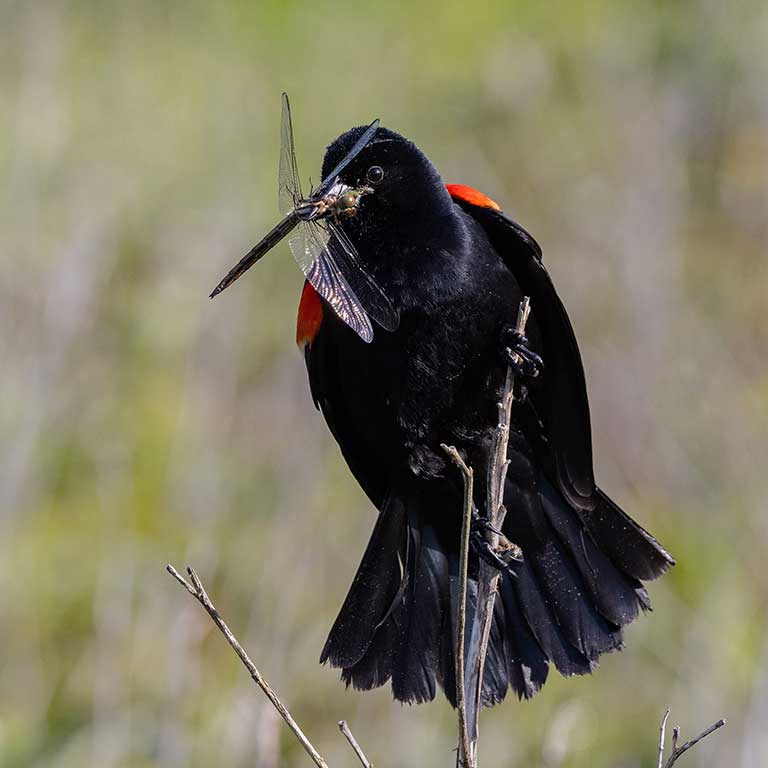
A broad suite of breeding bird species depends on marshes, many of them Species of Greatest Conservation Need. The Federally Threatened Black Rail (Laterallus jamaicensis) is associated with high marsh habitats on the Eastern Shore. Least Bittern (Botaurus exilis), Marsh Wren (Cistothorus palustris), Saltmarsh Sparrow (Ammospiza caudacuta), and Red-winged Blackbird (Agelaius phoeniceus) are a few of the many priority species associated with coastal and/or inland marshes.
Literature Cited
Fleming, G. P., K. D. Patterson, and K. Taverna (2021). The Natural Communities of Virginia: a Classification of Ecological Community Groups and Community Types. Third approximation. Version 3.3. Virginia Department of Conservation and Recreation, Division of Natural Heritage, Richmond, VA. www.dcr.virginia.gov/natural-heritage/natural-communities/
U.S. Geological Survey (USGS) (2024). Annual NLCD collection 1 science products (ver. 1.1, June 2025): U.S. Geological Survey data release. Reston, VA, USA. https://doi.org/10.5066/P94UXNTS.
Virginia Department of Wildlife Resources (VDWR) (2025). Virginia wildlife action plan. Virginia Department of Wildlife Resources, Henrico, VA, USA. 506 pp.
Wilson, M. D., B. D. Watts, and D. F. Brinker (2007). Status review of Chesapeake Bay marsh lands and breeding marsh birds. Waterbirds 30: 122–137.
Woodward, S. L. and R. L. Hoffman (1991). The nature of Virginia. Pages 23-50 in: McDonald, J. N. and T. Skware, eds. Virginia’s endangered species: proceedings of a symposium, coord. by Karen Terwilliger. The MacDonald and Woodward Publishing Co., Blacksburg