Introduction
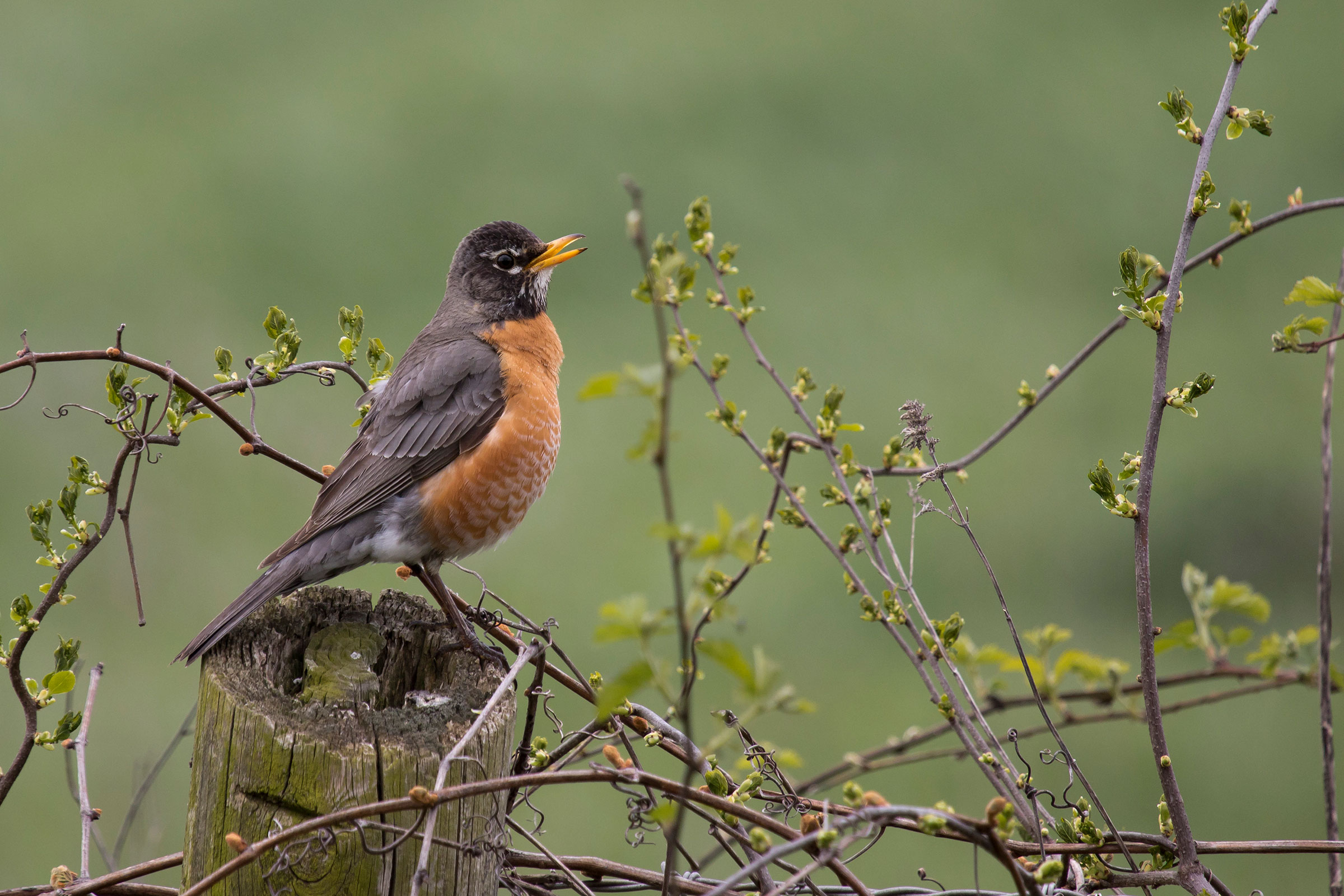
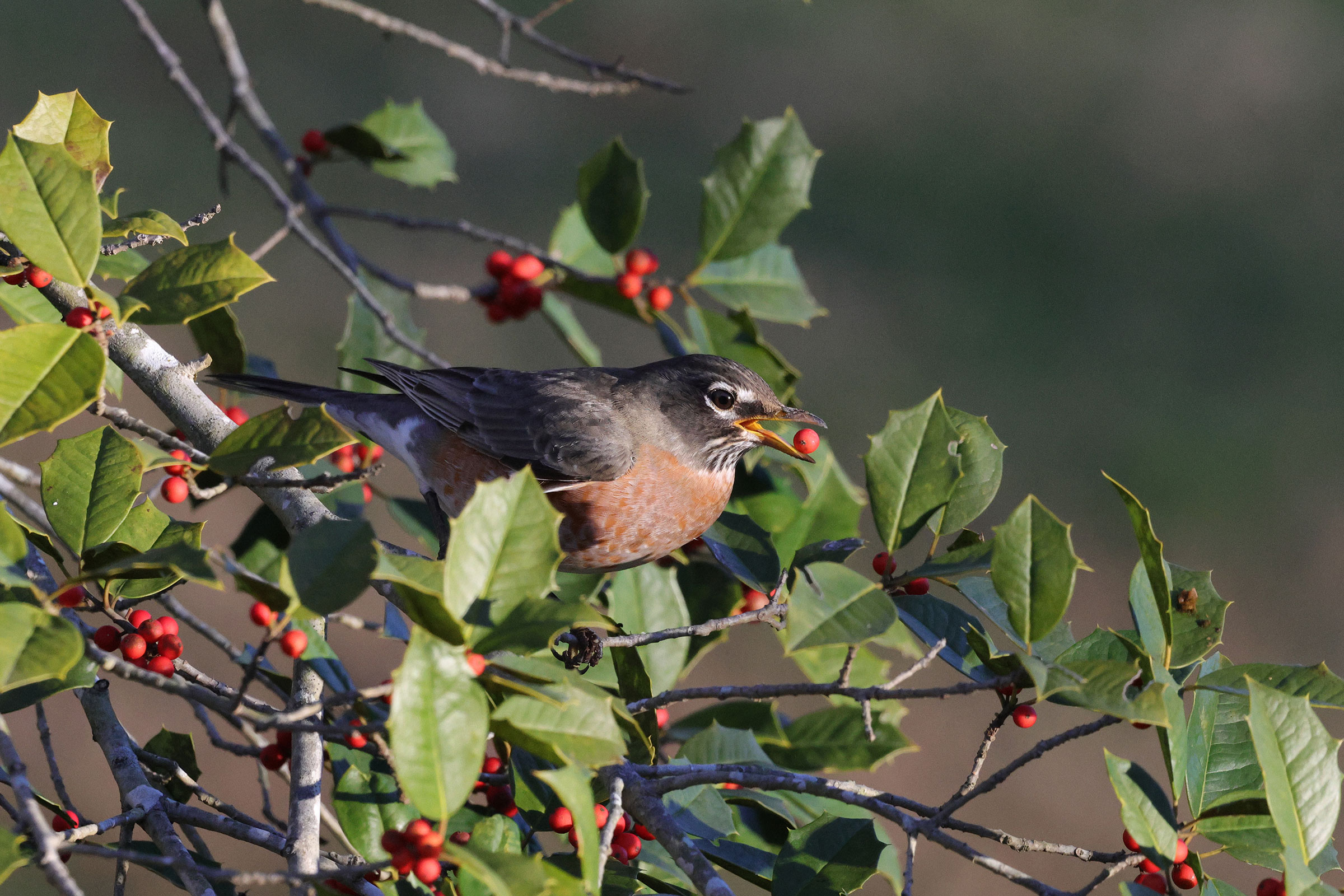
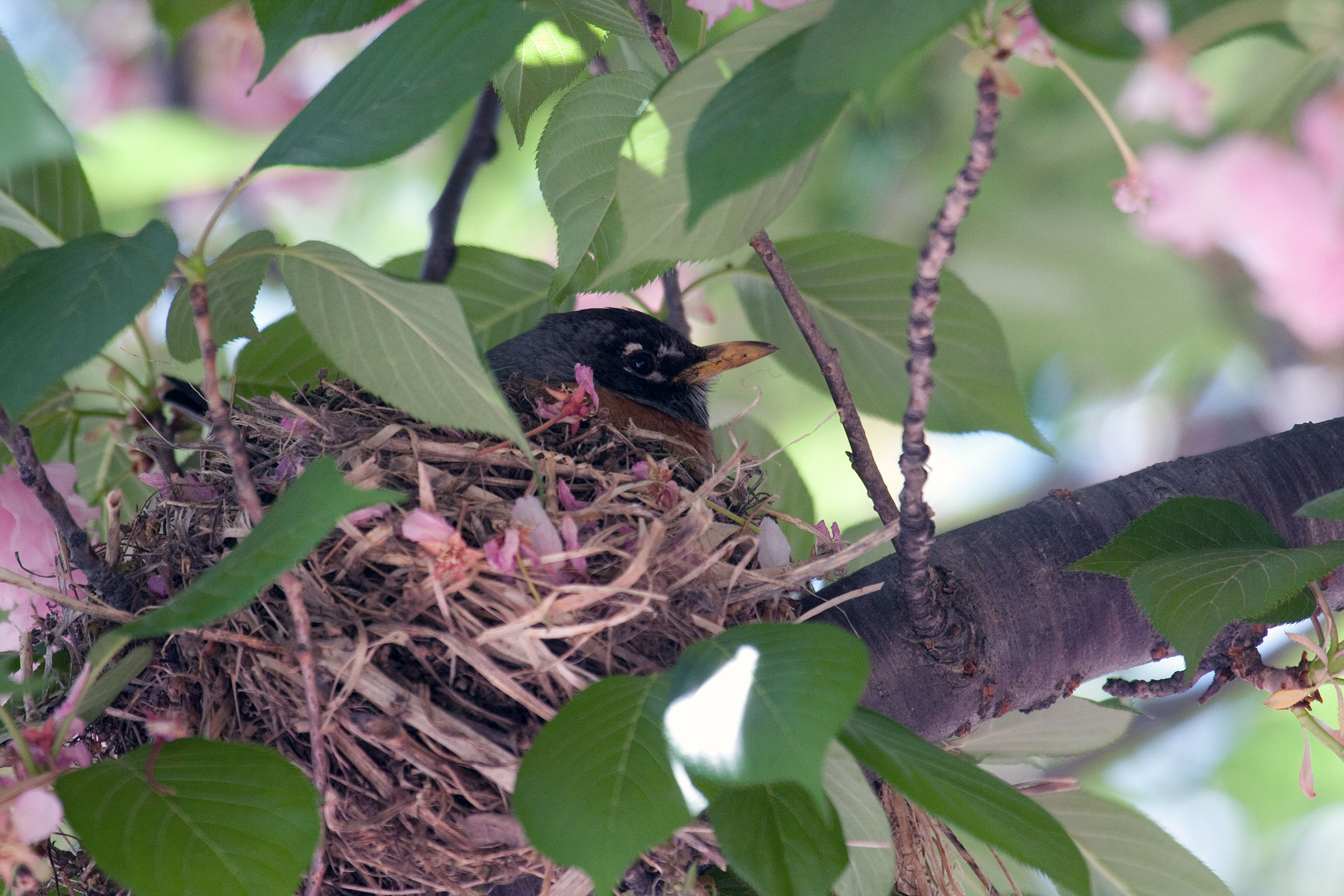
The American Robin is perhaps the most well-known bird in Virginia and throughout North America. It is often the first bird that children learn about at home and in school. In Virginia, the American Robin is a ubiquitous presence in yards, athletic fields, parks, farms, and forests. Surprisingly, it is equally prevalent on the tallest mountains as it is in suburban backyards with at least a small patch of grass. One of the first signs of spring, the American Robin is often the species we think of when uttering the phrase, “the early bird gets the worm” (Vanderhoff et al. 2020).
Breeding Distribution
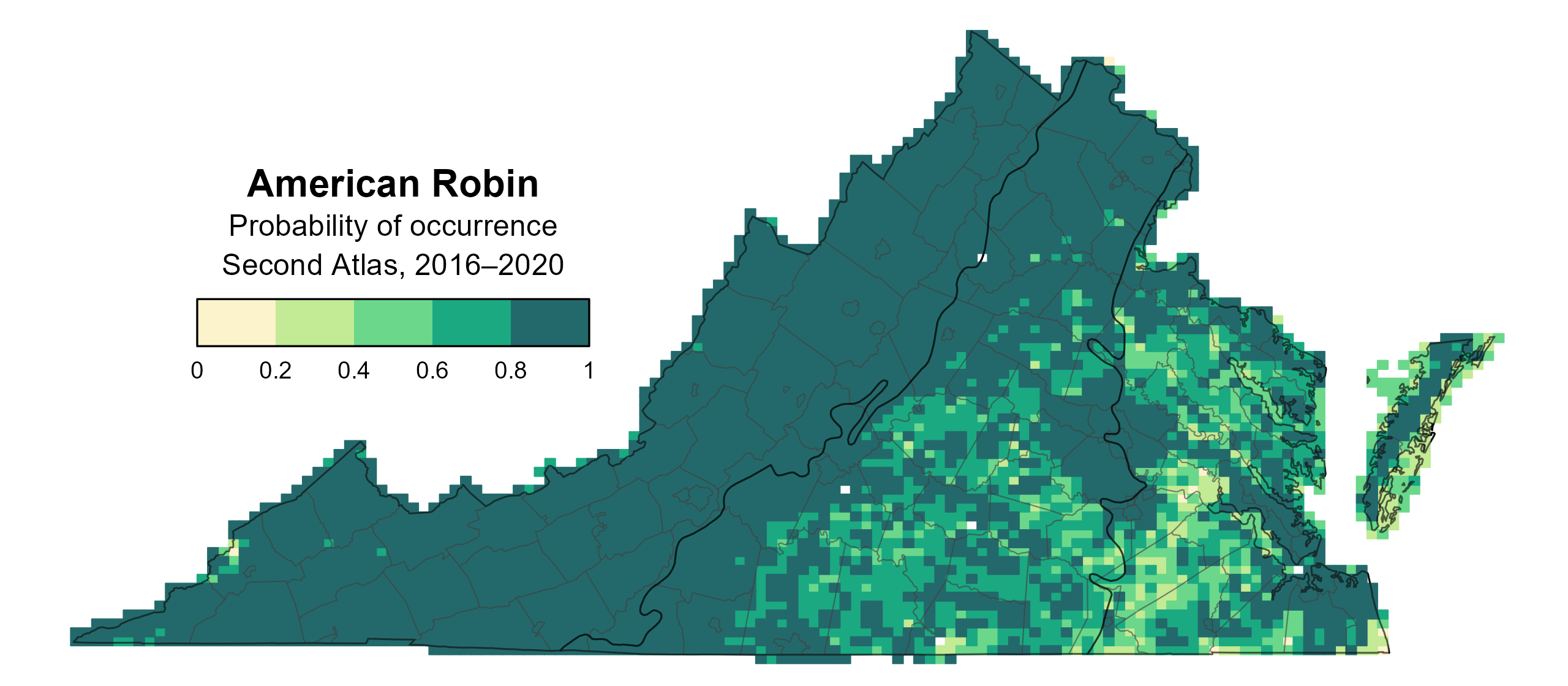
The American Robin occurs throughout Virginia but has the highest likelihood of occurring in the Mountains and Valleys region and the northern part of the Piedmont region (Figure 1). In the remainder of the Piedmont region and throughout the Coastal Plain, the probability of this species occurring is less consistent, with a few areas of moderate to low occupancy. Their likelihood of occurrence is not associated with any one environmental variable because American Robins have high occupancy across most of the state.
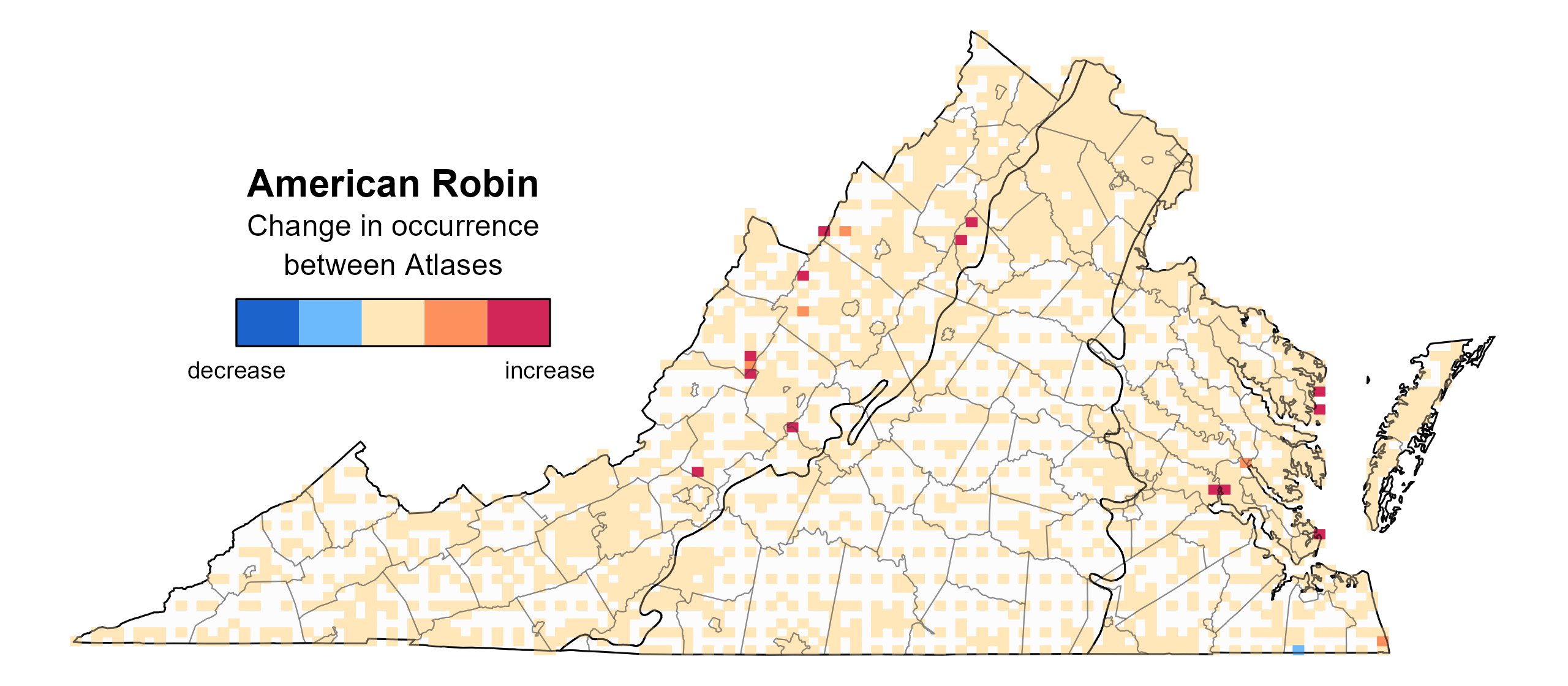
Between the First and Second Breeding Bird Atlases (Figures 1 and 2), American Robin occurrence remained constant across the state (Figure 3).
View Environmental Associations

Breeding Evidence
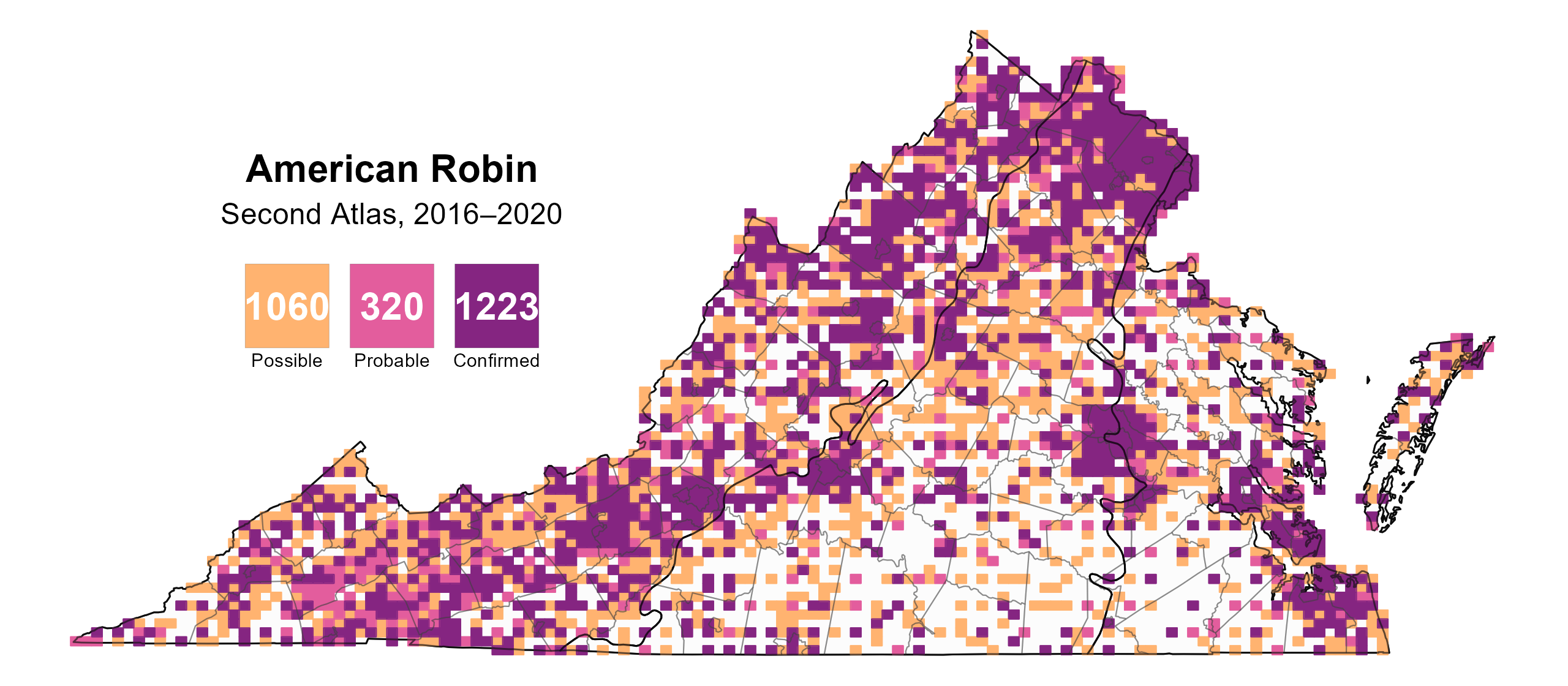
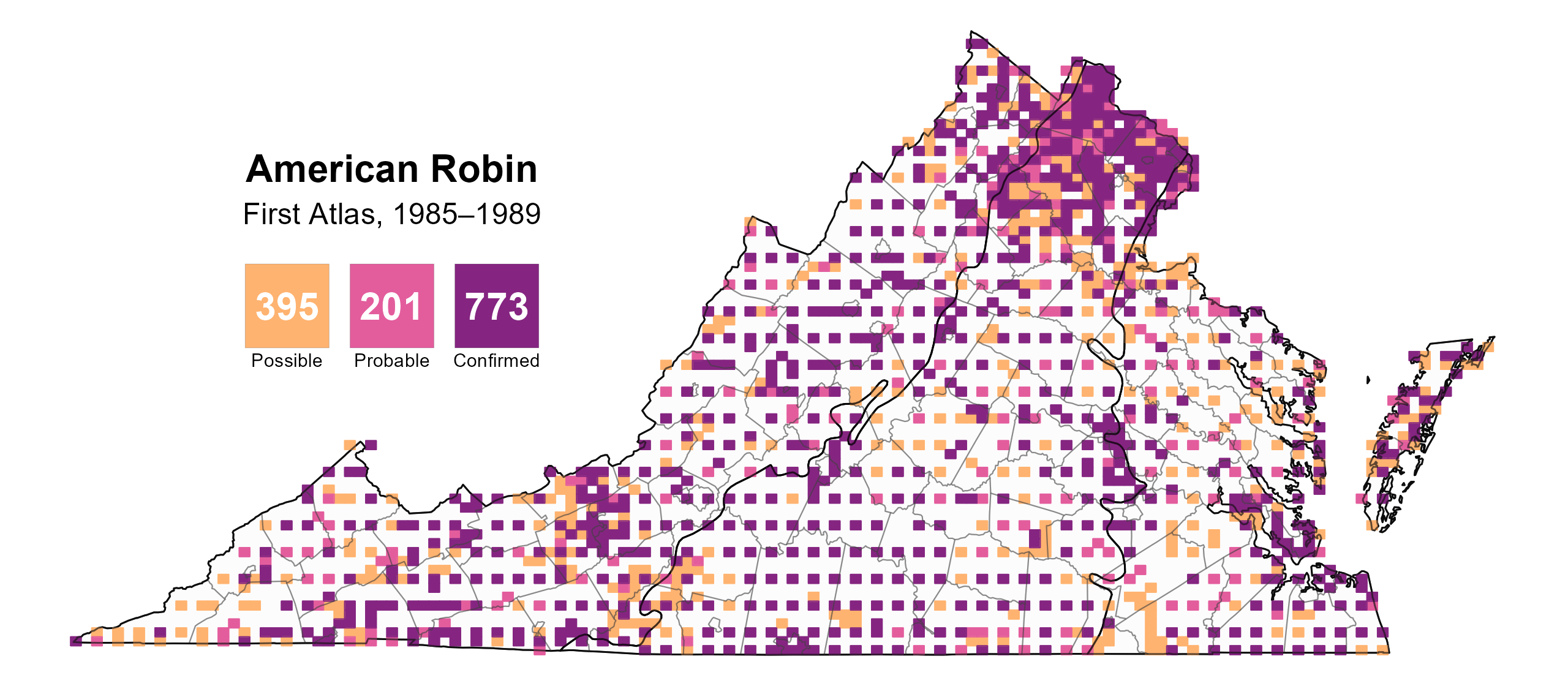
American Robins were confirmed breeders in 1,223 blocks and 131 of the state’s 133 counties (Figure 4). This species was a confirmed breeder across the state during the First Atlas as well (Figure 5).
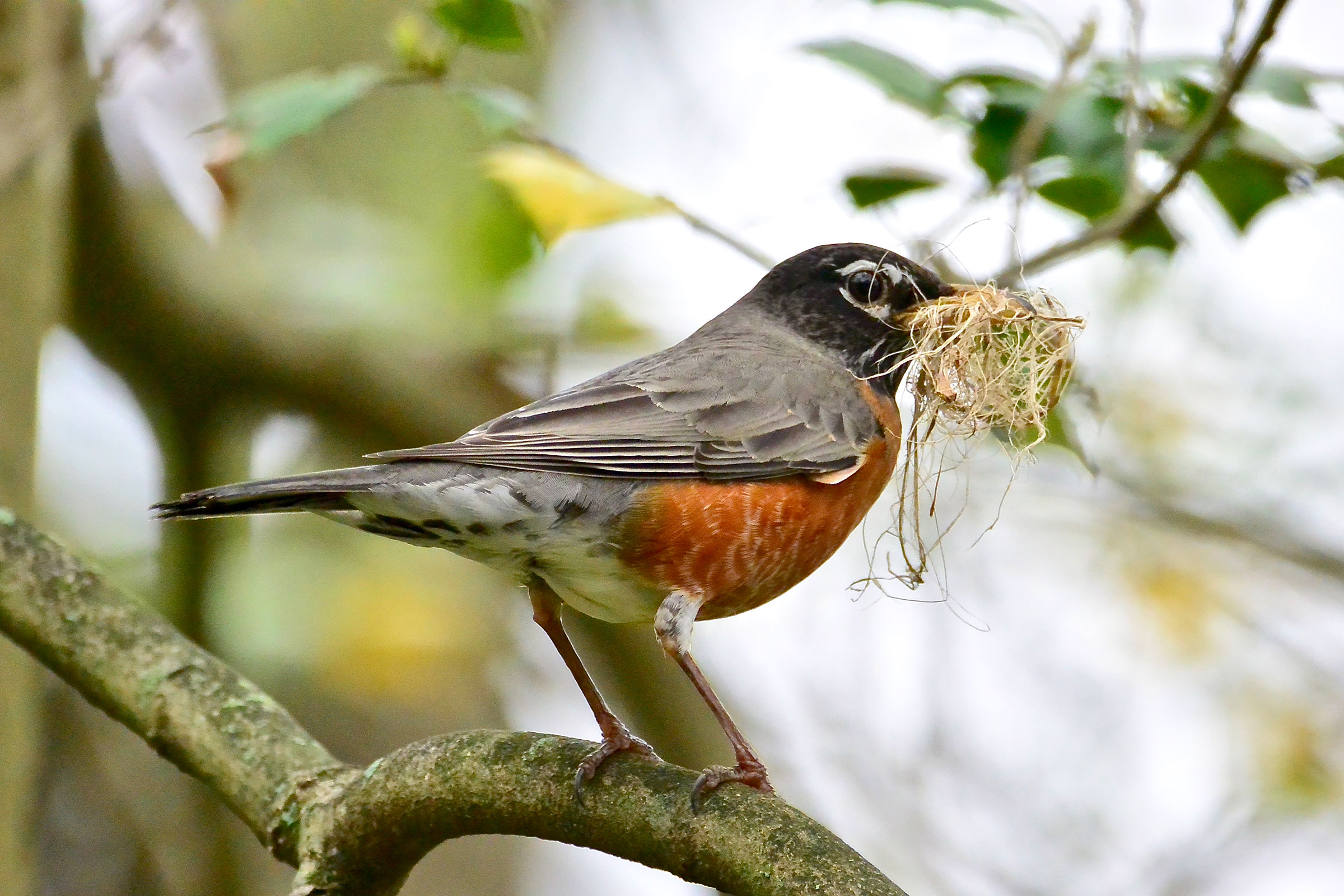
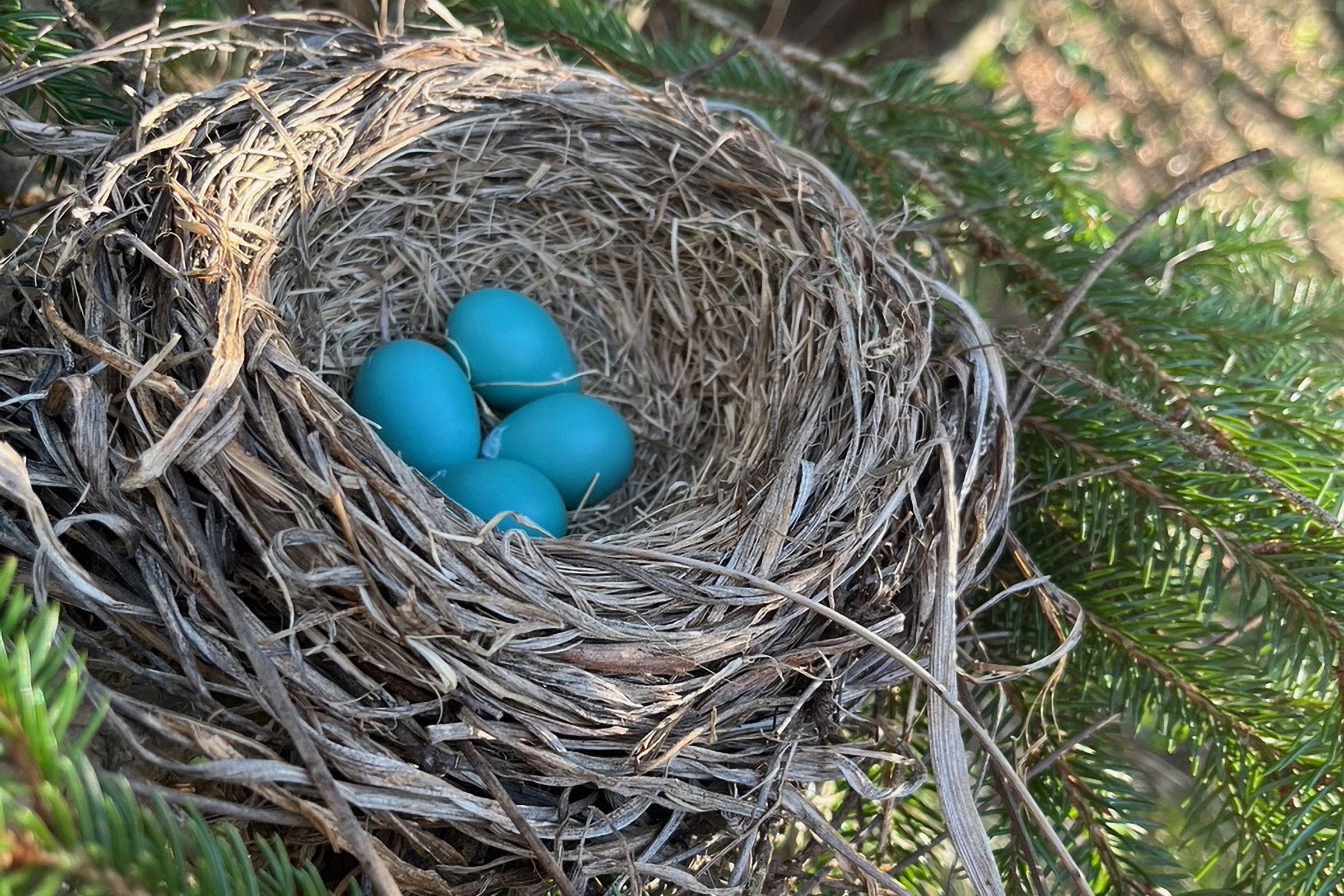
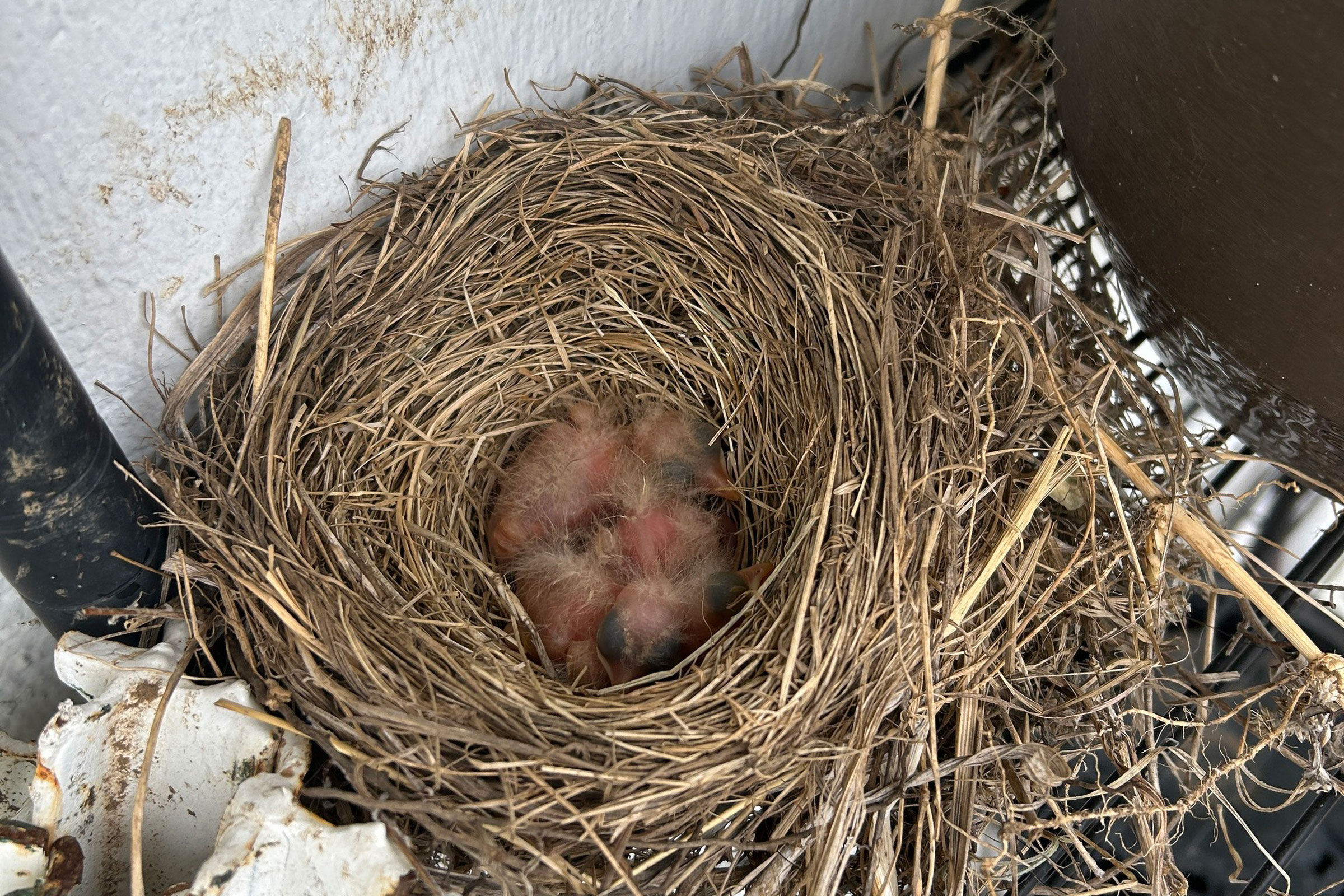
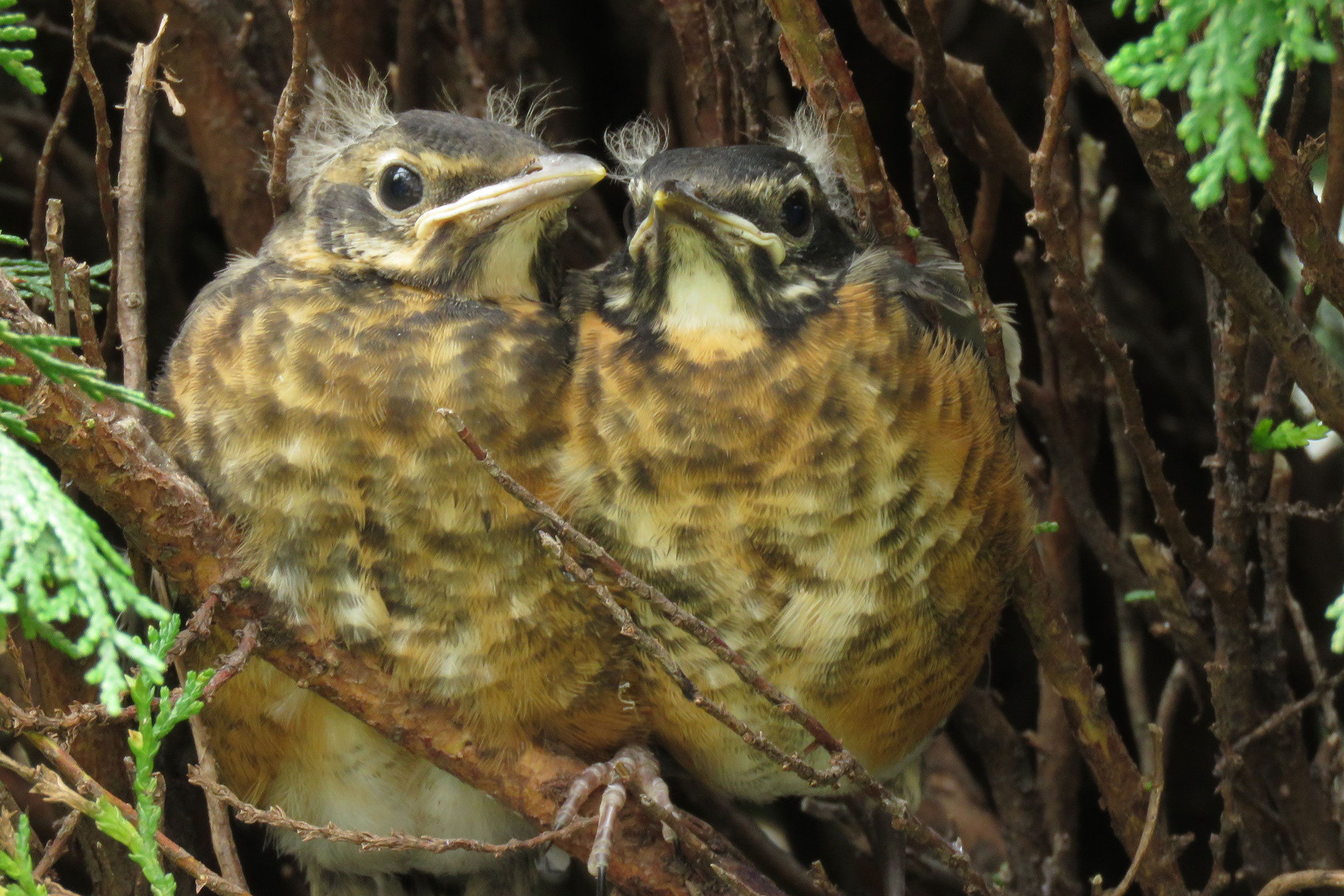
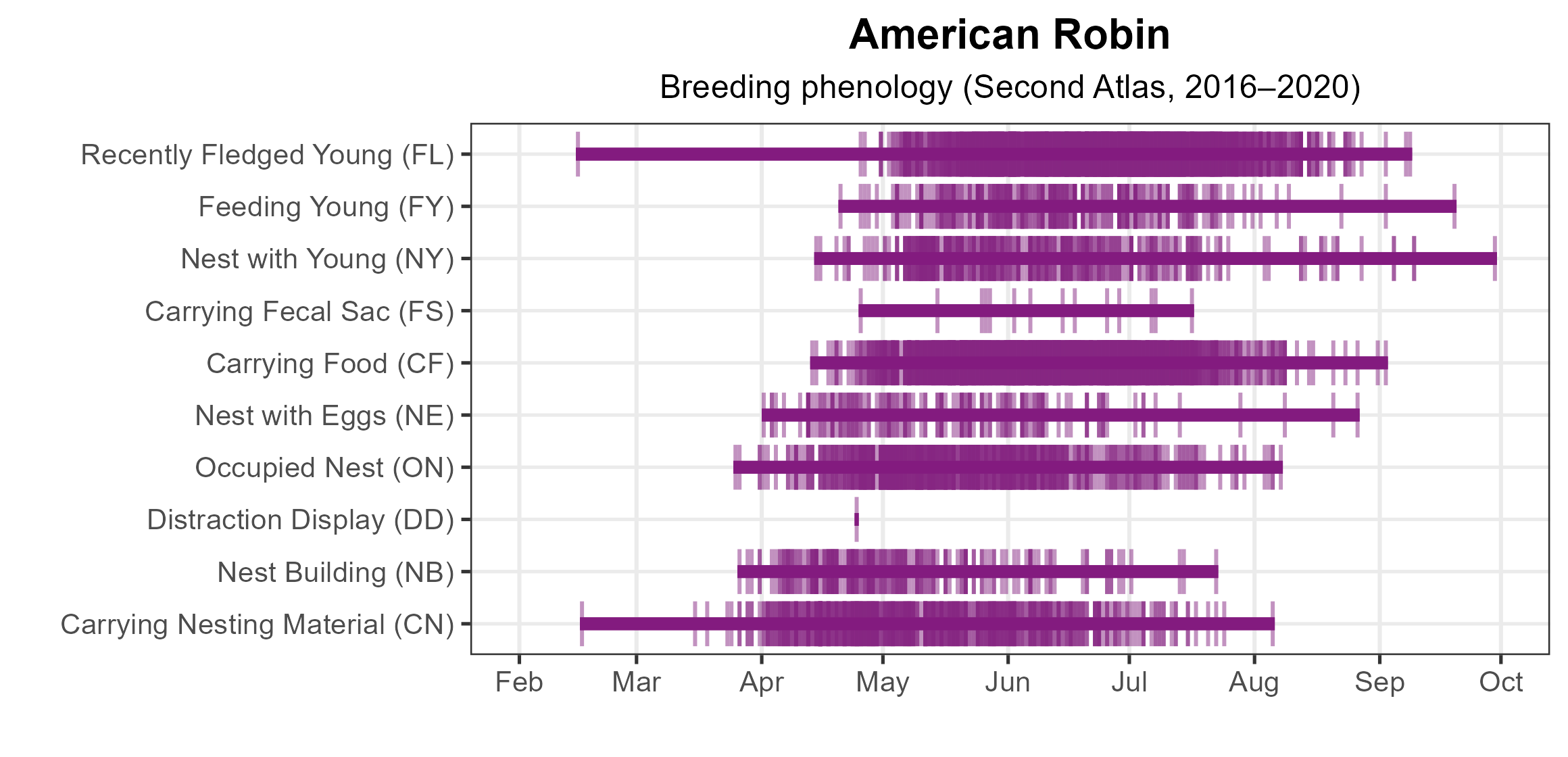
Recently fledged young and adults carrying nesting material were the earliest recorded breeding behaviors on February 15 and February 16, respectively. Other frequently observed breeding behaviors included adults carrying food (April 13 – September 2) and occupied nests (March 25 – August 7) (Figure 6).
For more general information on the breeding habits of this species, please refer to All About Birds.
Population Status
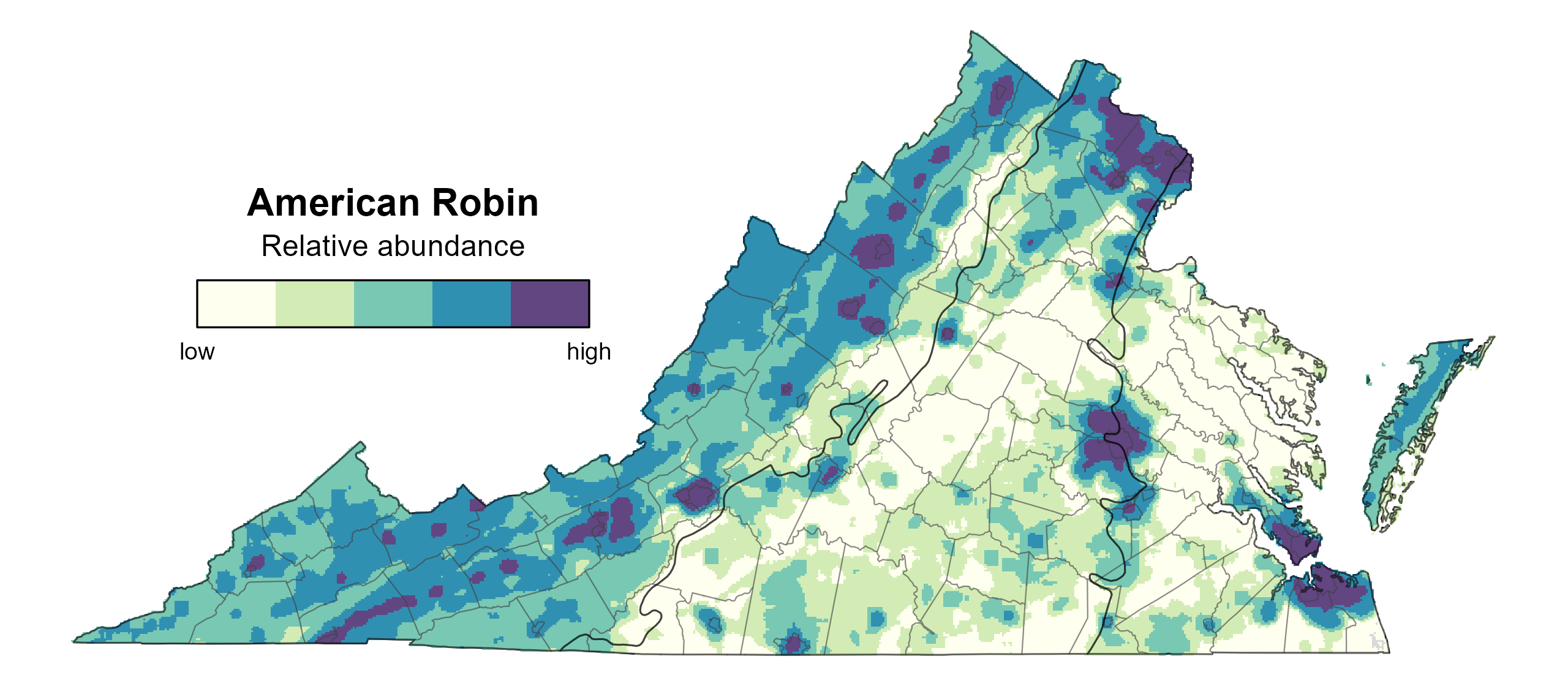
American Robin relative abundance was estimated to be highest within the Mountains and Valleys region, the northern and central Piedmont region, and sporadically in the southern Coastal Plain (Figure 7).
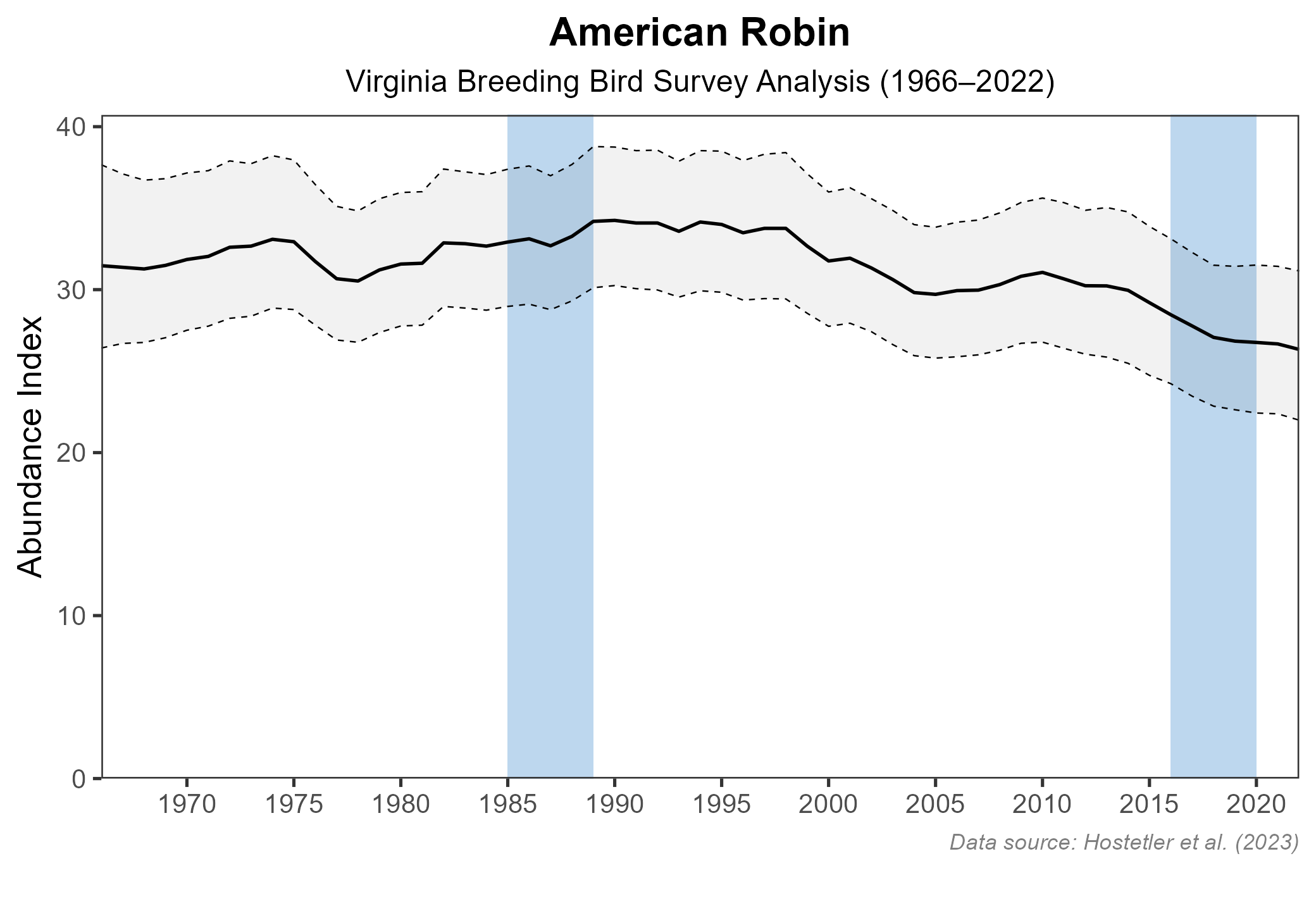
The total estimated American Robin population in the state is approximately 1,576,000 detectable individuals (with a range between 1,392,000 and 1,788,000), making it the eighth most abundant bird in the state (among those species for which abundance could be modeled). Based on the North American Breeding Bird Survey (BBS), the American Robin population declined by a nonsignificant 0.32% annually from 1966–2022 in Virginia; between Atlas periods, American Robins decreased by a significant rate of 0.61% per year from 1987–2018 (Hostetler et al. 2023; Figure 8).
Conservation
Americans Robins remain common and widespread in Virginia. They are not considered a species of special concern, and no species-specific conservation projects are underway in Virginia.
Interactive Map
The interactive map contains up to six Atlas layers (probability of occurrence for the First and Second Atlases, change in probability of occurrence between Atlases, breeding evidence for the First and Second Atlases, and abundance for the Second Atlas) that can be viewed one at a time. To view an Atlas map layer, mouse over the layer box in the upper left. County lines and physiographic regional boundaries (Mountains and Valleys, Piedmont, and Coastal Plain) can be turned on and off by checking or unchecking the box below the layer box. Within the map window, users can hover on a block to see its value for each layer and pan and zoom to see roads, towns, and other features of interest that are visible beneath a selected layer.
View Interactive Map in Full Screen
References
Hostetler, J. A., J. R. Sauer, J. E. Hines, D. Ziolkowski, and M. Lutmerding (2023). The North American breeding bird survey, analysis results 1966 – 2022. U.S. Geological Survey, Laurel, MD, USA. https://doi.org/10.5066/P9SC7T11.
Vanderhoff, N., P. Pyle, M. A. Patten, R. Sallabanks, and F. C. James (2020). American Robin (Turdus migratorius), version 1.0. In Birds of the World (P. G. Rodewald, Editor). Cornell Lab of Ornithology, Ithaca, NY, USA. https://doi.org/10.2173/bow.amerob.01.