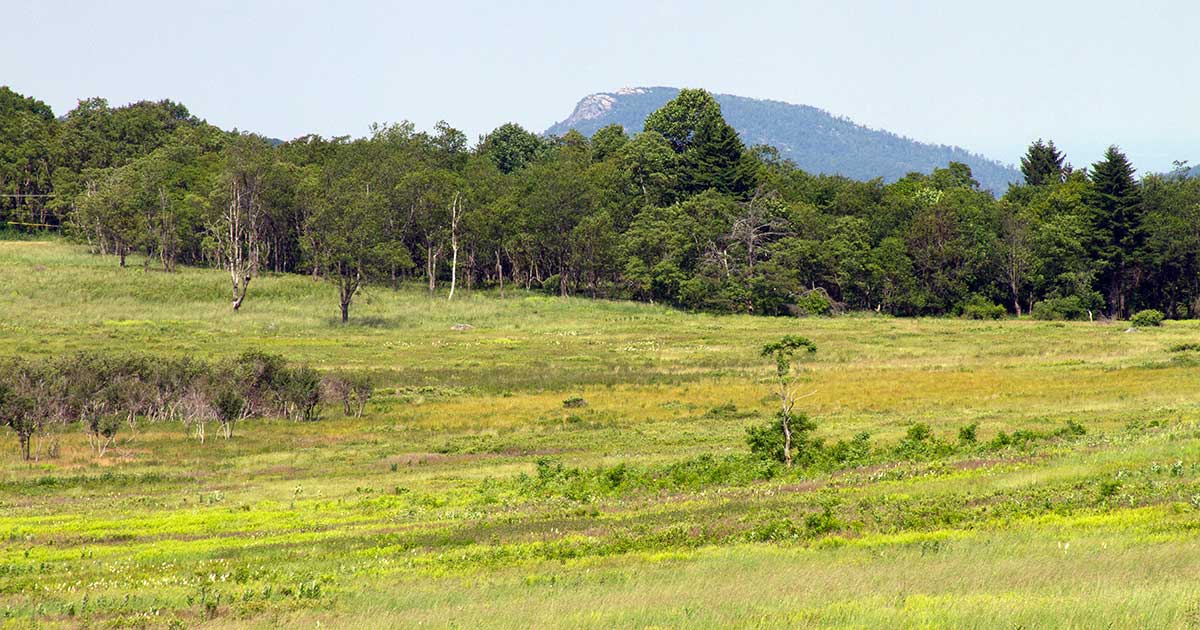
Grassland habitats consist primarily of grasses, sedges, and non-woody forbs. They tend to be maintained by disturbances such as fire, grazing, mowing or weather events (VDWR 2025). In 2020, grasslands covered approximately 733,000 acres (297,000 hectares) or 2.68% of the state (USGS 2024).
The predominant grassland types in Virginia are pastures and hayfields, which are treated separately under ‘Agricultural Lands’. Other grassland habitats may be found on public lands such as parks, battlefields and natural area preserves, on private lands managed through conservation programs (VDWR 2025), and at airports. The few natural grasslands in the Commonwealth are found as open woodlands and savannas on military lands in the Piedmont (Marine Corps Base Quantico, Fort Pickett, and Fort A. P. Hill), where they are maintained by fires from incendiary ammunition (VDWR 2025). A 200-acre (81 hectare) grassy bald on Whitetop Mountain is the only natural high-elevation bald in Virginia (Weakley et al. 2012).
Grassland loss has been driven by conversion to agriculture, development and other land uses. This has also contributed to remnant grassland patches that are too small to meet the nesting requirements of many grassland bird species (Vuocolo et al. 2016). Grasslands are also threatened by ecological succession, reverting to shrublands and eventually forests without frequent disturbance.
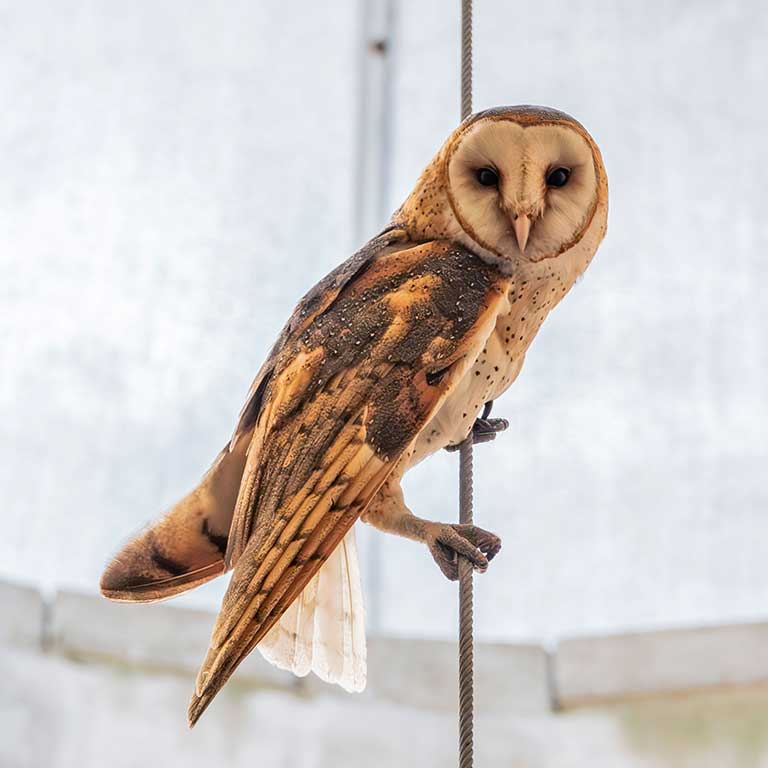
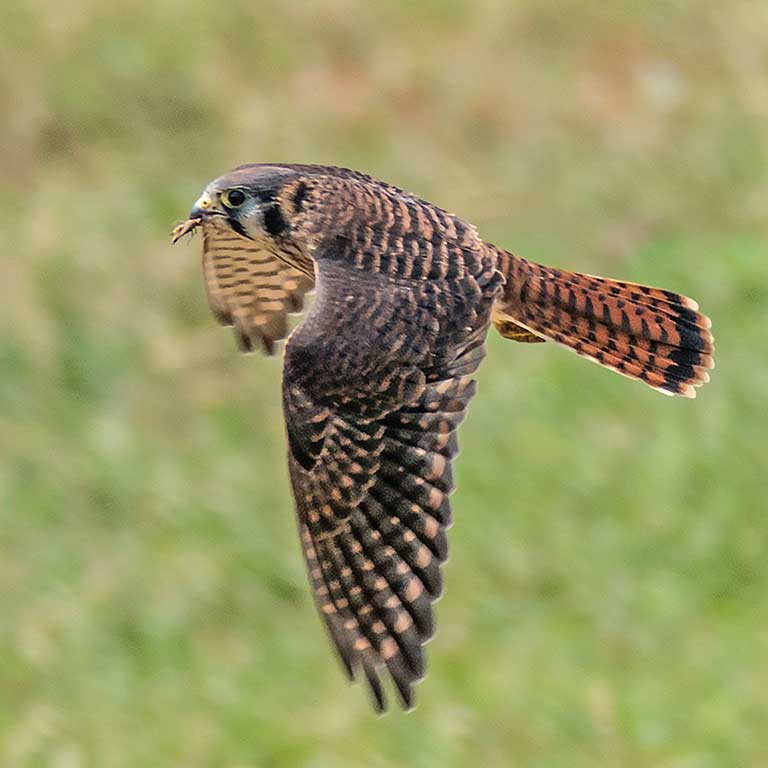
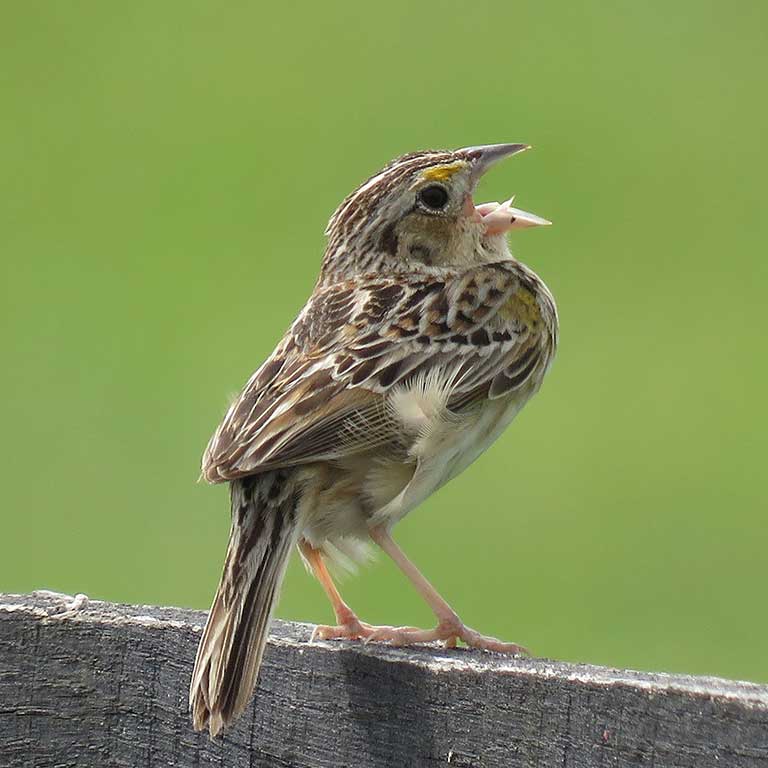
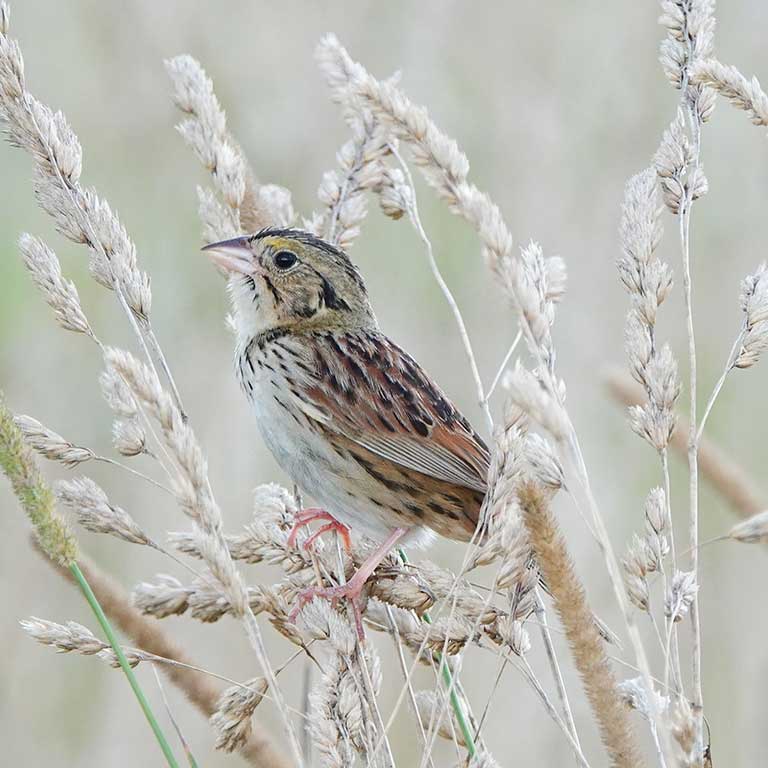
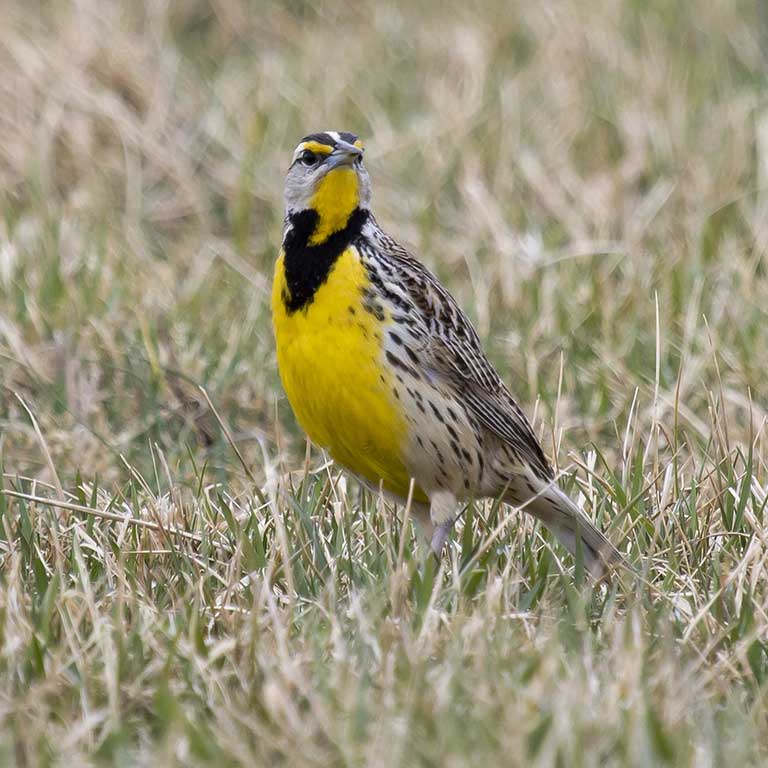
Grasslands support a wide array of breeding birds, many of them declining. They include American Barn Owl (Tyto furcata), American Kestrel (Falco sparverius), Grasshopper Sparrow (Ammodramus savannarum), Henslow’s Sparrow (Centronyx henslowii), and Eastern Meadowlark (Sturnella magna).
Literature Cited
U.S. Geological Survey (USGS) (2024). Annual NLCD collection 1 science products (ver. 1.1, June 2025): U.S. Geological Survey data release. Reston, VA, USA. https://doi.org/10.5066/P94UXNTS.
Virginia Department of Wildlife Resources (VDWR) (2025). Virginia wildlife action plan. Virginia Department of Wildlife Resources, Henrico, VA, USA. 506 pp.
Vuocolo, C., C. Sedgwick, S. Harding, F. Wolter, S. Capel, D. Pashley, and S. Heath (2016). Managing Land in the Piedmont of Virginia for the Benefit of Birds and Other Wildlife: Third Edition. Warrenton, Virginia. 32 pp.
Weakley, A. S., J. C. Ludwig, and J. F. Townsend (2012). Flora of Virginia. Bland Crowder, ed. Foundation of the Flora of Virginia Project Inc., Richmond. Fore Worth: Botanical Research Institute.