Introduction
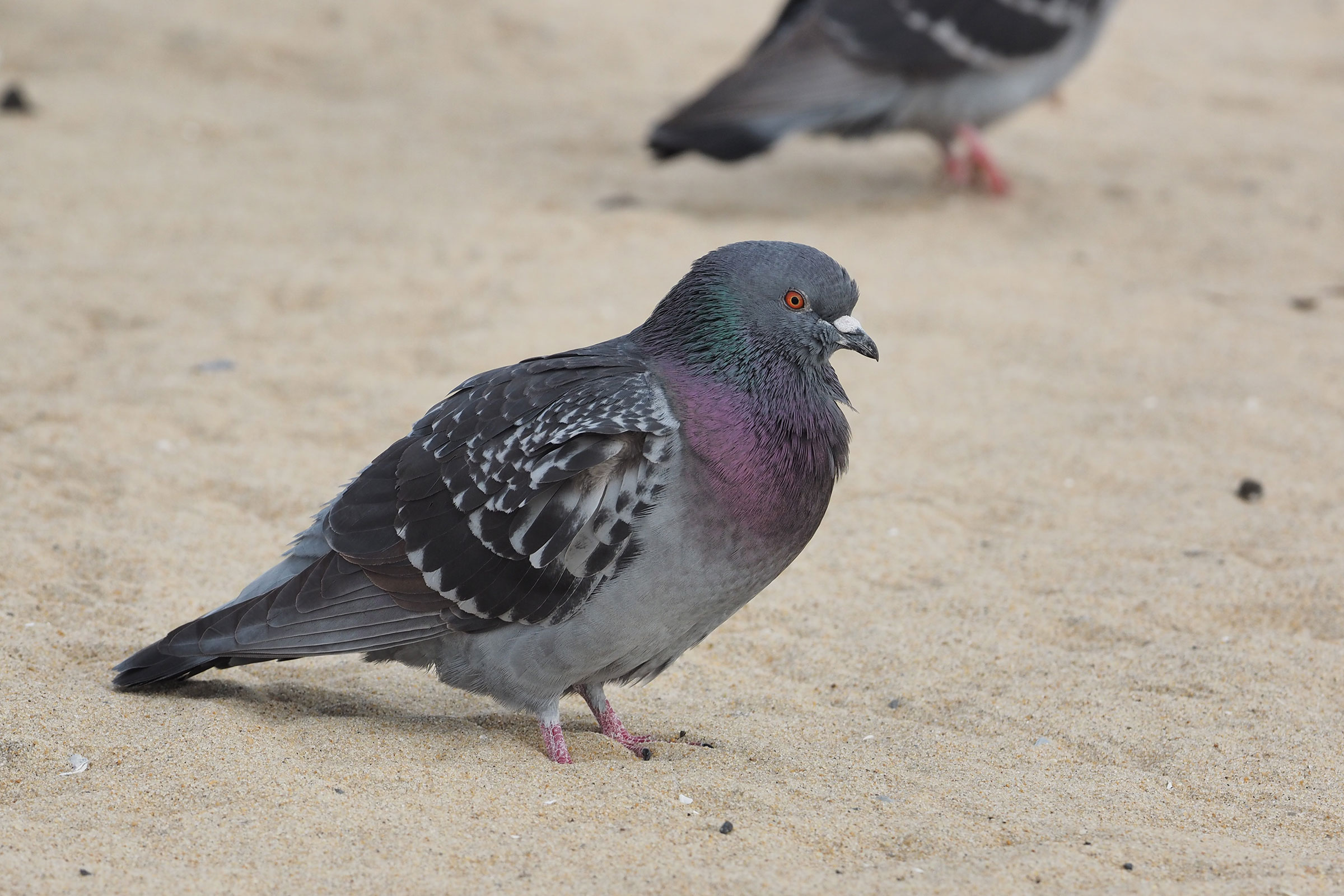
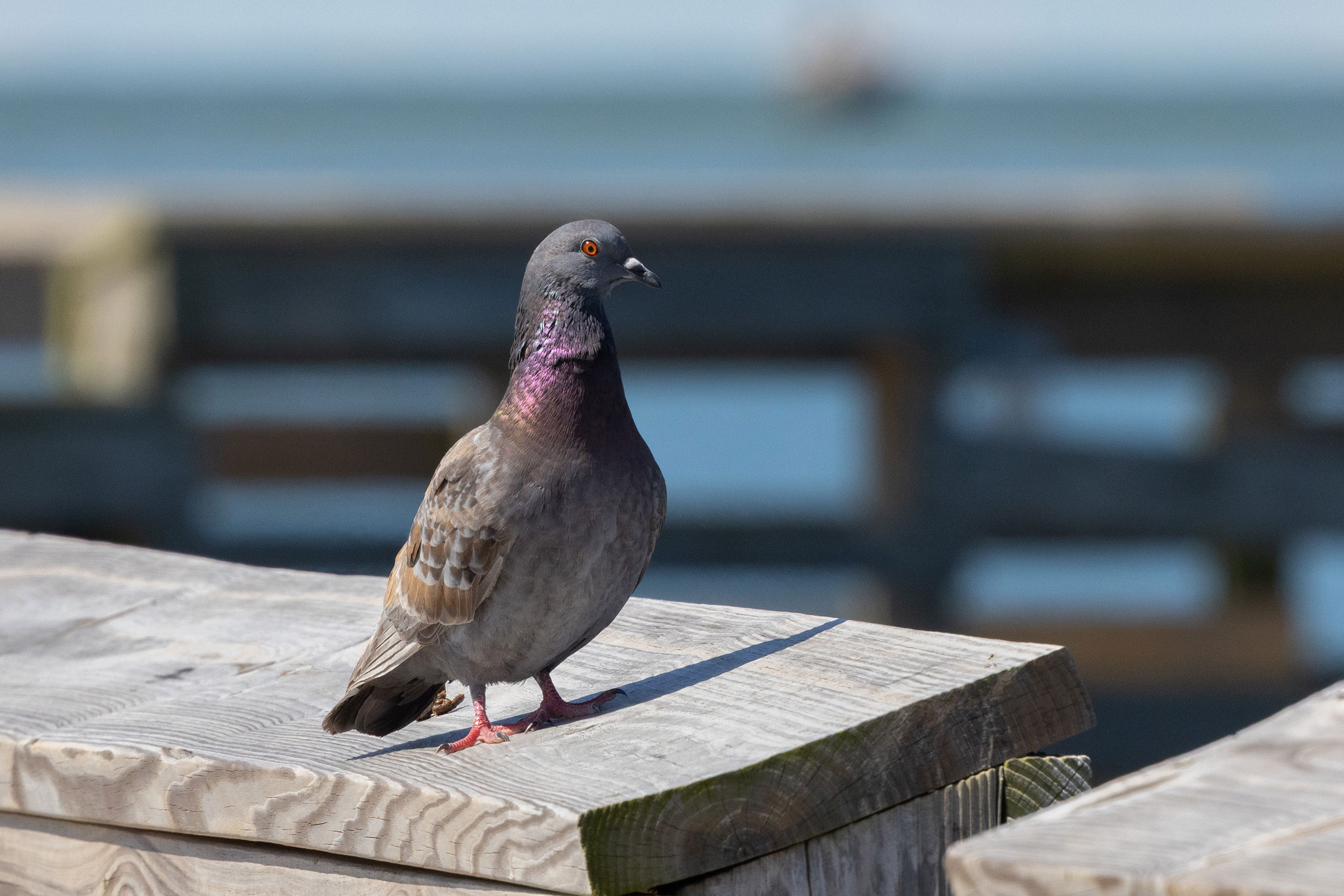
Maligned by farmers and urban shopkeepers and beloved by city-park birdwatchers, the Rock Pigeon is among the most recognizable birds in Virginia and throughout the world. Originally native to Africa and Europe, the Rock Pigeon was introduced to North America by colonists in the early 17th century. Virginia holds the distinction of being the first place where Rock Pigeons were introduced in the U.S. It is believed that English colonists brought the species to the state in 1621 (Schorger 1952).
Breeding Distribution
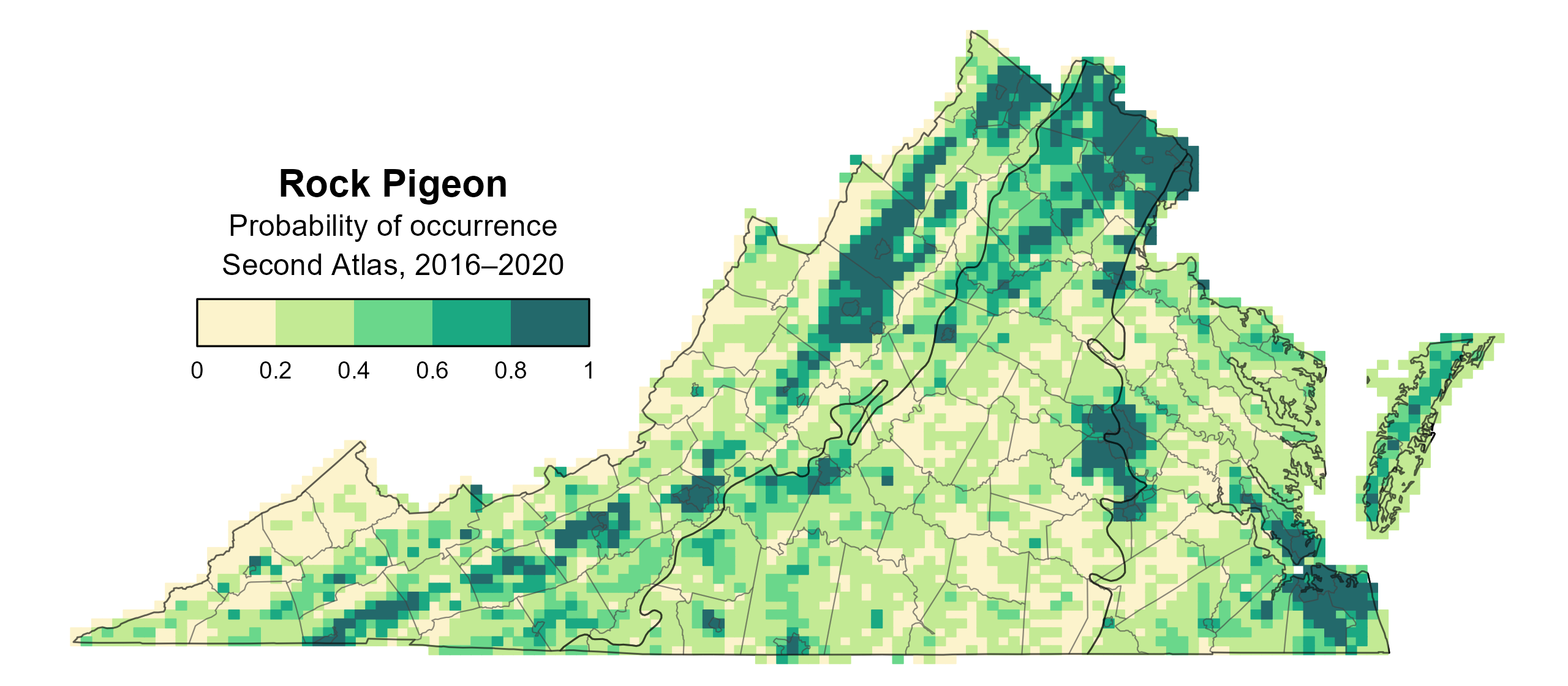
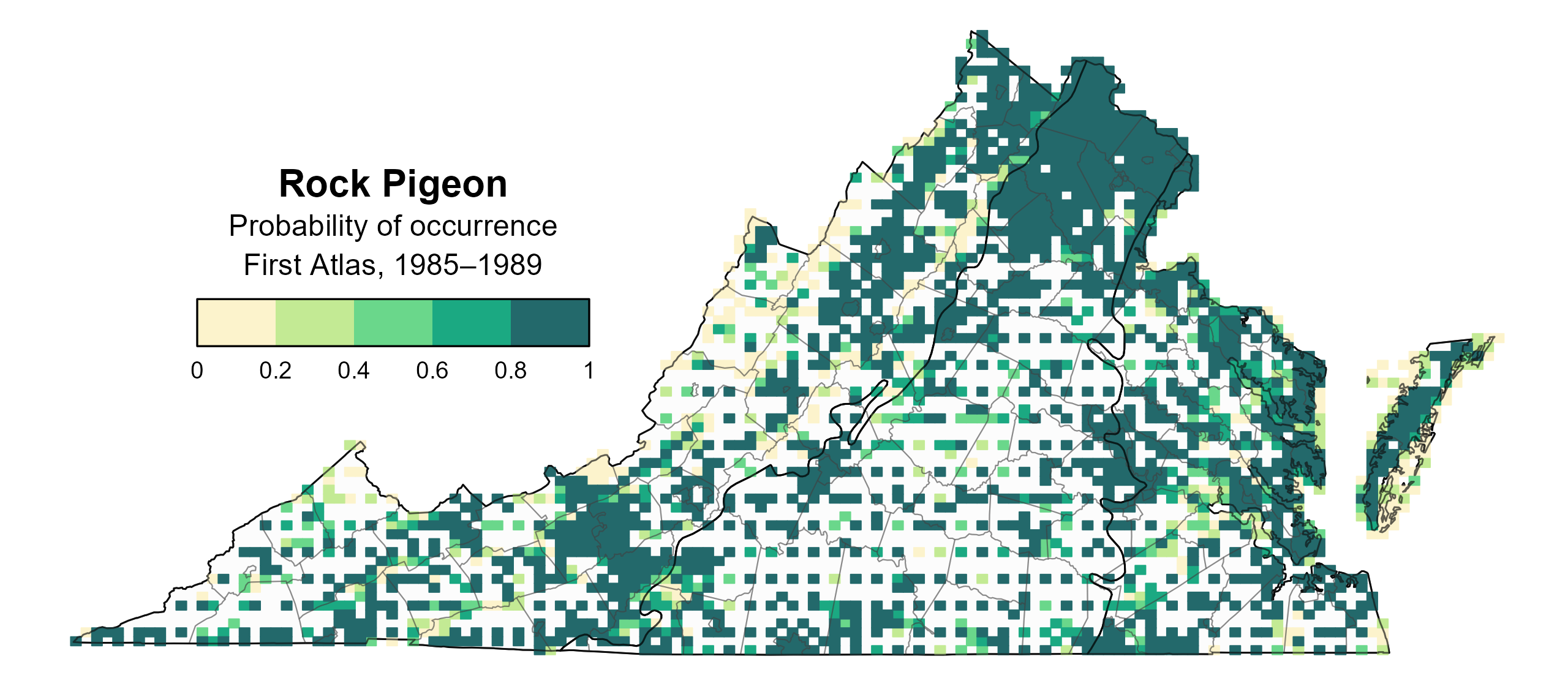
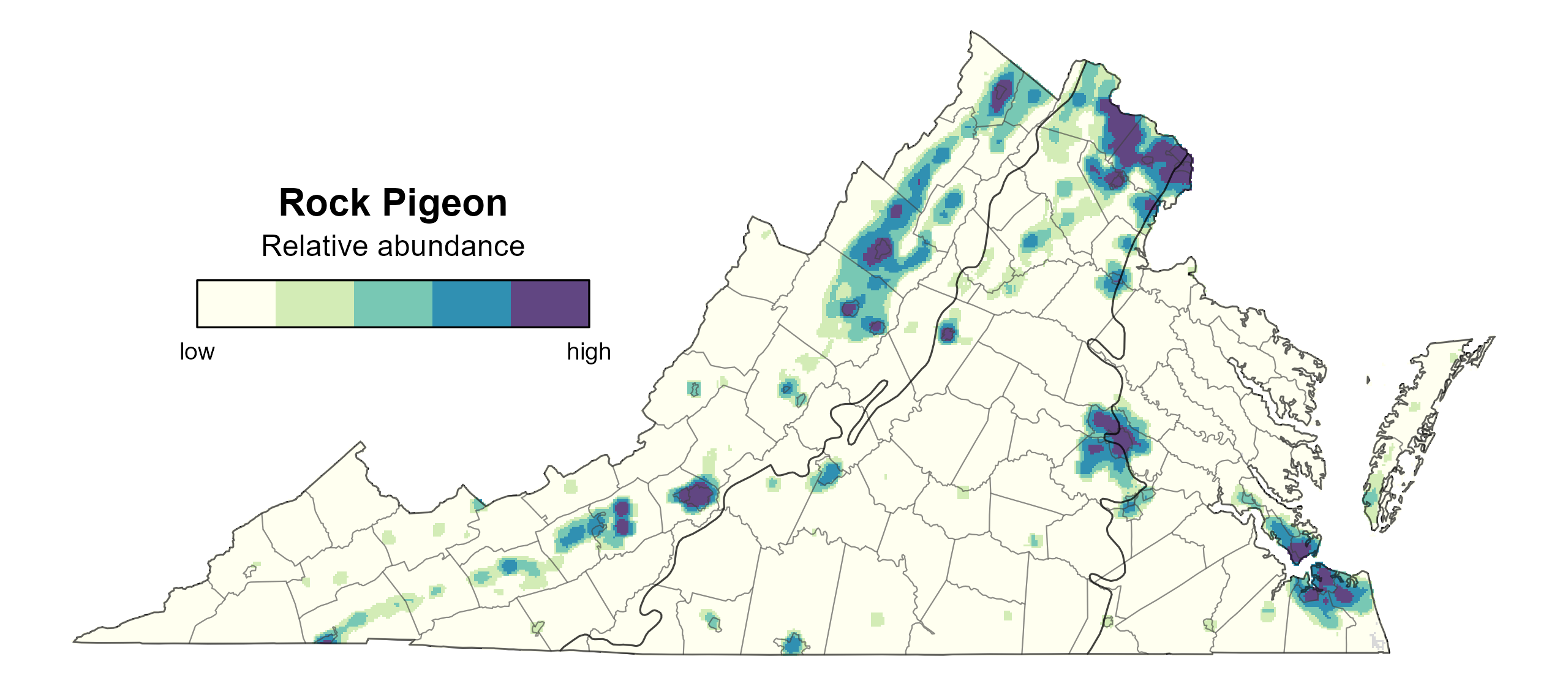
Rock Pigeons are found throughout Virginia but are most likely to occur in large urban landscapes, such as those in Hampton Roads-Virginia Beach, Northern Virginia, and Richmond, and in rural farming valleys in the Mountains and Valleys region (Figure 1). Accordingly, it is clear the species is strongly associated with developed and agricultural lands and negatively associated with forest cover, forest edge habitat, and number of habitat types in a block.
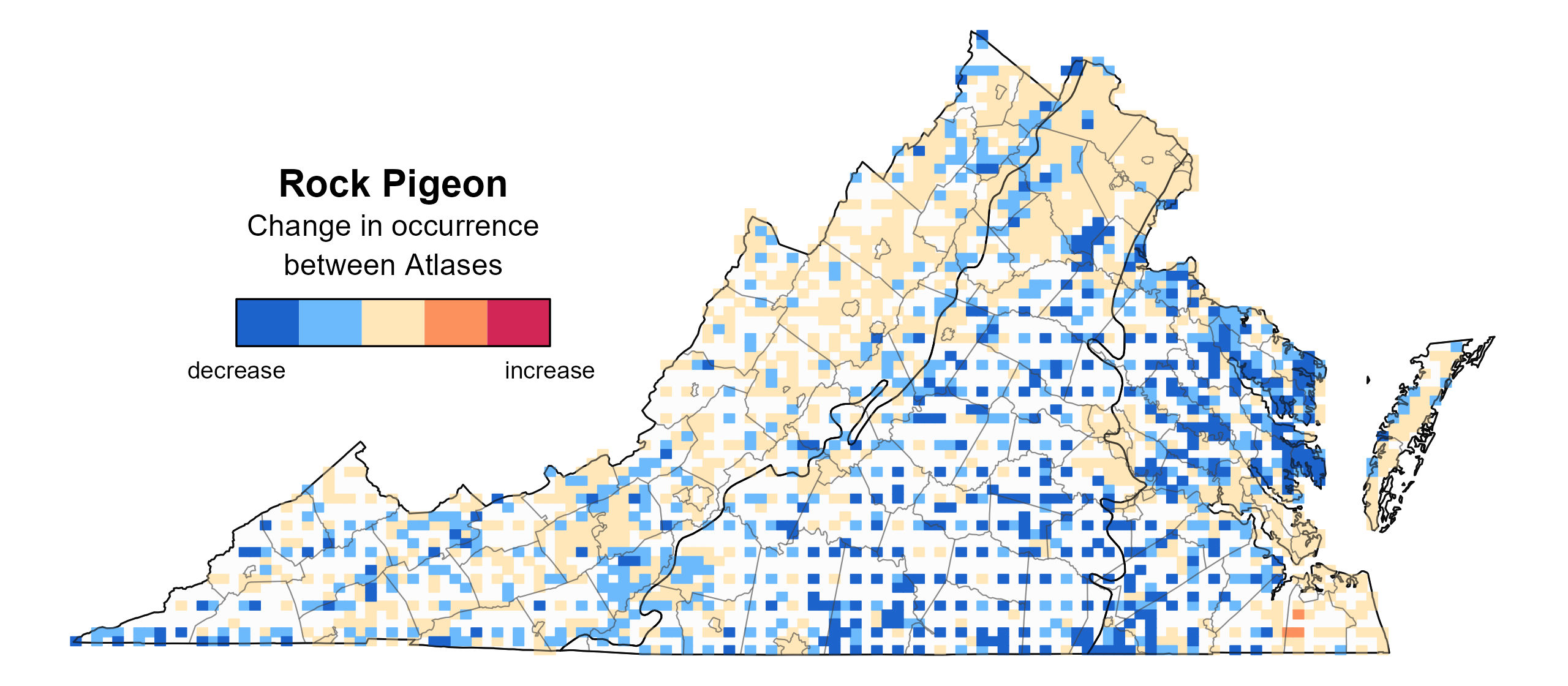
Between Atlases (Figures 1 and 2), the Rock Pigeon underwent a contraction in its breeding distribution in the central and southern Piedmont and Coastal Plain regions (Figure 3). In contrast, Rock Pigeon occurrence remained mostly constant in urban-suburban complexes.
View Environmental Associations
Breeding Evidence
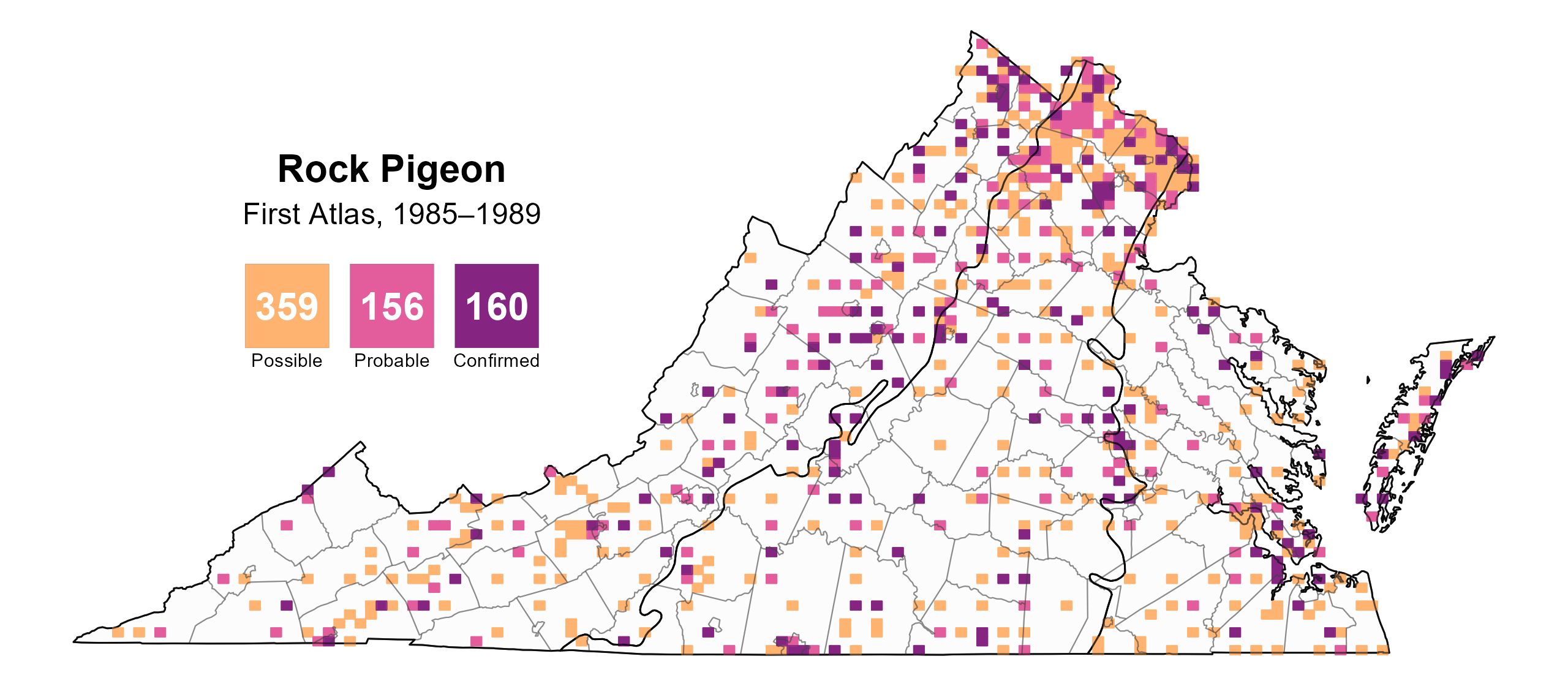
Rock Pigeons were confirmed breeders in 162 blocks and 71 counties throughout the state and found to be probable breeders in an additional 28 counties (Figure 4). Breeding observations were recorded throughout the state during both Atlas periods (Figures 4 and 5).
The earliest confirmed breeding behavior was recorded in early January when an occupied nest was documented (Figure 6). Of the documented breeding behaviors, this was the most frequently observed. Feeding young was the last breeding behavior observed at the end of September.
For more general information on the breeding habits of this species, please refer to All About Birds.


Population Status
Rock Pigeon relative abundance was estimated to be highest in the urban-suburban complexes of Hampton Roads-Virginia Beach, Northern Virginia, and Richmond as well as in rural farming valleys (Figure 7).
The total estimated Rock Pigeon population in the state is approximately 76,000 individuals (with a range between 36,000 and 157,000). Based on the North American Breeding Bird Survey (BBS), in Virginia, the Rock Pigeon population declined by a significant 2.53% annually from 1966–2022 and by a significant 3.63% per year from 1987–2018 between Atlases (Hostetler et al. 2023; Figure 7). The Rock Pigeon decline in Virginia is consistent with a decline throughout North America, where the species is estimated to have lost nearly 50% of its population since 1966 (Lowther et al. 2020).

Conservation
While Rock Pigeon populations are broadly declining, the species is still considered a pest in many places. Consequently, most management is targeted at local reduction or elimination. Eradication methods include poisoning, trapping, and eliminating ledges that are used for nesting and roosting (Lowther and Johnston 2020).
Interactive Map
The interactive map contains up to six Atlas layers (probability of occurrence for the First and Second Atlases, change in probability of occurrence between Atlases, breeding evidence for the First and Second Atlases, and abundance for the Second Atlas) that can be viewed one at a time. To view an Atlas map layer, mouse over the layer box in the upper left. County lines and physiographic regional boundaries (Mountains and Valleys, Piedmont, and Coastal Plain) can be turned on and off by checking or unchecking the box below the layer box. Within the map window, users can hover on a block to see its value for each layer and pan and zoom to see roads, towns, and other features of interest that are visible beneath a selected layer.
View Interactive Map in Full Screen
References
Hostetler, J. A., J. R. Sauer, J. E. Hines, D. Ziolkowski, and M. Lutmerding (2023). The North American breeding bird survey, analysis results 1966–2022. U.S. Geological Survey, Laurel, MD, USA. https://doi.org/10.5066/P9SC7T11.
Lowther, P. E., and R. F. Johnston (2020). Rock Pigeon (Columba livia), version 1.0. In Birds of the World (S. M. Billerman, Editor). Cornell Lab of Ornithology, Ithaca, NY, USA. https://doi.org/10.2173/bow.rocpig.01.
Schorger, A. W. (1952). Introduction of the domestic pigeon. The Auk 69:462–463.