Introduction
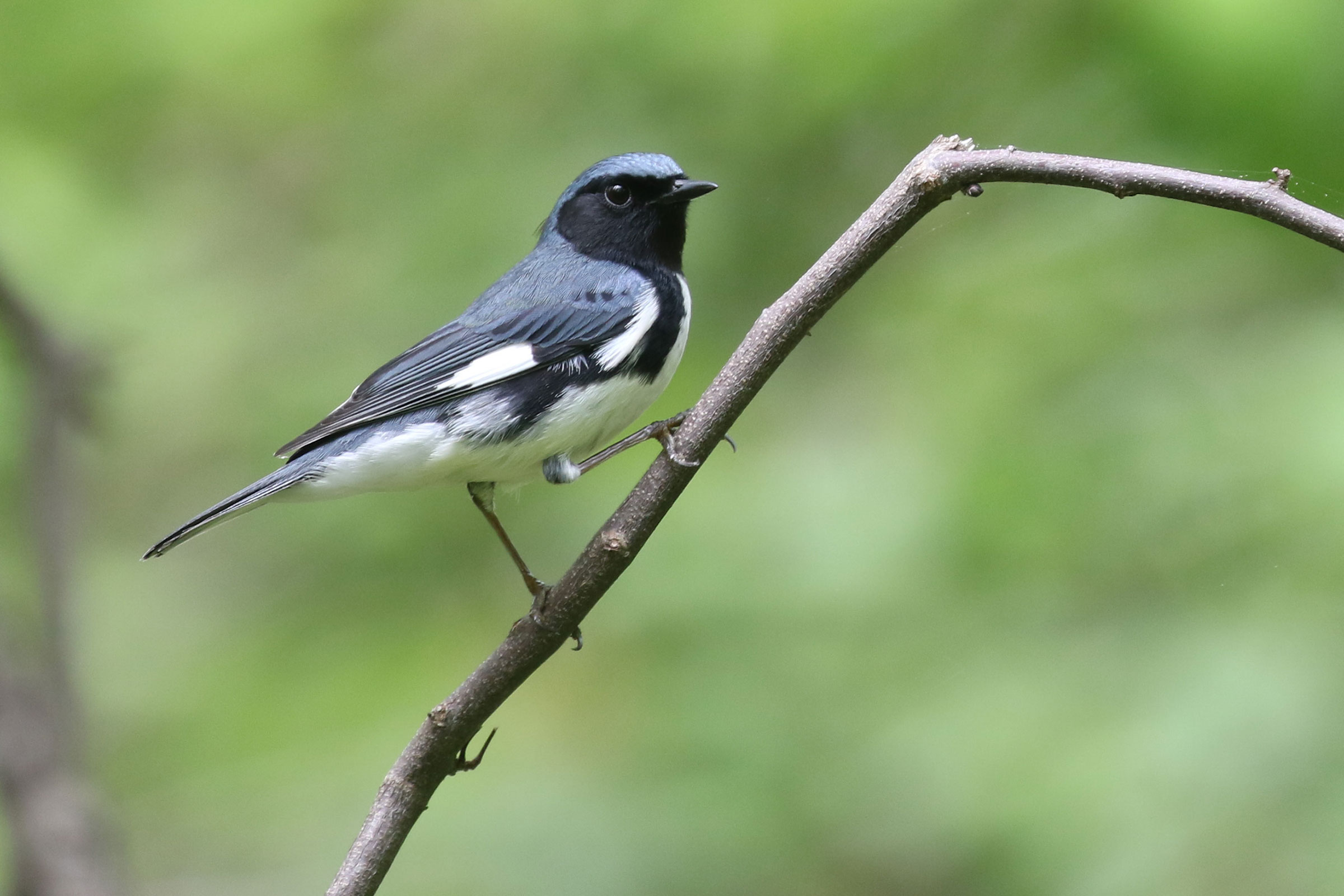
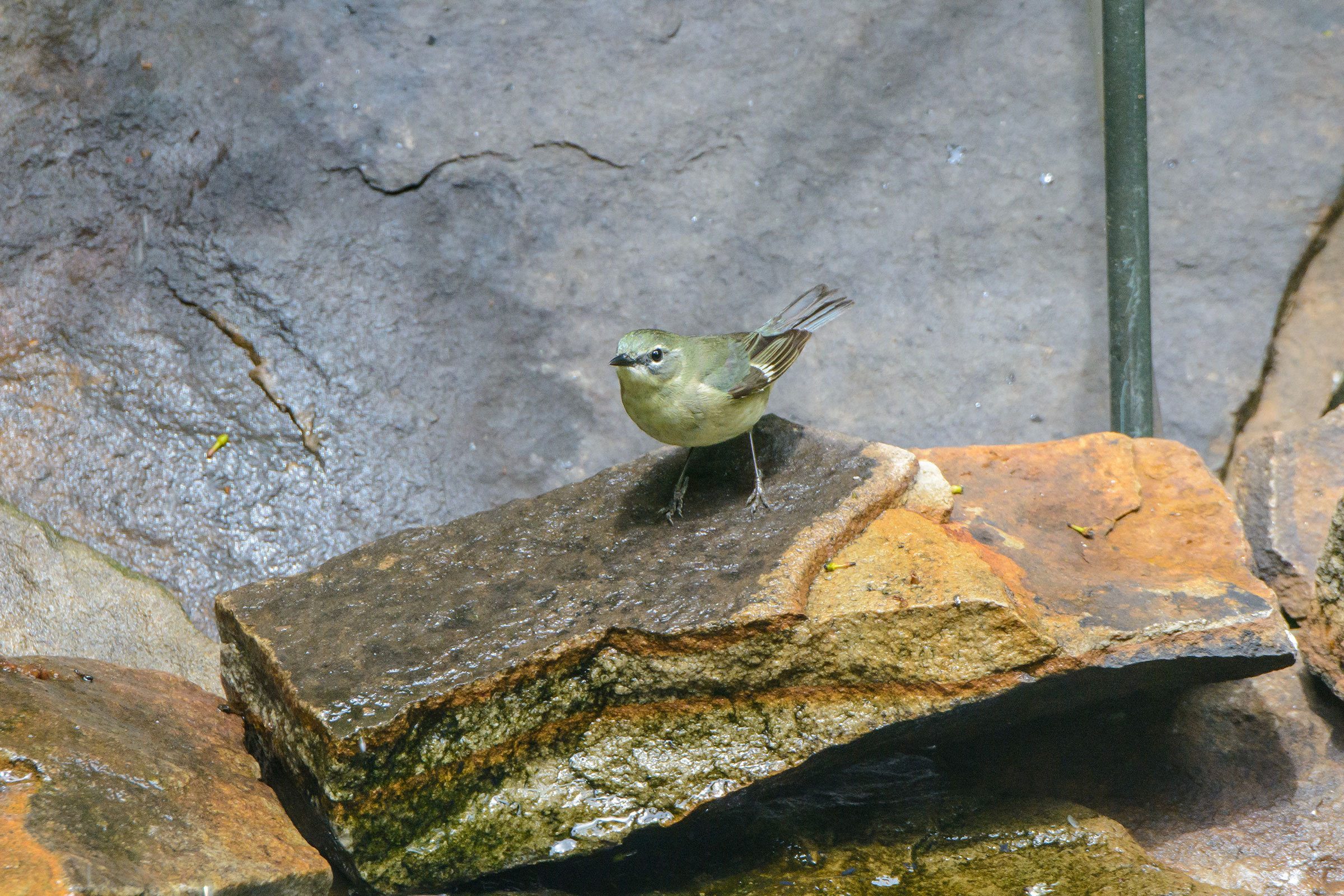
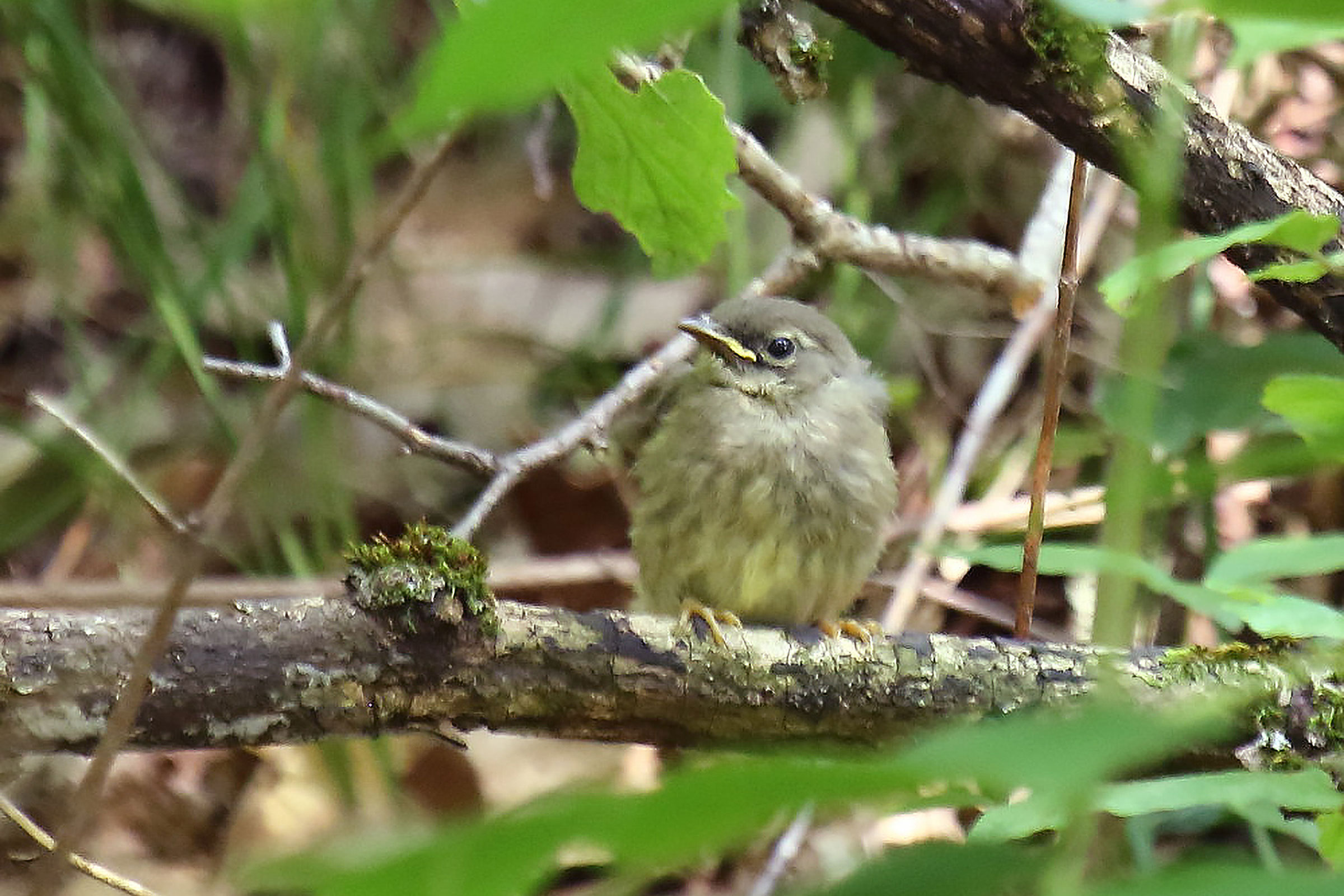
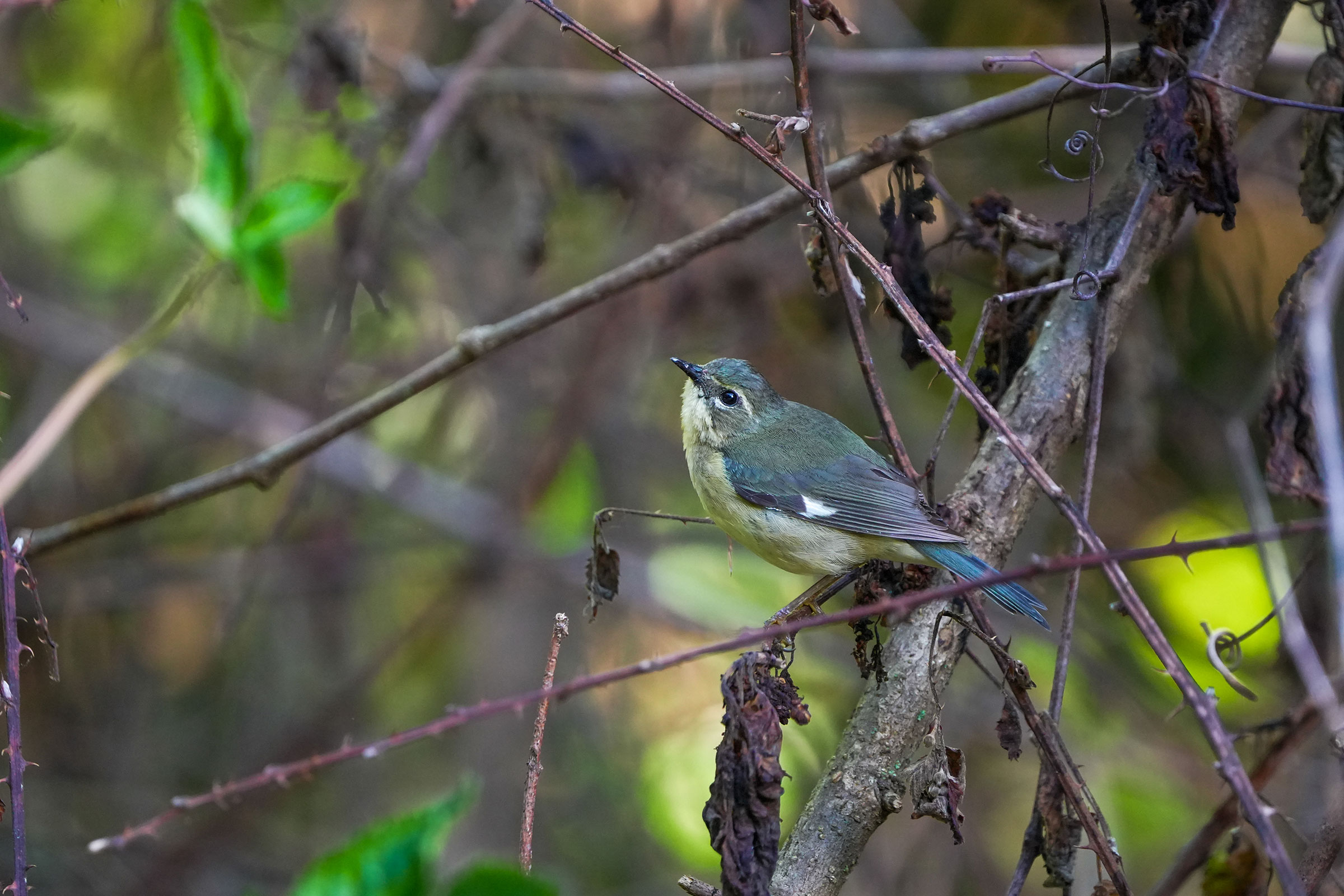
A buzzy song can be heard on a mild Appalachian morning, signaling the presence of a Black-throated Blue Warbler. Although much of the Black-throated Blue Warbler’s breeding range is north of Virginia, a southern extension of their range follows the Appalachian Mountains, where Black-throated Blue Warblers nest in contiguous tracts of mature deciduous and mixed evergreen-deciduous forest above 2,500 ft (760 m). Understory vegetation is particularly important for Black-throated Blue Warblers, as they typically place their nests in the fork of a shrub 3–5 ft (1–2 m) above the ground (Holmes et al. 2020).
Breeding Distribution
Black-throated Blue Warblers breed in the western Mountains and Valleys region, where they are most likely to be found in higher elevation forests along the Blue Ridge and Ridge and Valley Mountain ranges (Figure 1). Within these areas, this species is strongly associated with elevation, increasing in likelihood of occurrence along with elevational gain. Black-throated Blue Warblers are positively associated with understory shrub cover, which translates to a higher likelihood of occurrence in blocks with understories dominated by rhododendron (Rhododendron spp.) and mountain laurel (Kalmia latifolia). Lastly, this species shows a slight positive association with large, contiguous forest patches.
Between the First and Second Atlases (Figures 1 and 2), Black-throated Blue Warbler predicted occurrence primarily remained constant; however, there were some areas of decline in the southwestern portion of the Mountains and Valleys region and some evidence of decline in small patches in the remainder of the region (Figure 3).
View Environmental Associations

Figure 1: Black-throated Blue Warbler breeding distribution based on probability of occurrence (Second Atlas, 2016–2020). This map indicates the probability that this species will occur in an Atlas block (an approximately 10 mi2 [26 km2] survey unit) based on environmental (including habitat) factors and after adjusting for the probability of detection (variation in survey effort among blocks). Blocks in gray lie outside the core range of the species and were not modeled.
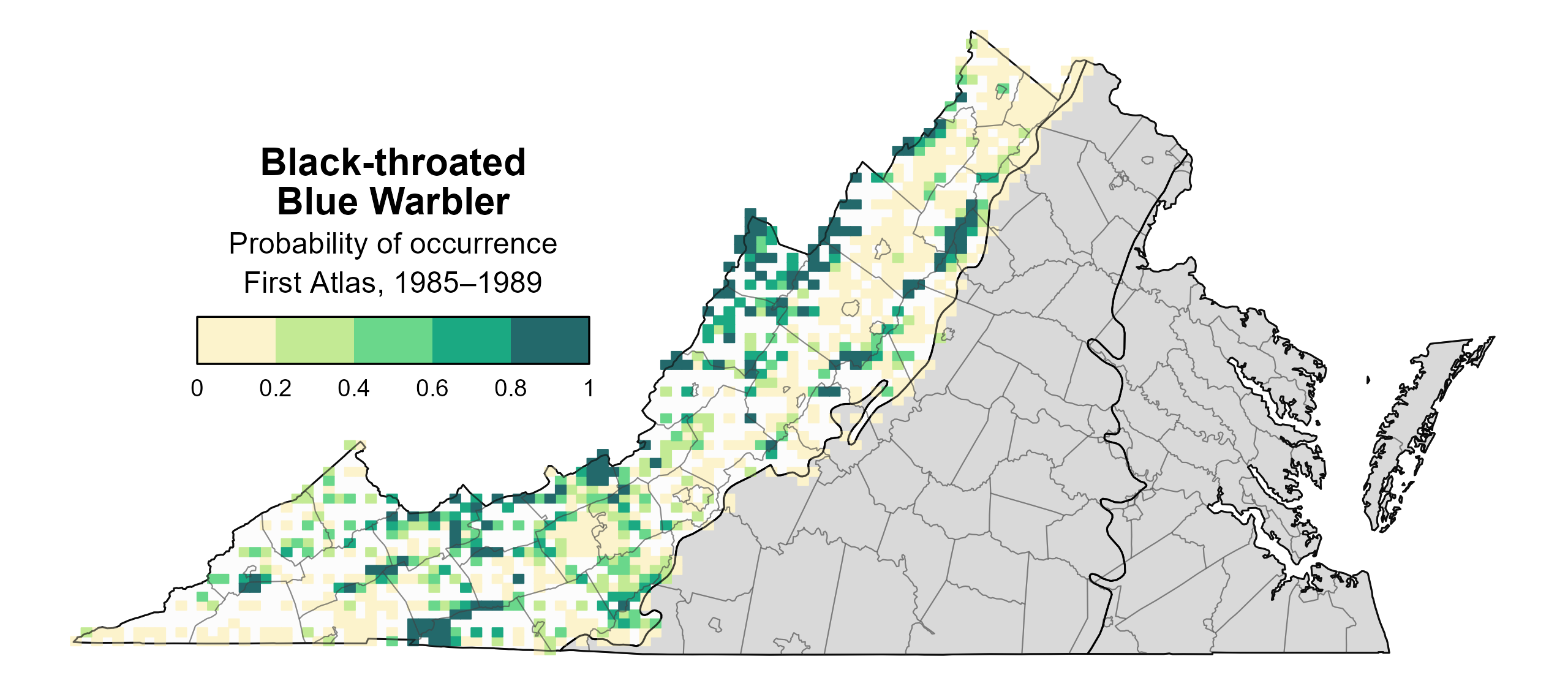
Figure 2: Black-throated Blue Warbler breeding distribution based on probability of occurrence (First Atlas, 1985–1989). This map indicates the probability that this species will occur in an Atlas block (an approximately 10 mi2 [26 km2] survey unit) based on environmental (including habitat) factors and after adjusting for the probability of detection (variation in survey effort among blocks). Blocks in white were not surveyed during the First Atlas and were not modeled. Blocks in gray are outside the species’ core range and were not modeled.
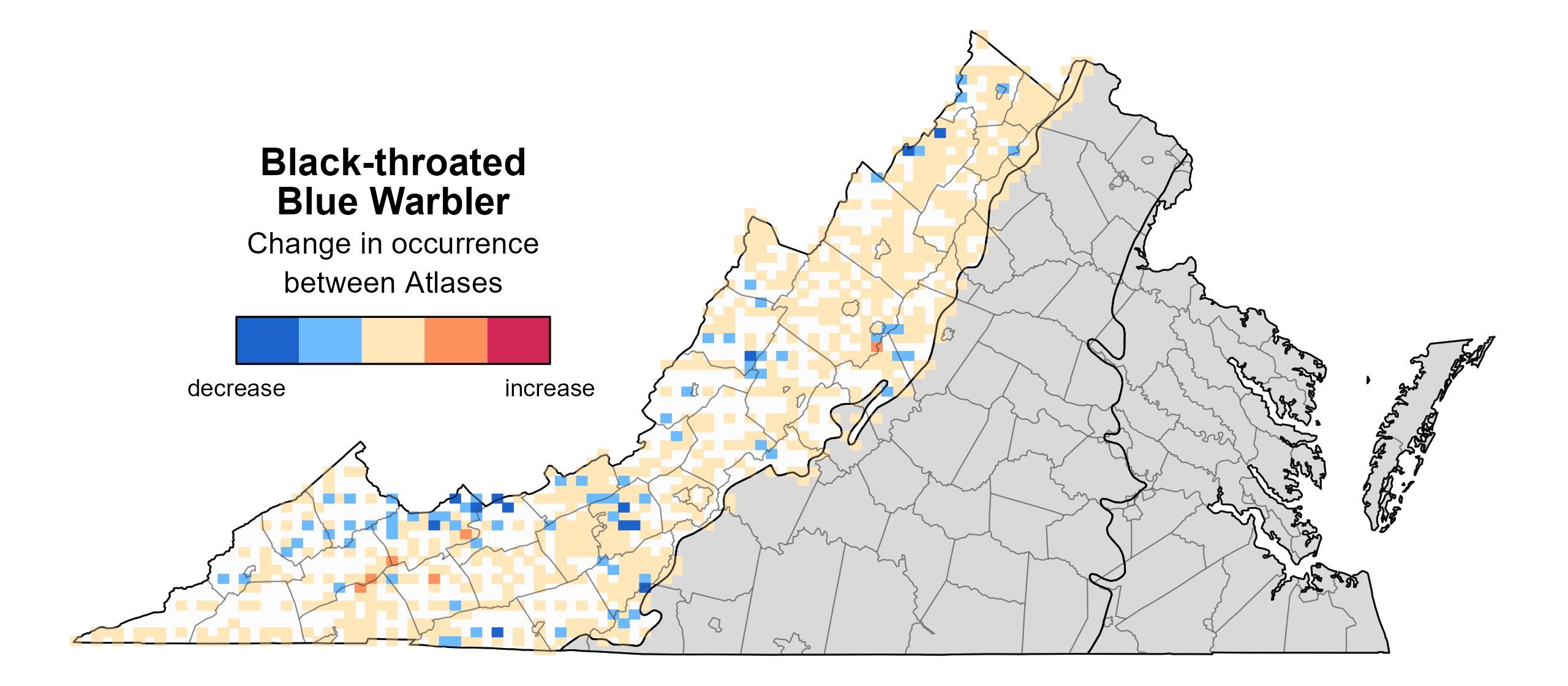
Figure 3: Black-throated Blue Warbler change in breeding distribution between Atlases (1985–1989 and 2016–2020) based on probability of occurrence. This map indicates the change in the probability that this species will occur in a block (an approximately 10 mi2 [26 km2] survey unit) between Atlas periods. Blocks with no change (tan) may have constant presence or constant absence. Blocks in white were not surveyed during the First Atlas so were not modeled. Blocks in gray are outside the species’ core range and were not modeled.
Breeding Evidence
Black-throated Blue Warblers were confirmed breeders in 29 blocks and 19 counties and found to be probable breeders in an additional seven counties in the Mountains and Valleys region (Figure 4). Breeding observations were concentrated in the mountains bordering West Virginia and along the Blue Ridge. Breeding observations were recorded in similar areas during the First Atlas (Figure 5).
The earliest confirmed breeding behavior was in early May when an adult was observed carrying nesting material. However, breeding confirmations were mainly based on observations of adults carrying food (May 31 – July 29), recently fledged young (June 3 – August 3), and adults feeding young (July 10 – July 29) (Figure 6).
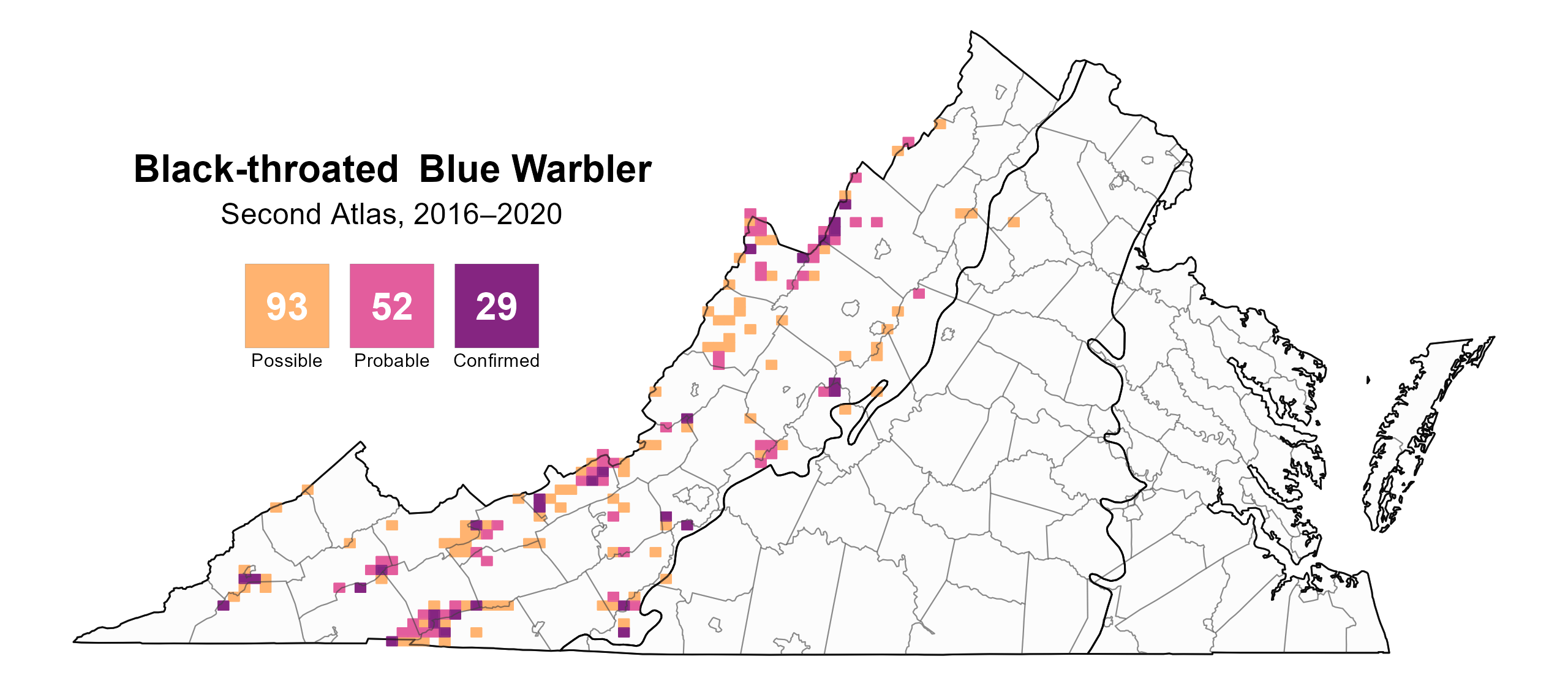
Figure 4: Black-throated Blue Warbler breeding observations from the Second Atlas (2016–2020). The colored boxes illustrate Atlas blocks (approximately 10 mi2 [26 km2] survey units) where the species was detected. The colors show the highest breeding category recorded in a block. The numbers within the colors in the legend correspond to the number of blocks with that breeding evidence category.
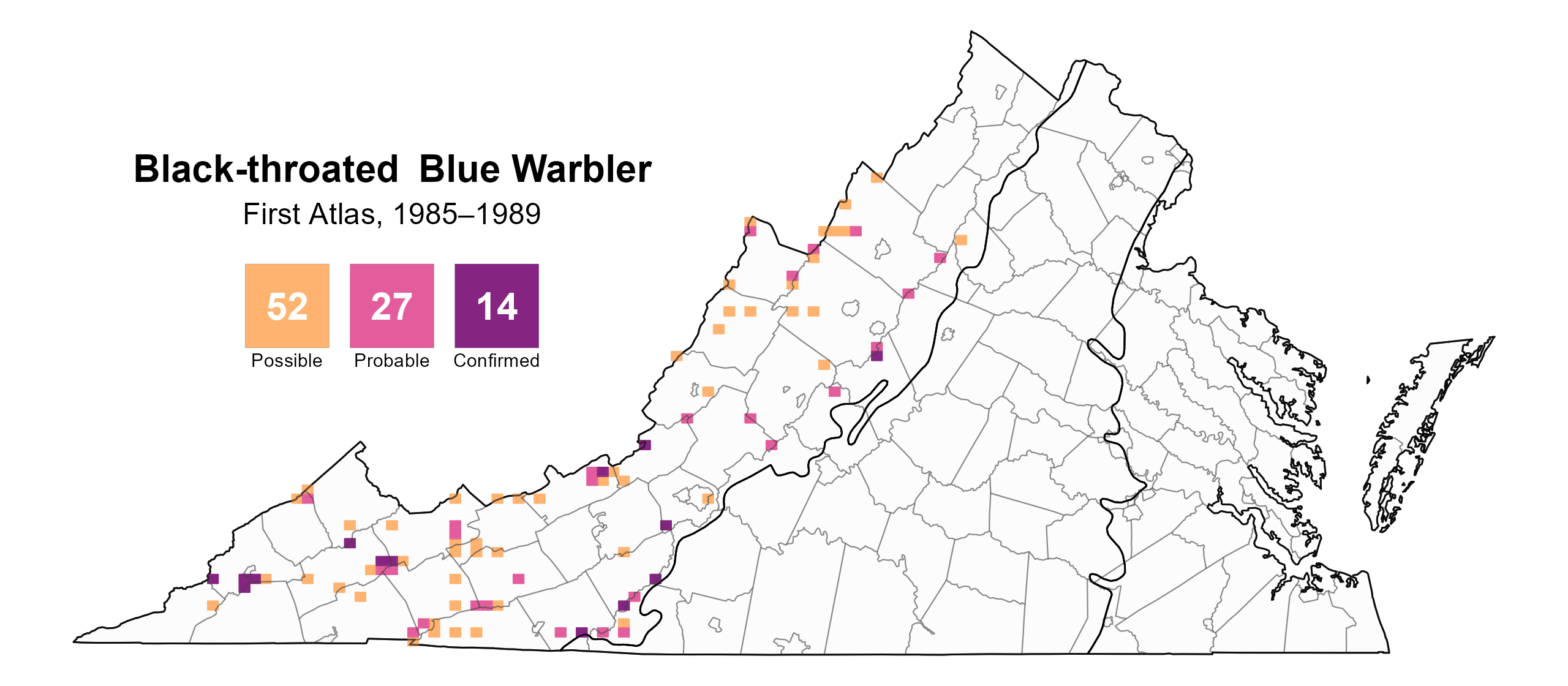
Figure 5: Black-throated Blue Warbler breeding observations from the First Atlas (1985–1989). The colored boxes illustrate Atlas blocks (approximately 10 mi2 [26 km2] survey units) where the species was detected. The colors show the highest breeding category recorded in a block. The numbers within the colors in the legend correspond to the number of blocks with that breeding evidence category.
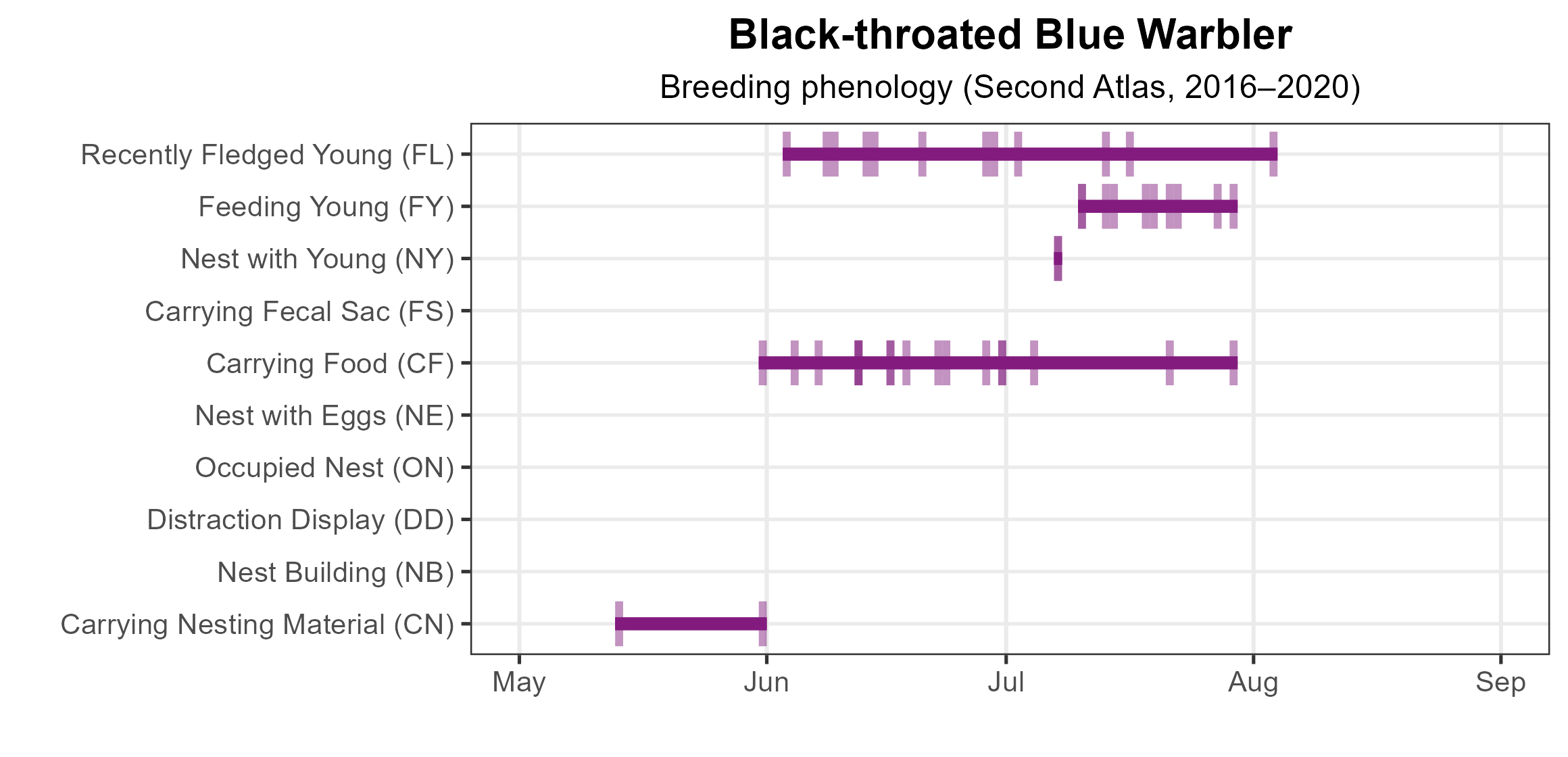
Figure 6: Black-throated Blue Warbler phenology: confirmed breeding codes. This graph shows a timeline of confirmed breeding behaviors. Tick marks represent individual observations of the behavior.
Population Status
Black-throated Blue Warbler relative abundance was estimated to be highest in extensively forested, high-elevation areas of the Appalachian Mountains and along the Blue Ridge Mountains (Figure 7).
The total estimated Black-throated Blue Warbler population in the state is approximately 82,000 individuals (with a range between 42,000 and 166,000). Based on North American Breeding Bird Survey (BBS) data for the Atlantic Flyway region, as the data for Virginia do not produce a credible trend, the Black-throated Blue Warbler population increased by a significant 1.21% annually from 1966–2022, and between Atlas periods, its population increased by a significant 1.14% per year from 1987–2018 (Hostetler et al. 2023; Figure 8).
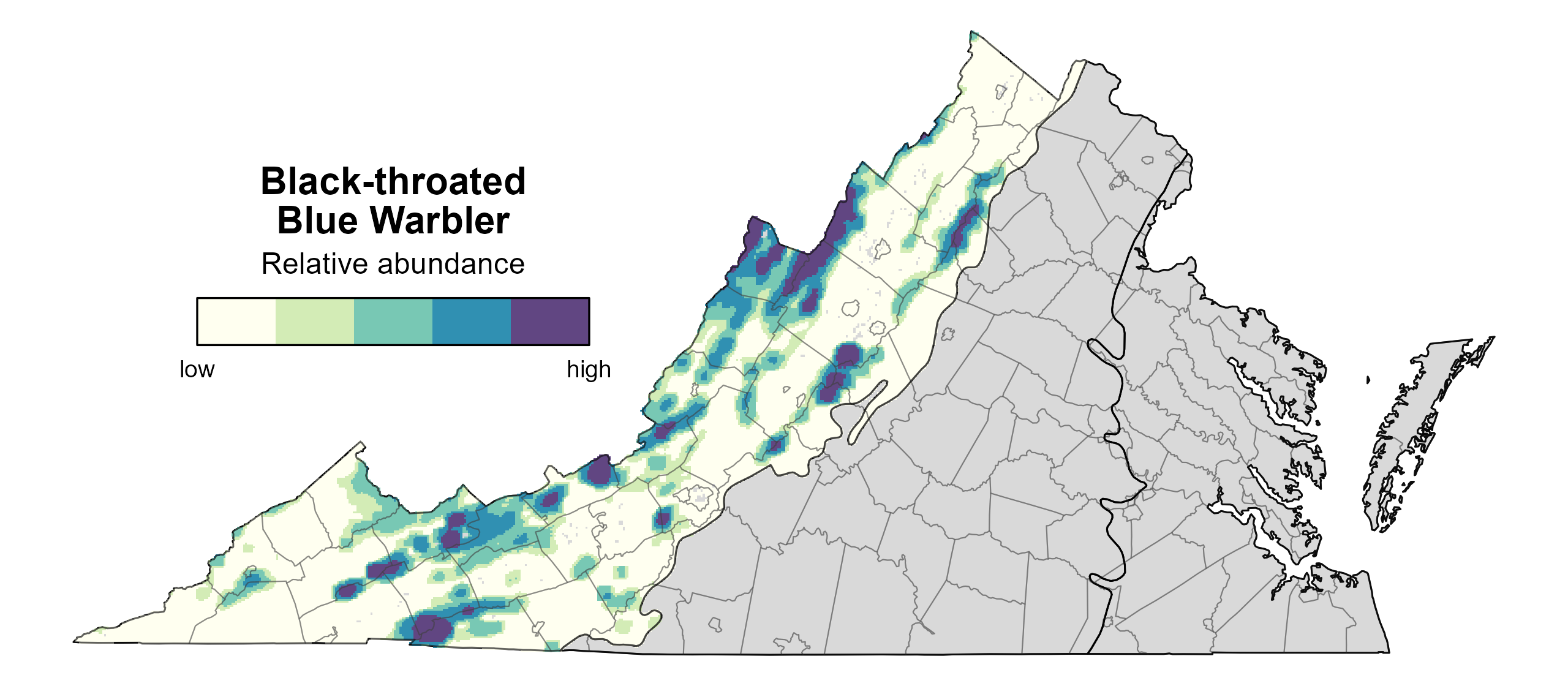
Figure 7: Black-throated Blue Warbler relative abundance (Second Atlas, 2016–2020). This map indicates the predicted abundance of this species at a 0.4 mi2 (1 km2) scale based on environmental (including habitat) factors. Abundance values are presented on a relative scale of low to high. Areas in gray are outside the species’ core range and were not modeled.

Figure 8: Black-throated Blue Warbler population trend for the Atlantic Flyway as estimated by the North American Breeding Bird Survey. The vertical axis shows species abundance; the horizontal axis shows the year. The solid line indicates the estimated population trend; there is a 97.5% probability that the true population trend falls between the dashed lines. The shaded bars indicate the First and Second Atlas periods.
Conservation
The Black-throated Blue Warbler population has increased throughout its range. In Virginia, although they are range restricted, they are not considered a species of special concern (Holmes et al. 2020). However, Black-throated Blue Warblers prefer to breed in the understory of mixed forests that could be impacted by clear-cutting and other types of habitat fragmentation. Thus, actions taken for species of greater conservation concern that involve protecting forested habitats with complex shrub understories in the mountains of Virginia could also be helpful for the Black-throated Blue Warbler.
Interactive Map
The interactive map contains up to six Atlas layers (probability of occurrence for the First and Second Atlases, change in probability of occurrence between Atlases, breeding evidence for the First and Second Atlases, and abundance for the Second Atlas) that can be viewed one at a time. To view an Atlas map layer, mouse over the layer box in the upper left. County lines and physiographic regional boundaries (Mountains and Valleys, Piedmont, and Coastal Plain) can be turned on and off by checking or unchecking the box below the layer box. Within the map window, users can hover on a block to see its value for each layer and pan and zoom to see roads, towns, and other features of interest that are visible beneath a selected layer.
View Interactive Map in Full Screen
References
Holmes, R. T., S. A. Kaiser, N. L. Rodenhouse, T. S. Sillett, M. S. Webster, P. Pyle, and M. A. Patten (2020). Black-throated Blue Warbler (Setophaga caerulescens), version 1.0. In Birds of the World (P. G. Rodewald, Editor). Cornell Lab of Ornithology, Ithaca, NY, USA. https://doi.org/10.2173/bow.btbwar.01.
Hostetler, J. A., J. R. Sauer, J. E. Hines, D. Ziolkowski, and M. Lutmerding (2023). The North American breeding bird survey, analysis results 1966–2022. U.S. Geological Survey, Laurel, MD, USA. https://doi.org/10.5066/P9SC7T11.