Introduction
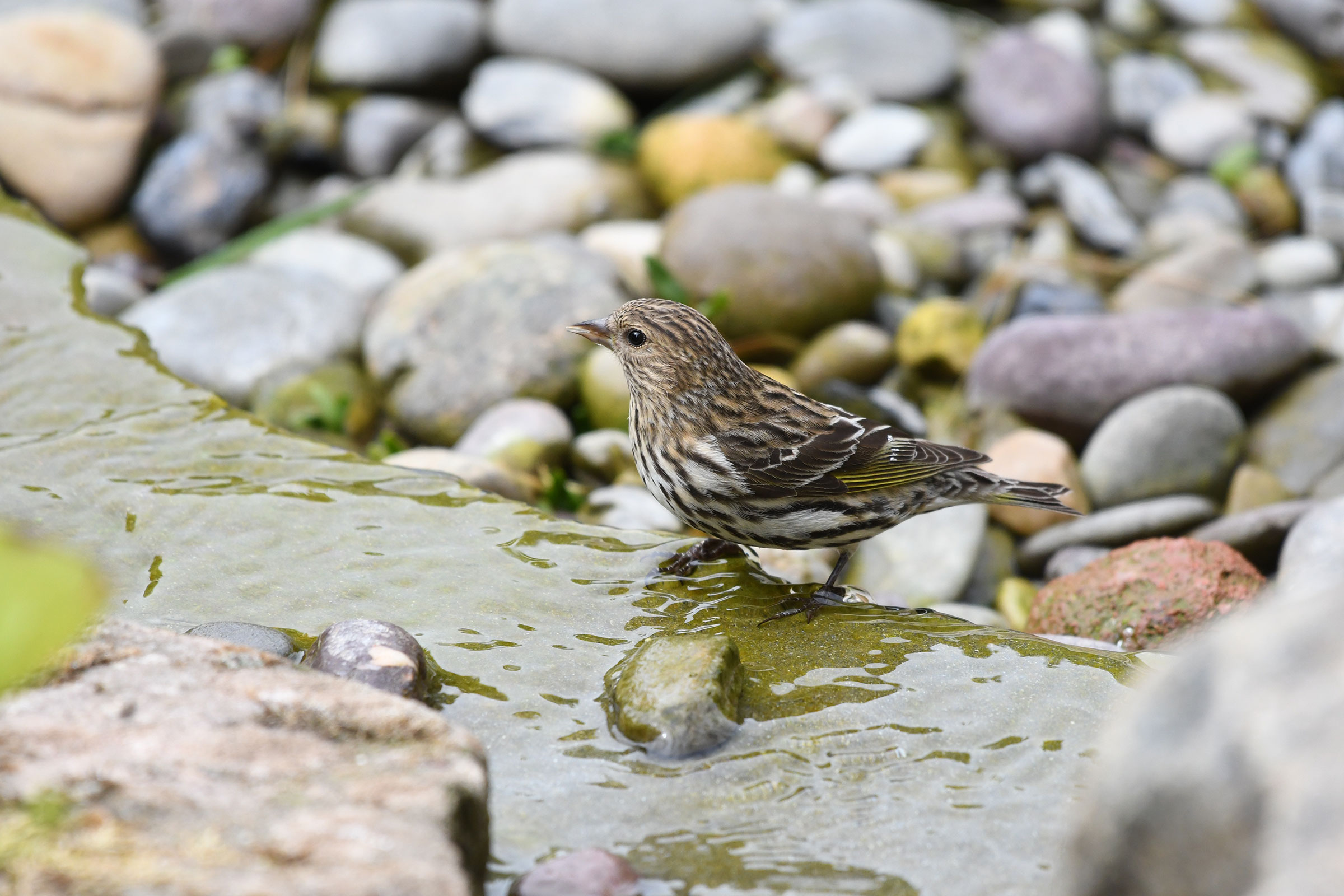
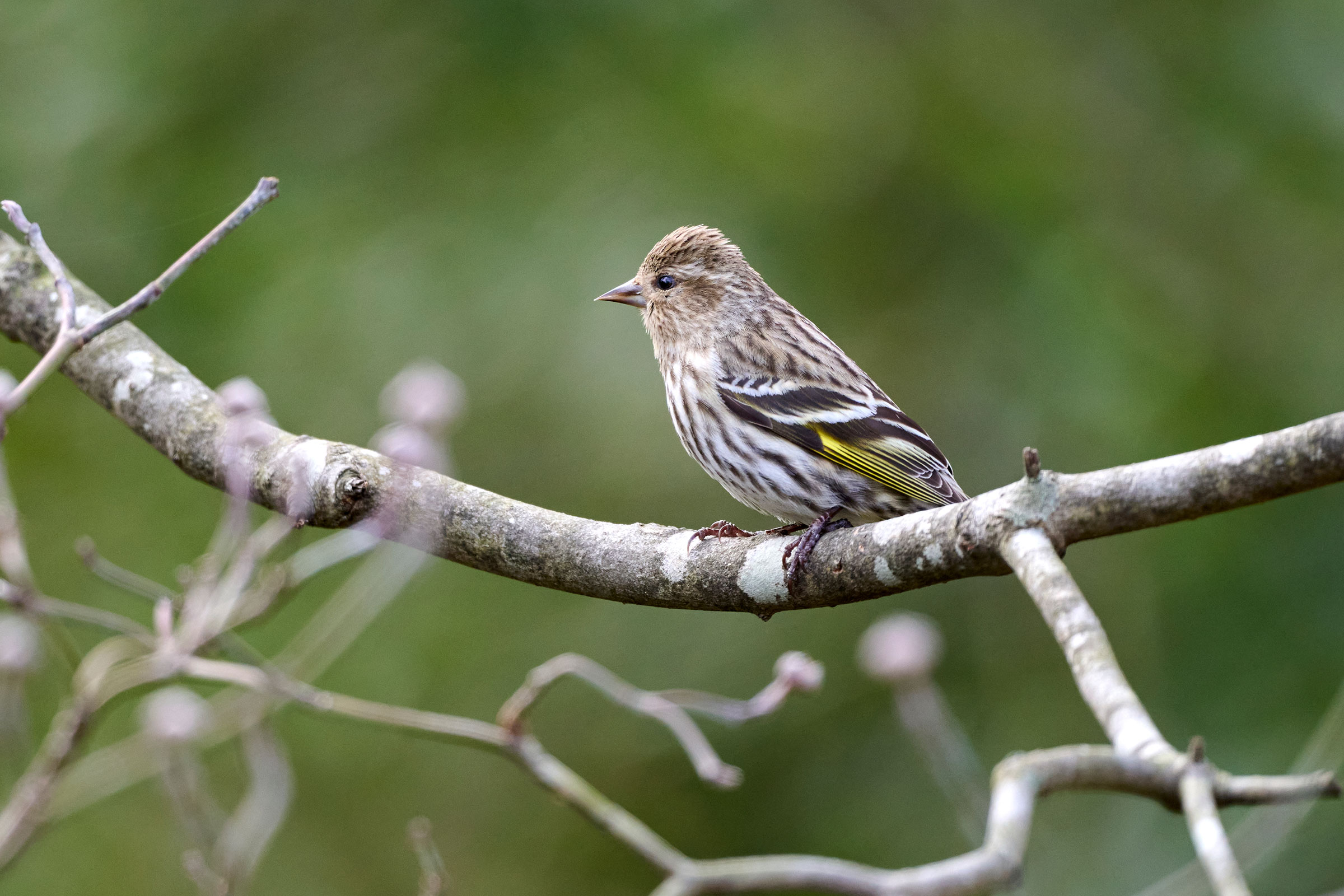
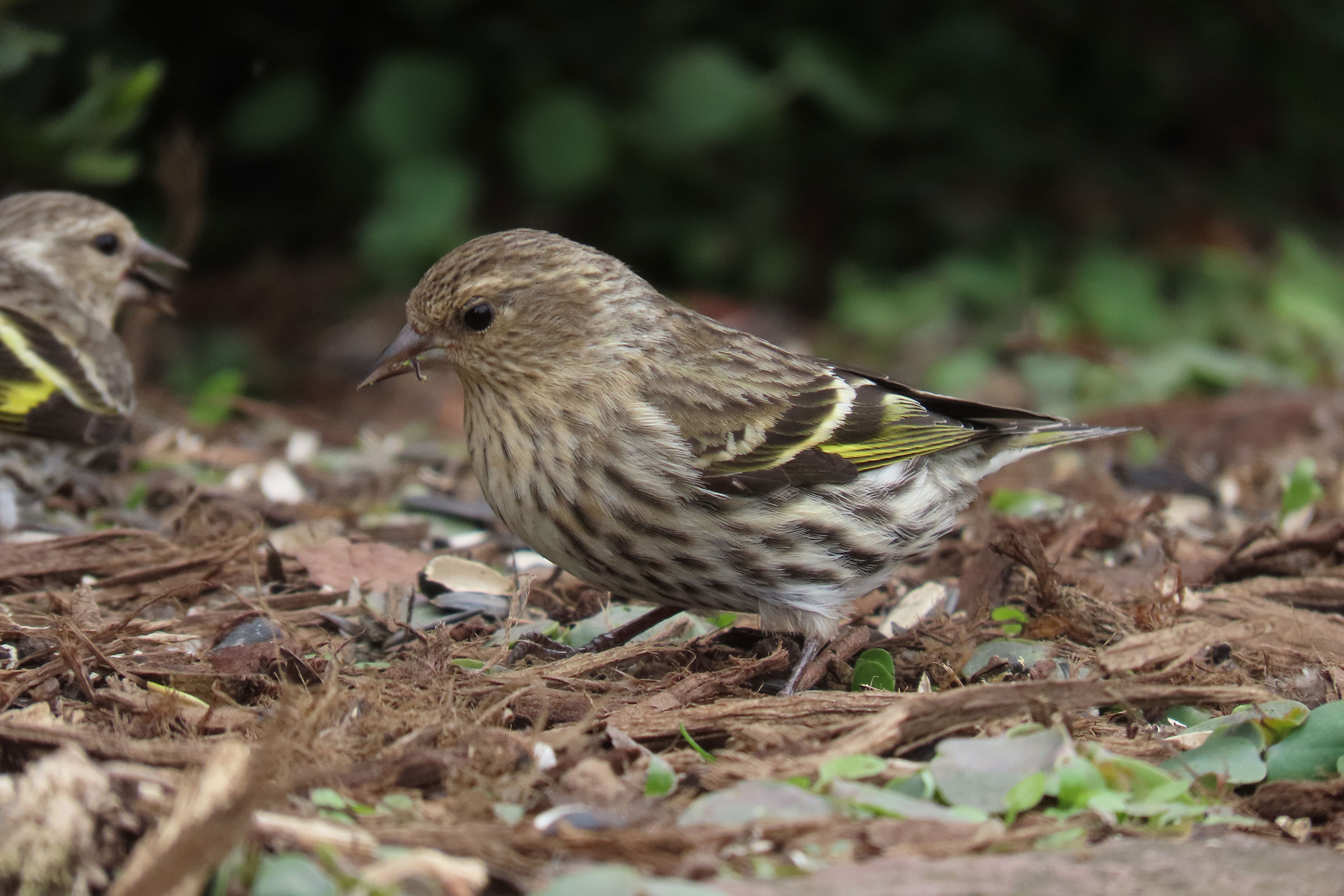
The Pine Siskin is recognized for its gleeful twittering, zipping call, and quarrelsome disposition as it descends on thistle feeders. Primarily found during breeding season in the northern reaches of the U.S. and Canada, this nomadic finch is uncommon throughout Virginia during most winters, except in irruption years when the species becomes locally abundant.
Breeding records are exceptionally rare in the state, with only three confirmed breeder records prior to 2007 (Rottenborn and Brinkley 2007). In other atlases, breeding confirmations were typically associated with prior winter irruptions (Foley 2020). Virginia most recently enjoyed a Pine Siskin irruption during the winter of 2020–2021, but breeding was not confirmed. When Pine Siskins remain in the state through the summer, they typically inhabit high-elevation spruce habitats in the Appalachian Mountains, as well as mixed pine-deciduous habitats at middle elevations (Wilson and Watts 2012).
Breeding Distribution
Because the species is rare, its distribution could not be modeled. For information on where Pine Siskins occur, please see the Breeding Evidence section.
Breeding Evidence
Pine Siskins were found only in the Mountains and Valleys region (Figure 1). Although they were not confirmed breeders during the Second Atlas, they were identified as probable breeders based on the presence of pairs in suitable red spruce (Picea rubens) habitat on Mount Rogers in Grayson County. Other records in the region consisted of lone birds in suitable forest habitat that were classified as possible breeders. Notably, Pine Siskins are one of the few species that were confirmed breeders during the First Atlas but not during the Second Atlas (Figure 2). Breeding confirmations in Montgomery County, Falls Church, and Mountain Lake in Giles County during the First Atlas were exceptional and account for most of all known breeding records in the state (Rottenborn and Brinkley 2007).
For more general information on the breeding habits of the Pine Siskin please refer to All About Birds.

Figure 1: Pine Siskin breeding observations from the Second Atlas (2016–2020). The colored boxes illustrate Atlas blocks (approximately 10 mi2 [26 km2] survey units) where the species was detected. The colors show the highest breeding category recorded in a block. The numbers within the colors in the legend correspond to the number of blocks with that breeding evidence category.

Figure 2: Pine Siskin breeding observations from the First Atlas (1985–1989). The colored boxes illustrate Atlas blocks (approximately 10 mi2 [26 km2] survey units) where the species was detected. The colors show the highest breeding category recorded in a block. The numbers within the colors in the legend correspond to the number of blocks with that breeding evidence category.
Population Status
A lack of detections during the point count surveys prevented the development of an abundance model for the Pine Siskin. Population trends for the species are declining across its range based on the North American Breeding Bird Survey (BBS); however, the BBS does not cover the species well in Virginia or across the Eastern region, so its population status is unclear in the Commonwealth.
Conservation
As relatively recent and rare breeder in the state, the Pine Siskin is not considered a species of concern in Virginia. However, the species’ gregarious nature and heavy use of feeders can facilitate the spread of salmonellosis and other diseases. To mitigate this risk, bird feeders should be cleaned and disinfected regularly, monitored for signs of sick birds, and arranged in ways that reduce the chances of birds contacting each other’s droppings, particularly during irruption years (Dawson 2020).
Interactive Map
The interactive map contains up to six Atlas layers (probability of occurrence for the First and Second Atlases, change in probability of occurrence between Atlases, breeding evidence for the First and Second Atlases, and abundance for the Second Atlas) that can be viewed one at a time. To view an Atlas map layer, mouse over the layer box in the upper left. County lines and physiographic regional boundaries (Mountains and Valleys, Piedmont, and Coastal Plain) can be turned on and off by checking or unchecking the box below the layer box. Within the map window, users can hover on a block to see its value for each layer and pan and zoom to see roads, towns, and other features of interest that are visible beneath a selected layer.
View Interactive Map in Full Screen
References
Dawson, W. R. (2020). Pine Siskin (Spinus pinus), version 1.0. In Birds of the World (A. F, Poole, Editor). Cornell Lab of Ornithology Ithaca, NY, USA. https://doi.org/10.2173/bow.pinsis.01.
Foley, G. (2020). Bird of the month – Pine Siskin. Maryland-DC breeding bird atlas. https://ebird.org/ebird/atlasmddc/news/november-2020-bird-of-the-month-pine-siskin.
Rottenborn, S. C., and E. S. Brinkley (Editors) (2007). Virginia’s birdlife: An annotated checklist. 4th edition. Virginia Society of Ornithology.
Wilson, M. D., and B. D. Watts (2012). The Virginia avian heritage project: a report to summarize the Virginia avian heritage database. CBTR 12-04. College of William and Mary and Virginia Commonwealth University. Williamsburg, VA, USA.