Introduction
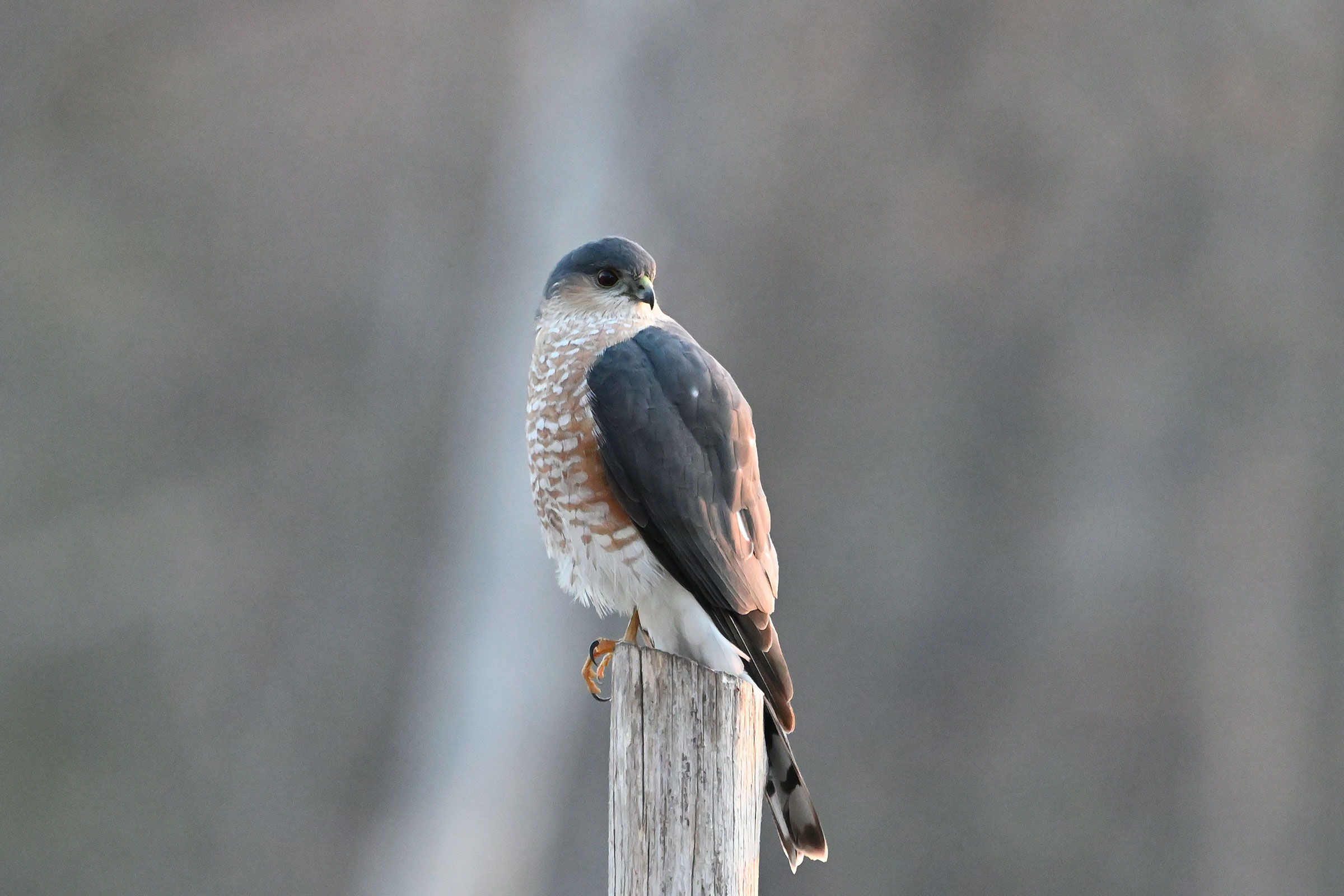
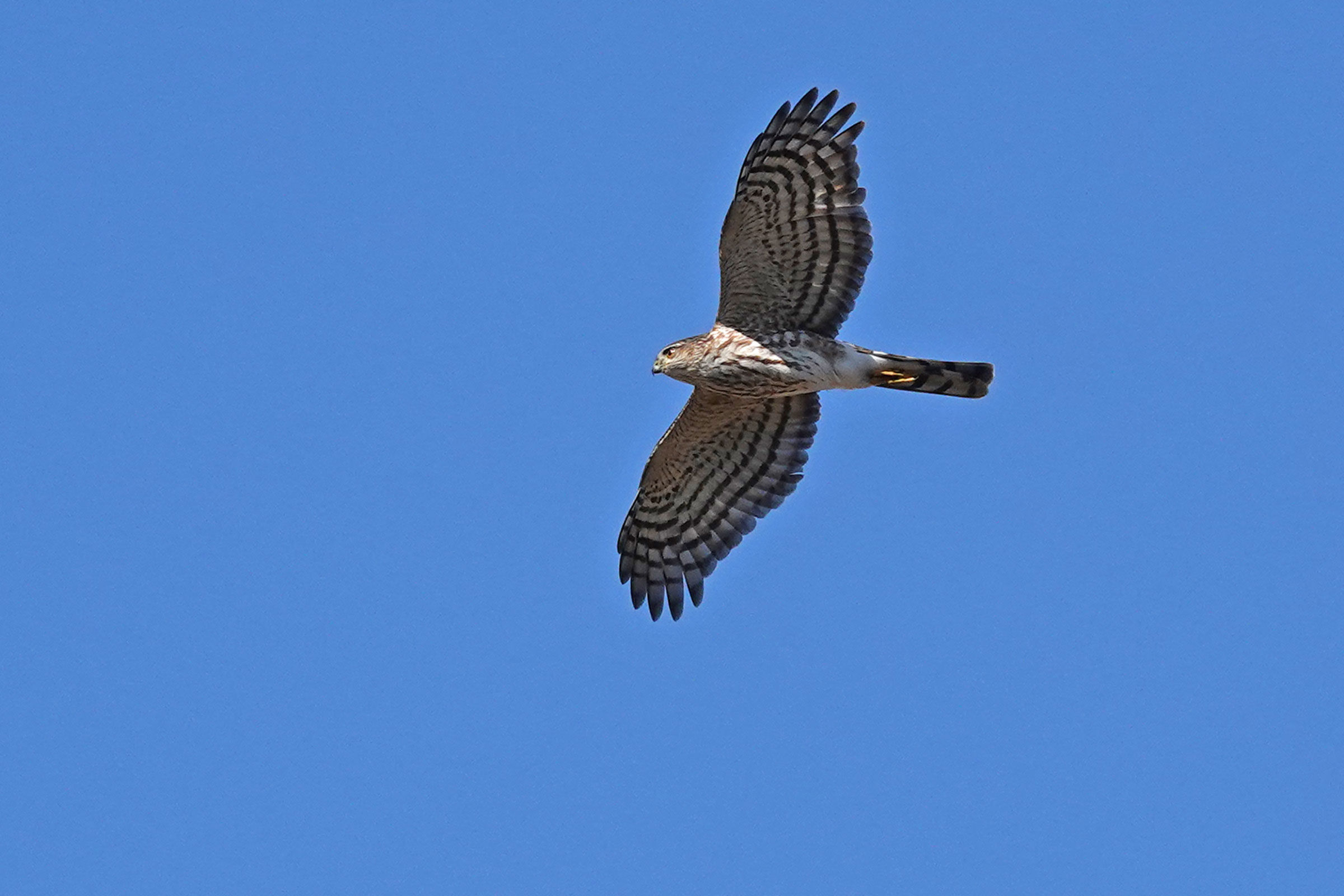
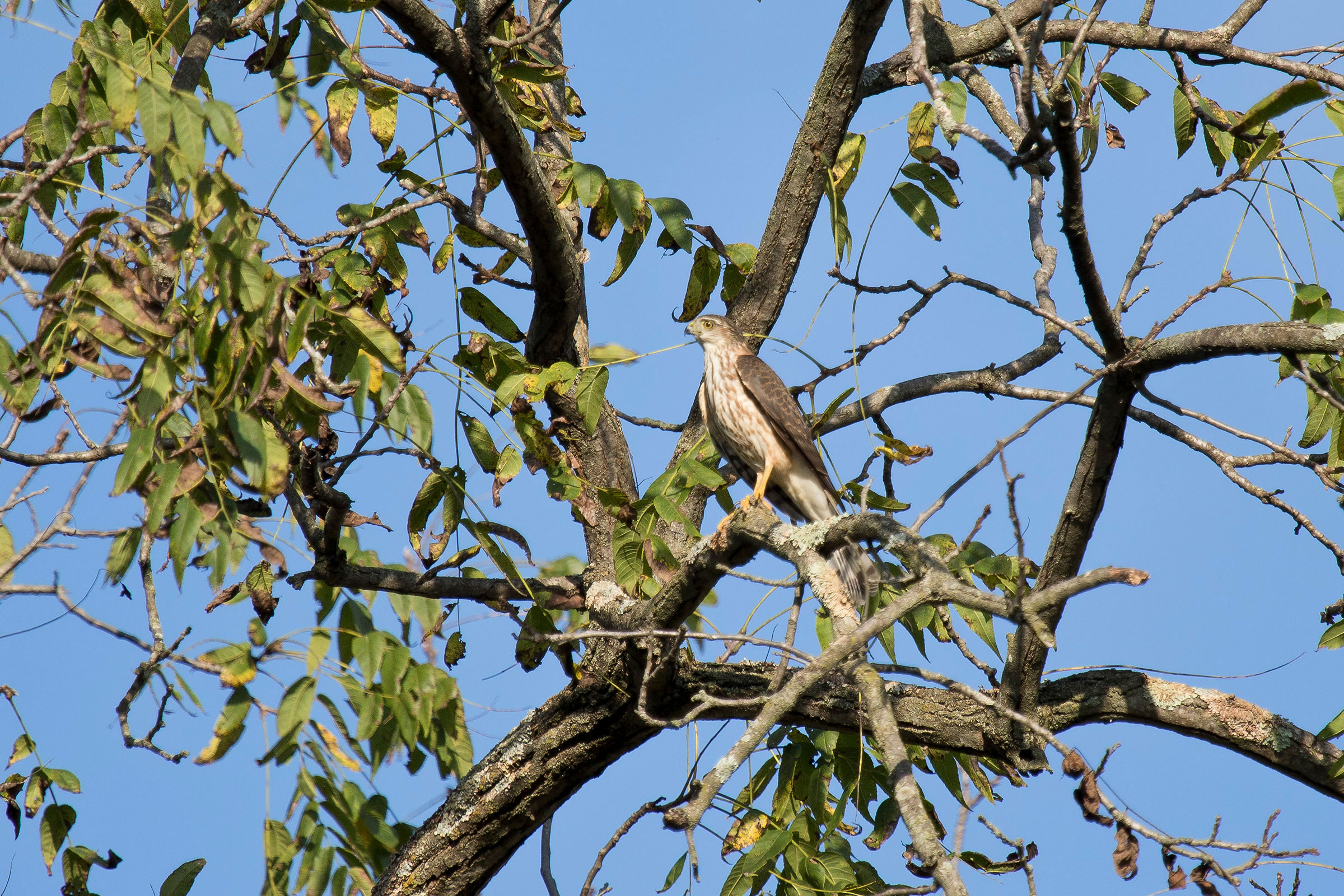
The Sharp-shinned Hawk is a sly, agile hawk that breeds and hunts in dense forests, and unlike the Red-tailed Hawk (Buteo jamaicensis), it is rarely seen perched in the open. While its breeding range includes the western two-thirds of Virginia, the Sharp-shinned Hawk is most often seen by Virginians during migration. Next to the Broad-winged Hawk (Buteo platypterus), the Sharp-shinned Hawk is the second most commonly observed migrating raptor at Rockfish Gap Hawkwatch (RGHW 2023). In Fall 2023, observers counted 2,064 migrating Sharp-shinned Hawks (10-year average = 1,828).
Breeding Distribution
During the Second Breeding Bird Atlas, there were too few breeding observations to develop occupancy models for the Sharp-shinned Hawk. Please see the Breeding Evidence section for more information on its breeding distribution.
Breeding Evidence
Sharp-shinned Hawks were confirmed breeders in four blocks in Dickenson, Highland, and Rockingham Counties and the city of Radford and were found to be probable breeders in an additional seven counties (Alleghany, Bath, Bland, Fairfax, Frederick, Highland, and Pulaski). Except for a probable breeder in Fairfax County and two possible breeders in Lynchburg, all breeding evidence was observed in the Mountains and Valleys region, which is the most heavily forested portion of the state. The large number of possible breeders is testament to the difficulty in observing and confirming nesting Sharp-shinned Hawks in their dense forest habitat. During the First Atlas, there were only four confirmed breeders and no probable or possible breeders recorded (Figure 2).
Breeding was confirmed through observations of nest building as early as March 12, followed by observations of adults carrying nesting material on April 28, an occupied nest on May 12, and a nest with young on July 7 (Figure 3).
For more general information on the breeding habits of this species, please refer to All About Birds.
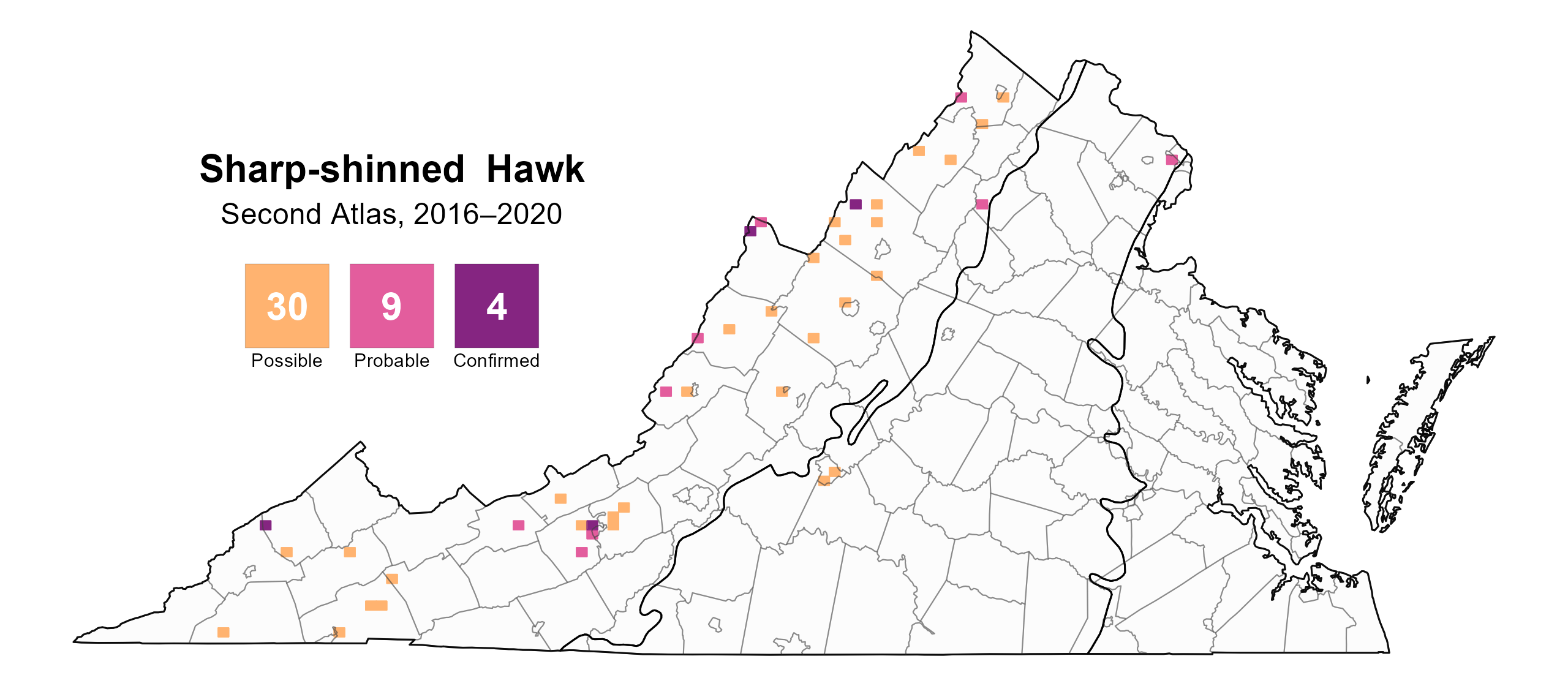
Figure 1: Sharp-shinned Hawk breeding observations from the Second Atlas (2016–2020). The colored boxes illustrate Atlas blocks (approximately 10 mi2 [26 km2] survey units) where the species was detected. The colors show the highest breeding category recorded in a block. The numbers within the colors in the legend correspond to the number of blocks with that breeding evidence category.
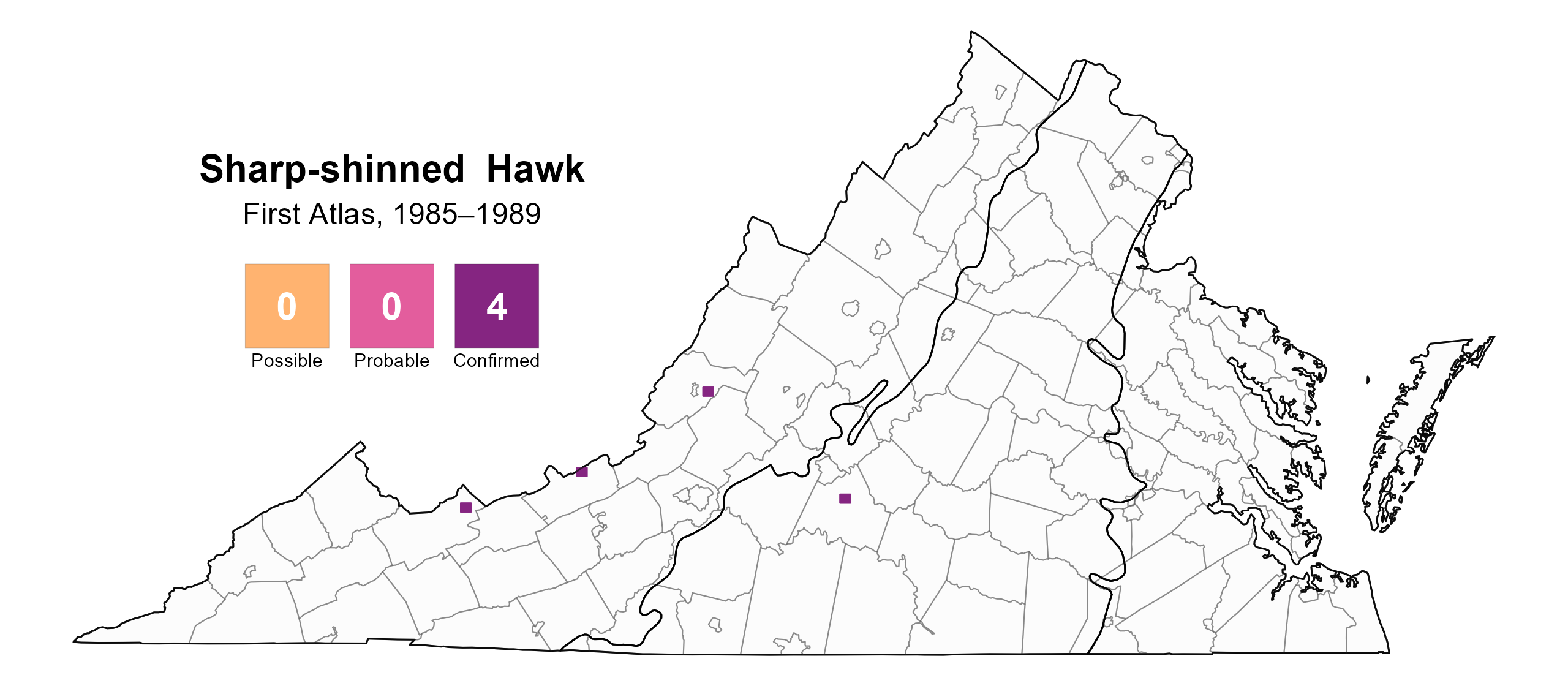
Figure 2: Sharp-shinned Hawk breeding observations from the First Atlas (1985–1989). The colored boxes illustrate Atlas blocks (approximately 10 mi2 [26 km2] survey units) where the species was detected. The colors show the highest breeding category recorded in a block. The numbers within the colors in the legend correspond to the number of blocks with that breeding evidence category.
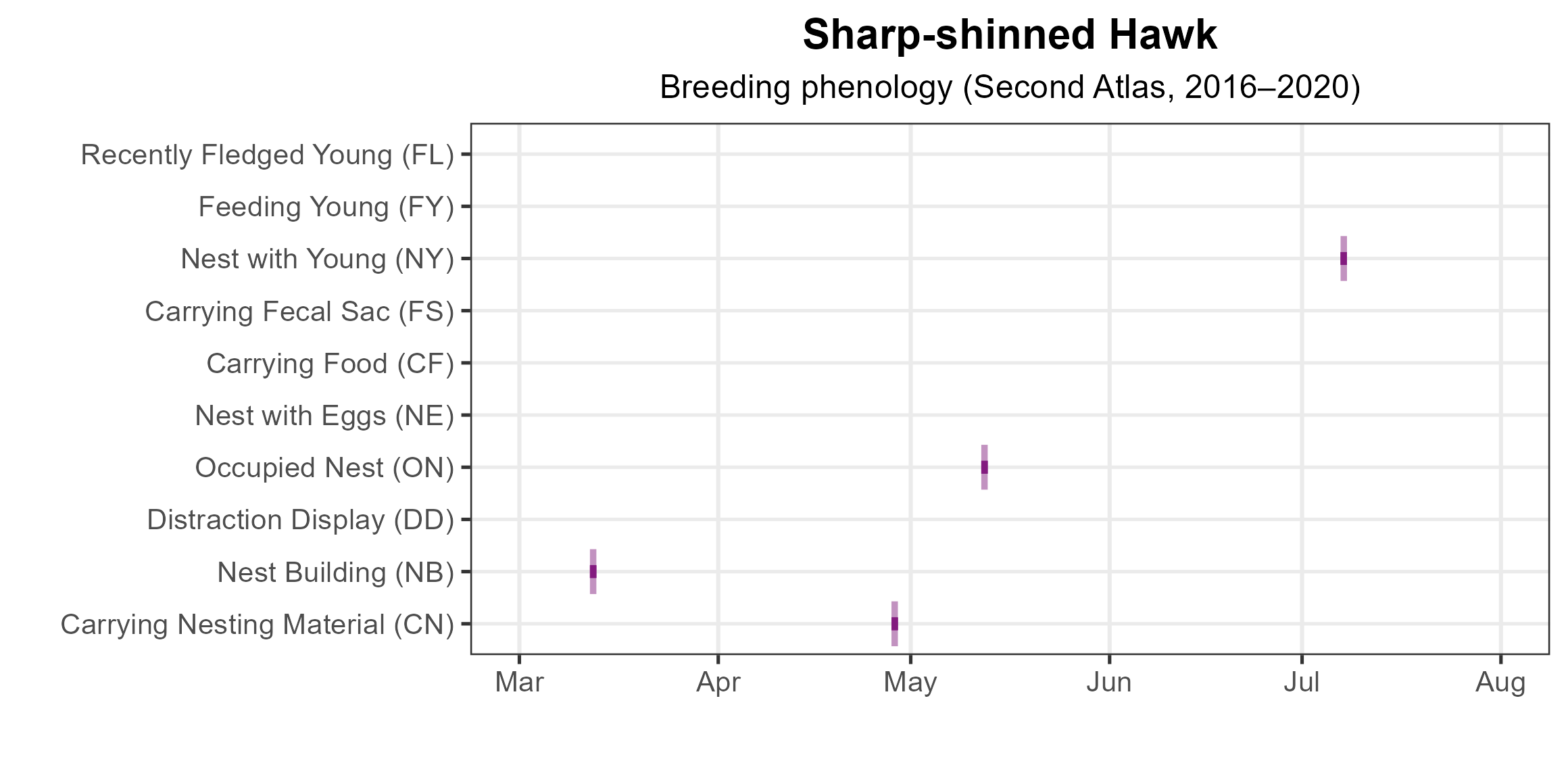
Figure 3: Sharp-shinned Hawk phenology: confirmed breeding codes. This graph shows a timeline of confirmed breeding behaviors. Tick marks represent individual observations of the behavior.
Population Status
An abundance model could not be developed for the Sharp-shinned Hawk because there were too few detections during the point count surveys. In addition, North American Breeding Bird Survey (BBS) data do not provide credible population trend estimates for this species at any geographic scale.
Conservation
The Sharp-shinned Hawk is included in Virginia’s 2025 Wildlife Action Plan as an Assessment Priority Species, as no population trend data are available to evaluate it as a potential Species of Greatest Conservation Need (VDWR 2025). Creating a targeted monitoring program for woodland raptors may be necessary to generate trend data for this species. Generally, the most important conservation strategy for Sharp-shinned Hawks is to protect large blocks of forest from conversion to developed or agricultural lands.
Interactive Map
The interactive map contains up to six Atlas layers (probability of occurrence for the First and Second Atlases, change in probability of occurrence between Atlases, breeding evidence for the First and Second Atlases, and abundance for the Second Atlas) that can be viewed one at a time. To view an Atlas map layer, mouse over the layer box in the upper left. County lines and physiographic regional boundaries (Mountains and Valleys, Piedmont, and Coastal Plain) can be turned on and off by checking or unchecking the box below the layer box. Within the map window, users can hover on a block to see its value for each layer and pan and zoom to see roads, towns, and other features of interest that are visible beneath a selected layer.
View Interactive Map in Full Screen
References
Bildstein, K. L., K. D. Meyer, C. M. White, J. S. Marks, and G. M. Kirwan (2020). Sharp-shinned Hawk (Accipiter striatus), version 1.0. In Birds of the World (S. M. Billerman, B. K. Keeney, P. G. Rodewald, and T. S. Schulenberg, Editors). Cornell Lab of Ornithology, Ithaca, NY, USA. https://doi.org/10.2173/bow.shshaw.01.
Rockfish Gap Hawk Watch (RGHW) (2023). 2023 season summary. https://www.rockfishgaphawkwatch.org/2023-season-summary.
Virginia Department of Wildlife Resources (VDWR) (2025). Virginia wildlife action plan. Virginia Department of Wildlife Resources, Henrico, VA, USA. 506 pp.