Introduction
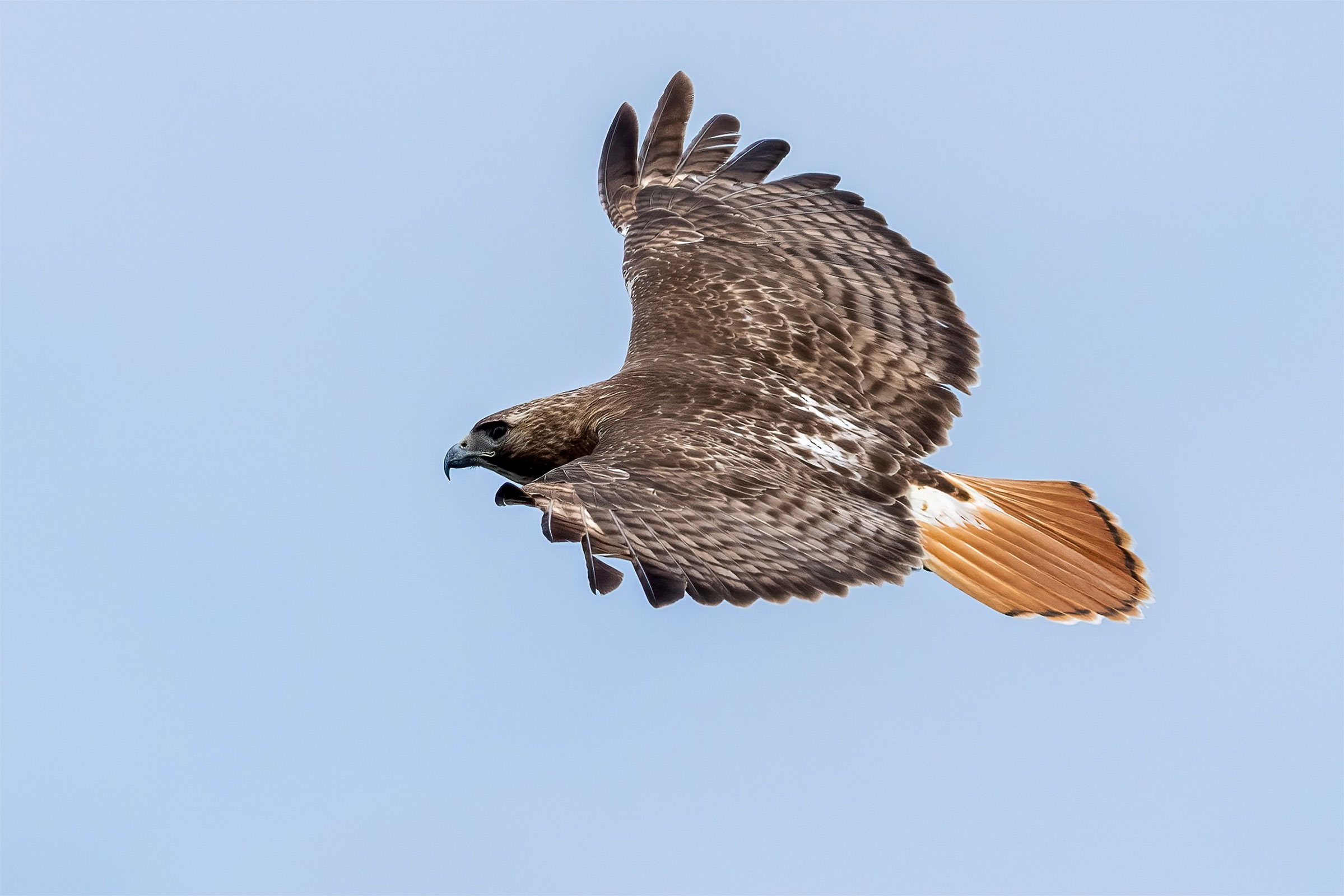
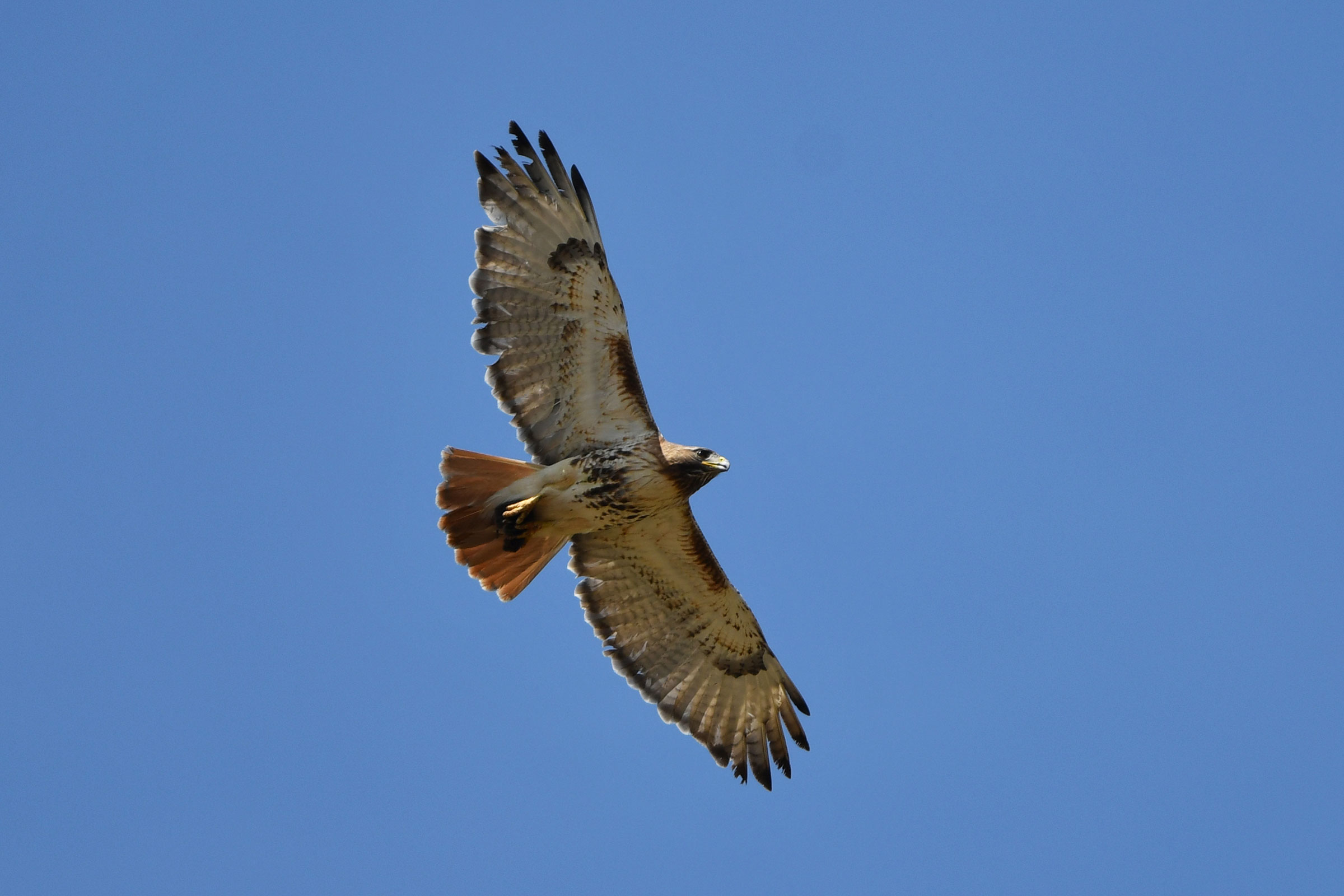
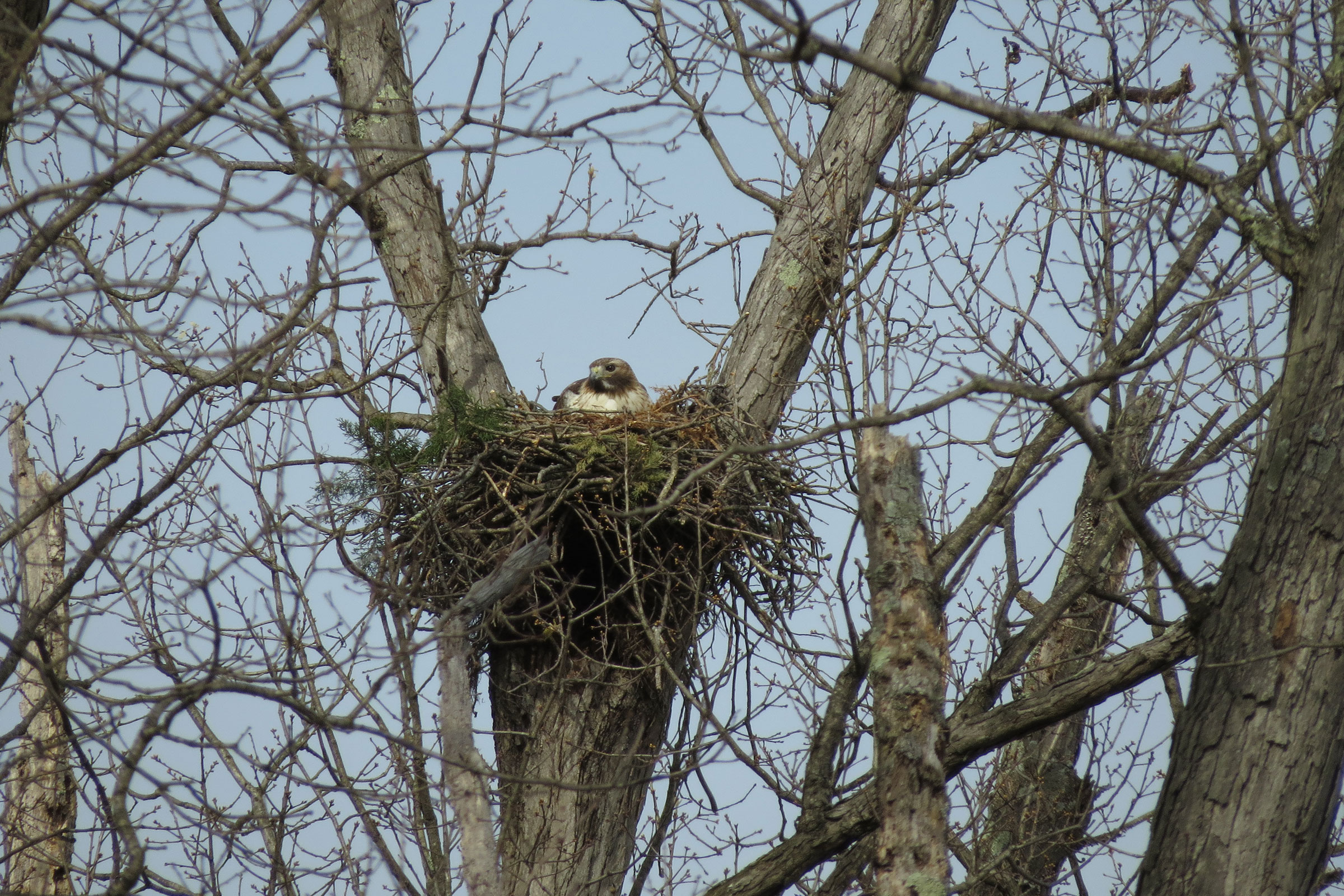
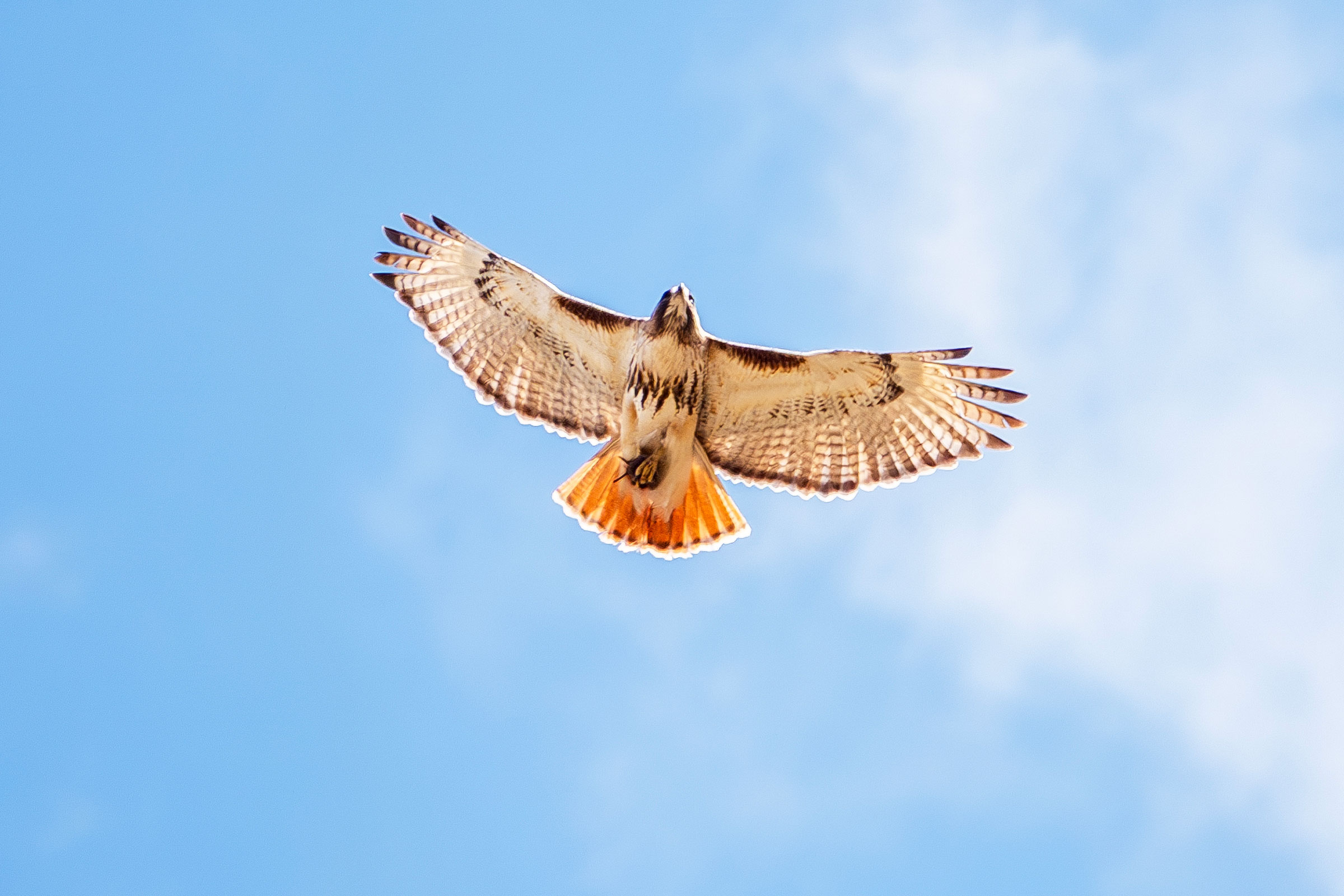
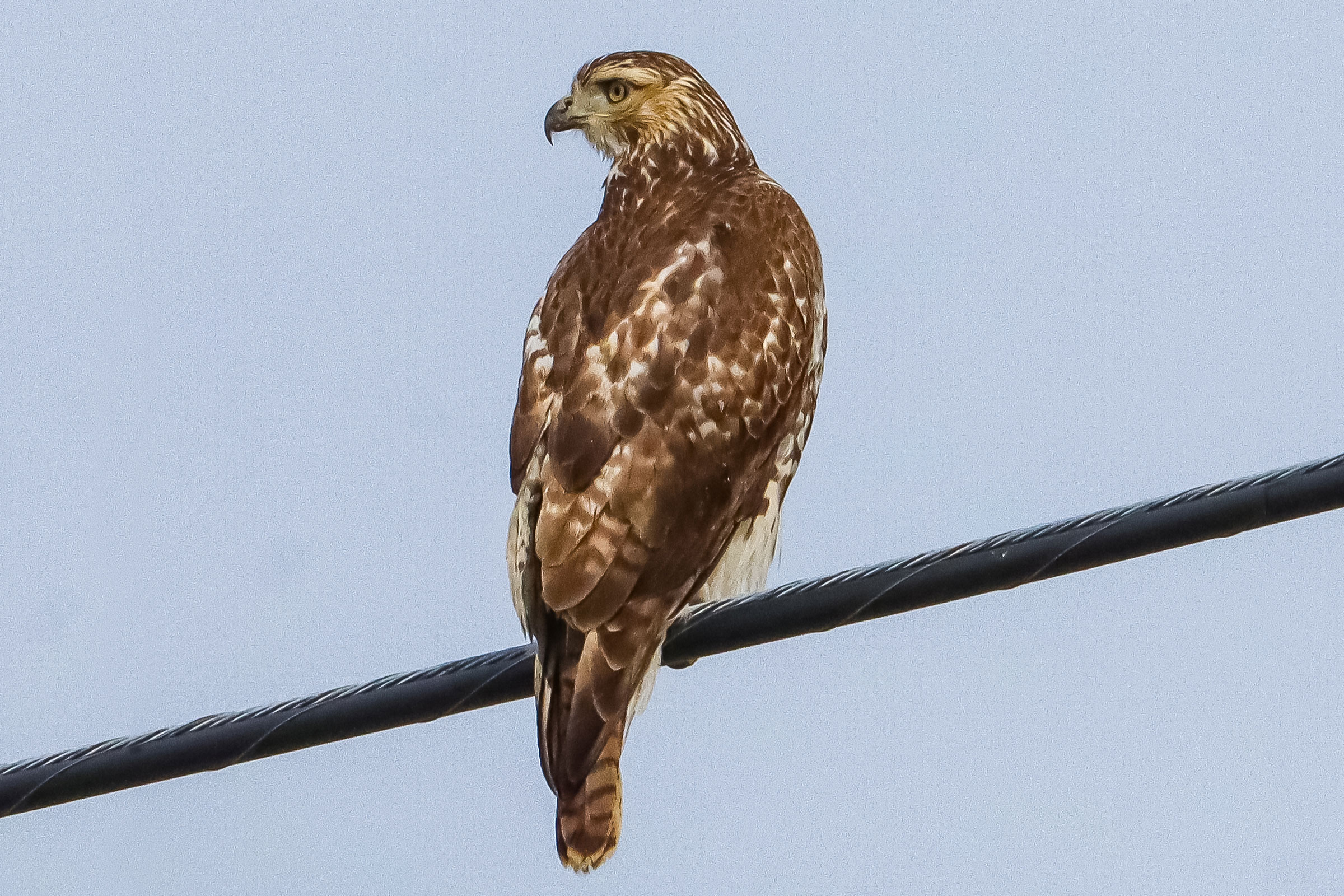
The Red-tailed Hawk is among the most well-known raptors in Virginia. From rural backroads to busy interstates, it can be seen hunting for small mammals from atop trees, fence posts, and utility wires (Preston et al. 2020). Its commonness, however, does not diminish its majesty. Morning sun on an adult red-tail’s contrasting chocolate-colored back, whitish breast, and rusty tail is always a sight to behold. Among the most versatile of avian predators, Red-tailed Hawks prey on animals as large as rabbits and pheasants and as small as sparrows. During winter when leaves are absent, an observant traveler on Virginia’s Interstate 81 is likely to see the Red-tailed Hawk’s vacant stick nests.
Breeding Distribution
Red-tailed Hawks are found throughout the state, but they are most likely to occur in the valleys of the Mountains and Valleys region and in the western and southcentral portions of the Piedmont region (Figure 1). The likelihood of Red-tailed Hawks occurring in a block increases as the amount of agricultural land increases and is also slightly positively associated with the proportion of forest cover and developed areas in a block. This broad set of habitat associations is a testament to the Red-tailed Hawk’s ability to successfully live and nest in a variety of environments, from suburban backyards to remote forests.
Red-tailed Hawk distribution during the First Atlas and the change in its distribution between the two Atlas periods could not be modeled due to model limitations (see Interpreting Species Accounts). For more information on where it occurred during the First Atlas, please see the Breeding Evidence section.
View Environmental Associations
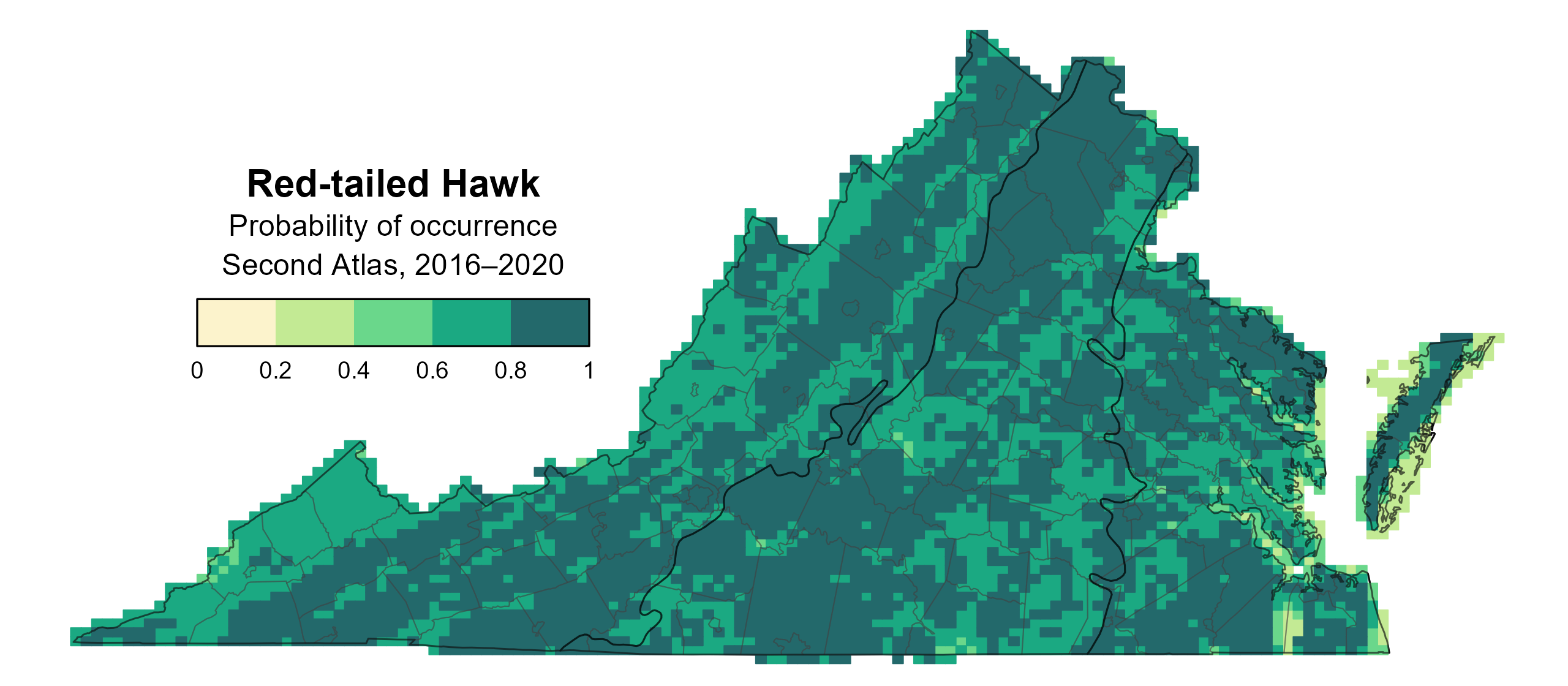
Figure 1: Red-tailed Hawk breeding distribution based on probability of occurrence (Second Atlas, 2016–2020). This map indicates the probability that this species will occur in an Atlas block (an approximately 10 mi2 [26 km2] survey unit) based on environmental (including habitat) factors and after adjusting for the probability of detection (variation in survey effort among blocks).
Breeding Evidence
Red-tailed Hawks were confirmed breeders in 331 blocks and 91 counties and probable breeders in an additional 12 counties, making a widespread breeding bird in Virginia (Figure 2). Although many more breeding observations were recorded during the Second Atlas than during the First Atlas, this discrepancy is most likely to due to differences in survey effort (Figures 2 and 3).
Breeding was confirmed as early as January 20 (adults carrying nesting material) and January 21 (nest building) were recorded (Figure 4). Throughout the breeding season, the most frequently observed breeding behaviors were occupied nests and recently fledged young. Red-tailed Hawks typically raise only one brood per season, unless a nest fails or is destroyed by some event, such as weather. Observations of active nests during August and September are likely the result of second nesting attempts.
For more general information on the breeding habits of this species, please refer to All About Birds.

Figure 2: Red-tailed Hawk breeding observations from the Second Atlas (2016–2020). The colored boxes illustrate Atlas blocks (approximately 10 mi2 [26 km2] survey units) where the species was detected. The colors show the highest breeding category recorded in a block. The numbers within the colors in the legend correspond to the number of blocks with that breeding evidence category.

Figure 3: Red-tailed Hawk breeding observations from the First Atlas (1985–1989). The colored boxes illustrate Atlas blocks (approximately 10 mi2 [26 km2] survey units) where the species was detected. The colors show the highest breeding category recorded in a block. The numbers within the colors in the legend correspond to the number of blocks with that breeding evidence category.
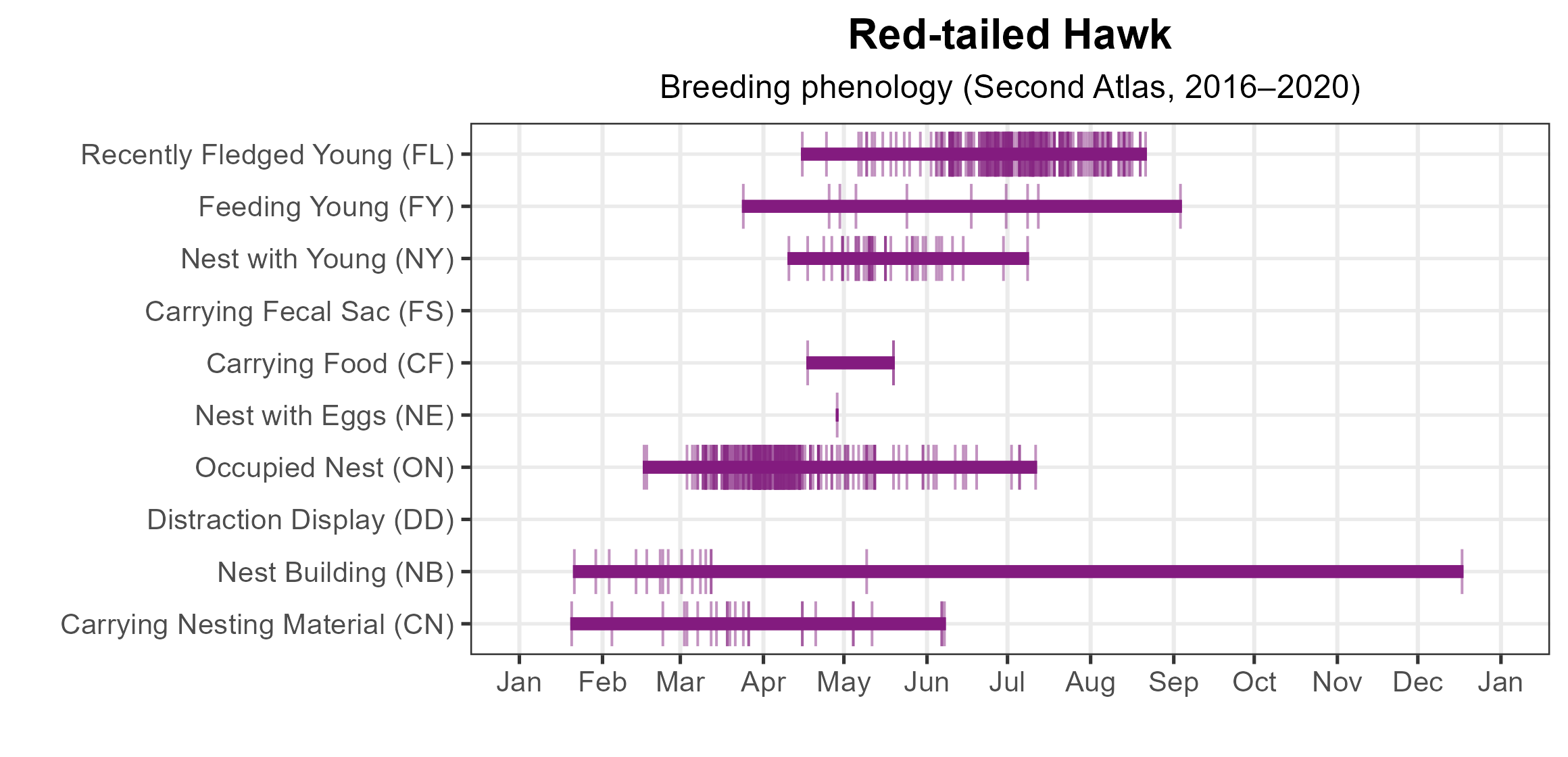
Figure 4: Red-tailed Hawk phenology: confirmed breeding codes. This graph shows a timeline of confirmed breeding behaviors. Tick marks represent individual observations of the behavior.
Population Status
Red-tailed Hawk relative abundance was estimated to be highest in the Mountains and Valleys region, moderate in the Piedmont region, and lowest in the Coastal Plain region (Figure 5).
The total estimated Red-tailed Hawk population in the state is approximately 29,000 individuals (with a range between 14,000 and 61,000). North American Breeding Bird Survey (BBS) data for Virginia show that the Red-tailed Hawk population experienced a significant 2.4% annual increase from 1966–2022, and between Atlases, the population experienced a nonsignificant increase of 0.6% per year from 1987–2018 (Hostetler et al. 2023; Figure 6).
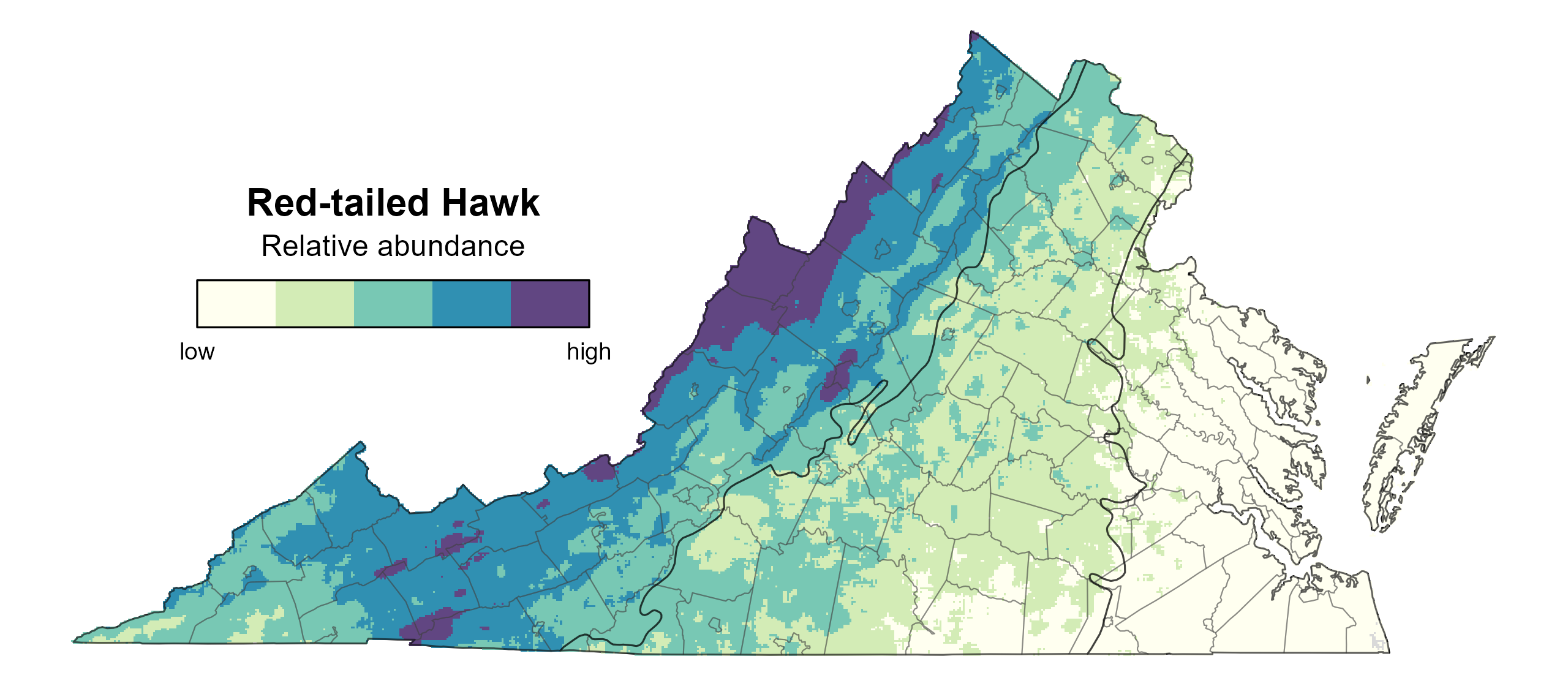
Figure 5: Red-tailed Hawk relative abundance (Second Atlas, 2016–2020). This map indicates the predicted abundance of this species at a 0.4 mi2 (1 km2) scale based on environmental (including habitat) factors. Abundance values are presented on a relative scale of low to high.
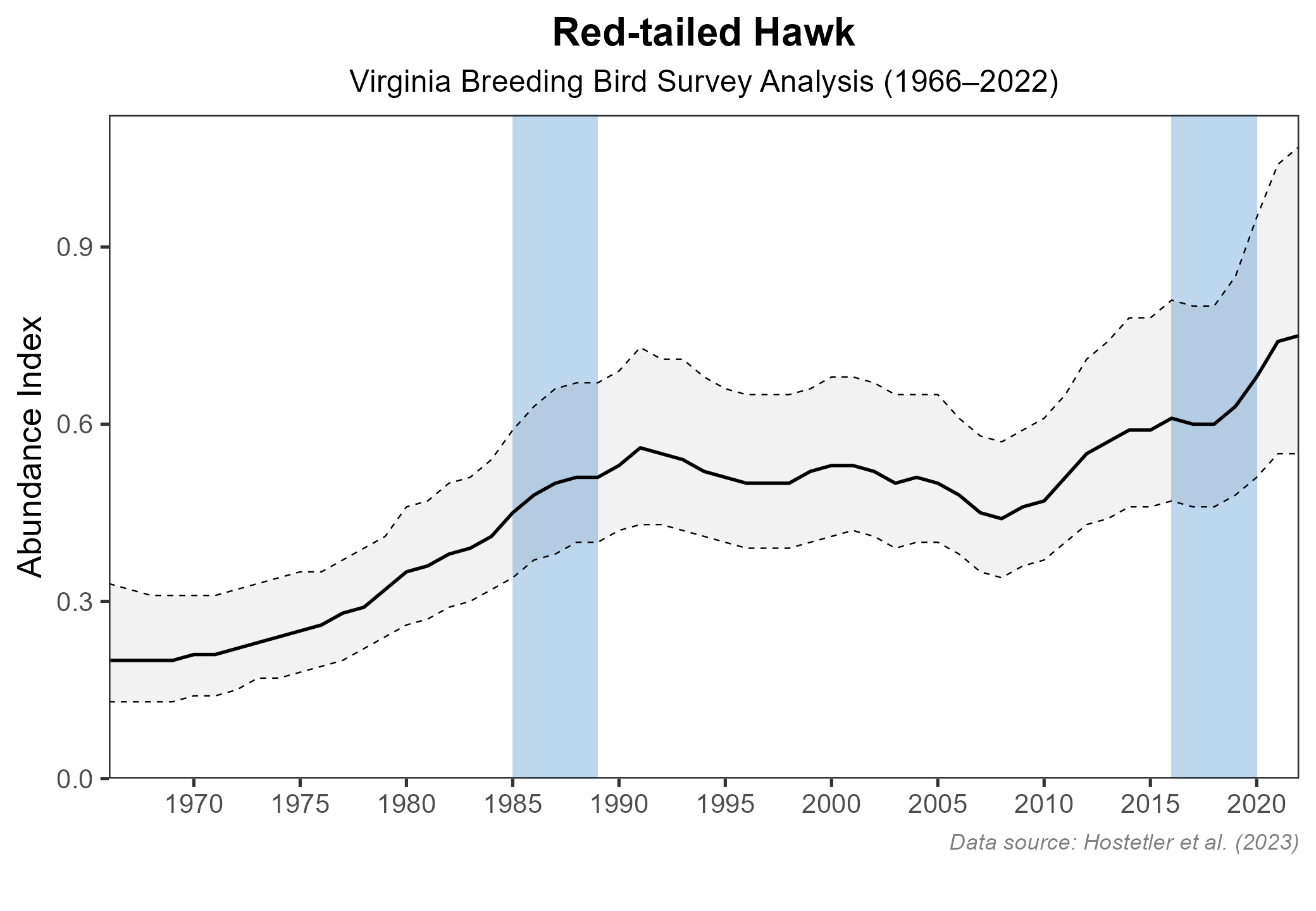
Figure 6: Red-tailed Hawk population trend for Virginia as estimated by the North American Breeding Bird Survey. The vertical axis shows species abundance; the horizontal axis shows the year. The solid line indicates the estimated population trend; there is a 97.5% probability that the true population trend falls between the dashed lines. The shaded bars indicate the First and Second Atlas periods.
Conservation
Given their increase in the state and their ability to inhabit human-altered landscapes if there are wooded patches, Red-tailed Hawks are not of conservation concern in Virginia, and no species-specific conservation actions are being implemented.
Interactive Map
The interactive map contains up to six Atlas layers (probability of occurrence for the First and Second Atlases, change in probability of occurrence between Atlases, breeding evidence for the First and Second Atlases, and abundance for the Second Atlas) that can be viewed one at a time. To view an Atlas map layer, mouse over the layer box in the upper left. County lines and physiographic regional boundaries (Mountains and Valleys, Piedmont, and Coastal Plain) can be turned on and off by checking or unchecking the box below the layer box. Within the map window, users can hover on a block to see its value for each layer and pan and zoom to see roads, towns, and other features of interest that are visible beneath a selected layer.
View Interactive Map in Full Screen
References
Hostetler, J. A., J. R. Sauer, J. E. Hines, D. Ziolkowski, and M. Lutmerding (2023). The North American breeding bird survey, analysis results 1966–2022. U.S. Geological Survey, Laurel, MD, USA. https://doi.org/10.5066/P9SC7T11.
Preston, C. R., and R. D. Beane (2024). Red-tailed Hawk (Buteo jamaicensis), version 1.1. In Birds of the World (A. F. Poole and M. G. Smith, Editors). Cornell Lab of Ornithology, Ithaca, NY. https://doi.org/10.2173/bow.rethaw.01.1.