Introduction
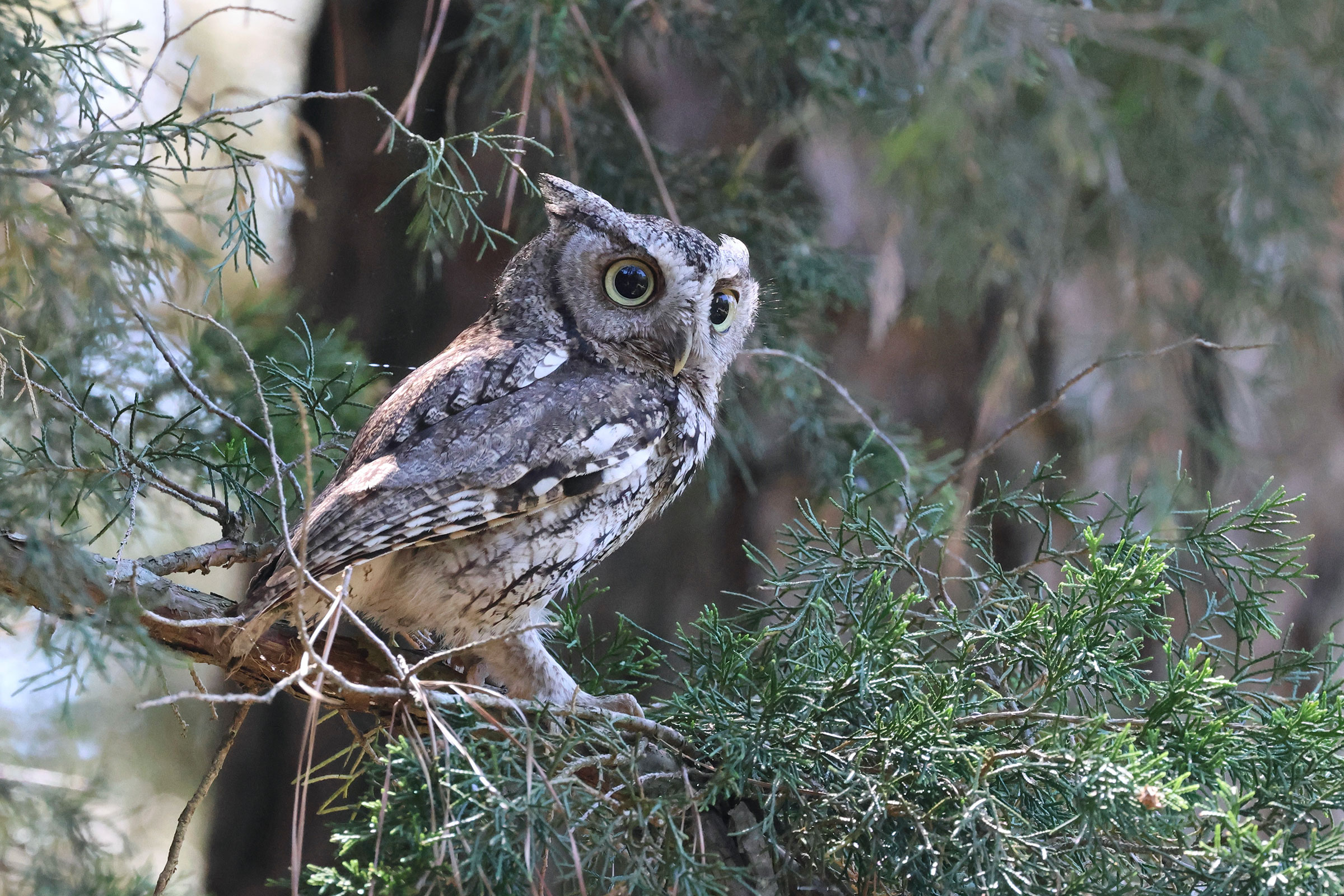
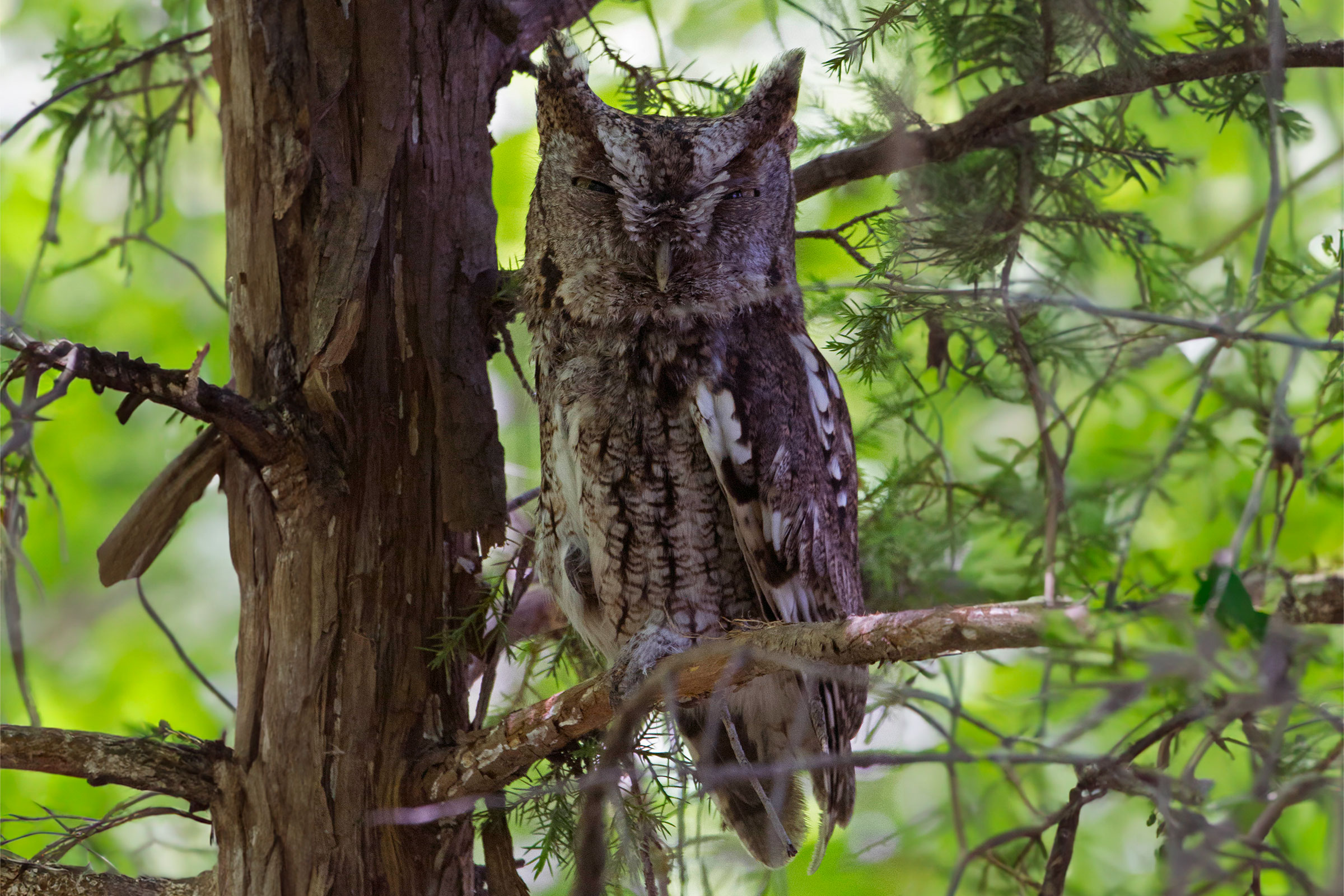
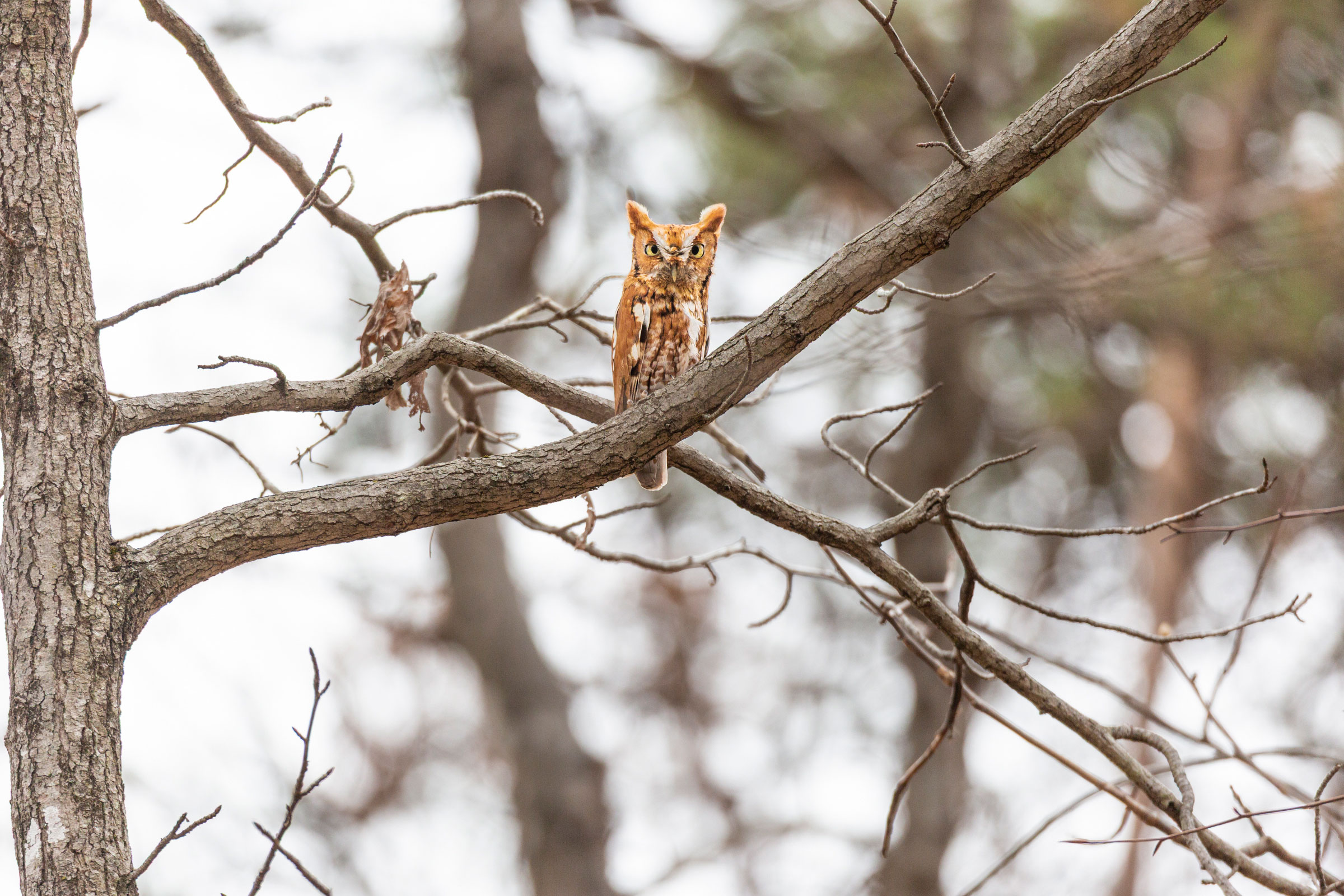
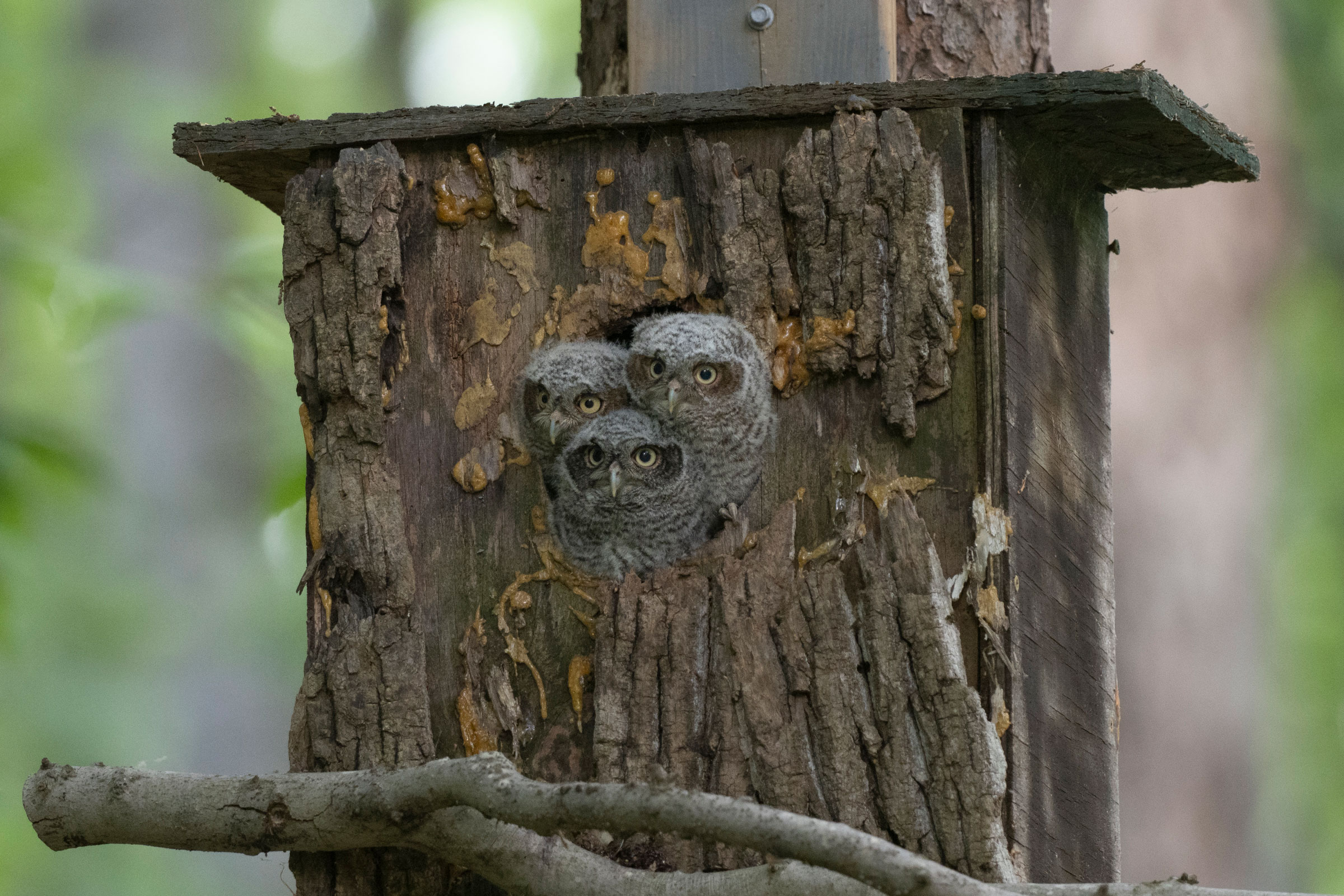
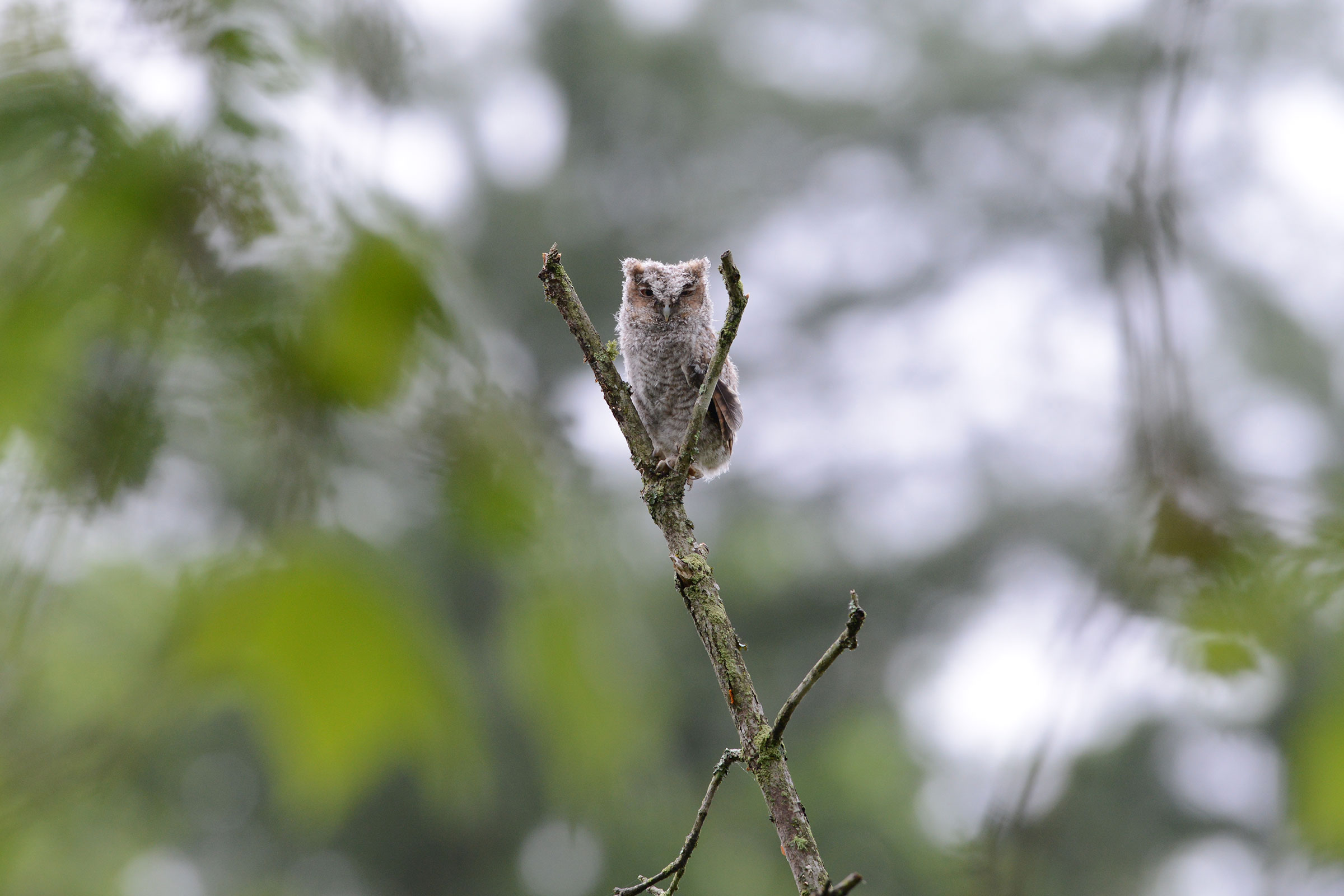
Eastern Screech-Owls are small with large yellow eyes and ear tufts. Their trill can often be heard as twilight fades and well into the night. The species is widely distributed throughout Virginia, inhabiting coastal swamps, Piedmont woodlots, mountain forests, and even suburban green spaces. Habitat requirements include mature trees plus open spaces with sparse shrub cover. The trees offer shelter and cavities for nesting. The open spaces, whether subcanopy or adjacent/nearby pasture or field, offer suitable and adequate prey (Spahr 2015).
Breeding Distribution
Statewide, Eastern Screech-Owls are more likely to occur in the Mountains and Valleys region than in the Piedmont or Coastal Plain region. In all three regions, they are least likely to occur in highly urbanized areas (Figure 1). More specifically, their likelihood of occurrence increases in blocks with a greater amount of agricultural habitats and decreases in developed blocks with fewer habitat types.
Eastern Screech-Owl distribution during the First Atlas and the change in distribution between Atlas periods could not be modeled due to model limitations (see Interpreting Species Accounts). For more information on its distribution during the First Atlas, please see the Breeding Evidence section.
View Environmental Associations
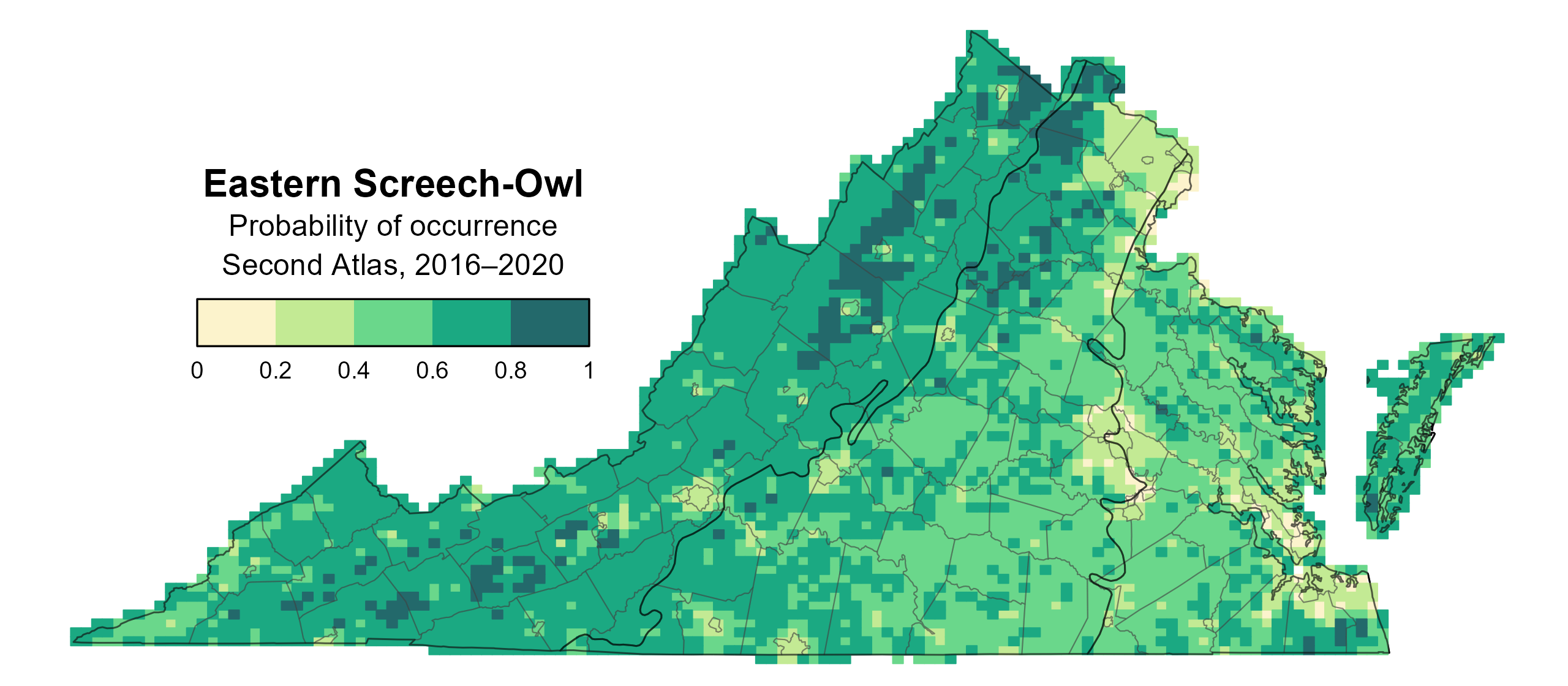
Figure 1: Eastern Screech-Owl breeding distribution based on probability of occurrence (Second Atlas, 2016–2020). This map indicates the probability that this species will occur in an Atlas block (an approximately 10 mi2 [26 km2] survey unit) based on environmental (including habitat) factors and after adjusting for the probability of detection (variation in survey effort among blocks).
Breeding Evidence
Eastern Screech-Owls were confirmed breeders in 83 blocks and 43 counties and found to be probable breeders in an additional 43 counties (Figure 2). The large number of probable breeding detections that could not be confirmed resulted from the difficulty in observing Eastern Screech-Owl breeding behaviors at night and finding nest cavities.
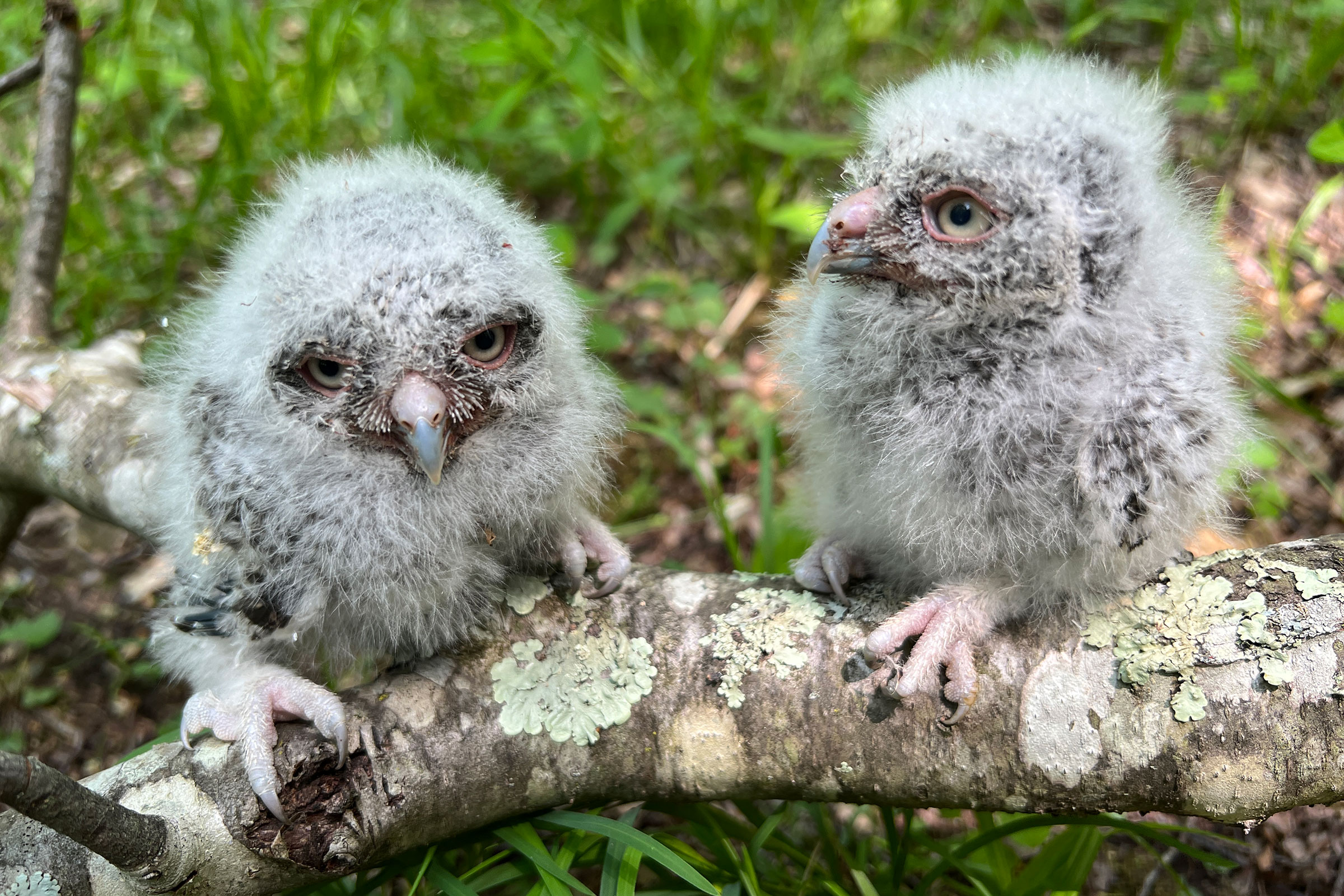
The earliest confirmed breeding behavior was recorded in early March when an occupied nest was observed (Figure 4). Throughout the breeding season, breeding was primarily confirmed through observations of occupied nests (March 8 – July 21), nests with young (April 10 – June 20), and recently fledged young (May 9 – August 21).
For more general information on the breeding habits of this species, please refer to All About Birds.
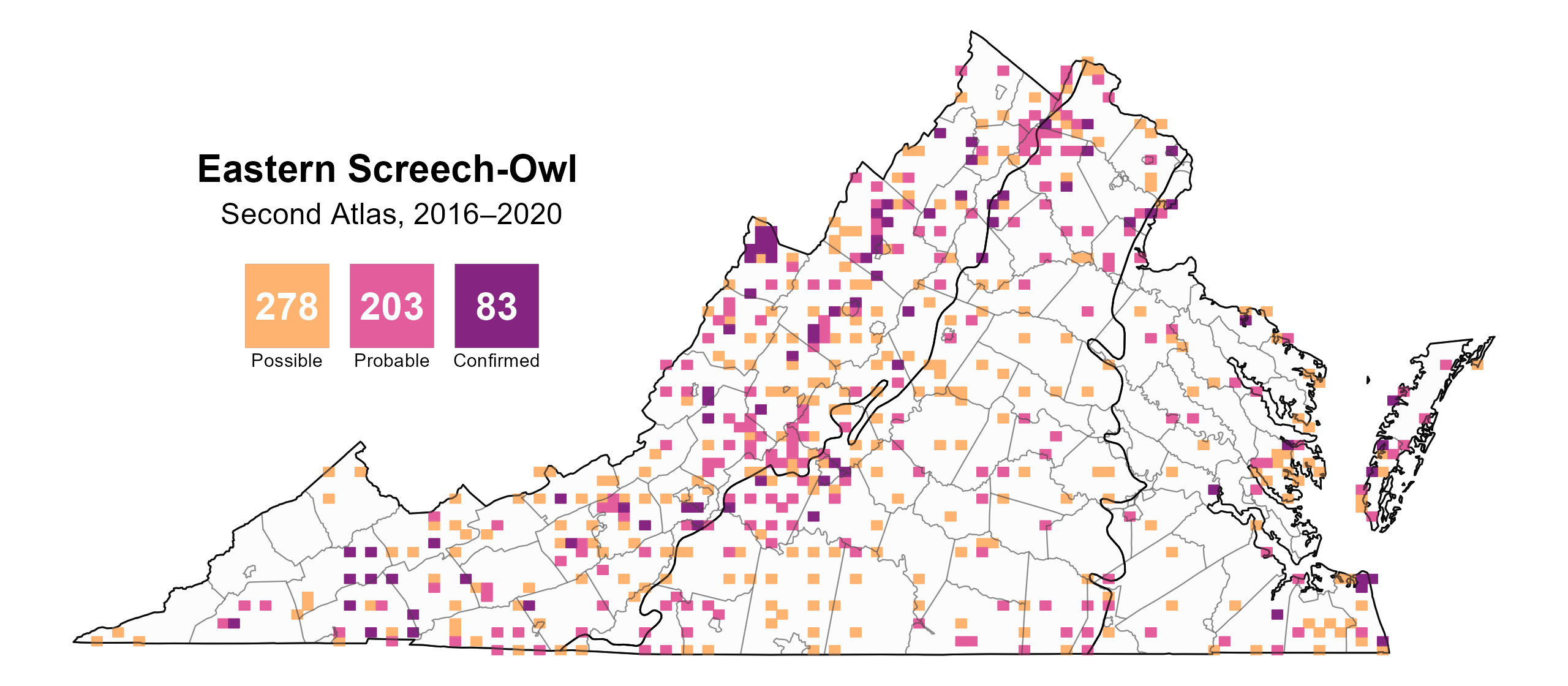
Figure 2: Eastern Screech-Owl breeding observations from the Second Atlas (2016–2020). The colored boxes illustrate Atlas blocks (approximately 10 mi2 [26 km2] survey units) where the species was detected. The colors show the highest breeding category recorded in a block. The numbers within the colors in the legend correspond to the number of blocks with that breeding evidence category.

Figure 3: Eastern Screech-Owl breeding observations from the First Atlas (1985–1989). The colored boxes illustrate Atlas blocks (approximately 10 mi2 [26 km2] survey units) where the species was detected. The colors show the highest breeding category recorded in a block. The numbers within the colors in the legend correspond to the number of blocks with that breeding evidence category.
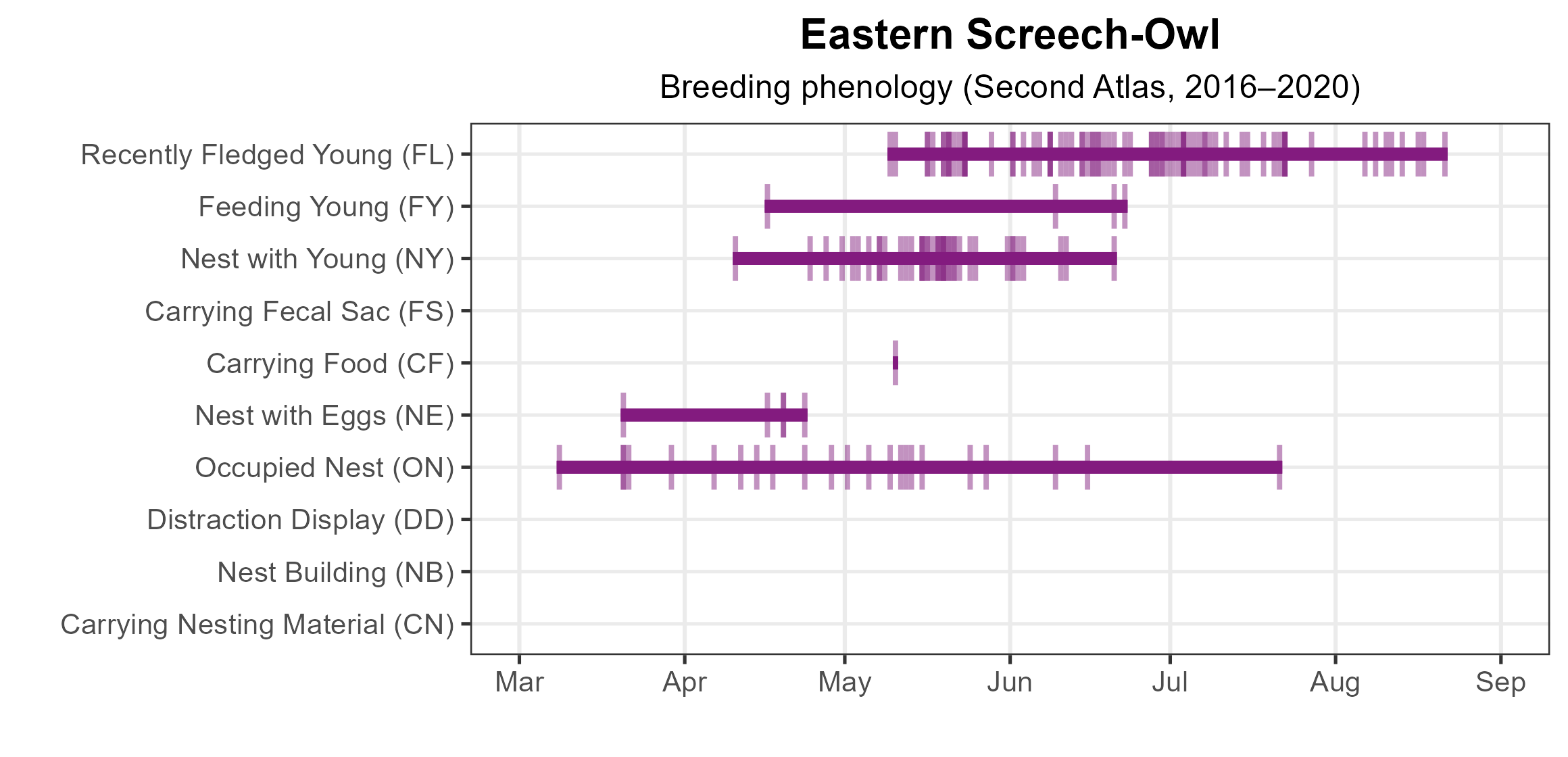
Figure 4: Eastern Screech-Owl phenology: confirmed breeding codes. This graph shows a timeline of confirmed breeding behaviors. Tick marks represent individual observations of the behavior.
Population Status
Due to a lack of detections in the point count data, an abundance model could not be produced for the Eastern Screech-Owl. Additionally, North American Breeding Bird Survey (BBS) trend data at Virginia and regional levels do not provide credible population trend estimates. However, the population of Eastern-Screech Owl in the Coastal Plain region appears to be declining (Bryan Watts, personal communication), while its population is more widespread in the Mountains and Valleys region, with one recent long-term study from the region suggesting a cyclical but stable population (Spahr and Bullock, in press).
Conservation
Because they are nocturnal, Eastern Screech-Owls are difficult to monitor, and determining population-level trends is problematic. In Virginia, this species is classified as a Tier IV Species of Greatest Conservation Need in the 2025 Wildlife Action Plan, indicating that its population may be declining and planning is needed (VDWR 2025). One way to help protect this species is by erecting nest boxes to attract the birds to locations that have adequate habitat but lack large tree cavities for nesting (Ritchison et al. 2020).
Interactive Map
The interactive map contains up to six Atlas layers (probability of occurrence for the First and Second Atlases, change in probability of occurrence between Atlases, breeding evidence for the First and Second Atlases, and abundance for the Second Atlas) that can be viewed one at a time. To view an Atlas map layer, mouse over the layer box in the upper left. County lines and physiographic regional boundaries (Mountains and Valleys, Piedmont, and Coastal Plain) can be turned on and off by checking or unchecking the box below the layer box. Within the map window, users can hover on a block to see its value for each layer and pan and zoom to see roads, towns, and other features of interest that are visible beneath a selected layer.
View Interactive Map in Full Screen
References
Hostetler, J. A., J. R. Sauer, J. E. Hines, D. Ziolkowski, and M. Lutmerding (2023). The North American breeding bird survey, analysis results 1966–2022. U.S. Geological Survey, Laurel, MD, USA. https://doi.org/10.5066/P9SC7T11.
Ritchison, G., F. R. Gehlbach, P. Pyle, and M. A. Patten (2020). Eastern Screech-Owl (Megascops asio), version 1.0. In Birds of the World (P. G. Rodewald, Editor). Cornell Lab of Ornithology, Ithaca, NY, USA. https://doi.org/10.2173/bow.easowl1.01.
Spahr, J. (2015). The Eastern Screech-Owl (Megascops asio) in Highland County, Virginia, a study of its prevalence and distribution. The Raven 86:3–10.
Spahr, J. and Bullock, L.P. (In press). The Eastern Screech-Owl (Megascops asio) in Highland County, Virginia, a study of seasonal and annual trends, 2014-2020.
Virginia Department of Wildlife Resources (VDWR) (2025). Virginia wildlife action plan. Virginia Department of Wildlife Resources, Henrico, VA, USA. 506 pp.