Introduction
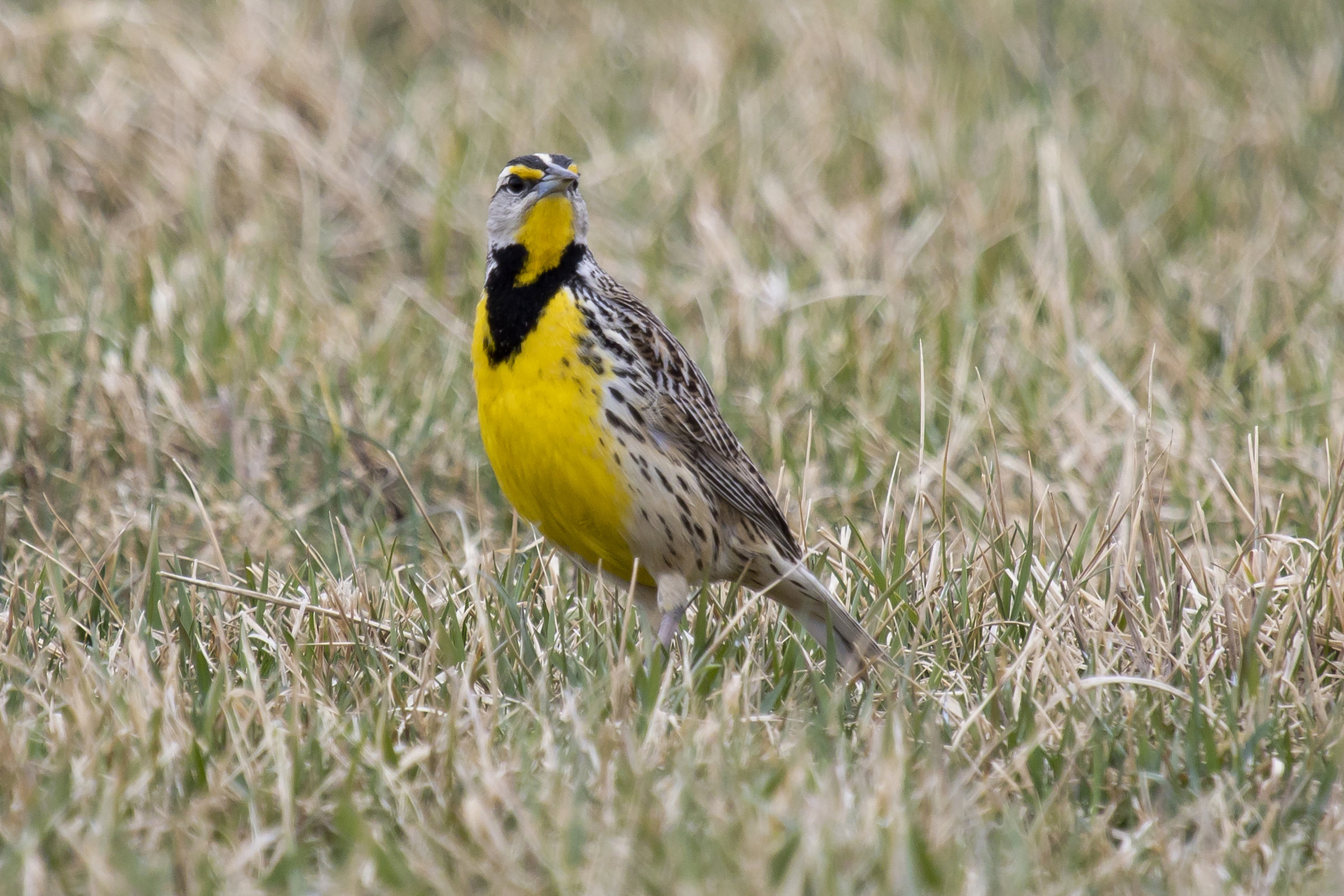
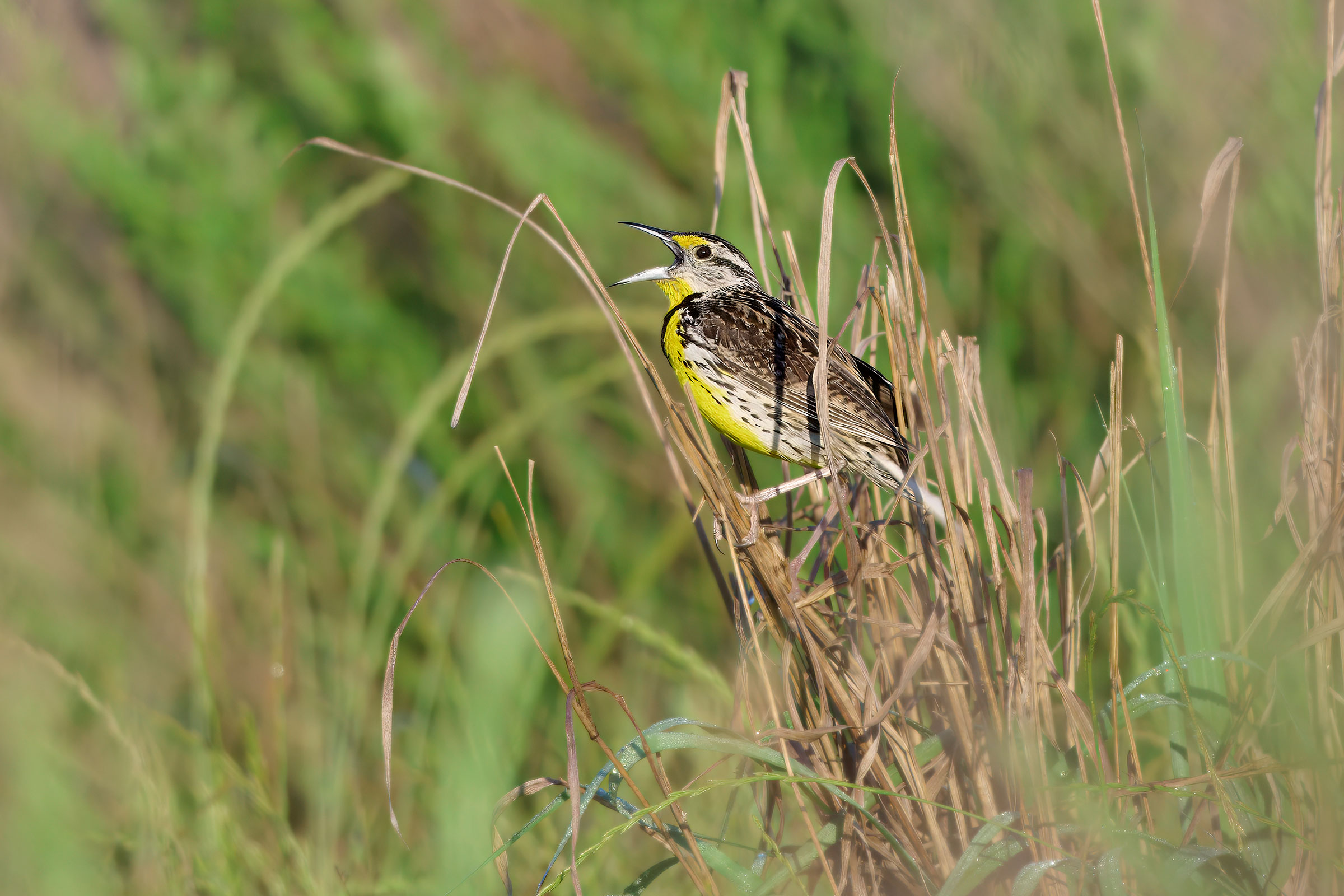
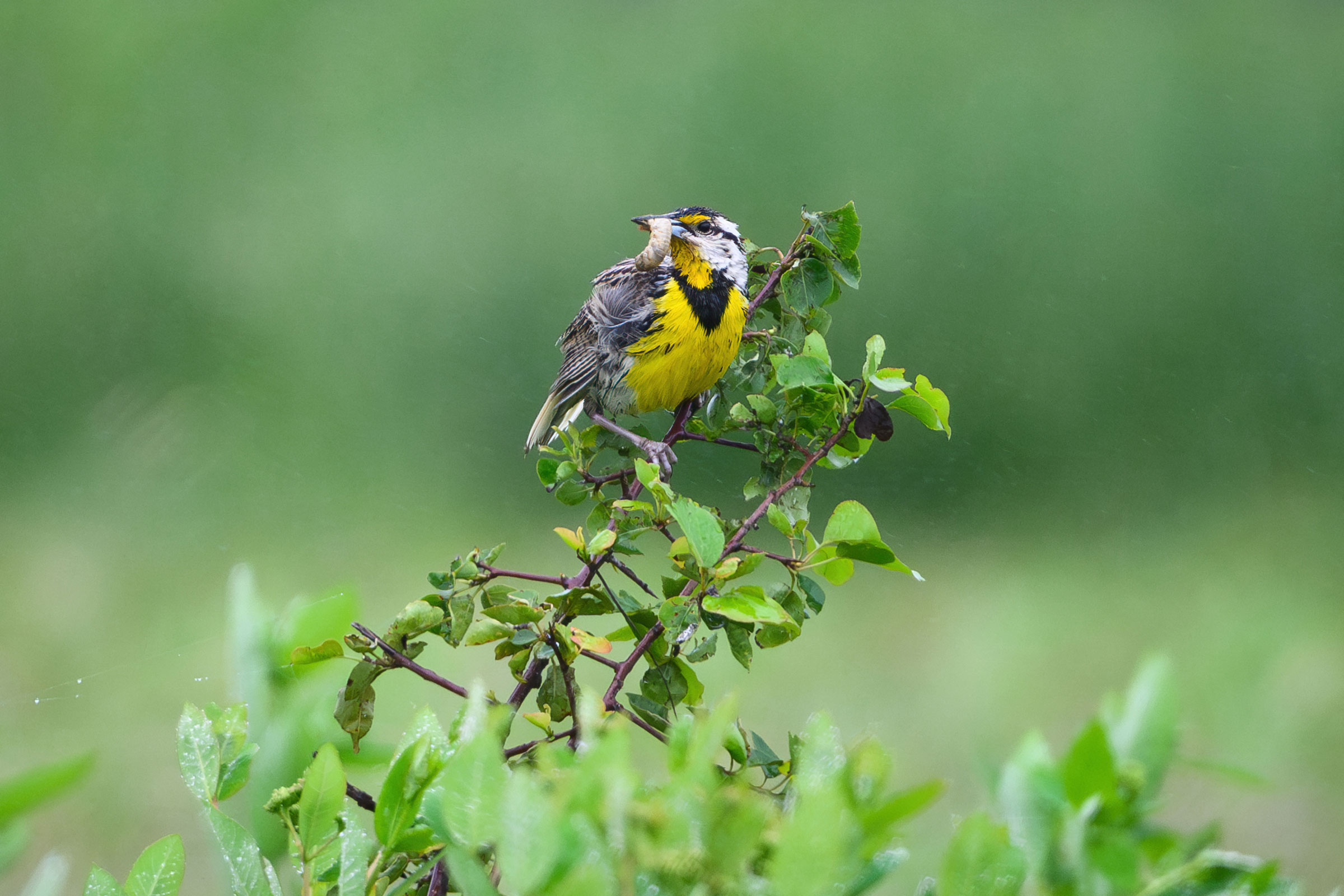
From a characteristic perch on a fencepost or lone tree, the melancholy whistled notes of the Eastern Meadowlark’s song signal the arrival of spring in Virginia. This species breeds in grassland habitats, including agricultural fields, such as pastures and hayfields. Eastern Meadowlarks are found throughout Virginia but have experienced substantial declines since the 1960s as grassland habitats have been lost and agricultural practices have changed (Rottenborn and Brinkley 2007; Jasper et al. 2020).
Breeding Distribution
Eastern Meadowlarks are found in all regions of the state but are less likely to occur in the forested highlands of the Allegheny and Blue Ridge Mountains and in the urban areas of Northern Virginia and the I-64 corridor between Richmond and the Tidewater area (Figure 1).
The likelihood of Eastern Meadowlark occurrence increases sharply with the proportion of agricultural lands (including hayfields and pastures) and is also positively associated with the amount of grassland habitat in a block. Meadowlarks are less likely to occur where there is a high degree of habitat diversity, indicative of their preference for large, contiguous grasslands and avoidance of fragmented areas (Hull 2002).
Eastern Meadowlark likelihood of occurrence in the Second Atlas was largely like that in the First Atlas (Figures 1 and 2). Throughout much of the state, there was minimal change. However, Eastern Meadowlark’s occurrence decreased in urban/suburban areas in all regions, especially in the Northern Virginia and the greater Richmond areas that have lost open agricultural habitats (Figure 3).
View Environmental Associations
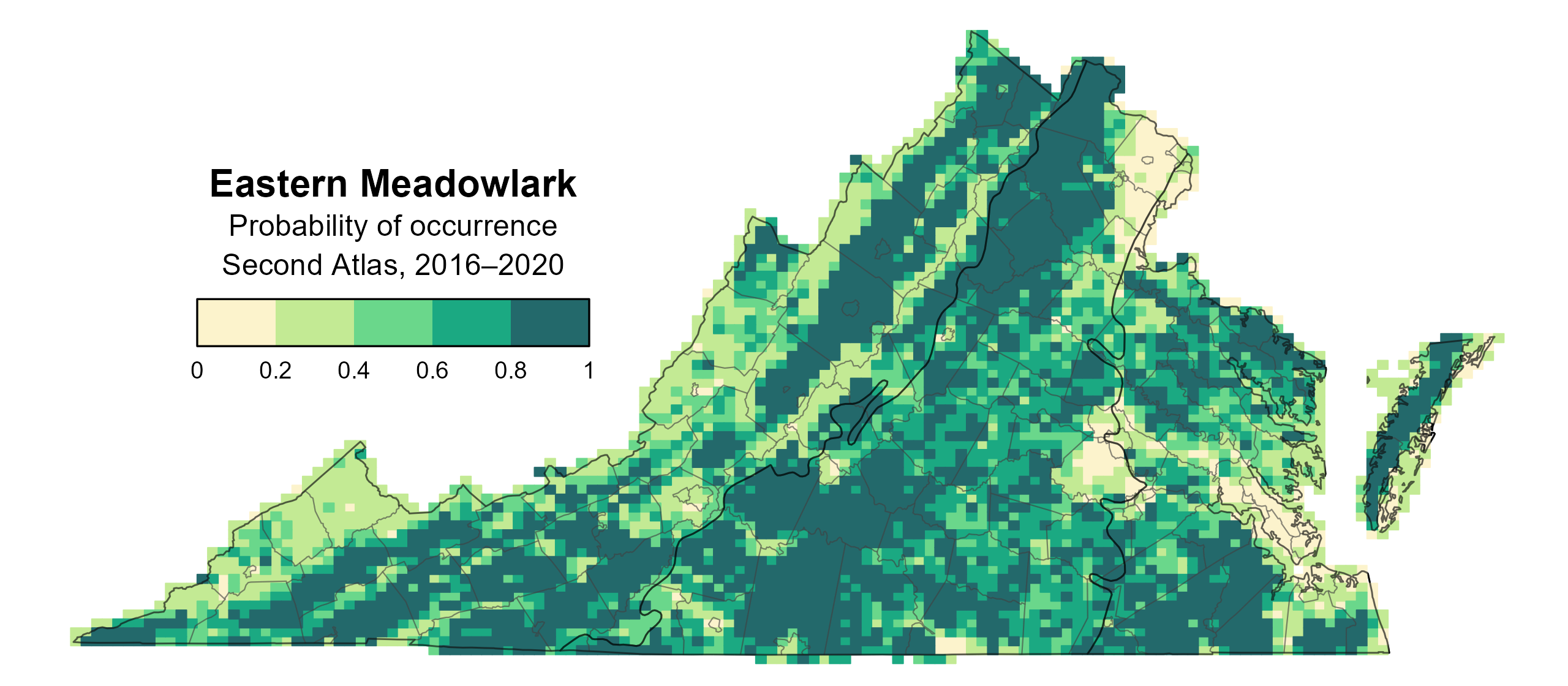
Figure 1: Eastern Meadowlark breeding distribution based on probability of occurrence (Second Atlas, 2016–2020). This map indicates the probability that this species will occur in an Atlas block (an approximately 10 mi2 [26 km2] survey unit) based on environmental (including habitat) factors and after adjusting for the probability of detection (variation in survey effort among blocks).
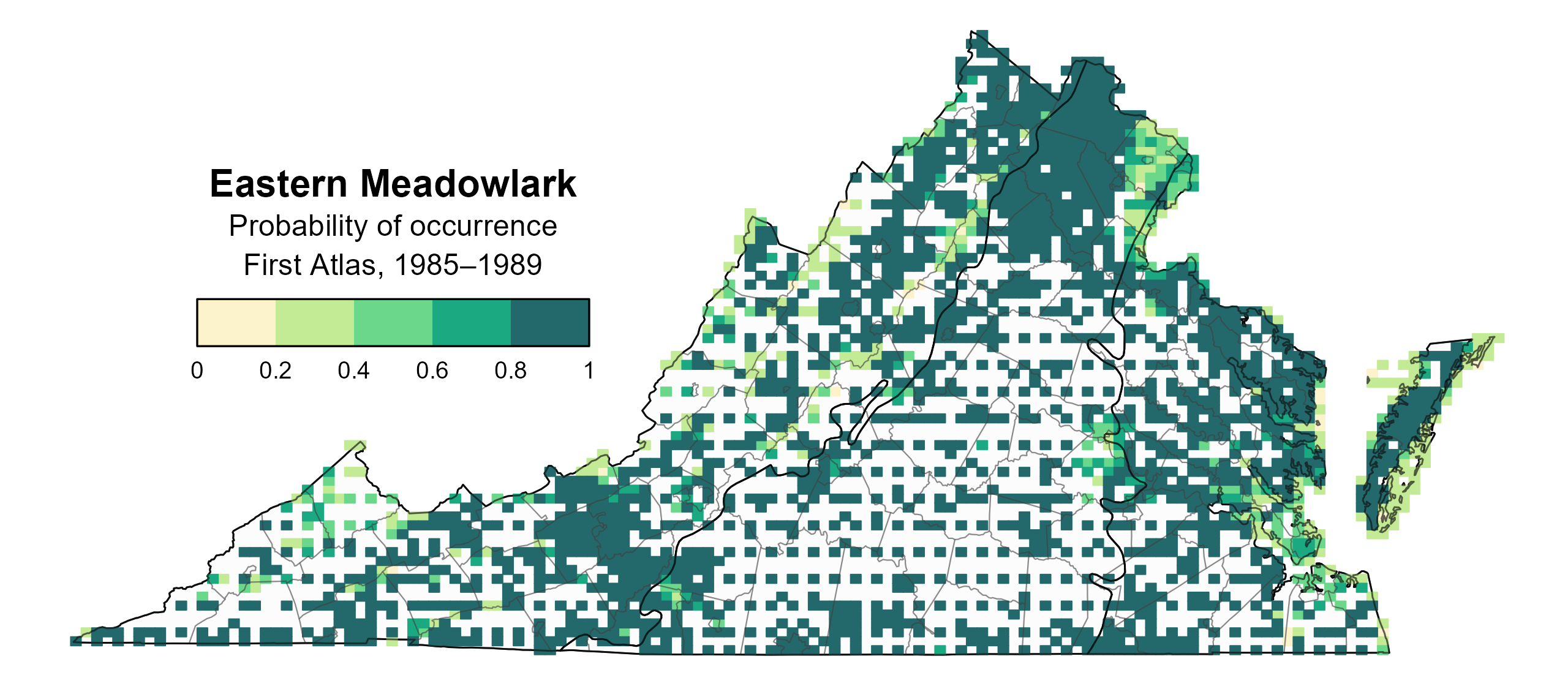
Figure 2: Eastern Meadowlark breeding distribution based on probability of occurrence (First Atlas, 1985–1989). This map indicates the probability that this species will occur in an Atlas block (an approximately 10 mi2 [26 km2] survey unit) based on environmental (including habitat) factors and after adjusting for the probability of detection (variation in survey effort among blocks). Blocks in white were not surveyed during the First Atlas and were not modeled.

Figure 3: Eastern Meadowlark change in breeding distribution between Atlases (1985–1989 and 2016–2020) based on probability of occurrence. This map indicates the change in the probability that this species will occur in a block (an approximately 10 mi2 [26 km2] survey unit) between Atlas periods. Blocks with no change (tan) may have constant presence or constant absence. Blocks in white were not surveyed during the First Atlas and were not modeled.
Breeding Evidence
Eastern Meadowlarks were confirmed breeders in 344 blocks in 86 counties and probable breeders in an additional 20 counties (Figure 4). Eastern Meadowlark breeding observations were recorded throughout the state during the First Atlas as well (Figure 5).
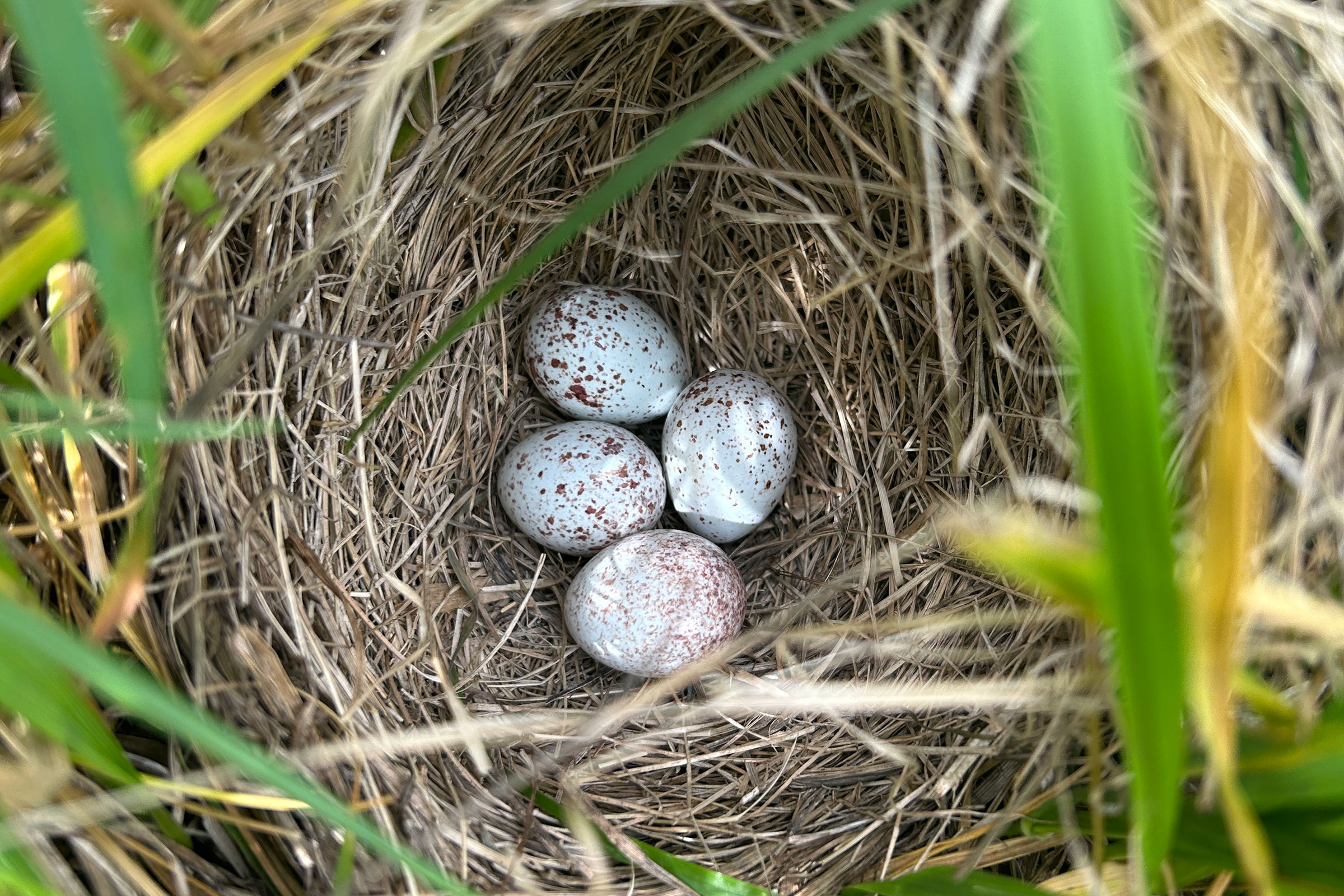
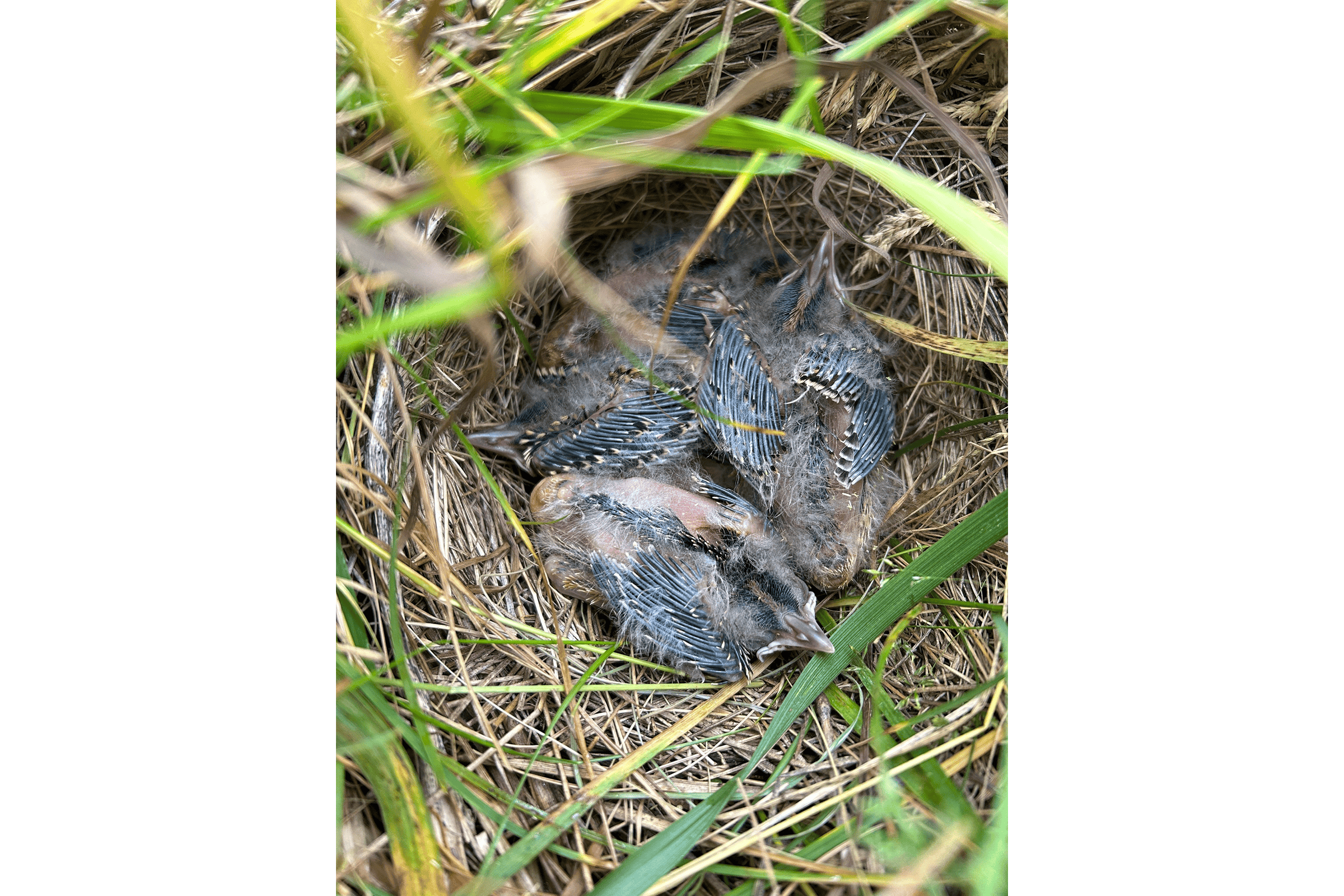
Birds were seen carrying nesting material as early as April 11 and were observed carrying food starting April 28 (Figure 6). Breeding continued through late August, with evidence of recently fledged young observed through August 24. For more general information on the breeding habits of the Eastern Meadowlark, please refer to All About Birds.
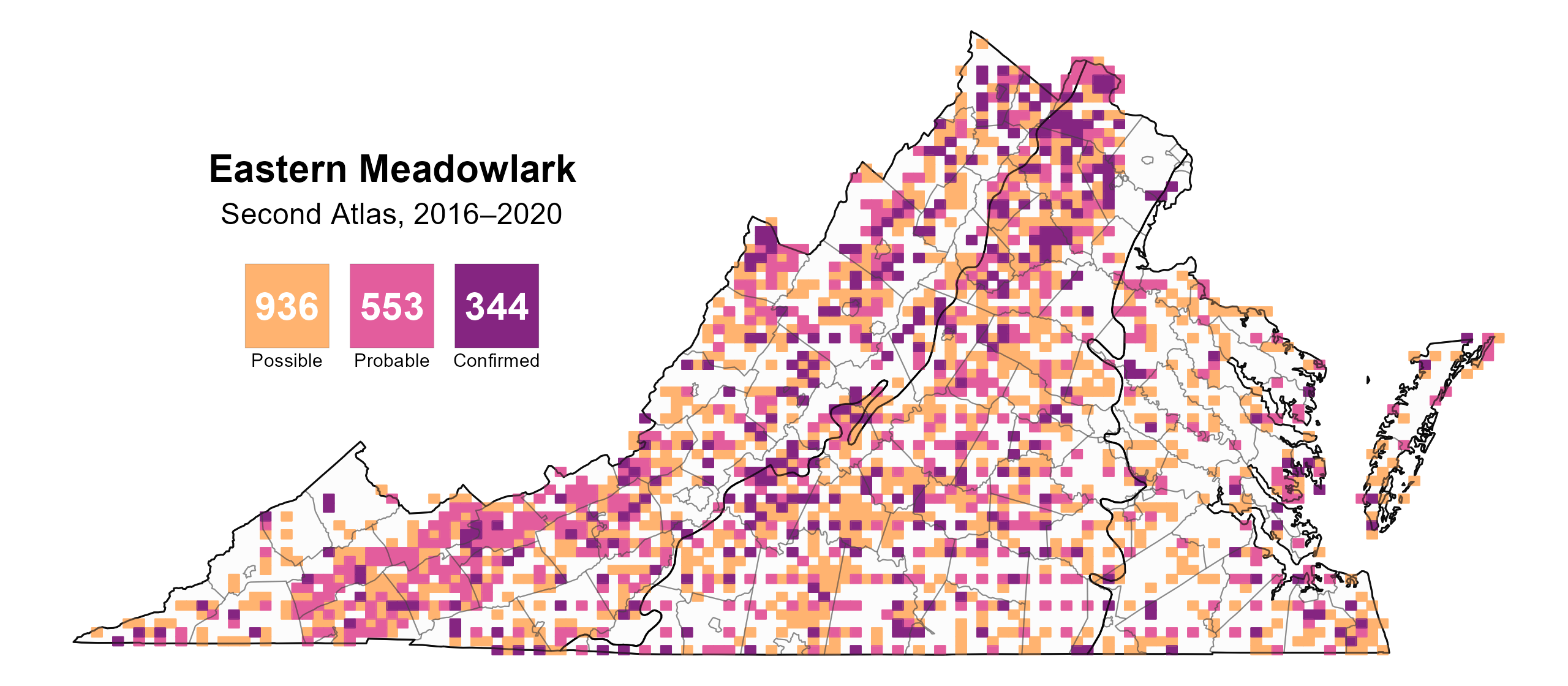
Figure 4: Eastern Meadowlark breeding observations from the Second Atlas (2016–2020). The colored boxes illustrate Atlas blocks (approximately 10 mi2 [26 km2] survey units) where the species was detected. The colors show the highest breeding category recorded in a block. The numbers within the colors in the legend correspond to the number of blocks with that breeding evidence category.
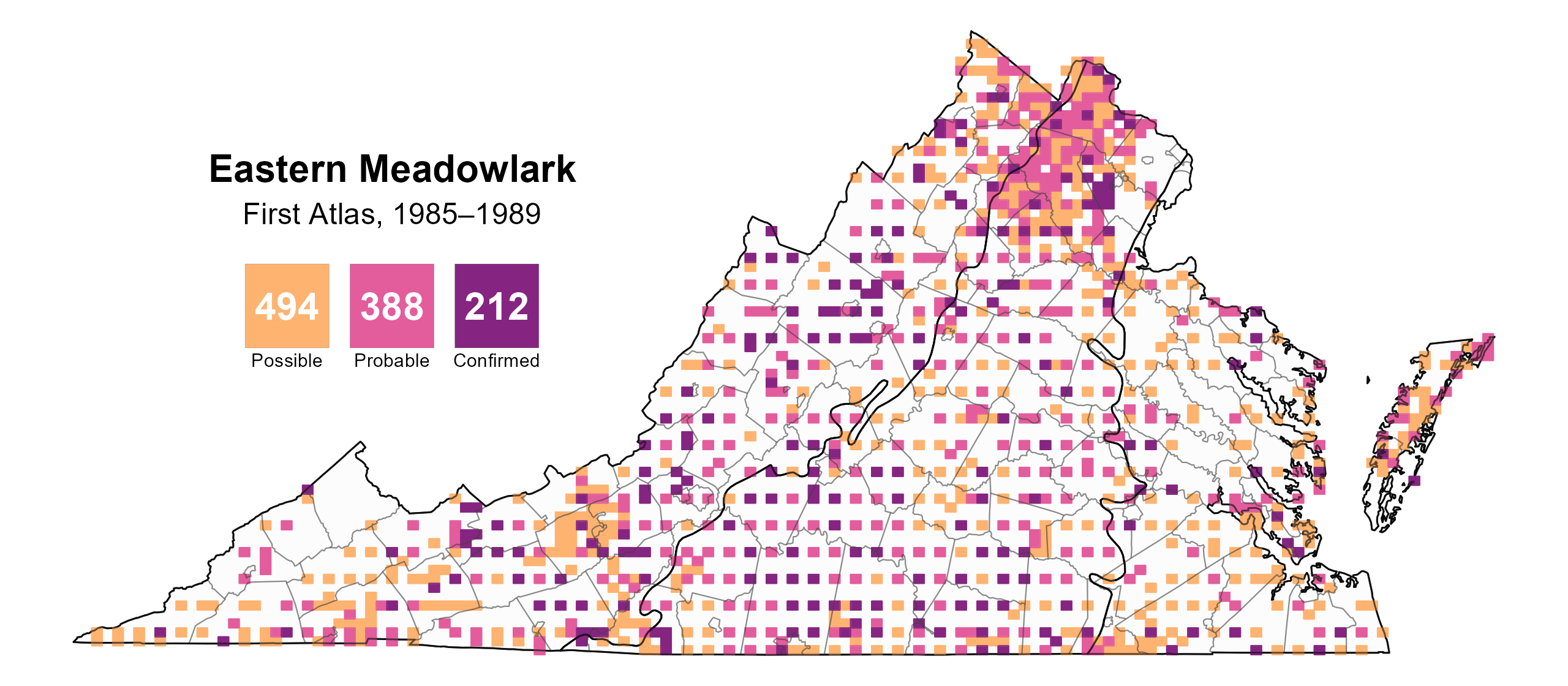
Figure 5: Eastern Meadowlark breeding observations from the First Atlas (1985–1989). The colored boxes illustrate Atlas blocks (approximately 10 mi2 [26 km2] survey units) where the species was detected. The colors show the highest breeding category recorded in a block. The numbers within the colors in the legend correspond to the number of blocks with that breeding evidence category.
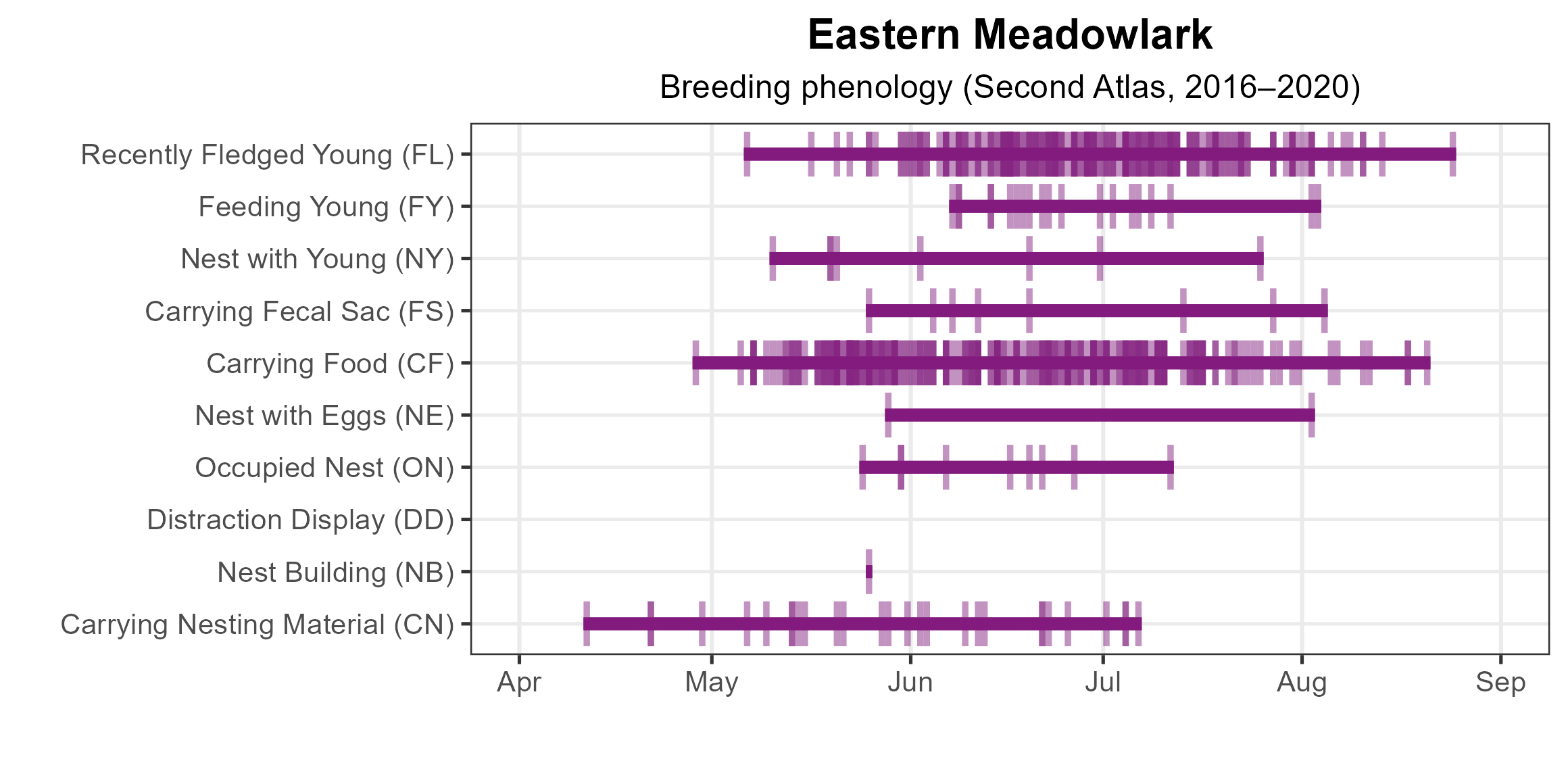
Figure 6: Eastern Meadowlark phenology: confirmed breeding codes. This graph shows a timeline of confirmed breeding behaviors. Tick marks represent individual observations of the behavior.
Population Status
Eastern Meadowlark relative abundance was estimated to be highest in the agricultural areas of the Mountains and Valleys region, while their abundance was more variable in the Piedmont and Coastal Plain regions (Figure 7). In the Piedmont, abundance was generally higher closer to the Blue Ridge Mountains. Abundance was extremely low in developed areas in Hampton Roads-Virginia Beach, Northern Virginia, and Richmond.
The total estimated Eastern Meadowlark population in the state is approximately 322,000 detectable individuals (with a range between 252,000 and 414,000). Population trends for the Eastern Meadowlark are decreasing in Virginia. The North American Breeding Bird Survey (BBS) reported a significant decrease of 2.29% per year from 1966–2022 (Hostetler et al. 2023; Figure 8), with the steepest declines occurring through the 1980s. Between the First and Second Atlas, BBS data showed a more moderate but significant decrease of 1.65% per year from 1987–2018.
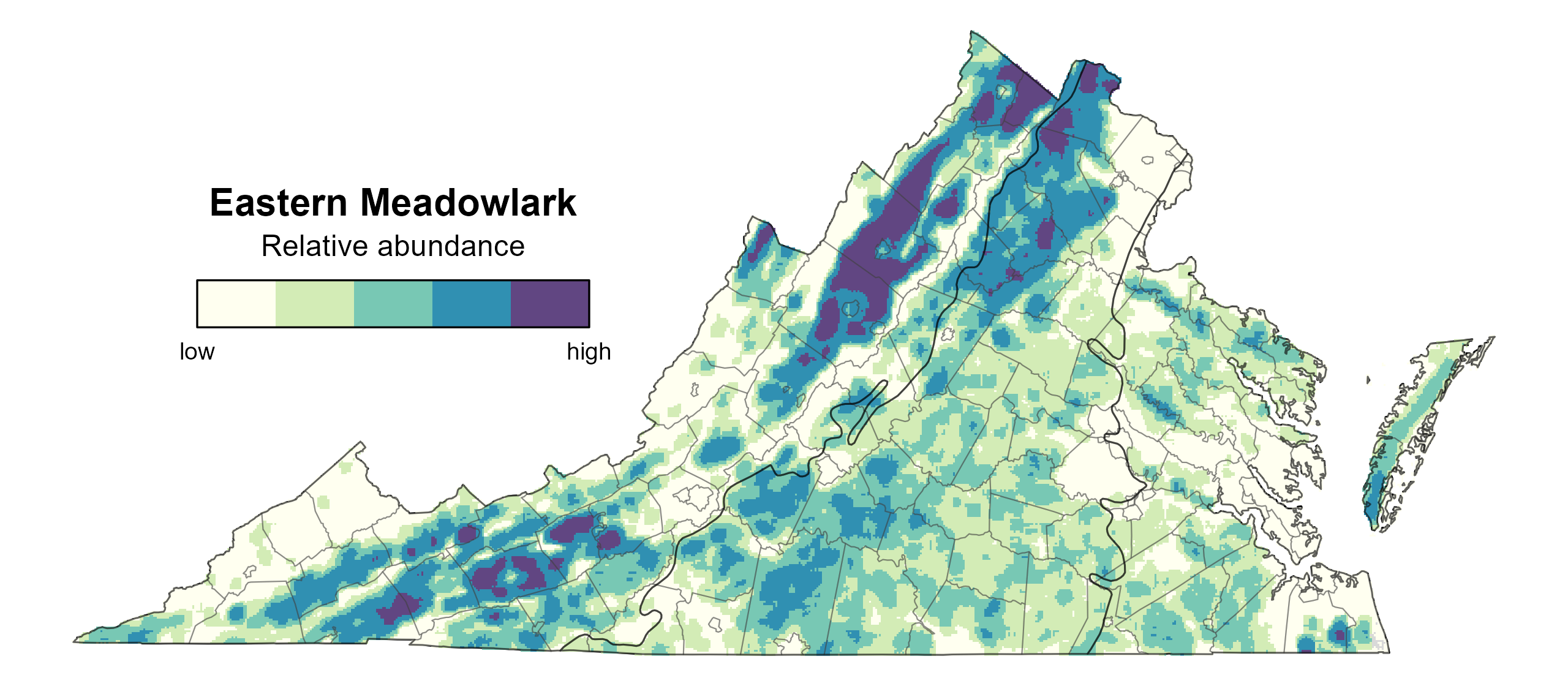
Figure 7: Eastern Meadowlark relative abundance (Second Atlas, 2016–2020). This map indicates the predicted abundance of this species at a 0.4 mi2 (1 km2) scale based on environmental (including habitat) factors. Abundance values are presented on a relative scale of low to high.
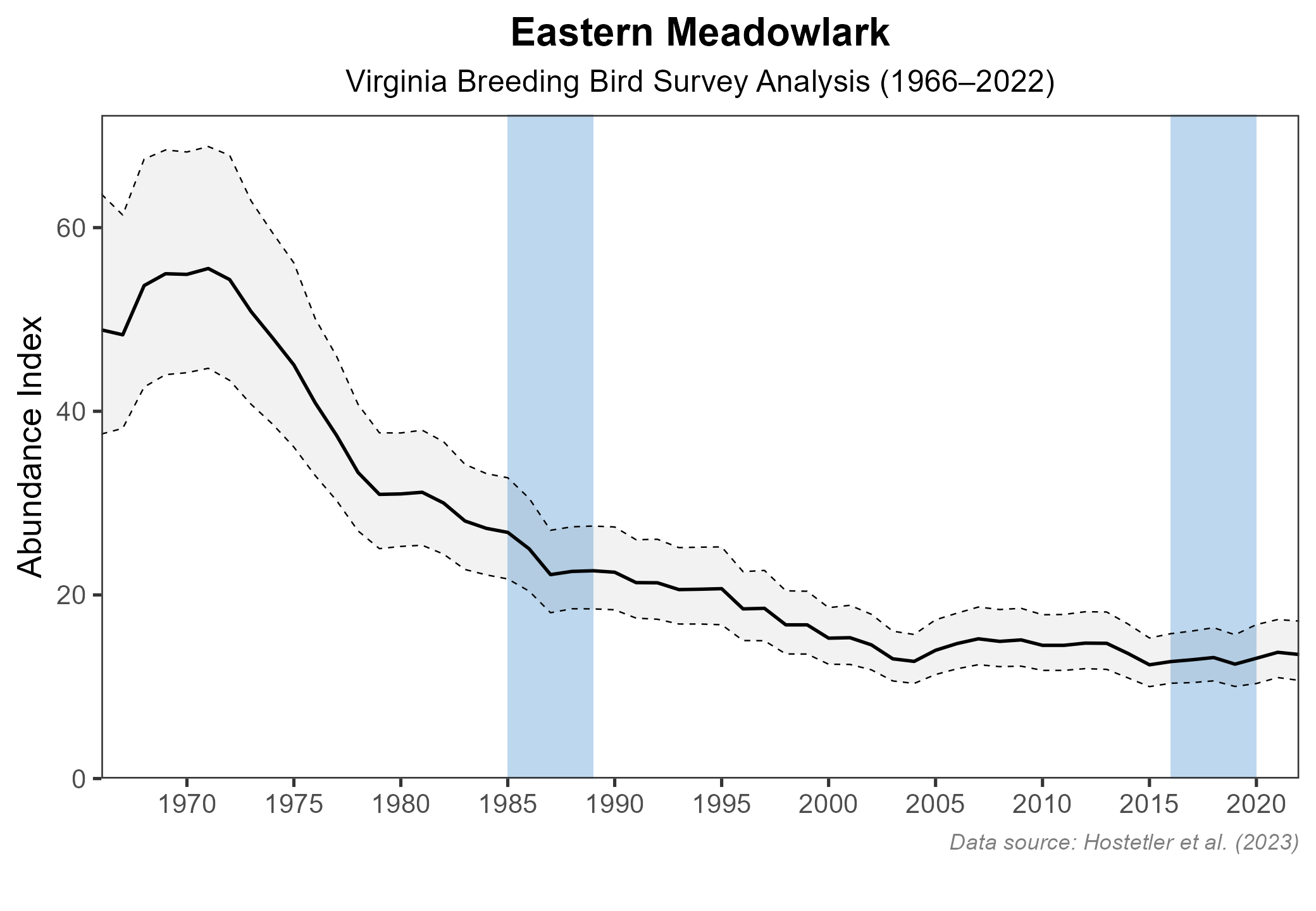
Figure 8: Eastern Meadowlark population trend for Virginia as estimated by the North American Breeding Bird Survey. The vertical axis shows species abundance; the horizontal axis shows the year. The solid line indicates the estimated population trend; there is a 97.5% probability that the true population trend falls between the dashed lines. The shaded bars indicate the First and Second Atlas periods.
Conservation
Like other grassland bird species, the Eastern Meadowlark is experiencing a substantial population decline in Virginia and throughout its range that has been attributed to habitat loss and degradation, intensification of agricultural practices, and pesticide use (Jaster et al. 2022). Thus, a variety of efforts are being implemented in the state to protect this species. First, Virginia’s 2025 Wildlife Action Plan includes this species as a Tier IV Species of Greatest Conservation Need, indicating it is in decline in parts of its range and long-term planning is needed (VDWR 2025).
In terms of current conservation actions being implemented, most Eastern Meadowlarks occur on private, working agricultural lands in Virginia. A collection of conservation organizations in the state work to study and conserve grassland birds on working lands, including Smithsonian’s Virginia Working Landscapes and partners with the Virginia Grassland Bird Initiative. These groups provide resources to address grassland species declines in the Piedmont, Blue Ridge Mountain, and Shenandoah Valley regions. These resources include guidelines that outline safe dates for haying to prevent nest failure and financial incentive programs to support farmers adopting grassland bird-friendly practices. Other groups such as the American Bird Conservancy, Piedmont Environmental Council, and Virginia Department of Wildlife Resources also provide management guidelines that encompass this species among other grassland birds (Vuocolo et al. 2016).
Ongoing research seeks to track the annual movements and habitat use of Eastern Meadowlarks in the Piedmont region and Shenandoah Valley. This research, undertaken through a partnership among the Smithsonian’s Virginia Working Landscapes, Movement of Life Initiative, Smithsonian Migratory Bird Center, the Migratory Connectivity Project, and George Mason University, will reveal the migratory status of Eastern Meadowlarks and inform conservation actions for the species (see Virginia Working Landscapes website).
Interactive Map
The interactive map contains up to six Atlas layers (probability of occurrence for the First and Second Atlases, change in probability of occurrence between Atlases, breeding evidence for the First and Second Atlases, and abundance for the Second Atlas) that can be viewed one at a time. To view an Atlas map layer, mouse over the layer box in the upper left. County lines and physiographic regional boundaries (Mountains and Valleys, Piedmont, and Coastal Plain) can be turned on and off by checking or unchecking the box below the layer box. Within the map window, users can hover on a block to see its value for each layer and pan and zoom to see roads, towns, and other features of interest that are visible beneath a selected layer.
View Interactive Map in Full Screen
References
Greenfield, O. (2022). Return of the Grassland Birds. Piedmont Environmental Council, Warrenton, VA, USA.
Hostetler, J. A., J. R. Sauer, J. E. Hines, D. Ziolkowski, and M. Lutmerding (2023). The North American breeding bird survey, analysis results 1966–2022. U.S. Geological Survey, Laurel, MD, USA. https://doi.org/10.5066/P9SC7T11.
Hull, S. (2002). Effects of management practices on grassland birds: Eastern Meadowlark.” U.S. Geological Survey Northern Prairie Wildlife Research Center, Jamestown, ND, USA.
Jaster, L. A., W. E. Jensen, W. E. Lanyon, and S. G. Mlodinow (2022). Eastern Meadowlark (Sturnella magna), version 1.1. In Birds of the World (P. Pyle and N. D. Sly, Editors). Cornell Lab of Ornithology, Ithaca, NY, USA. https://doi.org/10.2173/bow.easmea.01.1.
Virginia Department of Wildlife Resources (VDWR). 2025. Virginia wildlife action plan. Virginia Department of Wildlife Resources, Henrico, VA, USA. 506 pp.
Vuocolo, C., C. Sedgwick, S. Harding, F. Wolter, S. Capel, D. Pashley, and S. Heath (2016). Managing land in the Piedmont of Virginia for the benefit of birds and other wildlife: third edition. Piedmont Environmental Council, Warrenton, VA, USA.