Introduction
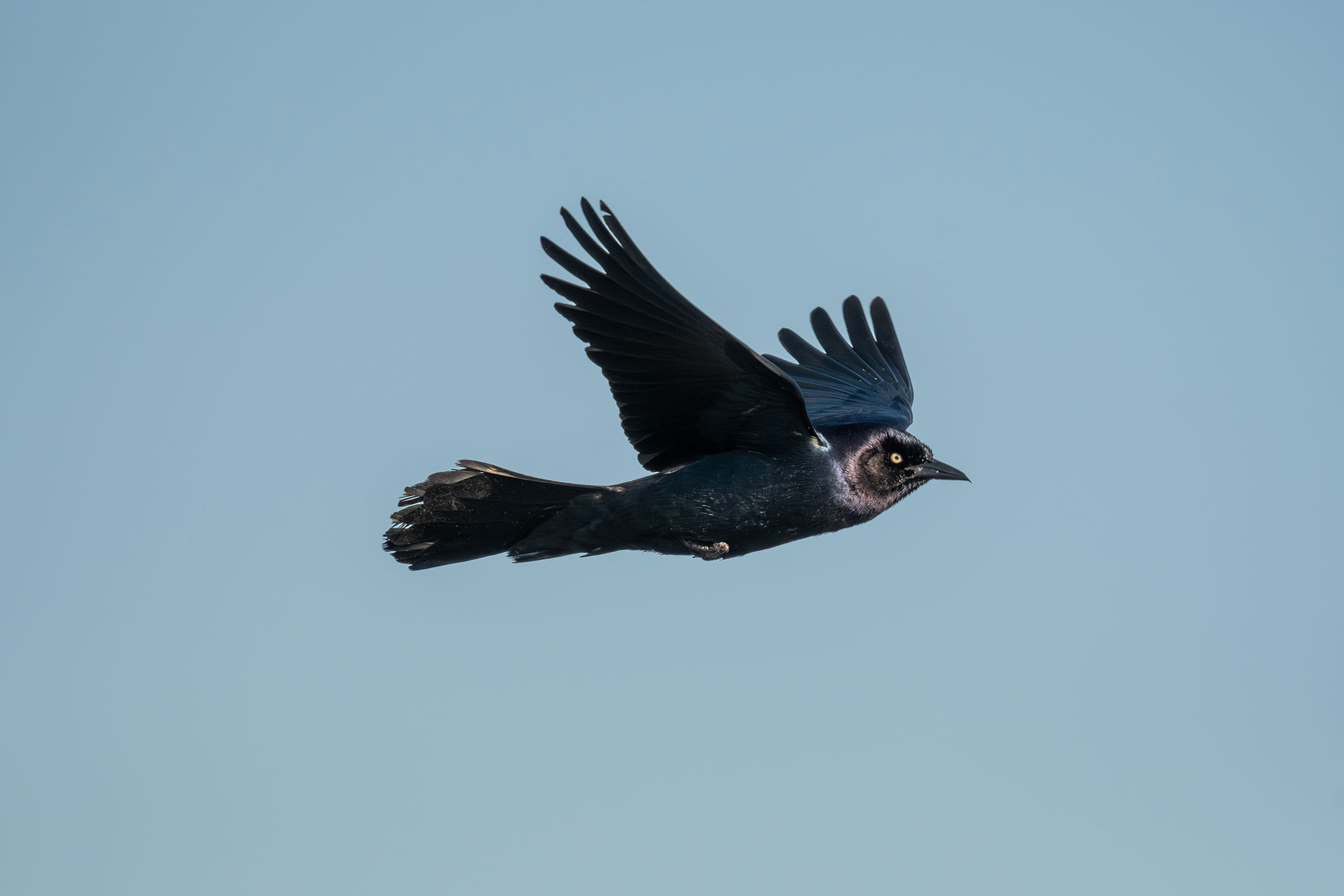
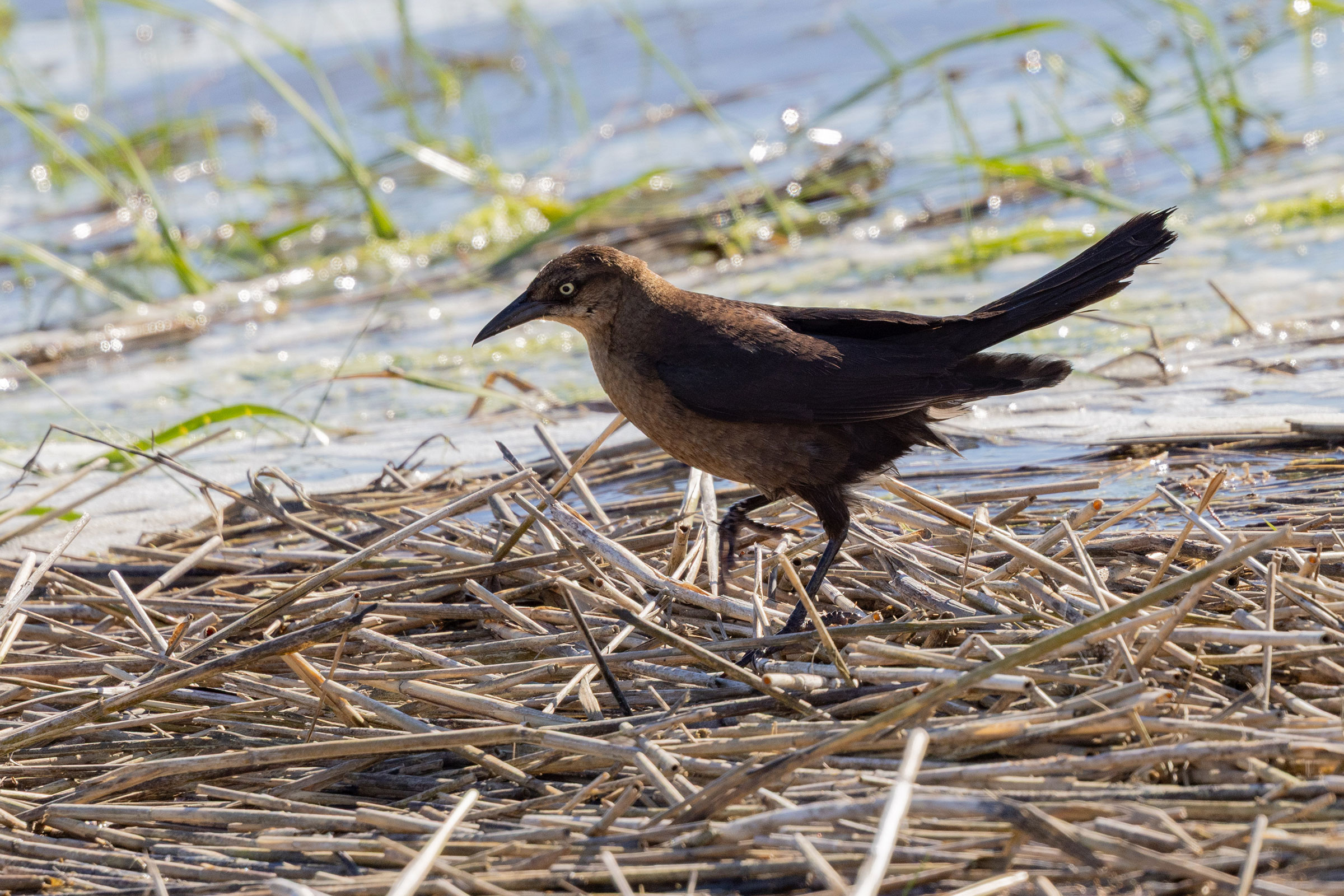
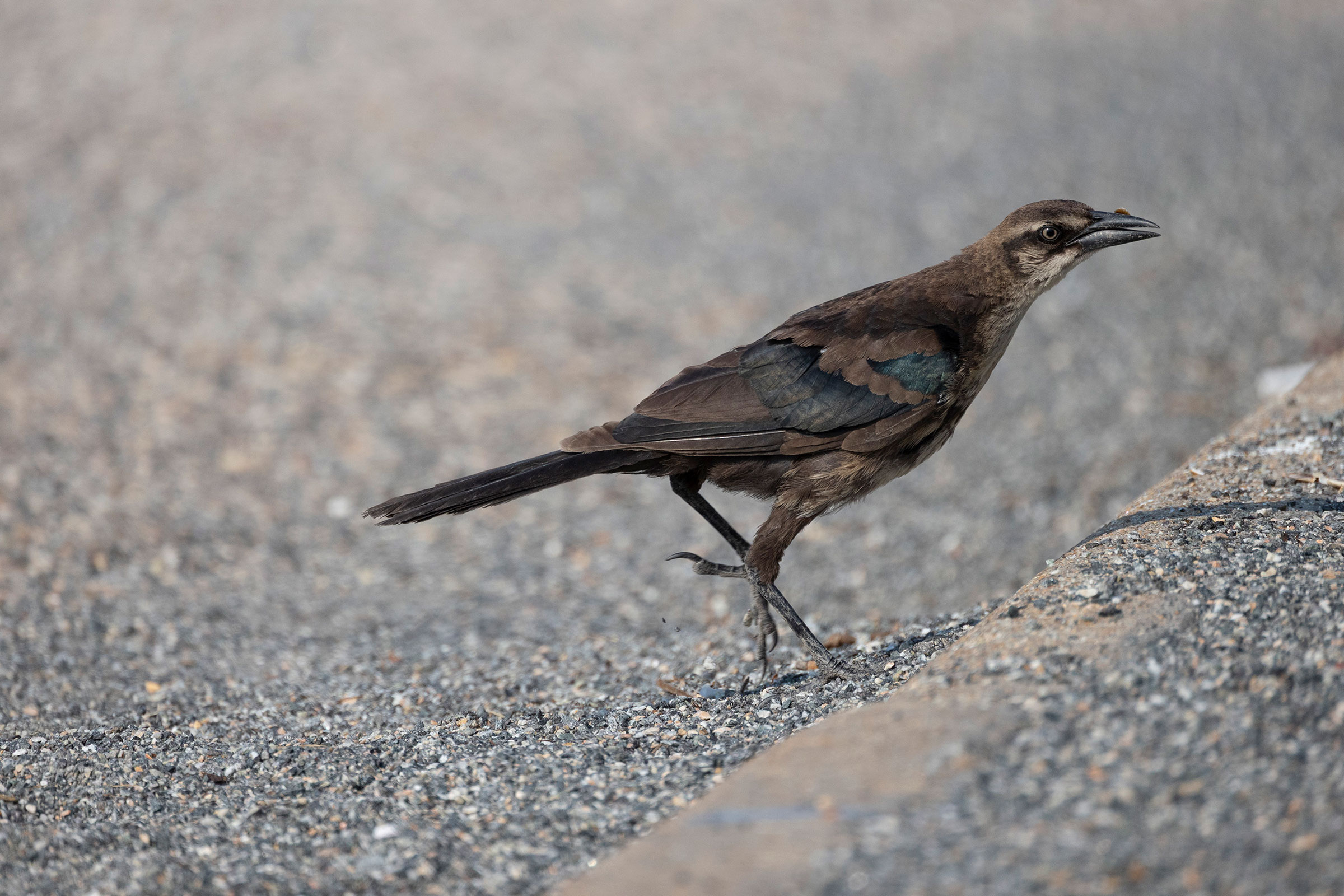
Named after its very long tail, which is reminiscent of a boat’s keel, the Boat-tailed Grackle inhabits coastal environments throughout the eastern U.S., including Virginia. There, it breeds in tall marsh grasses and shrubs and trees near water (Post et al. 2020). Accordingly, the bird’s diet includes aquatic prey such as mollusks, crustaceans, and amphibians (Post et al. 2020). The species is not monogamous, with dominant males defending and mating with females that nest in colonies (Post et al. 2020).
Breeding Distribution
Boat-tailed Grackles are found only in the Coastal Plain region, where they are most likely to occur in coastal areas of the Eastern Shore and the Tidewater area (Figure 1). Boat-tailed Grackles are less likely to occur in blocks with a greater proportion of forest cover, which is consistent with the species’ association with open areas.
During the Second Atlas, the Boat-tailed Grackle was moderately less likely to occur in some areas of the Eastern Shore and Tidewater region than during the previous Atlas (Figures 1 to 3).
View Environmental Associations
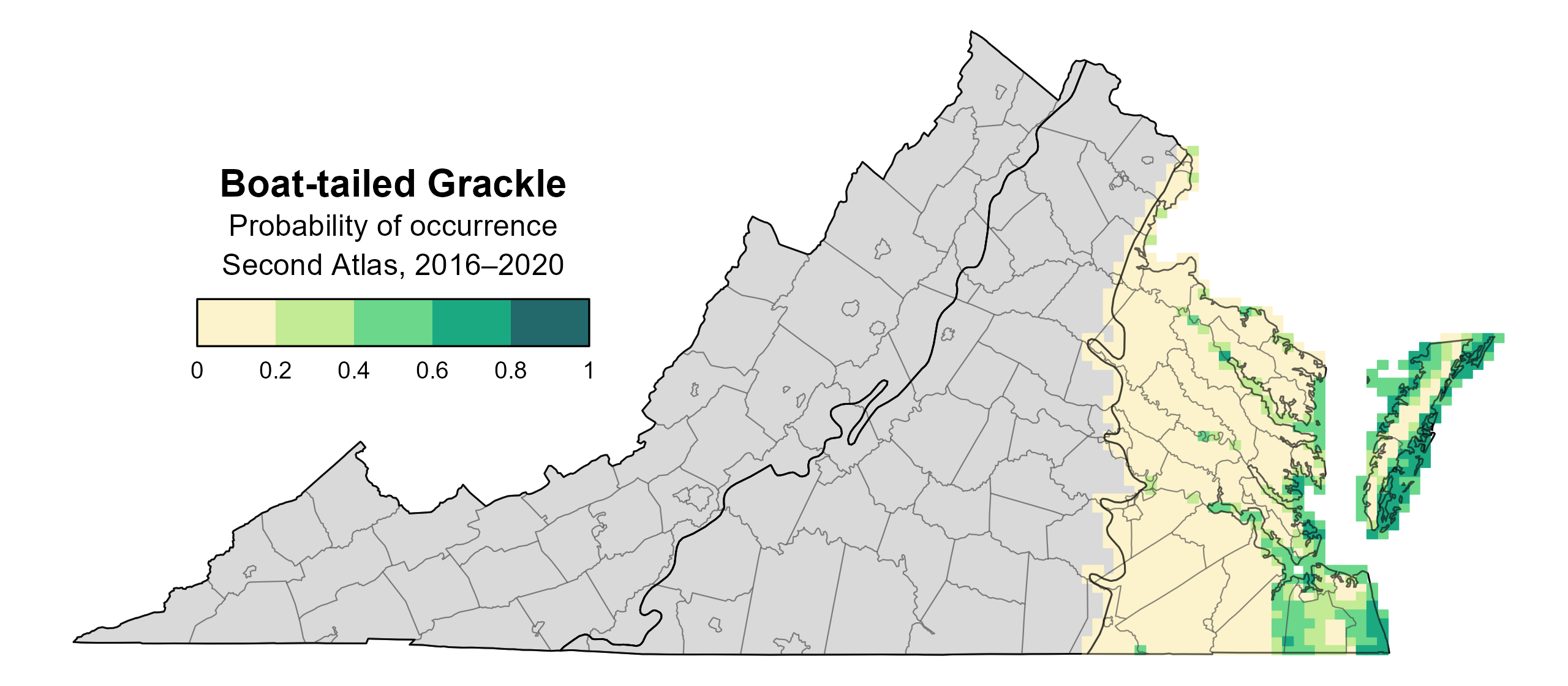
Figure 1: Boat-tailed Grackle breeding distribution based on probability of occurrence (Second Atlas, 2016–2020). This map indicates the probability that this species will occur in an Atlas block (an approximately 10 mi2 [26 km2] survey unit) based on environmental (including habitat) factors and after adjusting for the probability of detection (variation in survey effort among blocks). Blocks in gray are outside the species' core range and were not modeled.
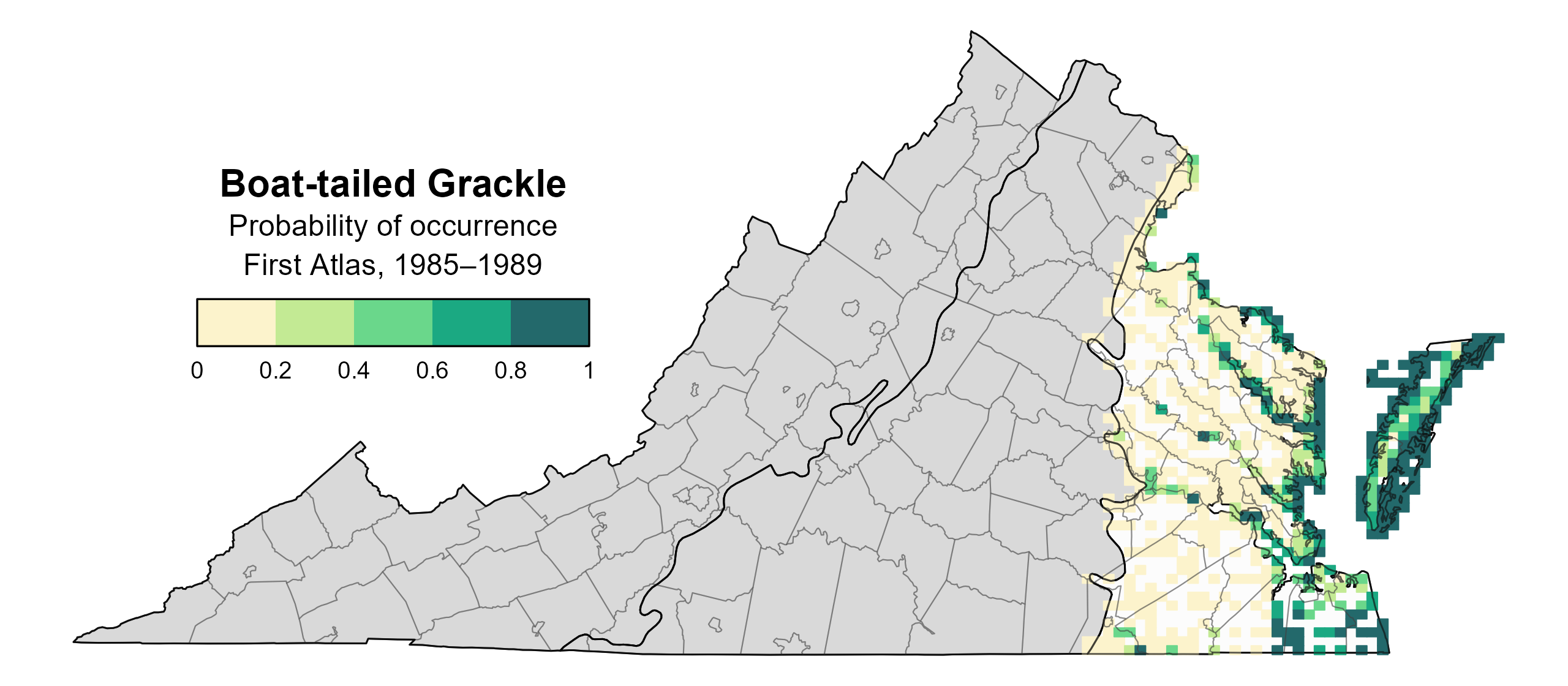
Figure 2: Boat-tailed Grackle breeding distribution based on probability of occurrence (First Atlas, 1985–1989). This map indicates the probability that this species will occur in an Atlas block (an approximately 10 mi2 [26 km2] survey unit) based on environmental (including habitat) factors and after adjusting for the probability of detection (variation in survey effort among blocks). Blocks in white were not surveyed during the First Atlas and were not modeled. Blocks in gray are outside the species’ core range and were not modeled.
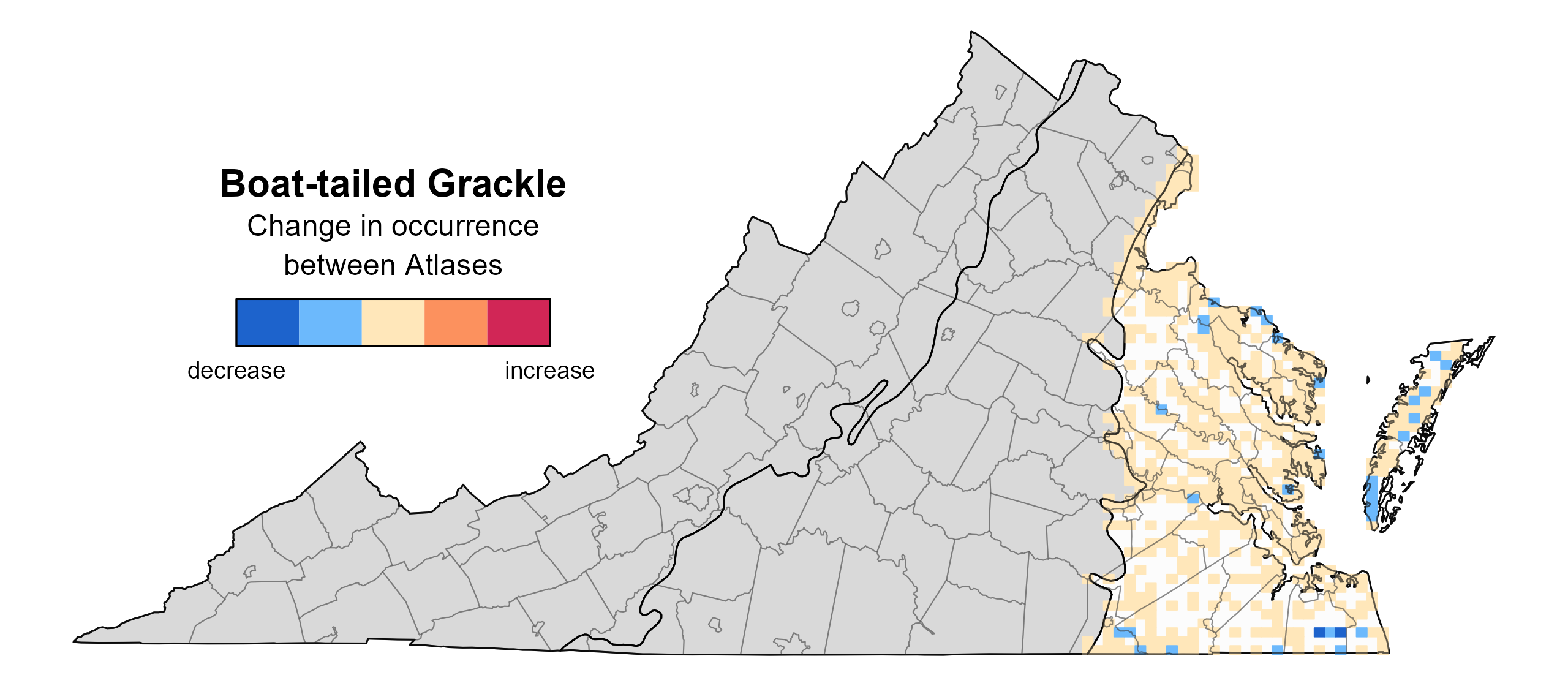
Figure 3: Boat-tailed Grackle change in breeding distribution between Atlases (1985–1989 and 2016–2020) based on probability of occurrence. This map indicates the change in the probability that this species will occur in a block (an approximately 10 mi2 [26 km2] survey unit) between Atlas periods. Blocks with no change (tan) may have constant presence or constant absence. Blocks in white were not surveyed during the First Atlas and were not modeled. Blocks in gray are outside the species’ core range and were not modeled.
Breeding Evidence
Boat-tailed Grackles were confirmed breeders in 29 blocks and 11 counties (Accomack, Chesapeake, Hampton, Isle of Wight, Mathews, Norfolk, Northampton, Northumberland, Poquoson, Portsmouth, and Virginia Beach) and found to be probable breeders in one additional county (Gloucester) (Figure 4). During the First Atlas, breeding observations were recorded in generally similar locations (Figure 5).
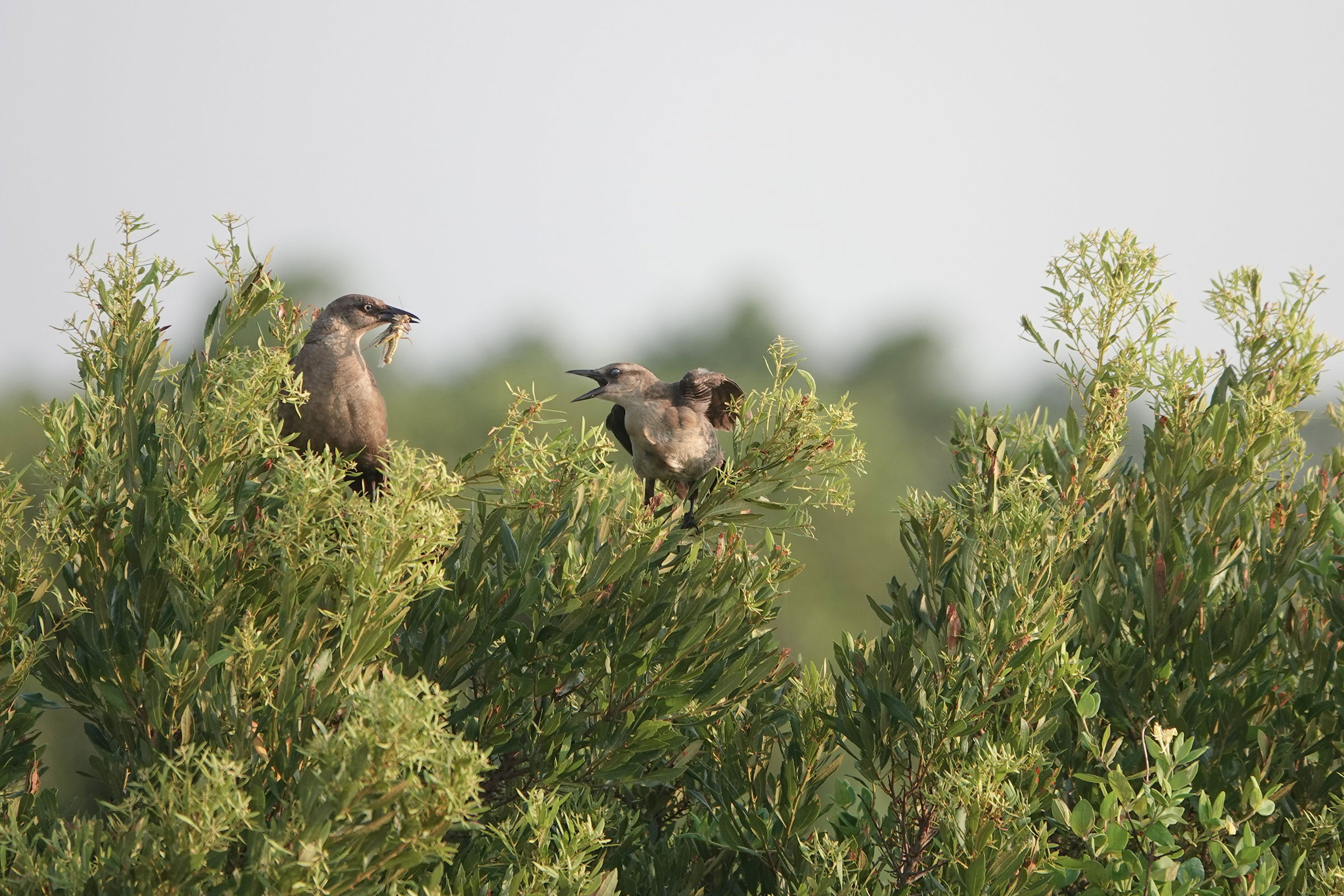
The earliest confirmed breeding behavior was documented in mid-April, when adults were observed carrying food (Figure 6). In addition to recently fledged young, this behavior was the most frequently recorded breeding evidence. Occupied nests were observed from May 1 to July 8 and recently fledged young from May 18 to July 22.
For more general information on the breeding habits of this species, please refer to All About Birds.
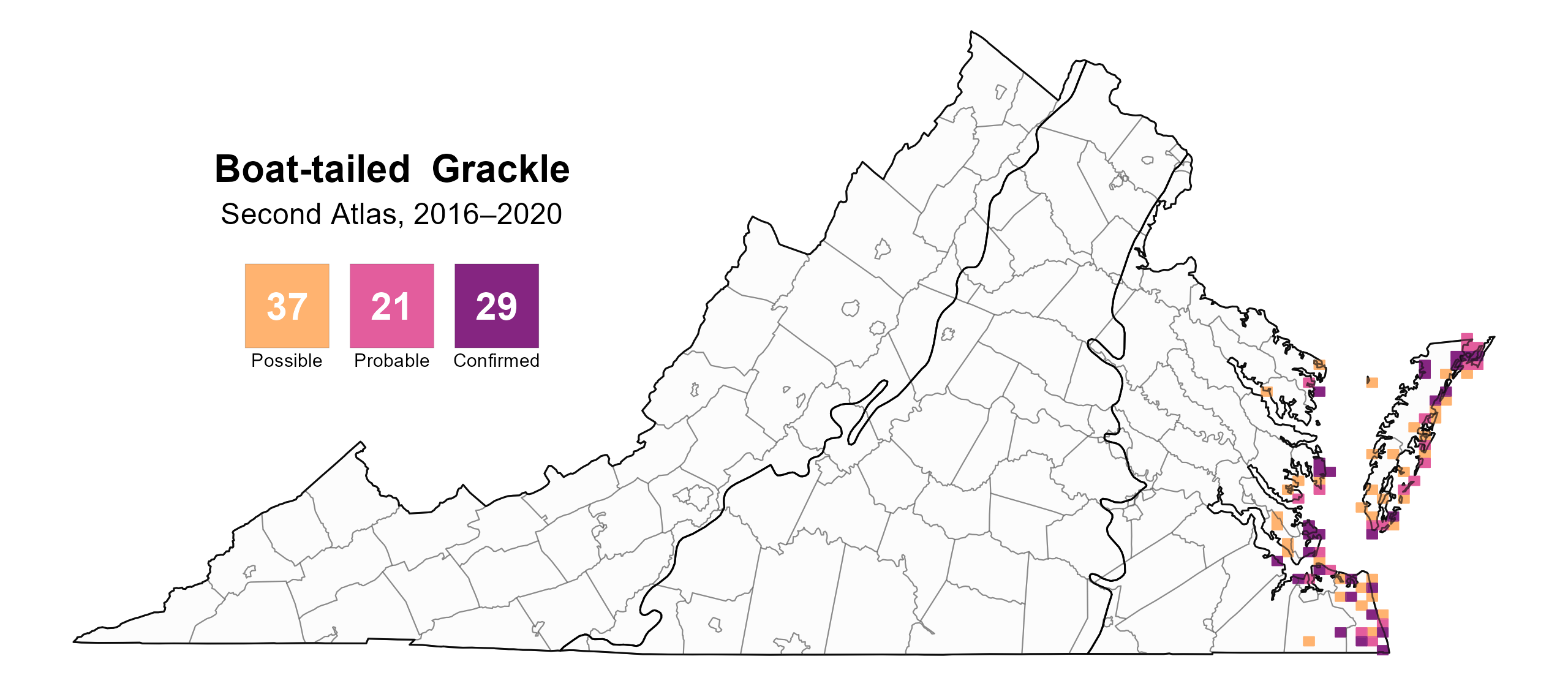
Figure 4: Boat-tailed Grackle breeding observations from the Second Atlas (2016–2020). The colored boxes illustrate Atlas blocks (approximately 10 mi2 [26 km2] survey units) where the species was detected. The colors show the highest breeding category recorded in a block. The numbers within the colors in the legend correspond to the number of blocks with that breeding evidence category.
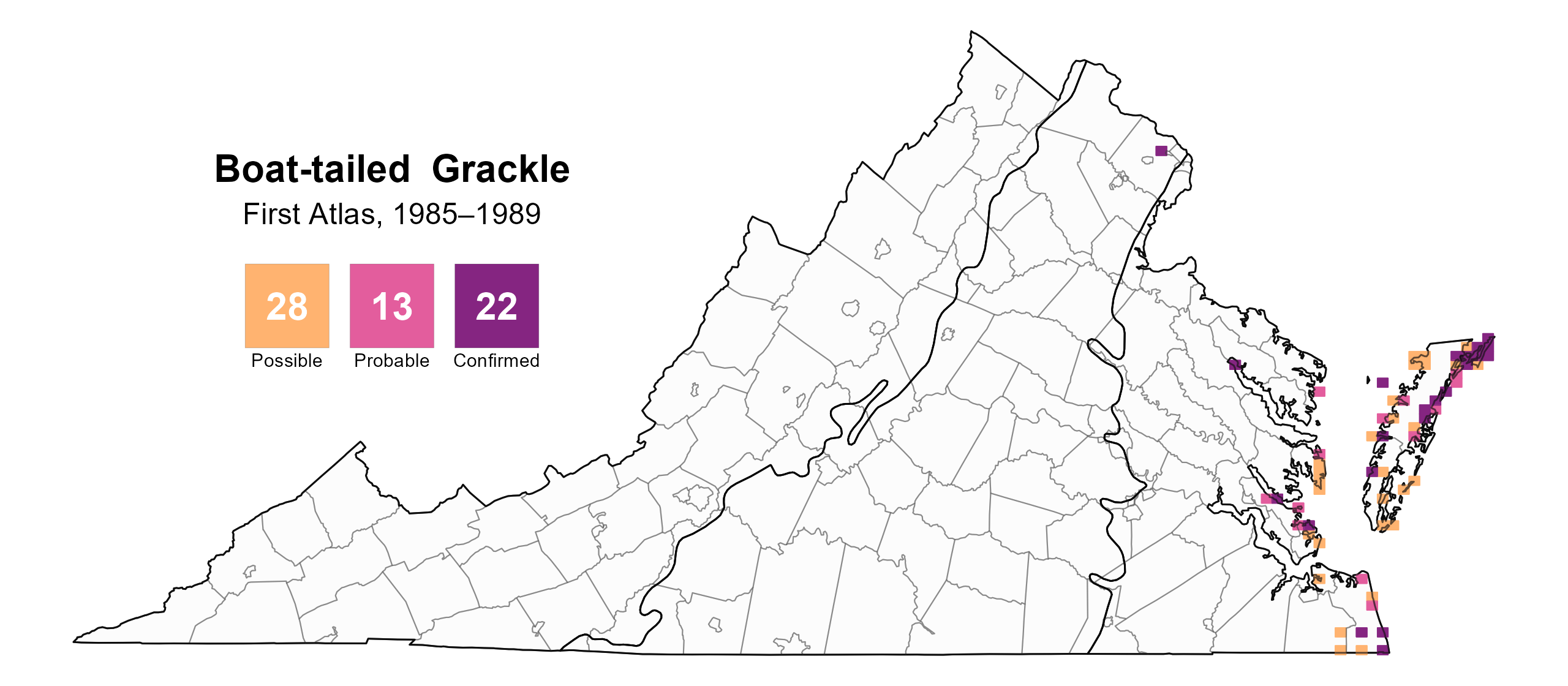
Figure 5: Boat-tailed Grackle breeding observations from the First Atlas (1985–1989). The colored boxes illustrate Atlas blocks (approximately 10 mi2 [26 km2] survey units) where the species was detected. The colors show the highest breeding category recorded in a block. The numbers within the colors in the legend correspond to the number of blocks with that breeding evidence category.
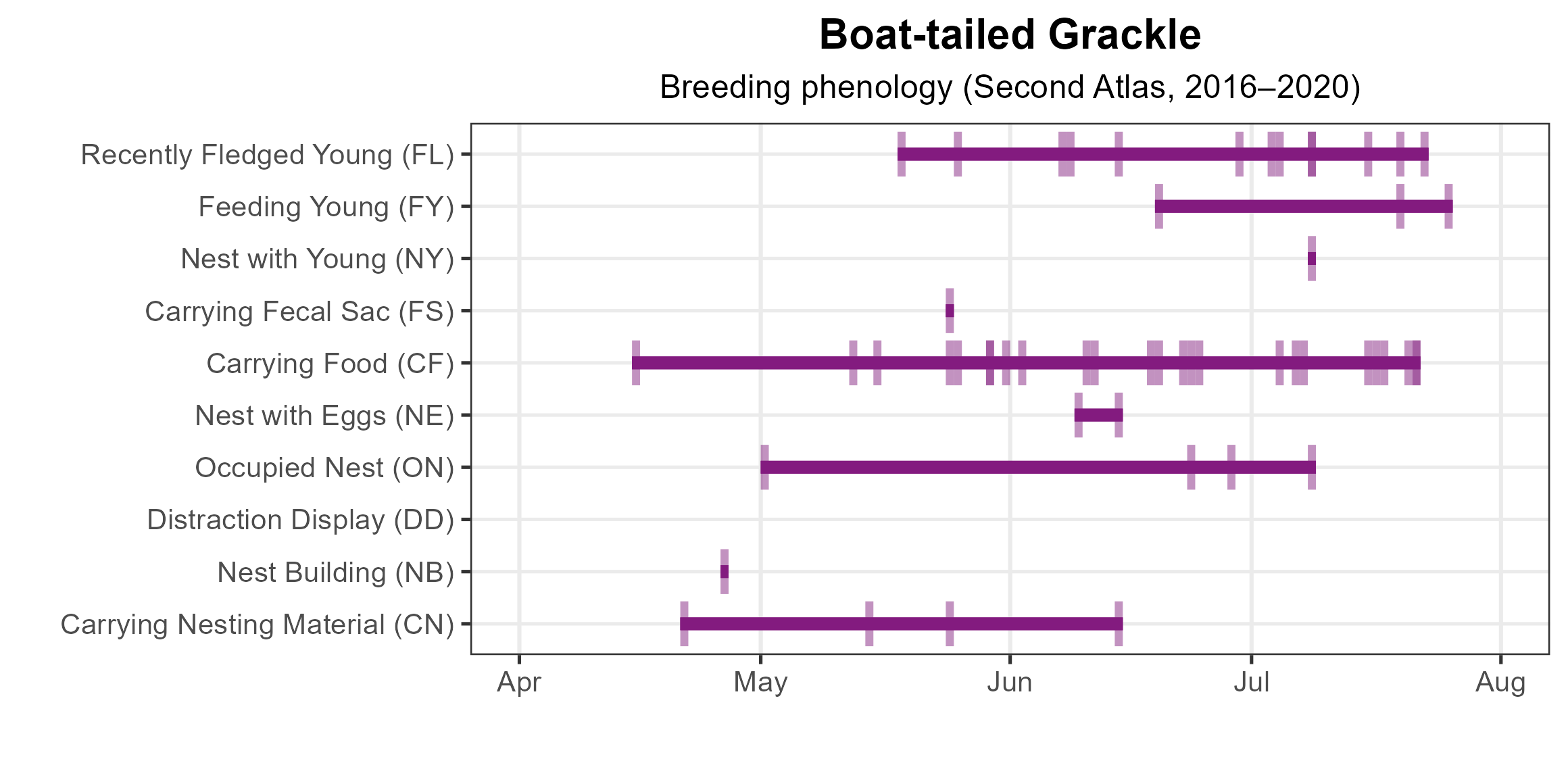
Figure 6: Boat-tailed Grackle phenology: confirmed breeding codes. This graph shows a timeline of confirmed breeding behaviors. Tick marks represent individual observations of the behavior.
Population Status
Boat-tailed Grackle relative abundance was estimated to be highest on the Eastern Shore, the Tidewater area, and the coastal ends of the Lower (Virginia) and Middle Peninsulas (Figure 7).
The total estimated Boat-tailed Grackle population in the state is approximately 19,000 individuals (with a range between 10,000 and 35,000). The North American Breeding Bird Survey (BBS) only detects the species on three routes in Virginia, such that population trend estimates for the state are not credible. However, the Boat-tailed Grackle population within the broader Southeastern Coastal Plain was estimated to have increased by a nonsignificant 0.72% annually from 1966–2022, whereas between Atlas periods, it decreased by a nonsignificant 0.76% annually 1987–2018 (Hostetler et al. 2023) (Figure 8).
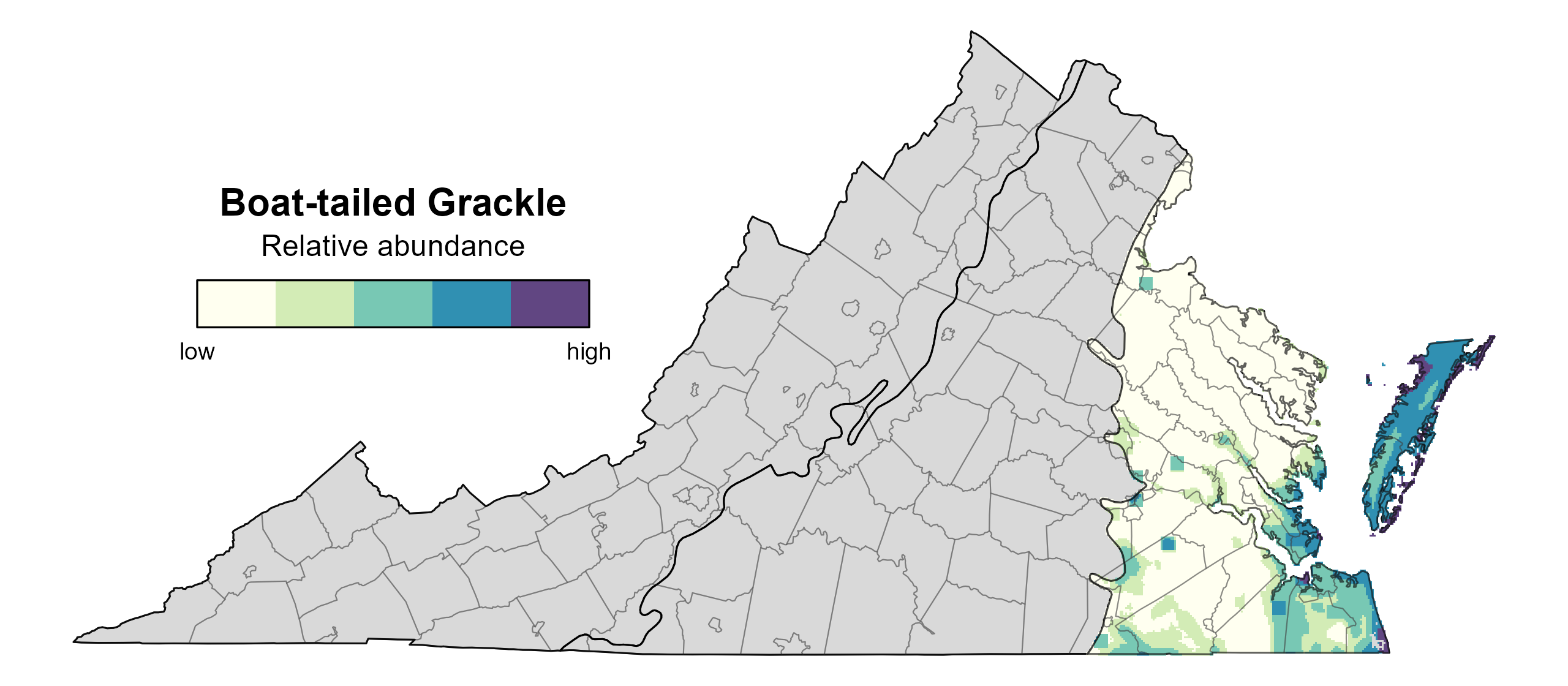
Figure 7: Boat-tailed Grackle relative abundance (Second Atlas, 2016–2020). This map indicates the predicted abundance of this species at a 0.4 mi2 (1 km2) scale based on environmental (including habitat) factors. Abundance values are presented on a relative scale of low to high. Areas in gray are outside the species’ core range and were not modeled.
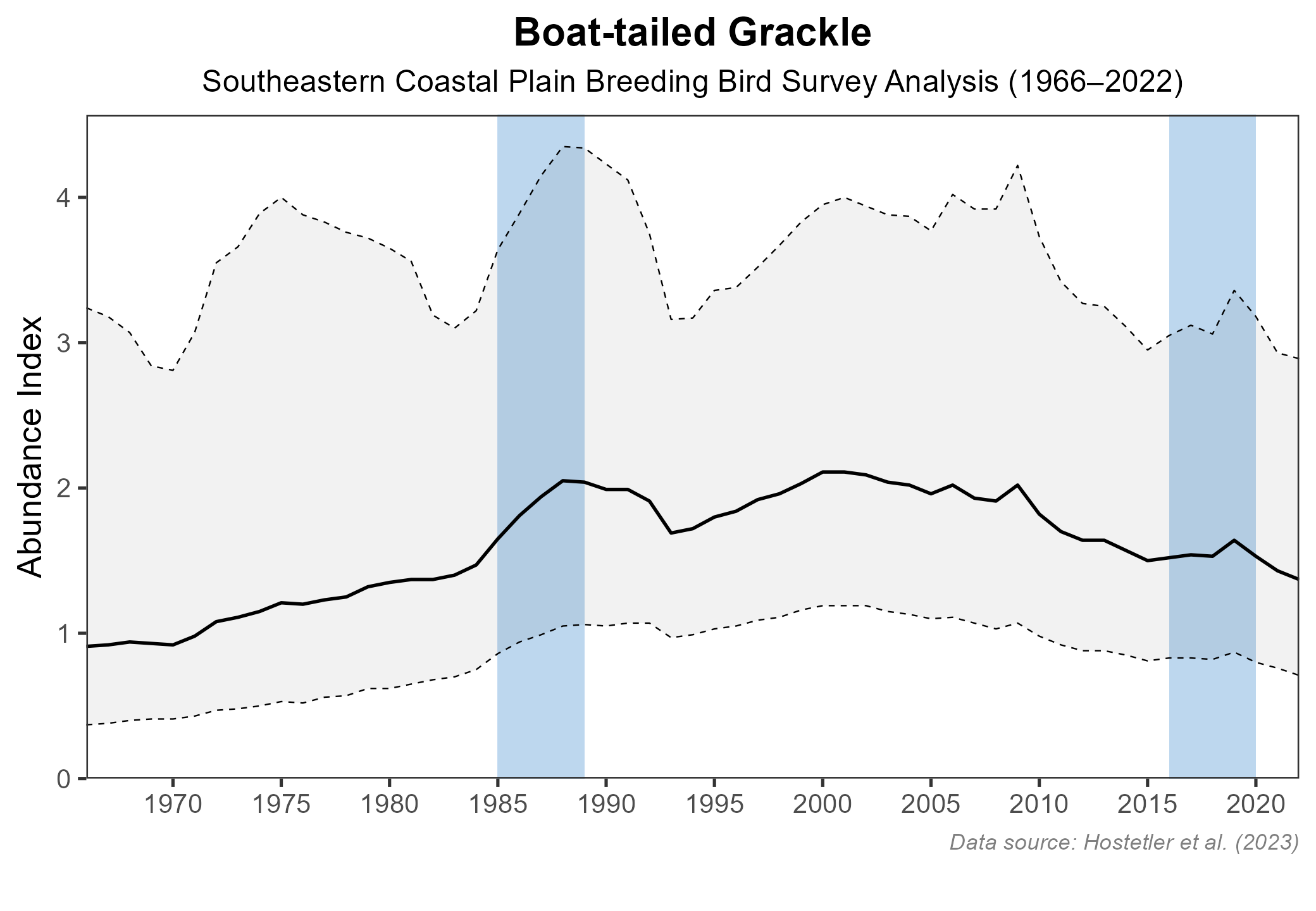
Figure 8: Boat-tailed Grackle population trend for the Southeastern Coastal Plain as estimated by the North American Breeding Bird Survey. The vertical axis shows species abundance; the horizontal axis shows the year. The solid line indicates the estimated population trend; there is a 97.5% probability that the true population trend falls between the dashed lines. The shaded bars indicate the First and Second Atlas periods.
Conservation
Given the Boat-tailed Grackle’s relatively small population and restricted coastal range, Virginia’s 2025 Wildlife Action Plan classifies this species as a Tier III (High Conservation Need) Species of Greatest Conservation Need (VDWR 2025). There are hints in the data of ongoing and/or future population declines in this species within Virginia, such as a decline in the probability of Boat-tailed Grackles breeding in portions of their coastal Virginia range and a downturn in their population trend at the regional level. Monitoring efforts that specifically target Boat-tailed Grackles may be necessary to paint a clearer picture of its population status within the Commonwealth.
Boat-tailed Grackles are year-round residents and have become increasingly urbanized, particularly in Virginia Beach (Rottenborn and Brinkley 2007), where Second Atlas breeding confirmations included parks and a condominium complex. Dramatic declines in local populations on the barrier islands took place historically due to the loss of woody nesting habitat (pines and cedars), which was accompanied by a shift toward nesting in myrtle (Bailey 1913). Extensive stands of wax myrtle (Myrica cerifera) continue to provide nesting opportunities on several barrier islands, although myrtle is disappearing from some of the islands (Ruth Boettcher, personal communication). Boat-tailed Grackles in Virginia also nest in tall marsh grasses, and this flexibility in choice of nesting habitat is to the population’s advantage. Investigating reproductive success by habitat type (shrub versus marsh grass) and what proportion of the population relies on each would help to frame a conservation strategy. In the meantime, marsh-nesting grackles will benefit from conservation actions targeted at the broader marsh bird community. These include identifying and protecting suitable marshes, as well as properties in marsh migration zones to mitigate for loss of marshes to sea-level rise (VDWR 2025).
Interactive Map
The interactive map contains up to six Atlas layers (probability of occurrence for the First and Second Atlases, change in probability of occurrence between Atlases, breeding evidence for the First and Second Atlases, and abundance for the Second Atlas) that can be viewed one at a time. To view an Atlas map layer, mouse over the layer box in the upper left. County lines and physiographic regional boundaries (Mountains and Valleys, Piedmont, and Coastal Plain) can be turned on and off by checking or unchecking the box below the layer box. Within the map window, users can hover on a block to see its value for each layer and pan and zoom to see roads, towns, and other features of interest that are visible beneath a selected layer.
View Interactive Map in Full Screen
References
Bailey, H. H. (1913). The birds of Virginia. J. P. Bell Company. Lynchburg, VA, USA.
Hostetler, J. A., J. R. Sauer, J. E. Hines, D. Ziolkowski, and M. Lutmerding (2023). The North American breeding bird survey, analysis results 1966–2022. U.S. Geological Survey, Laurel, MD, USA. https://doi.org/10.5066/P9SC7T11.
Post, W., J. P. Poston, and G. T. Bancroft (2020). Boat-tailed Grackle (Quiscalus major), version 1.0. In Birds of the World (A. F. Poole, Editor). Cornell Lab of Ornithology, Ithaca, NY, USA. https://doi.org/10.2173/bow.botgra.01.
Rottenborn, S. C., and E. S. Brinkley (Editors) (2007). Virginia’s birdlife: An annotated checklist. 4th edition. Virginia Society of Ornithology.
Virginia Department of Wildlife Resources (VDWR) (2025). Virginia wildlife action plan. Virginia Department of Wildlife Resources, Henrico, VA, USA. 506 pp.