Introduction
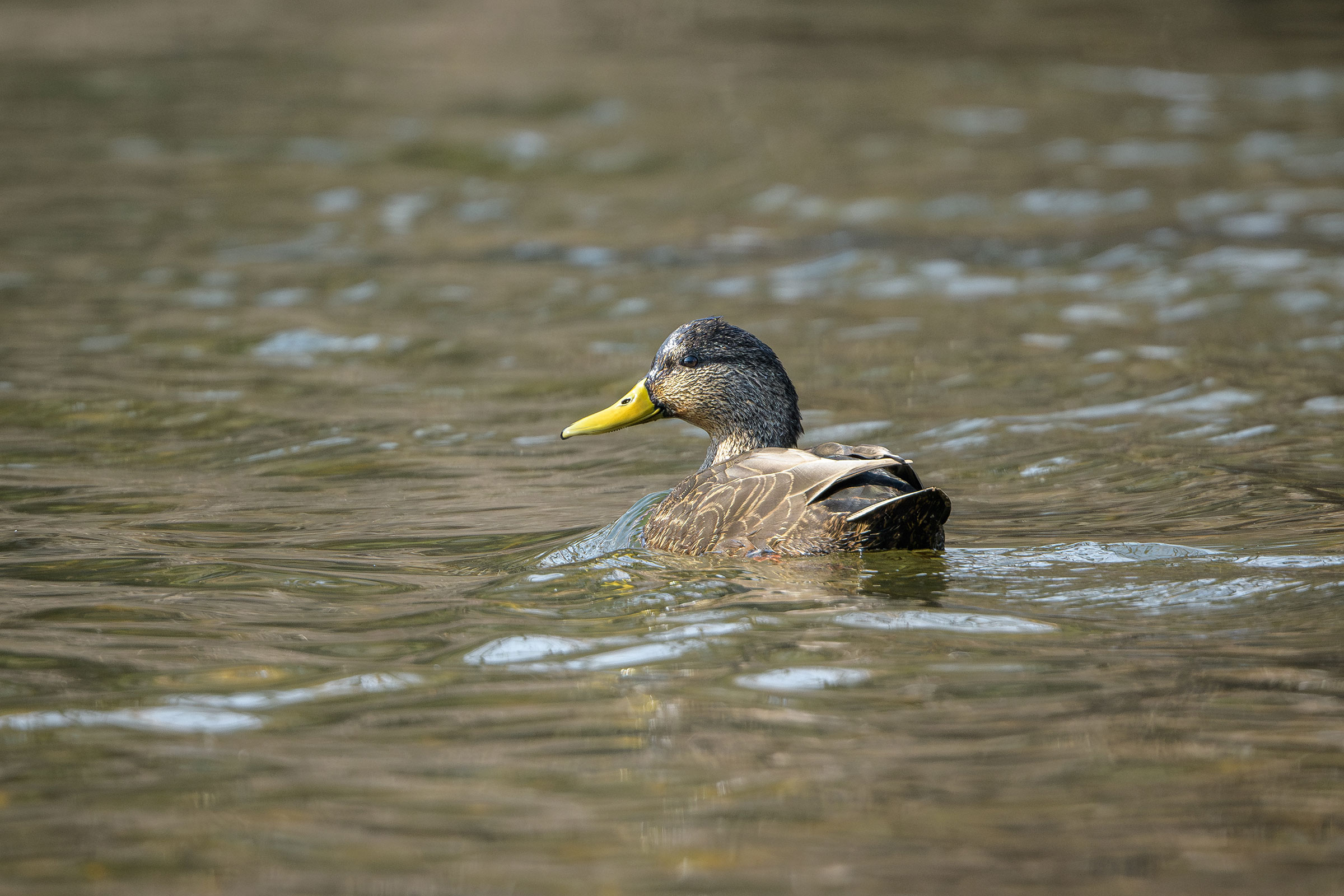
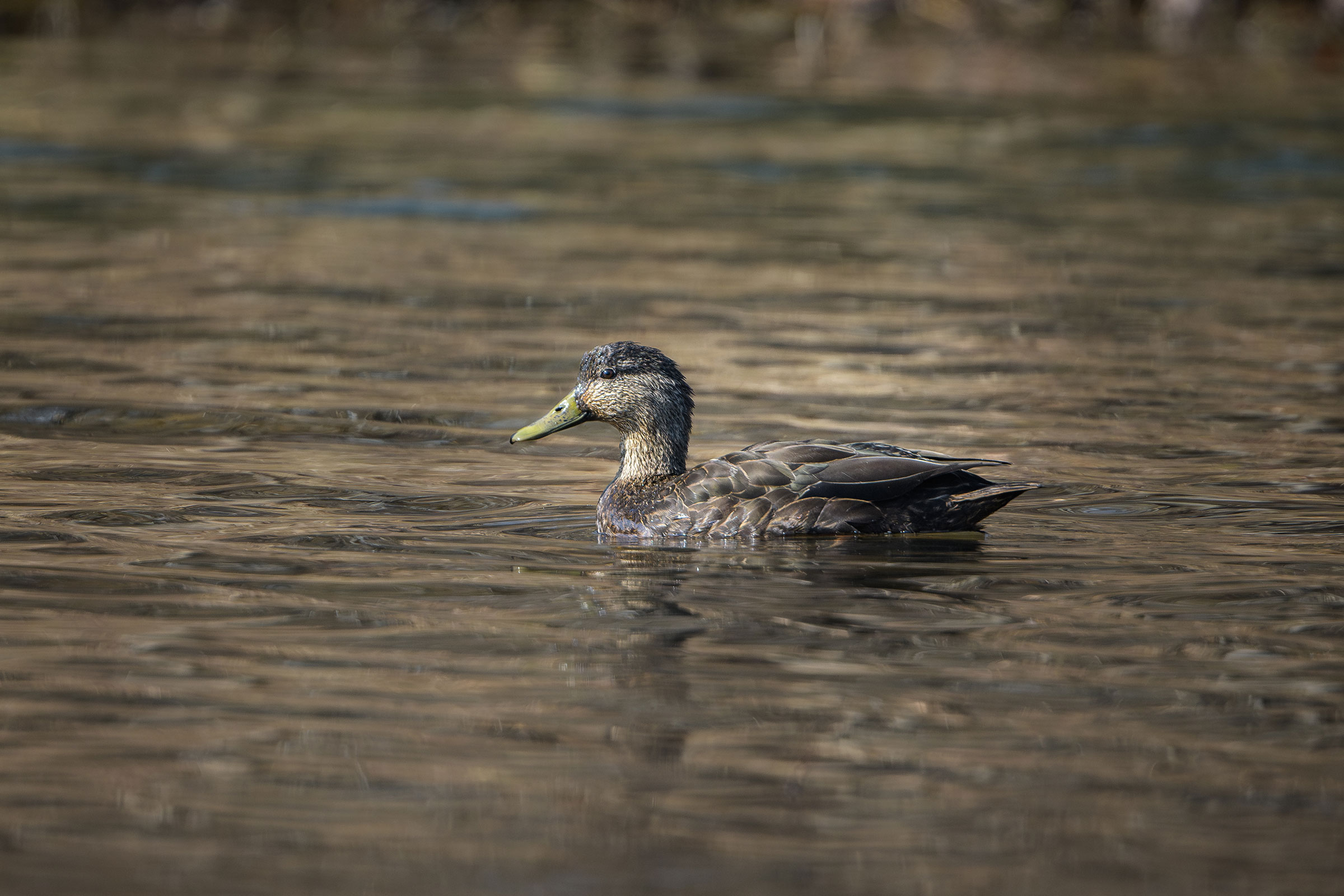
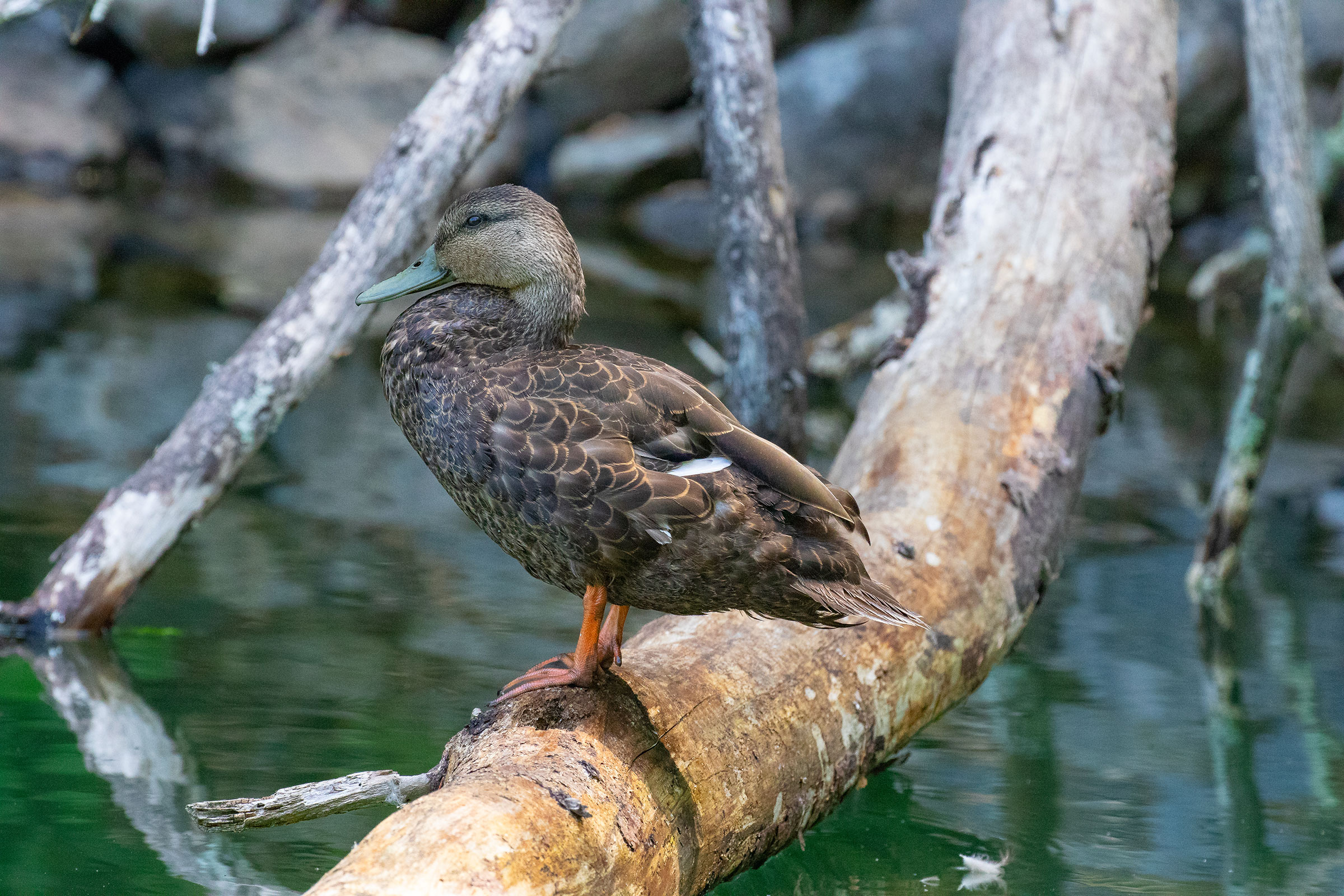
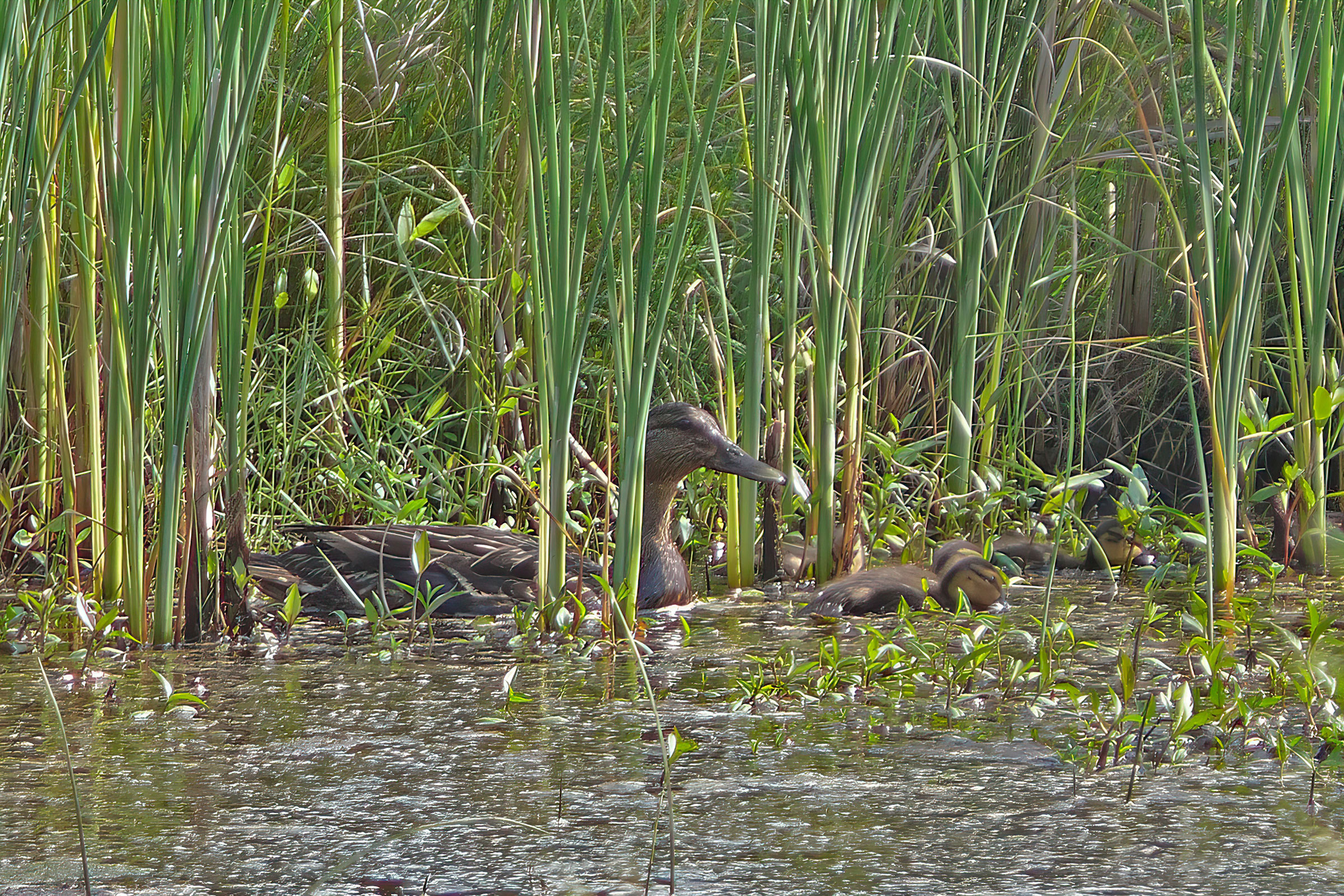
Virginia’s lower Chesapeake Bay supports one of the largest wintering populations of American Black Ducks in the Mid-Atlantic region, making them relatively easy to find during a January birding trip. The region also supports a small number of breeding American Black Ducks (Costanzo and Hindman 2007; Erwin et al. 2011), although finding them in inaccessible brackish and saltwater wetlands and isolated ponds can be challenging (Wilson and Watts 2012). Well-concealed nests are usually built on the ground in marshes or on small islands, where water protects them from nest predators, such as raccoons (Procyon lotor) (Longcore et al. 2020). Historically, breeding American Black Ducks were found outside the Coastal Plain region of Virginia, but today, they are mostly found in the tidal waters of the lower Chesapeake Bay (Wilson and Watts 2012).
Breeding Distribution
During the breeding season, American Black Ducks are almost exclusively confined to the Coastal Plain, where they are most likely to occur in saltwater marshes bounding the edges of the Eastern Shore. Annual surveys conducted by the Virginia Department of Wildlife Resources (VDWR) confirm that most nests are located on offshore islands in this area (Costanzo 2002). However, too few breeding observations prevented the development of distribution models. For more information on their occurrence in the state, please see the Breeding Evidence section.
Breeding Evidence
In the Coastal Plain, American Black Ducks were confirmed breeders in just nine blocks in one county (Accomack) and the city of Richmond and considered probable breeders in Mathews County at Bethel Beach Natural Area Preserve, where a pair was observed (Figure 1). VDWR surveys were responsible for most confirmations, given the relative inaccessibility of the islands where the species nests to Atlas volunteers and the low number of remaining breeding pairs. During the First Atlas, most confirmations were confined to the Coastal Plain region; however, there were additional confirmations in the greater Richmond area (including Chesterfield County) and as far west as Bath County (Figure 2).
The earliest nests with eggs were observed on April 18, and recently fledged young were observed from May 5 to June 22 (Figure 3). For more general information on the breeding habits of this species, please refer to All About Birds.

Figure 1: American Black Duck breeding observations from the Second Atlas (2016–2020). The colored boxes illustrate Atlas blocks (approximately 10 mi2 [26 km2] survey units) where the species was detected. The colors show the highest breeding category recorded in a block. The numbers within the colors in the legend correspond to the number of blocks with that breeding evidence category.

Figure 2: American Black Duck breeding observations from the First Atlas (1985–1989). The colored boxes illustrate Atlas blocks (approximately 10 mi2 [26 km2] survey units) where the species was detected. The colors show the highest breeding category recorded in a block. The numbers within the colors in the legend correspond to the number of blocks with that breeding evidence category.

Figure 3: American Black Duck phenology: confirmed breeding codes. This graph shows a timeline of confirmed breeding behaviors. Tick marks represent individual observations of the behavior.
Population Status
Because American Black Ducks were not detected on Atlas point count surveys, abundance could not be modeled for the species. In Virginia, the species has declined substantially from its historic highs (Gary Costanzo, personal communication). The Atlantic Flyway Breeding Waterfowl Plot Survey is testament to a continuing downward trend, with American Black Duck having undergone a 36% population reduction at the Flyway level between 1993 and 2019 (Roberts 2019).
Conservation
Across its range, the American Black Duck population is estimated to have declined by 50% from the 1950s to the 1980s (Hartley and Weldon 2020). Declines are thought to have arisen predominantly from loss of quality habitats and potentially from competition with Mallards (Anas platyrhynchos) for habitat, food resources, and even mates, as American Black Ducks readily hybridize with Mallards (Longcore et al. 2020). VDWR surveys in the 1990s found that most nests were located on offshore islands (both barrier islands and islands on the bayside of the Chesapeake Bay), which were free of ground predators (Costanzo 2002). However, many barrier islands have since been colonized by predators such as raccoon, red fox (Vulpes vulpes), and coyote (Canis latrans), which has led to a reduction in the number of American Black Ducks nesting there (Gary Costanzo, personal communication).
The Atlantic Coast Joint Venture, for which the American Black Duck is one of three flagship species, focuses on the species’ wintering population and has a restoration goal of 90,384 individuals for Virginia (Hartley and Weldon 2020). The lower Chesapeake Bay plays a substantial role in reaching this goal. Given the low remaining number of breeding pairs in Virginia, the 2025 Wildlife Action Plan includes the wintering population of American Black Duck as a Species of Greatest Conservation Need Tier II (Very High Conservation Need) (VDWR 2025).
Conservation actions targeted at the wintering population could also benefit breeding American Black Ducks. These actions include the following: enhancing and managing black duck habitat by restoring riparian buffers, underwater grass beds, and wetlands converted to agricultural uses; managing open marshes and wetland water levels; and controlling exotic and invasive plant species (Hartley and Weldon 2020). The state of Maryland is using dredge spoil to rebuild the number of nesting islands in the Chesapeake Bay for American Black Duck and a host of shorebirds and wading birds; this approach could also be adopted in Virginia in the future.
Interactive Map
The interactive map contains up to six Atlas layers (probability of occurrence for the First and Second Atlases, change in probability of occurrence between Atlases, breeding evidence for the First and Second Atlases, and abundance for the Second Atlas) that can be viewed one at a time. To view an Atlas map layer, mouse over the layer box in the upper left. County lines and physiographic regional boundaries (Mountains and Valleys, Piedmont, and Coastal Plain) can be turned on and off by checking or unchecking the box below the layer box. Within the map window, users can hover on a block to see its value for each layer and pan and zoom to see roads, towns, and other features of interest that are visible beneath a selected layer.
View Interactive Map in Full Screen
References
Costanzo, G. R. (2002). Black Duck nesting in the Virginia portion of the Chesapeake Bay. In Blacks Ducks and Their Chesapeake Bay Habitats: Proceedings of a Symposium (M.C. Perry, Editor). U.S. Geological Survey, Biological Resources Discipline Information and Technology Report USGS/BRD/ITR-2002-005.
Costanzo, G. R., and L. J. Hindman (2007). Chesapeake Bay breeding waterfowl populations. Waterbirds 30 (Special Publication 1):17-24.
Erwin, R. M., D. F. Brinker, B. D. Watts, G. R. Costanzo, D. D. Morton (2011). Islands at bay: rising seas, eroding islands, and waterbird habitat loss in Chesapeake Bay (USA). Journal of Coastal Conservation 15:51-60.
Hartley, M.J., and A.J. Weldon (2020). American Black Duck conservation plan. Atlantic Coast Joint Venture.
Longcore, J. R., D.G. McAuley, G. R. Hepp, and J.M. Rhymer (2020). American Black Duck (Anas rubripes), version 1.0. In Birds of the World. Cornell Lab of Ornithology, Ithaca, NY, USA. https://doi.org/10.2173/bow.ambduc.01.1.
Roberts, A. 2019. Atlantic Flyway breeding waterfowl Plot Survey. https://dnr.maryland.gov/wildlife/Documents/2019_AFC_PlotSurvey.pdf.
Virginia Department of Wildlife Resources (VDWR). 2025. Virginia wildlife action plan. Virginia Department of Wildlife Resources, Henrico, VA, USA. 213 pp.
Wilson, M.D., and B.D. Watts (2012). The Virginia avian heritage project: A report to summarize the Virginia avian heritage database. Center for Conservation Biology Technical Report Series. College of William and Mary and Virginia Commonwealth University, Williamsburg, VA, USA.